

TL;DR:
- The JPY to AUD exchange rate determines the amount of Australian Dollars received for each Yen exchanged. As of mid-2026, 1 JPY equals about 0.00884 AUD, with minor daily fluctuations affecting large transfers. Choosing regulated specialist providers and monitoring live market rates can significantly improve conversion outcomes.
The JPY to AUD exchange rate defines exactly how many Australian Dollars you receive for each Japanese Yen exchanged. As of mid-2026, 1 JPY equals approximately 0.00884 AUD, meaning 1,000 JPY converts to roughly 8.84 AUD. Whether you are budgeting for a trip to Australia, repatriating funds, or analyzing cross-market investment exposure, this rate directly shapes your financial outcome. Platforms like XE, MTFX, and CurrencyTransfer each offer different rates, fees, and transfer speeds, so knowing how to compare them is as important as knowing the rate itself.
What is the current JPY to AUD rate and how is it calculated?
The mid-market rate is the midpoint between the buy and sell prices quoted on global forex markets. It is the rate you see on financial data platforms, and it represents the true value of the currency pair before any provider adds their margin. Banks and transfer services then apply a spread on top of this rate, which is how they generate revenue on currency exchanges.

The 30-day rate range for JPY to AUD between late April and late May 2026 sat between 0.0087 and 0.0089, with a daily average of 0.0088. That narrow band reflects a relatively stable pair, but even small moves matter when you are converting large sums. The pair shows daily fluctuations around 0.15%, which is modest by forex standards but still meaningful for transfers above 500,000 JPY.
| Conversion Amount (JPY) | Approximate AUD (at 0.0088) |
|---|---|
| 10,000 JPY | 88.40 AUD |
| 50,000 JPY | 442.00 AUD |
| 100,000 JPY | 884.00 AUD |
| 500,000 JPY | 4,420.00 AUD |
| 1,000,000 JPY | 8,840.00 AUD |
Supply and demand on the forex market drives the rate daily. The Bank of Japan's monetary policy, the Reserve Bank of Australia's interest rate decisions, and commodity prices (particularly iron ore, which Australia exports heavily) all exert pressure on the AUD to JPY conversion in both directions.
How do providers affect your JPY to AUD conversion outcome?
Not all providers deliver the same rate, and the difference between a bank and a specialist service can be significant. Specialist providers can save up to 4% compared to high-street banks on larger transfers. On a 1,000,000 JPY transfer, that gap translates to roughly 350 AUD in your pocket rather than the provider's.
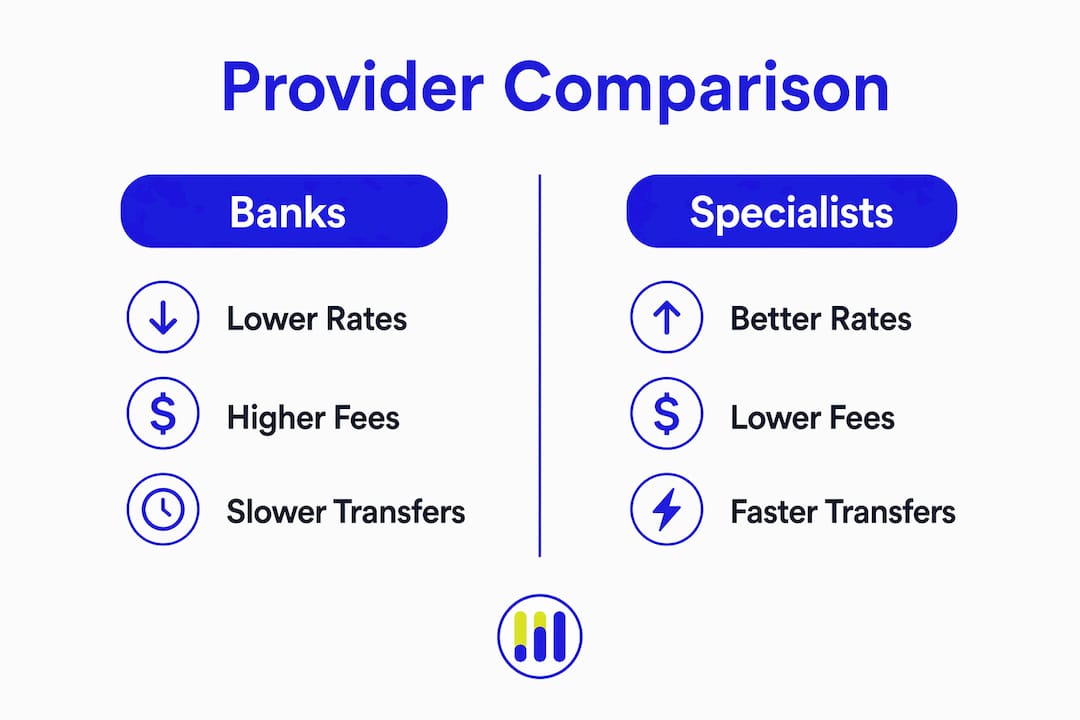
Here is how the main provider types compare:
| Provider Type | Rate Competitiveness | Typical Fees | Transfer Speed |
|---|---|---|---|
| High-street banks | Below mid-market | Higher fixed fees | 2–5 business days |
| Specialist FX services (MTFX, CurrencyTransfer) | Near mid-market | Low or zero fees | 1–2 business days |
| Online platforms (XE) | Near mid-market | Variable by amount | 1–3 business days |
Transfers between AUD and JPY typically complete in 1–2 business days through standard processing. Priority SWIFT transfers submitted before 14:00 GMT can process the same day, which matters when you need funds to clear before a property settlement or investment deadline.
Key factors to evaluate when choosing a provider:
- Regulatory status: FCA-regulated providers like CurrencyTransfer operate under strict transparency and client fund protection rules.
- Rate margin: Ask for the mid-market rate and compare it to what the provider quotes. The gap is your real cost.
- Fee structure: Some providers charge flat fees; others build their profit entirely into the rate spread.
- Transfer limits: Specialist services often handle large transfers more efficiently than retail banking platforms.
Pro Tip: Always request a quote for your exact transfer amount before committing. Rates often improve for larger sums, and some providers will negotiate margins on transfers above 100,000 AUD equivalent.
What are the best practical tips for converting JPY to AUD?
Timing and provider selection are the two levers you control. The rate itself is set by the market, but when and where you convert determines your final outcome.
- Monitor live rate charts before converting. Tracking intraday price action can reveal better entry points within the same trading day. Converting at the daily low rather than the daily high on a 500,000 JPY transfer can mean a difference of several AUD.
- Compare at least three providers. Comparing rates across regulated providers reduces inflated margins and maximizes the amount you receive. Use XE as a mid-market benchmark, then compare MTFX and CurrencyTransfer against it.
- Convert larger amounts in single transfers. Providers typically offer tighter margins on higher volumes. Splitting a large conversion into multiple small transfers often increases your total cost.
- Use rate alert tools. Most specialist platforms let you set a target rate and notify you when the market reaches it. This removes the need to check rates manually every day.
- Consider forward contracts for planned transfers. If you know you will need AUD in 60 days, a forward contract locks in today's rate and protects you from adverse moves.
Pro Tip: For travel budgeting, load a multi-currency card like Wise or Revolut at the mid-market rate rather than exchanging cash at airport kiosks, where margins can exceed 5%.
For a deeper look at selecting the right conversion service, the yen converter guide on Tickerplace covers provider selection in detail.
How does the JPY to AUD rate affect travelers, investors, and businesses?
The exchange rate between the Japanese Yen and the Australian Dollar touches three distinct groups in different ways.
Travelers converting JPY to AUD for an Australian trip need to account for both the rate and the conversion method. A 200,000 JPY travel budget converts to approximately 1,768 AUD at the current rate. Choosing the wrong conversion channel can reduce that by 50–70 AUD before you even board the plane.
Investors tracking the AUD to JPY pair watch it as a proxy for risk sentiment in Asia-Pacific markets. The Australian Dollar is a commodity currency, and the Japanese Yen is a traditional safe-haven asset. When global risk appetite falls, AUD tends to weaken against JPY. Understanding this relationship helps investors interpret currency moves within their broader portfolio context. Tickerplace's ASX live data tools provide real-time price feeds that support this kind of cross-asset analysis.
Businesses making cross-border payments between Japan and Australia face exchange rate risk on every invoice. A payment agreed in JPY that settles two weeks later in AUD can arrive worth less than expected if the rate moves against you. Hedging through forward contracts or options is the standard mitigation approach for businesses with recurring JPY to AUD exposure.
Key takeaways
The most effective way to convert JPY to AUD is to benchmark against the mid-market rate, compare FCA-regulated specialist providers, and time transfers using live rate monitoring tools.
| Point | Details |
|---|---|
| Current rate benchmark | 1 JPY equals approximately 0.00884 AUD as of mid-2026. |
| Mid-market vs. provider rate | Banks add a spread above the mid-market rate; specialist providers like MTFX and CurrencyTransfer offer tighter margins. |
| Transfer speed options | Standard transfers take 1–2 business days; priority SWIFT transfers submitted before 14:00 GMT can settle same-day. |
| Cost savings from specialists | Specialist FX providers can save up to 4% versus high-street banks, especially on larger transfers. |
| Rate monitoring pays off | Tracking intraday charts and setting rate alerts helps you convert at better levels without constant manual checking. |
Tickerplace's view on timing and provider selection
The most common mistake people make when converting JPY to AUD is treating it as a single-step transaction. They check one rate, use one provider, and move on. That approach leaves real money on the table.
From Tickerplace's perspective, the provider comparison step is where most of the value is captured, not in trying to perfectly time the market. The JPY to AUD pair moves modestly day to day, so chasing the perfect rate often costs more in time and stress than it saves. Choosing a regulated specialist over a high-street bank, however, is a near-certain improvement on almost every transfer.
The second underused tool is the rate alert. Setting a target rate and waiting for the market to reach it is a passive strategy that works well for non-urgent transfers. It removes emotion from the decision and keeps you from converting at a poor rate simply because you ran out of patience.
Tickerplace also believes that investors tracking Japanese and Australian equities should treat the JPY to AUD rate as a live variable in their analysis, not a background detail. Currency moves can materially affect the AUD-denominated returns of Japanese holdings, and that risk deserves the same attention as the underlying stock selection.
— Tickerplace
Track currency trends with Tickerplace
Understanding the JPY to AUD rate is only part of the picture. Investors and travelers who act on that understanding need reliable, real-time data to make confident decisions.
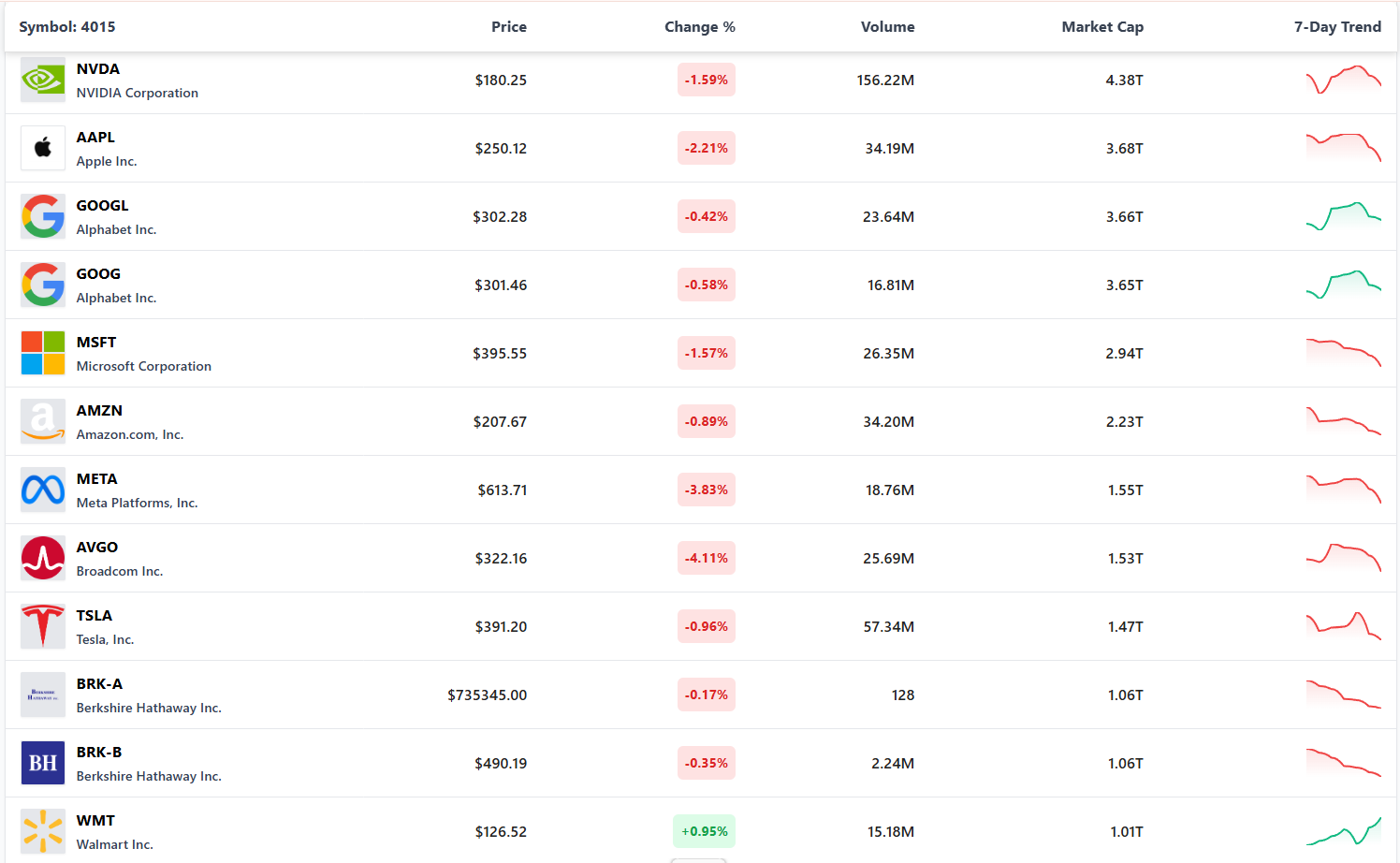
Tickerplace provides live market data, financial metrics, and research tools designed for investors who take currency and equity exposure seriously. Whether you are monitoring the AUD to JPY conversion as part of a cross-border investment thesis or screening ASX-listed stocks for currency-sensitive earnings, the platform gives you the data infrastructure to do it properly. Explore Tickerplace's full suite of tools to connect currency rate awareness with your broader investment research workflow.
FAQ
What is 1,000 JPY worth in AUD right now?
At the current mid-market rate of approximately 0.0088, 1,000 JPY equals roughly 8.84 AUD. The exact amount varies slightly depending on the provider and the margin they apply.
How long does a JPY to AUD transfer take?
Standard transfers between JPY and AUD take 1–2 business days through most specialist providers. Priority SWIFT transfers submitted before 14:00 GMT can process the same day, subject to banking hours.
Is it better to use a bank or a specialist provider for JPY to AUD?
Specialist FX providers like MTFX and CurrencyTransfer consistently offer better rates than high-street banks. The cost difference can reach up to 4% on larger transfers, which is a meaningful saving on amounts above 500,000 JPY.
What drives the JPY to AUD exchange rate?
The rate is driven by forex market supply and demand, influenced by the Bank of Japan's monetary policy, the Reserve Bank of Australia's interest rate decisions, and commodity prices like iron ore. Risk sentiment in Asia-Pacific markets also shifts the pair, with AUD weakening against JPY during periods of global uncertainty.
How do i get the best rate when converting japanese yen to AUD?
Compare at least three regulated providers against the mid-market rate published on XE, set a rate alert for your target level, and convert in a single larger transfer rather than multiple smaller ones to access tighter margins.