

TL;DR:
- Woolworths' share price in 2026 experienced significant volatility, bouncing from technical support and driven by earnings recovery signals.
- Fundamental factors such as market share, margin pressures, high debt levels, and dividend yield help inform confident investment decisions amidst market fluctuations.
Few ASX stocks have generated as much debate in 2026 as Woolworths (ASX: WOW). The share price woolworths australia investors track has swung from multi-year highs above A$38 to a sharp correction, then bounced sharply off technical support, all within months. For individual investors and analysts, that kind of volatility creates both opportunity and confusion. This guide cuts through the noise by explaining what is actually driving Woolworths' price movements, what the fundamentals reveal, and how you can apply that knowledge to make more confident decisions.
Key Takeaways
| Point | Details |
|---|---|
| Recent price recovery | Woolworths bounced off A$32–33 support in late April 2026, posting a 7-day return of 5.15%. |
| Analyst upgrade signals upside | JPMorgan set a price target of A$37 based on earnings recovery and 4.5% Q3 sales growth. |
| Elevated yield is a warning sign | A dividend yield of 3.94% sits above the 5-year average, which may signal price weakness rather than pure income opportunity. |
| Leverage requires attention | A debt-to-equity ratio near 300% makes Woolworths share value sensitive to interest rate fluctuations. |
| Use multiple tools together | Combining technical levels, fundamental metrics, and analyst targets gives a more accurate read than any single input alone. |
Share price woolworths australia: recent trends and data
Woolworths' price story in 2026 has two distinct chapters. The first was a sharp rally that sent the stock to A$38.15, up nearly 30% year-to-date, as earnings surprised to the upside and momentum traders piled in above key resistance levels. The second was an equally sharp correction.
In late April 2026, the share price bounced off A$32–33 support after a 9% intraday drop, one of the most significant single-day swings the stock has seen in years. What followed was a recovery that delivered a 90-day return of 11.05% and a 7-day return of 5.15% as of late May 2026.
The table below provides a structured snapshot of the key price reference points every investor should know:
| Metric | Value (2026) |
|---|---|
| Recent 52-week high | A$38.15 |
| Key technical support | A$32–33 |
| 7-day return (late May 2026) | 5.15% |
| 90-day return | 11.05% |
| JPMorgan price target | A$37 |
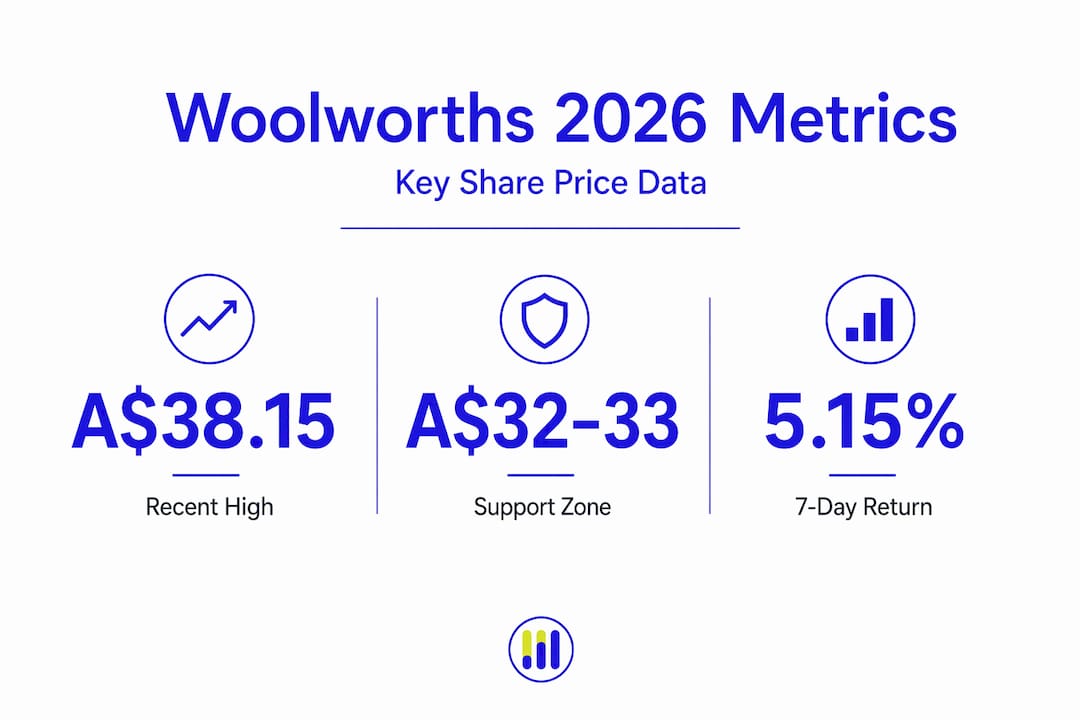
Understanding these levels matters because the A$32–33 zone is not just a price. It is where value buyers historically step in and where automated trading systems often trigger buy orders, creating a self-reinforcing floor.
Pro Tip: Mark the A$32–33 zone on your price chart as a reference range, not a precise number. Support zones work as ranges, and treating them too literally leads to missed entries.
Fundamental factors behind Woolworths shares value
Woolworths is far more than a supermarket chain. The company holds over 35% market share in Australian groceries and operates Big W discount stores and the PFD foodservice distribution business. That diversification provides a revenue cushion, but it also means different business segments carry different risk profiles.
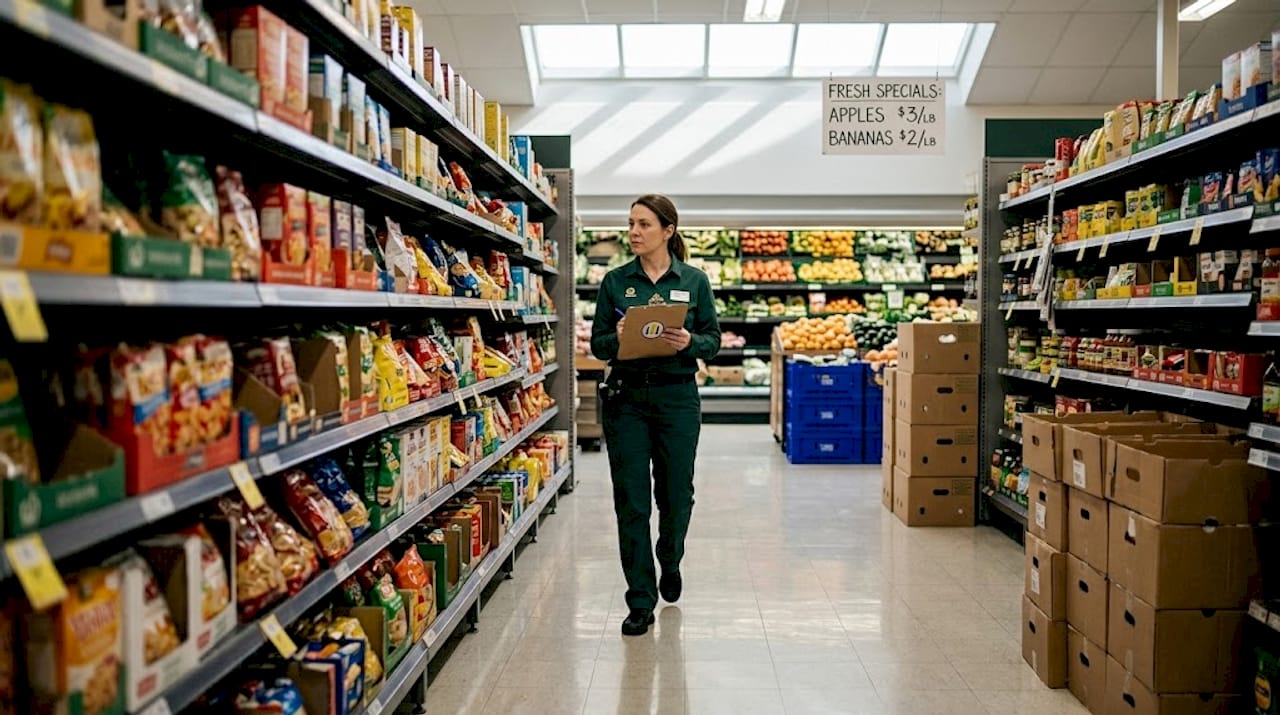
On the cost side, margin pressure is a real and current concern. Woolworths announced a three-month price freeze on 300 household staples in 2026 to retain price-sensitive customers, while rising fuel and logistics costs are expected to compress EBIT margins in Q4. That combination of revenue-protective pricing and cost inflation creates a narrow margin corridor that analysts are watching closely.
The leverage picture adds another layer of risk. Woolworths carries a debt-to-equity ratio near 300% and net debt of approximately A$15 billion. You can assess that ratio yourself using a debt-to-equity calculator to understand how a shift in interest rates would change the company's debt servicing cost relative to equity. At 300%, even a modest rate increase materially changes the calculus.
On dividends, the current yield of 3.94% looks attractive compared to the 5-year average of 2.92%. But here is the critical distinction most investors miss: a high dividend yield can signal that the share price has fallen faster than dividends have grown, not that the company is suddenly more generous. Treat elevated yields as a prompt to investigate price weakness, not just as a straightforward income opportunity.
Pro Tip: When a stock's dividend yield rises sharply above its historical average, check whether the dividend per share actually increased or whether the price dropped. That distinction changes the entire investment thesis.
Analyst perspectives and market sentiment in 2026
The most significant institutional signal on Woolworths shares price in 2026 came from JPMorgan, which upgraded WOW to overweight with a A$37 price target. The rationale was not short-term optimism. It was grounded in raised EPS forecasts for FY2026 through FY2028, improved customer satisfaction metrics, and 4.5% Q3 sales growth. That kind of multi-year earnings recovery thesis gives institutional investors a framework for holding through near-term volatility.
Still, the bull case coexists with real headwinds:
- Inflation continues to pressure household budgets, which limits Woolworths' ability to raise prices without losing volume.
- Rising logistics and fuel costs directly affect operating margins across grocery and foodservice segments.
- Regulatory scrutiny on grocery pricing remains a headline risk that can trigger sharp short-term selloffs.
The Woolworths stock price also reflects its status as a defensive dividend stock. In uncertain markets, defensive stocks attract capital simply because they offer income alongside relative stability. That institutional demand supports the share price even when economic conditions are difficult.
"Institutional confidence is based on expectation of a multi-year earnings recovery trajectory, not short-term hype." — JPMorgan upgrade analysis, May 2026
Short-term price drops often trigger forced selling by momentum traders, creating sharp intraday moves that can look alarming but do not always reflect deteriorating fundamentals. The post-Q3 selloff and subsequent rebound is a textbook example. Value-oriented buyers recognized the support zone, stepped in, and momentum reversed.
How to track and interpret Woolworths share price movements
Applying this knowledge practically requires a structured approach. Here is a process that integrates both technical and fundamental signals into a repeatable framework:
-
Set your technical anchors. Mark A$32–33 as the primary support zone and A$37–38 as the resistance range based on the 2026 high and JPMorgan's current target. These levels frame the current trading range and define risk parameters for entry and exit decisions.
-
Monitor dividend yield relative to history. If the yield moves significantly above 3.94%, investigate why before treating it as attractive income. Compare the current yield against the 5-year average of 2.92% using real-time data to catch shifts early.
-
Watch debt metrics alongside rate decisions. With net debt near A$15 billion, each Reserve Bank of Australia rate cycle has direct implications for Woolworths shares value. When rates rise, debt servicing costs increase and earnings estimates often face downward revision.
-
Use analyst targets as a reference range, not a price guarantee. JPMorgan's A$37 target reflects a specific set of assumptions about earnings recovery and sales growth. If those assumptions change, the target changes. Cross-reference at least two to three analyst views before drawing conclusions.
-
Access real-time data consistently. Tracking the Woolworths ASX performance on a daily basis helps you spot divergence between price and fundamentals early. For broader context, comparing WOW against ASX-listed peers by market cap helps you understand whether a move is stock-specific or sector-wide.
Pro Tip: Woolworths and Coles move in similar patterns given their shared exposure to grocery inflation and regulatory risk. Tracking the Coles share price alongside WOW gives you a faster read on whether a Woolworths move is company-specific or an industry-wide signal.
My take on Woolworths share price volatility in 2026
I've watched Woolworths cycle through bull runs and corrections enough times to recognize a pattern most individual investors fall into: reacting to price movement as if it equals fundamental change. It rarely does. When WOW dropped 9% in a single session in April 2026, the temptation was to read it as a business deteriorating. In reality, it was momentum unwinding from an overextended rally.
What I've found consistently is that the investors who navigate Woolworths shares forecast cycles best are the ones treating technical levels as a structural map rather than a prediction tool. The A$32–33 support zone does not guarantee a reversal. It tells you where risk asymmetry shifts in your favor, assuming the fundamentals remain intact.
The dividend yield confusion is the mistake I see most often. When a yield climbs above its historical average, it triggers a flood of income-seeking buyers who have not asked why the yield rose. Combining price context with yield data is not optional. It is the difference between buying value and catching a falling stock.
— Tickerplace
Track Woolworths shares in real time with Tickerplace
For investors applying the frameworks in this guide, having accurate real-time data is not a luxury. It is a prerequisite for making decisions you can stand behind.
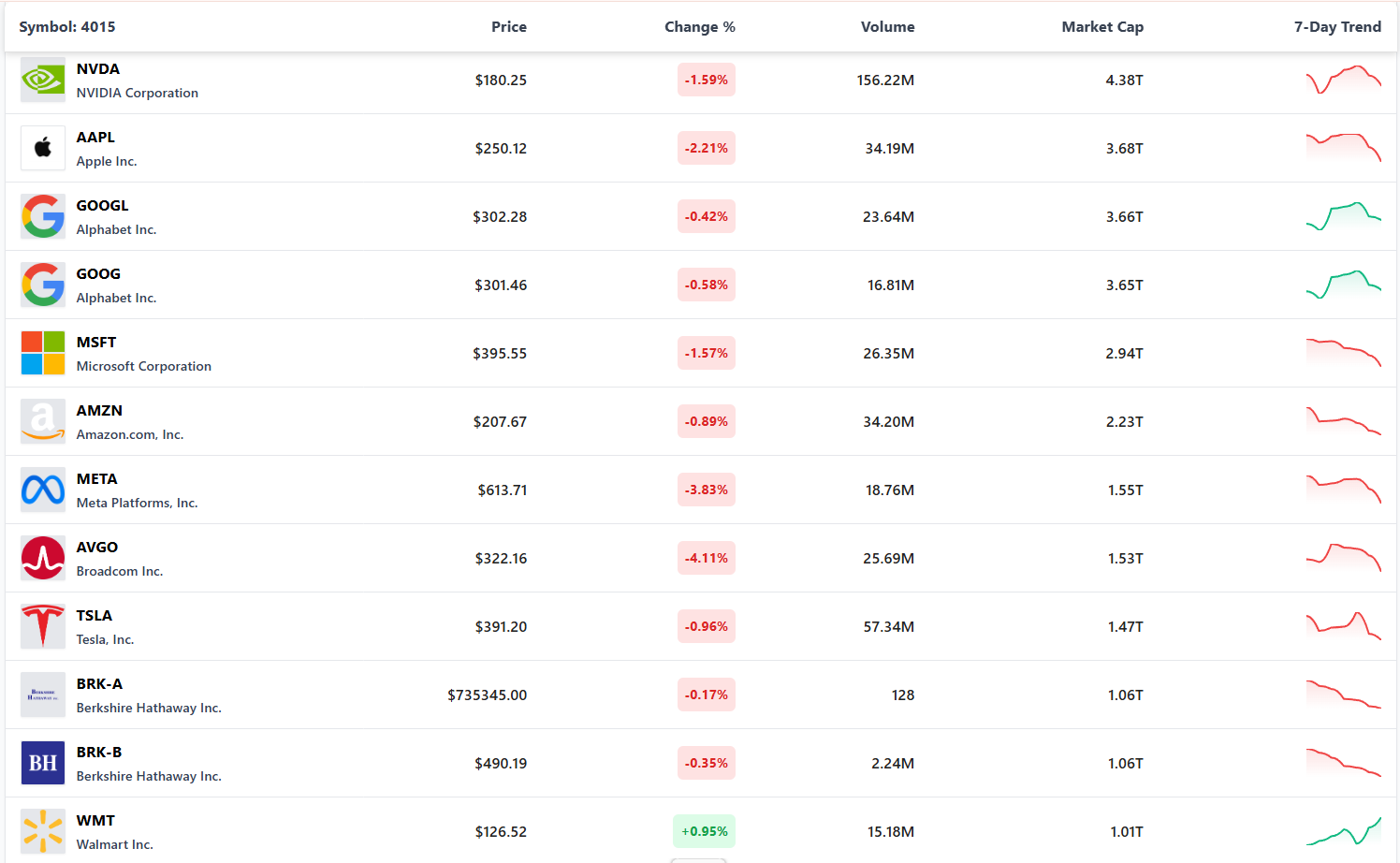
Tickerplace provides real-time Woolworths stock price data alongside technical and fundamental research tools built for active investors and analysts. The stock screener lets you filter ASX-listed stocks by yield, debt-to-equity ratios, earnings growth, and price-to-earnings multiples so you can contextualize WOW against sector peers in seconds. For deeper analysis, Tickerplace's research platform gives you access to financial statements, market cap rankings, and analyst-grade metrics, all in one place. Whether you are monitoring Woolworths daily or building a longer-term position, these tools put the right data in front of you at the right time.
FAQ
What is the current Woolworths share price in Australia?
Woolworths (ASX: WOW) shares recovered from a low near A$32–33 in late April 2026 and posted a 7-day return of 5.15% as of late May 2026. For the most current Woolworths share price, check a real-time ASX data source.
Why did Woolworths share price drop sharply in April 2026?
The April 2026 drop involved a 9% intraday decline driven largely by momentum unwinding after the stock hit a multi-year high near A$38. The price subsequently recovered as value buyers stepped in at the A$32–33 technical support zone.
What is JPMorgan's Woolworths shares forecast?
JPMorgan upgraded Woolworths to overweight in 2026 with a price target of A$37, citing 4.5% Q3 sales growth, improved customer metrics, and raised EPS forecasts through FY2028.
Is Woolworths' dividend yield currently attractive?
Woolworths' dividend yield of approximately 3.94% sits above its 5-year average of 2.92%. However, that elevated yield reflects a share price that has declined, not simply stronger income generation, so investors should assess price context alongside the yield figure.
How do I invest in Woolworths shares?
You can invest in Woolworths shares by purchasing ASX: WOW through a licensed Australian broker or online trading platform. Before investing, review technical levels, fundamental metrics like the debt-to-equity ratio, and analyst targets to build a complete picture of current Woolworths shares value.