

TL;DR:
- Westpac's share price movements are primarily driven by dividend mechanics, sector-wide selling, and analyst valuation concerns rather than business deterioration.
- Understanding ex-dividend date effects, sector trends, and income valuation is essential for making informed investment decisions.
Westpac Banking Corporation (ASX: WBC) is one of Australia's four major banks, and its share price reflects a precise interplay of dividend mechanics, sector trends, and analyst sentiment that every investor must understand. Share prices for Westpac traded near A$38.50 in early May 2026 before pulling back to around A$35.24 by June, a move driven by both the ex-dividend event and broad financial sector weakness. For income-focused investors and analysts tracking Westpac bank stock price movements, knowing what causes these shifts separates informed decisions from reactive ones.
1. How dividend events affect share prices for Westpac
The ex-dividend date is the single most misunderstood driver of short-term Westpac share price movements. On the ex-dividend date, a stock's price adjusts downward by approximately the dividend amount because buyers after that date no longer qualify to receive the declared payment. Westpac declared an interim dividend of A$0.77 per share, fully franked, for the 2026 financial year.

The ex-dividend date was 8 May 2026, with payment scheduled for 26 June 2026. On that ex-date, about 97 cents of the share price fall was the mechanical effect of trading ex-dividend. This means the price drop was not a signal of deteriorating business value. It was a predictable, structural adjustment that investors who understand dividend mechanics can anticipate and use to their advantage.
The practical implication is significant. An investor who sees a sharp single-day decline on a chart without checking the dividend calendar may incorrectly conclude that something is fundamentally wrong with the company. Investors cross-check share prices against dividend timetables to separate mechanical adjustments from genuine valuation changes.
Pro Tip: Add Westpac's ex-dividend dates to your investment calendar and compare them directly against price charts. A drop that aligns with an ex-date is structural, not a sell signal.
2. Market and sector trends shaping Westpac's share value
Beyond dividends, the broader ASX banking sector exerted significant downward pressure on Westpac's share value during May and June 2026. Westpac shares fell about 6.5% over May 2026, declining from approximately A$38.50 to A$36.00. That decline was not solely dividend-driven. Sector-wide selling amplified the move.
Several factors contributed to this environment:
- ASX 200 Banks Index weakness: Financial stocks led the ASX 200 lower in early June 2026, with Westpac shares down 1.87% on 2 June 2026 alone as banks dragged the broader index.
- Interest rate expectations: Margin compression concerns tied to interest rate trajectory weighed on the entire Australian banking sector, not just Westpac.
- Mortgage market competition: Intensifying competition in home lending squeezed net interest margin expectations, a concern flagged by multiple analysts covering the sector.
- Peer comparison: Westpac's price trajectory in this period broadly mirrored movements in CBA and ANZ, confirming that sector forces, not company-specific news, drove much of the weakness. You can review CBA's share price trends for direct comparison.
Understanding these sector dynamics prevents investors from over-attributing price declines to Westpac-specific problems. When the entire banking sector sells off, individual stock weakness is largely a reflection of macro sentiment rather than a deterioration in Westpac's fundamentals.
3. Analyst ratings and price targets on Westpac shares
Analyst consensus provides a structured framework for evaluating whether the current Westpac bank shares price represents fair value, undervaluation, or overvaluation. As of mid-2026, the picture from major research houses is cautious.
Key analyst positions include:
- Morgan Stanley and Macquarie both maintain below-market or underperform ratings on Westpac, citing valuation concerns and competitive pressure in the mortgage market.
- Consensus price target sits near A$34.99, which is slightly below the June 2026 market price of approximately A$35.24. This implies limited upside at current levels according to the analyst community.
- Valuation pressure stems from the view that Westpac's price-to-earnings multiple is stretched relative to its earnings growth outlook compared to peers.
These ratings do not constitute a definitive sell signal for every investor. Income-focused shareholders who hold Westpac for its dividend yield may find the stock attractive regardless of near-term price target gaps. However, growth-oriented investors should weigh these analyst perspectives carefully before adding to positions. Reviewing ANZ's share price analysis alongside Westpac data provides useful sector-level context for relative valuation decisions.
4. Dividend yield and income value for Westpac shareholders
Westpac's fully franked dividend structure makes the Westpac share value calculation more complex than a simple price-to-earnings comparison. The interim dividend yield sits at approximately 4.2% on a fully franked basis, with the grossed-up yield rising to near 6.0% once franking credits are included.
Fully franked dividends provide Australian tax residents with credits at the company tax rate of 30%, which directly improves after-tax income. For a self-managed superannuation fund (SMSF) or a low-tax-rate individual investor, the effective return from Westpac's dividend is materially higher than the headline yield suggests.
The table below compares the headline and grossed-up yield perspectives:
| Yield measure | Value | What it means for investors |
|---|---|---|
| Headline interim yield | ~4.2% fully franked | Cash return relative to share price |
| Grossed-up yield | ~6.0% | Total return including franking credit value |
| Franking credit rate | 30% company tax rate | Reduces personal tax liability for eligible investors |
Pro Tip: Use a dividend yield calculator that accounts for franking credits when assessing Westpac's true income return. The headline yield understates the actual benefit for Australian tax residents.
Despite the share price softness in May and June 2026, Westpac's net interest margin improvement in the first half of the year signals ongoing business strength. This supports the sustainability of its dividend program, which is the primary reason income investors hold the stock through periods of price volatility.
Key takeaways
Westpac's share price movements are primarily driven by dividend mechanics, sector-wide selling, and analyst valuation concerns, not fundamental business deterioration.
| Point | Details |
|---|---|
| Ex-dividend price drop | The 8 May 2026 price fall was ~97 cents mechanical, not a valuation signal. |
| Sector weakness amplified decline | Westpac fell ~6.5% in May 2026 due to both dividend adjustment and ASX bank sector selling. |
| Analyst consensus is cautious | Morgan Stanley and Macquarie hold underperform ratings; consensus target near A$34.99. |
| Grossed-up yield reaches ~6.0% | Franking credits lift the effective income return well above the headline 4.2% yield. |
| Dividend calendar is a key tool | Cross-referencing price charts with ex-dividend dates prevents misreading short-term moves. |
Tickerplace's take on reading Westpac's price movements
At Tickerplace, we have analyzed hundreds of dividend-paying ASX stocks, and Westpac is a textbook example of how mechanical price events mislead investors who rely on charts alone. The May 2026 price drop looked alarming on a raw chart. In context, it was almost entirely explained by the ex-dividend adjustment and sector selling pressure, not by any deterioration in Westpac's core business.
The insight most investors miss is this: Westpac's first-half net interest margin actually improved during this period. The stock was cheaper on paper, but the underlying business was not weaker. That disconnect is where informed investors find opportunity, and where reactive investors make costly mistakes.
For income-focused investors, the grossed-up yield near 6.0% is the number that matters most, not the headline price. Tracking that figure alongside the ex-dividend calendar gives you a far more accurate picture of Westpac's investment case than watching daily price moves in isolation. Reliable financial data tools are not optional for this kind of analysis. They are the foundation of every sound decision.
— Tickerplace
Track Westpac shares with Tickerplace
Tickerplace gives individual investors and financial analysts the data infrastructure to monitor Westpac's share price, dividend history, and sector performance in one place.
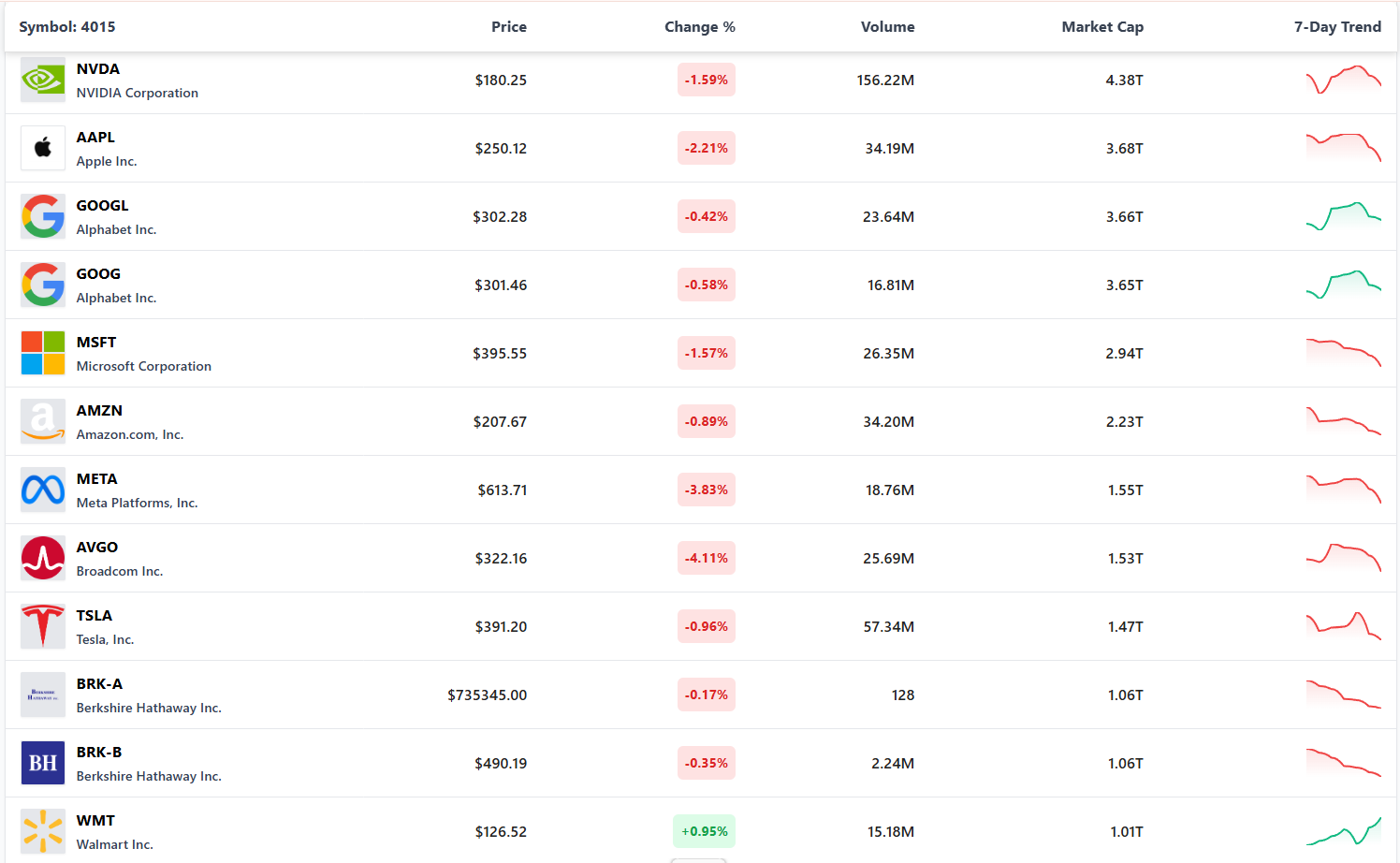
The platform provides real-time and historical ASX stock data, including Westpac banking stock price charts, technical and fundamental analysis, and a dividend yield calculator that factors in franking credits for accurate income return assessment. You can also use the stock screener to filter ASX-listed banks by yield, price-to-earnings ratio, and analyst rating to benchmark Westpac against its peers. For investors who want a full picture of the ASX financial sector, Tickerplace consolidates the data you need to make decisions with confidence.
FAQ
What is the current Westpac share price?
As of June 2026, the Westpac share price is near A$35.24, following a decline from approximately A$38.50 in early May 2026 driven by the ex-dividend adjustment and sector selling.
Why did Westpac's share price drop in May 2026?
The price fell about 6.5% in May 2026 due to two factors: the mechanical ex-dividend adjustment of approximately 97 cents on 8 May 2026, and broad-based selling of ASX financial stocks.
What dividend did Westpac pay in 2026?
Westpac declared an interim dividend of A$0.77 per share, fully franked, with an ex-dividend date of 8 May 2026 and a payment date of 26 June 2026.
What is Westpac's grossed-up dividend yield?
The interim dividend yield is approximately 4.2% fully franked, rising to near 6.0% when franking credits at the 30% company tax rate are included, making it particularly attractive for Australian tax residents.
What do analysts say about Westpac shares?
Morgan Stanley and Macquarie maintain below-market or underperform ratings on Westpac, with a consensus price target near A$34.99, citing valuation concerns and mortgage market competition.