

TL;DR:
- "ASX live" labels can be misleading, as delayed data up to 20 minutes may not be suitable for intraday trading. Genuine real-time data is exchange-sourced with sub-second latency, while other feeds may be aggregated or snapshot reports. Choosing the correct data tier depends on your trading strategy's time sensitivity to avoid costly disadvantages.
Not all "ASX live" labels mean the same thing, and that gap can cost you real money. ASX price data options include both true real-time feeds and delayed tiers, with cash equity data delayed up to 20 minutes and derivatives delayed up to 10 minutes on standard public feeds. For active traders and analysts, acting on data that is 20 minutes old is not a minor inconvenience; it is a structural disadvantage. This guide cuts through the marketing language and gives you a clear framework for identifying, accessing, and applying ASX price data at the right level for your workflow.
Key Takeaways
| Point | Details |
|---|---|
| Not all 'live' data is real-time | Many platforms labeled 'ASX live' actually offer delayed data that can affect trading outcomes. |
| Direct feeds minimize latency | The fastest, most accurate ASX price information comes from exchange-licensed real-time or MarketSource connections. |
| Match data speed to your workflow | Choose your data tier based on how time-sensitive your trading or analysis strategy is. |
| Summaries are not substitutes | Periodic or daily summaries can help with trends but do not replace continuous, real-time market feeds for active traders. |
What does 'ASX live' actually mean?
Now that we've highlighted why "ASX live" is a confusing term, let's clarify its precise meanings and what's actually available to you.
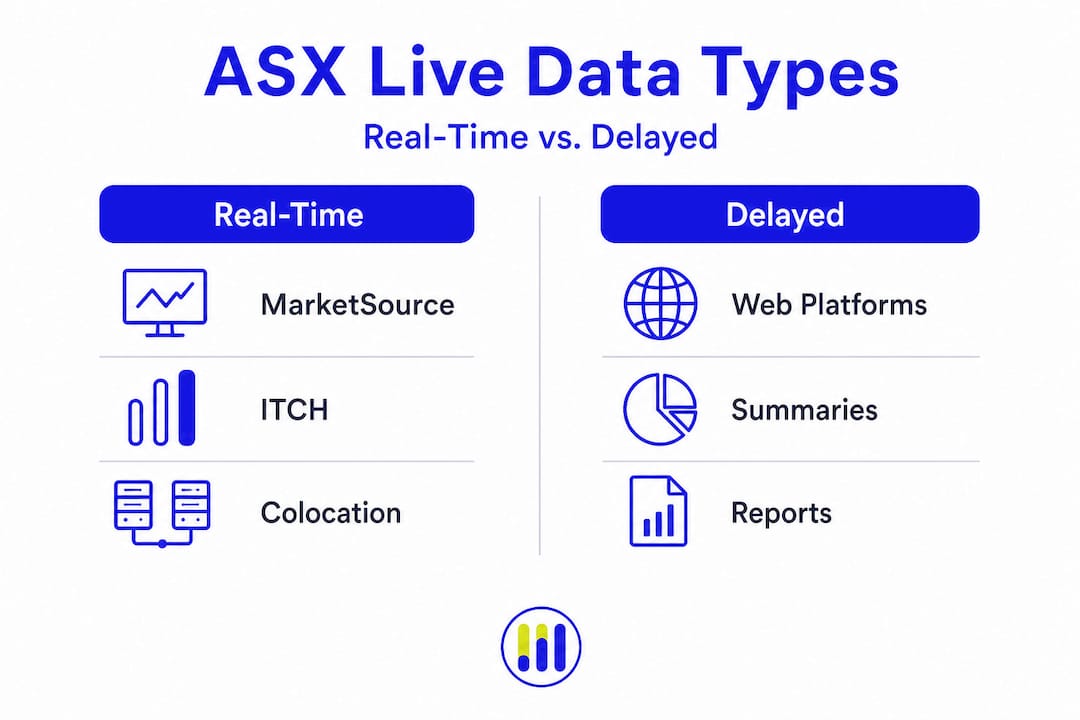
The phrase "ASX live" is used loosely across financial platforms, broker portals, and data aggregators. In practice, it can refer to three very different things:
- Direct, exchange-sourced real-time data with sub-second latency, delivered via licensed feeds
- Aggregated website feeds that are delayed up to 20 minutes for equities or 10 minutes for derivatives
- Periodic summaries and reports that are snapshots, not streaming data at all
This matters because the word "live" implies immediacy. But a feed that is 20 minutes old during a volatile trading session is not live in any meaningful sense for an intraday trader. ASX price data options include real-time data and delayed data, and the distinction is clearly documented at the exchange level, even if it is not always surfaced clearly by the platforms you use.
Key distinction: Real-time data reflects prices as they occur at the exchange matching engine. Delayed data reflects prices as they were, at a point in the past. For time-sensitive decisions, only real-time qualifies.
Relying on a "live" label without verifying the source and latency tier is one of the most common and costly mistakes active traders make. Before you execute a trade based on what your platform shows, confirm whether the feed is truly exchange-sourced or a delayed aggregation.
You can check current ASX stock price lookup data and cross-reference it against your platform to get a practical sense of any latency gap. For a broader view of the market, the list of ASX stocks gives you a starting point for comparing how different instruments are quoted across data tiers.
Ways to access real-time and delayed ASX price data
Understanding the labels isn't enough; let's break down exactly how you can get the right data feed for your needs.
ASX states MarketSource is fed directly from the ASX and the ASX 24 matching engines for real-time information, making it the fastest and most authoritative connectivity option available. Beyond MarketSource, there are several access paths, each with different latency profiles, licensing requirements, and cost structures.
| Access method | Latency | Best suited for | Licensing required |
|---|---|---|---|
| ASX MarketSource (direct) | Sub-second, real-time | Institutional traders, algo systems | Yes, ASX licensed |
| Licensed third-party vendors | Near real-time to seconds | Active retail traders, advisors | Via vendor agreement |
| Broker-integrated feeds | Seconds to minutes | Self-directed retail investors | Typically bundled |
| Public/aggregated websites | Up to 20 min (equities) | Research, trend analysis | None |
The right tier depends on your workflow. If your strategy involves executing trades within minutes of a price movement, a broker-integrated feed with a few seconds of lag may still be acceptable. But if you are running automated systems or managing institutional-scale positions, MarketSource or a licensed vendor feed is the only responsible choice.
Pro Tip: Before committing to a data provider, request a written specification of their feed latency and source. "Real-time" in a vendor's marketing material does not always mean exchange-sourced. Ask specifically whether the feed originates from ASX MarketSource or a downstream aggregator.
For context on how ASX performs as a listed company itself, reviewing ASX financial reports can give you useful insight into the exchange's revenue streams, including its data licensing business.
Ultra-low latency strategies: ASX ITCH and colocation
Once you know your basic options, it's critical for latency-sensitive users to understand the advanced edge technologies available.

For high-frequency traders and institutional desks where microseconds matter, the standard MarketSource feed is still not fast enough. ASX offers two advanced solutions that push latency to its technical floor.
ASX ITCH protocol is a binary, one-way data feed designed for speed. ASX ITCH offers time-stamping to the nanosecond, meaning each order book event is tagged with extreme precision. This level of granularity is essential for strategies that depend on reconstructing the order book or identifying fleeting arbitrage windows.
Physical colocation within the Australian Liquidity Centre places your trading infrastructure in the same data center as the ASX matching engines. This eliminates network propagation delay almost entirely. ASX also offers colocation options in the Australian Liquidity Centre for time-sensitive clients who need the absolute minimum round-trip time.
| Technology | Latency level | Use case | Cost tier |
|---|---|---|---|
| ASX ITCH protocol | Nanosecond-stamped | Order book reconstruction, HFT | High |
| Australian Liquidity Centre colocation | Near-zero propagation | Speed arbitrage, algo execution | Very high |
| MarketSource standard | Sub-second | Institutional real-time trading | Moderate to high |
Key considerations for ultra-low latency access:
- Both ITCH and colocation require significant technical infrastructure investment
- These solutions are subject to formal agreements and ongoing compliance obligations
- Only high-frequency and institutional traders typically generate enough volume to justify the cost
- The performance advantage is measurable but only relevant if your strategy is genuinely latency-sensitive
For most active investors, understanding these options is valuable for context, even if you never use them directly. Knowing that institutional players operate at nanosecond speed helps calibrate your expectations about price discovery and order execution. Reading a market data reading guide can help you interpret what you see in the market with this institutional context in mind.
How to align your access tier with your trading strategy
Having covered all connection types, let's focus on how to choose the right tier for your specific trading or research workflow.
Matching the feed tier to the strategy's time sensitivity is the foundational principle here. Not every trader needs the fastest feed, and paying for real-time data you don't actually need is an unnecessary cost. Use this checklist to map your workflow to the right access path.
- High-frequency or algorithmic trading: Requires direct exchange feeds, ideally via MarketSource or ITCH. Any latency beyond milliseconds can erode the strategy's edge entirely.
- Intraday active trading: Needs real-time or near-real-time data from a licensed vendor or broker with a documented sub-second feed. Delayed data is not suitable.
- Swing trading (days to weeks): A broker-integrated feed with seconds of latency is generally sufficient. Delayed data may introduce minor risks around entry and exit timing.
- Fundamental analysis and longer-term investing: Delayed data is entirely adequate. The 20-minute lag has no material impact on decisions made over weeks or months.
- Research and trend analysis: Public or aggregated delayed feeds serve this purpose well, especially for screening and comparative analysis.
Pro Tip: If you are a swing trader who occasionally executes around earnings announcements or macro events, consider upgrading temporarily to a real-time feed during those periods. The cost of a short-term real-time subscription is almost always lower than the cost of a poorly timed entry based on stale data.
For analysts tracking specific companies, reviewing ANZ financial insights alongside real-time price feeds gives you a more complete picture of valuation versus current market sentiment.
Periodic reports and market summaries: When 'live' isn't real-time
Finally, beyond live data, investors often encounter market summaries and daily reports. Let's clarify their use cases.
ASX provides an 'ASX 24 market summary' page that includes bid/ask spreads, open, high, low, last trade prices, and traded volume. These are periodic snapshots, not continuously updating streams.
Market summaries are genuinely useful tools, but only when applied to the right tasks:
- Trend analysis: Reviewing daily summaries over time reveals directional patterns and volume trends
- End-of-day reconciliation: Confirming closing prices and settlement values
- Screening and filtering: Identifying instruments worth deeper analysis based on volume or price range
- Contextual research: Supporting fundamental analysis without the need for intraday precision
Important limitation: Periodic reports must never be used as the basis for fast-moving intraday trading decisions. The time lag embedded in these summaries means prices may have moved significantly since the last update.
The practical rule is straightforward: use summaries for context and research, use real-time feeds for execution. Treating a market summary as a live price is one of the most common errors among less experienced investors, and it is entirely avoidable once you understand the distinction.
For a broader view of instruments available on the exchange, the ASX company list helps you identify which securities are worth monitoring with a real-time feed versus those where delayed data is sufficient.
Why 'live' isn't always live: The investor's real edge
With all the technical context now clear, here's a candid look at what really matters when using ASX live data to guide your investing.
Most retail investors significantly overestimate the quality of the data they are receiving. A platform with a polished interface and a "live" badge can still be delivering data that is 15 to 20 minutes old. The interface does not tell you the latency. The label does not guarantee the source. Only the technical specification does.
The uncomfortable truth is that the institutional edge in markets is not purely about speed. It is about certainty. Institutional desks know exactly what data they have, where it comes from, and how old it is. They have eliminated ambiguity from their information stack. Most retail traders have not.
Chasing nanosecond advantages is not the answer for most investors. What matters far more is understanding your own workflow, selecting a data tier that genuinely matches your strategy's time sensitivity, and building decision discipline around the quality of information you actually have. Reading market data smarter is less about the speed of the feed and more about knowing how to interpret what you receive.
The investors who get hurt by data latency are rarely the ones who chose the wrong protocol. They are the ones who never asked the question in the first place.
Take your ASX research to the next level with Tickerplace
Ready to upgrade your workflow? Explore how dedicated ASX market tools can help implement what you've learned.
If you are serious about making informed, timely decisions on ASX-listed securities, having the right platform behind your research is essential. Tickerplace is built for exactly this kind of work, offering active investors and analysts a structured environment for tracking, filtering, and analyzing ASX stocks with precision.
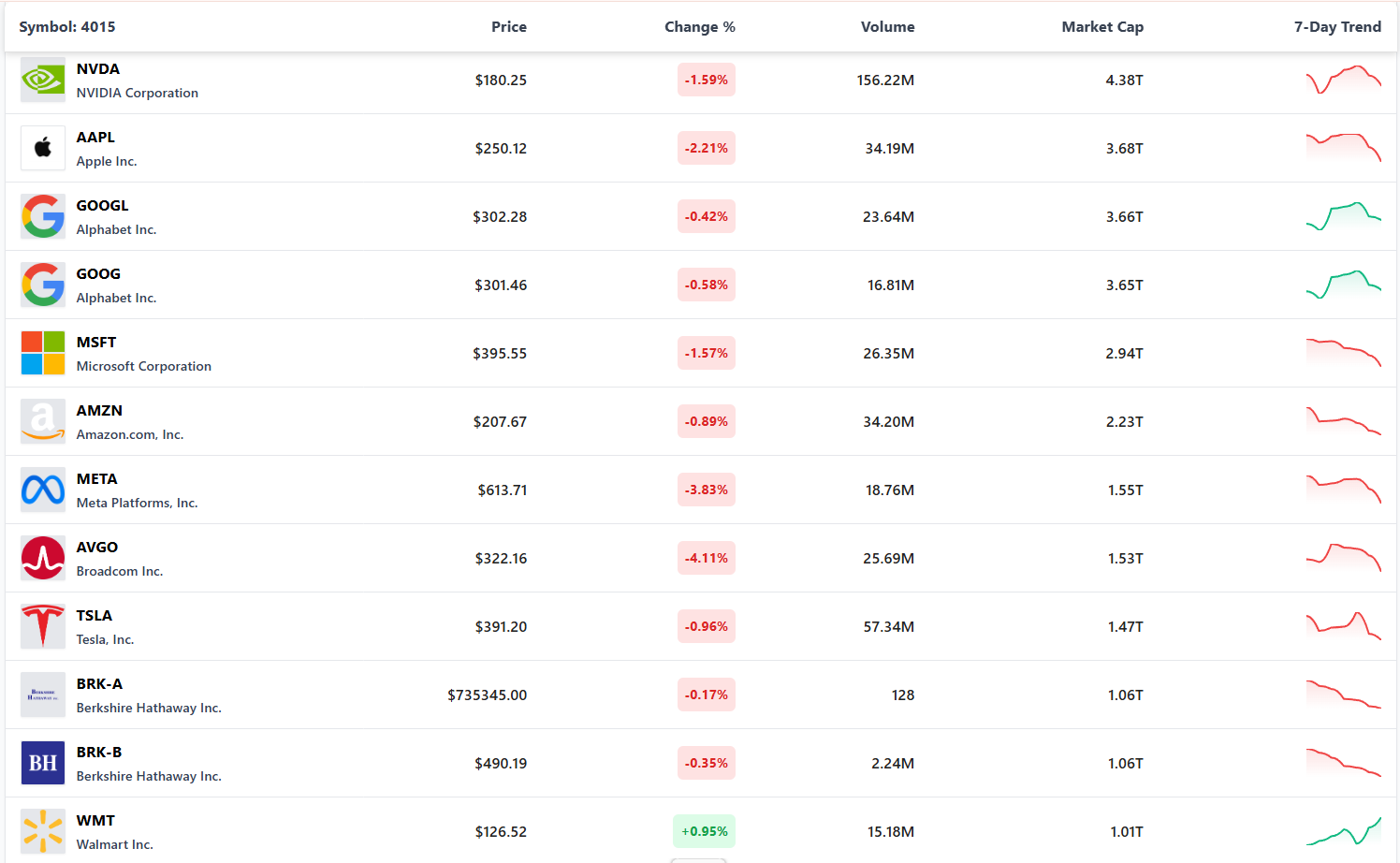
Use the stock screener to filter ASX securities by key financial and technical criteria, then dig deeper with company-level financials and price data. The Tickerplace platform brings together market overviews, top movers, and research tools in one place, so you spend less time hunting for data and more time acting on it. For those building their analytical foundation, the investing education guides connect data literacy with practical strategy, helping you apply everything covered in this article with confidence.
Frequently asked questions
Is ASX 'live' price data truly real-time?
Only directly licensed or exchange-sourced feeds offer true real-time data; many public sites carry a delay of up to 20 minutes, as ASX price data tiers clearly document for both cash equities and derivatives.
How can I access ASX data with the lowest possible latency?
Direct connectivity via MarketSource or the ultra-low latency ASX ITCH protocol with colocation in the Australian Liquidity Centre offers the fastest access and the least delay.
Are ASX market summaries the same as live, streaming feeds?
No; the ASX 24 market summary is a periodic report containing snapshots of bid/ask, volume, and price range data, not a continuously updating stream.
Do all trading strategies require real-time ASX data?
No; only high-frequency and intraday traders genuinely require real-time feeds, while longer-term investors can operate effectively with delayed data tiers at significantly lower cost.