

TL;DR:
- The yen to AUD exchange rate reflects the value of one Japanese Yen in Australian Dollars. It is influenced mainly by central bank policies, commodity prices, and global risk sentiment. Traders use short-term trends and key thresholds to inform their currency strategies.
The yen to AUD exchange rate is defined as the price of one Japanese Yen (JPY) expressed in Australian Dollars (AUD). As of june 2026, 1 JPY equals approximately 0.0088 AUD, meaning 1 AUD buys roughly 113.02 JPY. This rate matters directly to forex traders, institutional investors, and anyone moving capital between Japan and Australia. The JPY/AUD pair sits at the intersection of two distinct economic forces: Japan's export-driven, low-rate economy and Australia's commodity-dependent growth cycle. Understanding how this rate moves gives you a real edge in timing positions and managing currency risk.
What is the current yen to AUD rate and how is it measured?
The JPY to AUD exchange rate measures how many Australian Dollars one Japanese Yen can buy at a given moment. The standard reference point traders use is the mid-market rate, which is the midpoint between the buy (bid) and sell (ask) prices in global currency markets. Banks and brokers add a spread on top of this rate, so the rate you execute at will differ slightly from the mid-market benchmark.

Platforms like XE.com publish the mid-market rate as the cleanest measure of real value. For JPY/AUD conversion, live rate platforms update prices approximately every five minutes, which matters when markets are moving fast. Relying on a rate that is even an hour old can expose you to meaningful slippage during volatile sessions.
Practical conversion benchmarks help you size positions quickly. 1,000 JPY equals approximately 8.8 AUD at the current mid-market rate. The table below scales this across common transaction sizes.
| JPY Amount | Approximate AUD Value (at 0.0088) |
|---|---|
| 1,000 JPY | 8.80 AUD |
| 10,000 JPY | 88.00 AUD |
| 100,000 JPY | 880.00 AUD |
| 1,000,000 JPY | 8,800.00 AUD |
These figures use the mid-market rate. Actual conversion costs will be slightly lower after broker spreads and fees are applied.
- The mid-market rate is the fairest benchmark for comparing quotes across brokers.
- XE.com and FXConvertly both publish live JPY/AUD rates updated in near real time.
- Always confirm whether a quoted rate includes fees before executing a conversion.
How have short-term trends shaped the JPY/AUD pair recently?
Short-term JPY/AUD movements tell a more nuanced story than the headline rate alone. The pair recorded a 0.34% gain over a recent 7-day period, a modest but directionally meaningful move for a currency pair that typically trades in tight ranges. A gain of this size signals mild yen strength or mild AUD softness, and it warrants attention before entering a new position.
The 30-day range provides the critical context. The 30-day high reached 0.0089 and the 30-day low touched 0.0087. That 0.0002 spread may look small in absolute terms, but it represents roughly a 2.3% swing across the range. For traders using leverage, that range defines meaningful risk boundaries.
| Metric | Value |
|---|---|
| Current mid-market rate | ~0.0088 AUD per JPY |
| 7-day change | +0.34% |
| 30-day high | 0.0089 |
| 30-day low | 0.0087 |
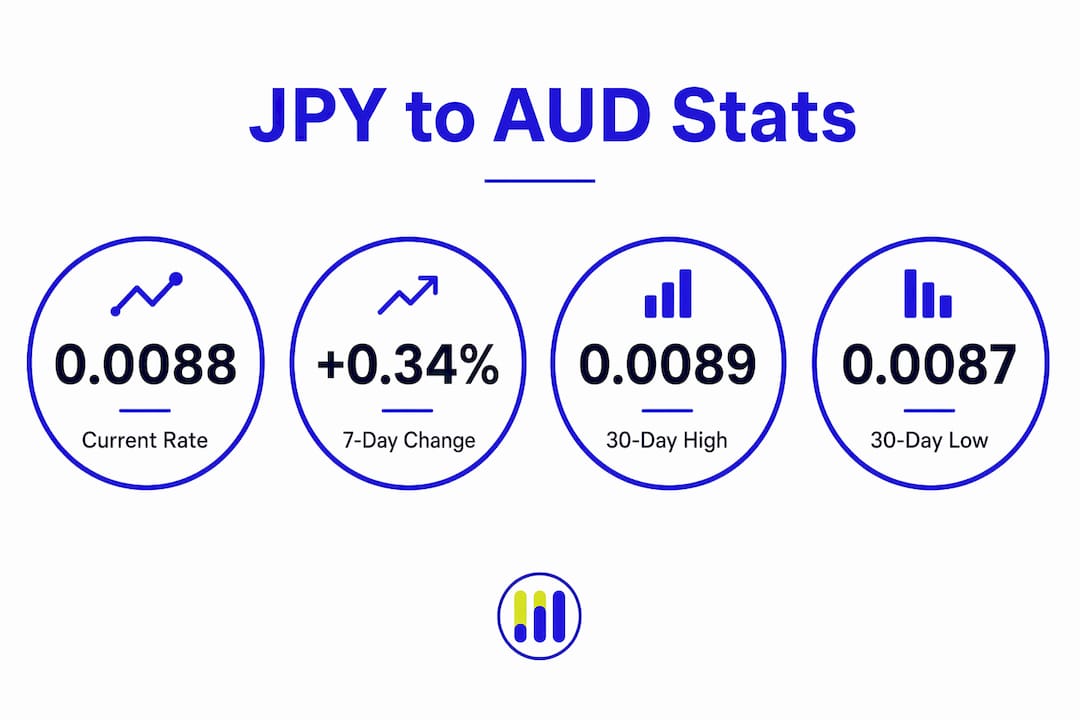
Reading the rate at 0.0088 without knowing the 30-day range is like reading a stock price without knowing its support and resistance levels. The rate sitting near the midpoint of its 30-day range suggests neither strong bullish nor bearish momentum at this time.
Pro Tip: Set price alerts on XE.com or FXConvertly at the 30-day high (0.0089) and low (0.0087). A break above or below these levels often signals a shift in short-term momentum worth acting on.
For a deeper look at the 2026 JPY/AUD trends and how historical context shapes current positioning, Tickerplace has published a dedicated breakdown of the mechanics behind this pair.
What factors drive the yen to Australian dollar exchange rate?
The JPY/AUD rate responds to a specific set of macroeconomic and market forces. Knowing which levers matter most helps you anticipate moves rather than react to them after the fact.
Bank of Japan and Reserve Bank of Australia monetary policies are the most direct drivers. When the Bank of Japan holds rates near zero while the RBA raises rates, the interest rate differential widens and typically pressures the yen lower against the AUD. The reverse is also true: any signal from the Bank of Japan toward policy normalization tends to strengthen JPY across the board.
Trade flows and commodity prices between Japan and Australia form the underlying economic foundation of this pair. Australia is a major exporter of iron ore, coal, and liquefied natural gas. Japan is one of Australia's largest import partners for these commodities. When commodity prices rise, AUD tends to strengthen. When they fall, AUD weakens relative to JPY.
Global risk sentiment creates a distinct dynamic for this pair. JPY is a recognized safe haven currency. During periods of market stress, investors buy yen, which pushes JPY higher and the JPY/AUD rate lower. AUD, by contrast, is a risk-on currency that tends to rise when global growth expectations are strong and commodity demand is high.
Key factors to monitor for the JPY/AUD pair:
- Bank of Japan policy signals: Rate hike expectations strengthen JPY significantly.
- RBA interest rate decisions: Higher Australian rates support AUD.
- Iron ore and coal prices: Commodity price moves directly affect AUD demand.
- Global risk appetite: Risk-off environments favor JPY; risk-on environments favor AUD.
- Japanese and Australian GDP and inflation data: Surprises in either direction move the pair.
- US dollar strength: A strong USD often pressures both currencies, but affects AUD more directly.
How can traders use JPY to AUD insights in their strategies?
Effective forex trading requires combining live rate data with a clear framework for entry, exit, and risk management. The JPY/AUD pair rewards traders who treat it as a macro trade rather than a pure technical play.
-
Define your rate thresholds. Use the 30-day high and low as your initial support and resistance levels. A rate above 0.0089 suggests AUD weakness or JPY strength is accelerating. A rate below 0.0087 signals the opposite. These levels tell you when the market is breaking out of its recent range.
-
Align with the macro backdrop. Check RBA and Bank of Japan meeting calendars before sizing up a position. Central bank decisions can move the pair by 1–2% in a single session. Trading against a central bank decision without a clear catalyst is a high-risk approach.
-
Monitor commodity price signals. Iron ore futures and coal spot prices serve as leading indicators for AUD direction. A sustained drop in iron ore prices often precedes AUD softness against JPY by several trading sessions.
-
Use live data tools consistently. Check XE.com or FXConvertly for rate updates before any conversion or position entry. Rates update approximately every five minutes, so a rate checked at market open may not reflect conditions an hour later.
-
Hedge currency exposure when holding cross-border assets. If you hold Australian equities and have JPY-denominated liabilities, a rising JPY/AUD rate increases your effective cost. Forward contracts or currency options can lock in a rate and remove that uncertainty from your portfolio.
For a practical look at converting yen to AUD at the best available rate, Tickerplace has published a dedicated guide covering timing strategies and broker selection.
Key takeaways
The JPY/AUD rate is driven by Bank of Japan and RBA policy divergence, Australian commodity prices, and global risk sentiment, making it one of the more macro-sensitive pairs in the G10 universe.
| Point | Details |
|---|---|
| Current rate benchmark | 1 JPY equals approximately 0.0088 AUD as of june 2026. |
| Short-term trend | The pair gained 0.34% over 7 days, with a 30-day range of 0.0087 to 0.0089. |
| Key rate drivers | Bank of Japan policy, RBA decisions, iron ore prices, and global risk sentiment all move this pair. |
| Live data tools | XE.com and FXConvertly update JPY/AUD rates approximately every five minutes. |
| Trading strategy | Use 30-day high/low thresholds as entry signals and align positions with central bank calendars. |
Tickerplace's perspective on the 2026 JPY/AUD market
The most common mistake traders make with JPY/AUD is treating it as a simple carry trade. It is not. The yen carries safe haven status that can override interest rate differentials in a matter of hours when global sentiment shifts. In 2026, with Bank of Japan policy normalization still unfolding, the risk of sudden JPY strength is higher than it has been in years. Traders who size positions based solely on the current rate differential are underestimating that tail risk.
The 30-day range of 0.0087 to 0.0089 looks narrow, but it is the kind of range that can break sharply on a single central bank statement. Watching commodity markets alongside the rate chart gives you a second signal that most retail traders ignore. When iron ore prices and JPY/AUD diverge, one of them is usually wrong. That divergence is often where the trade is.
Data-driven discipline matters more than conviction in this pair. Check live rates on XE.com before every conversion. Revisit your thresholds after every RBA and Bank of Japan meeting. The traders who stay current with the data consistently outperform those who rely on a rate they checked last week.
— Tickerplace
Track JPY/AUD and global markets with Tickerplace
Tickerplace gives traders and investors a single platform for real-time market data, stock screening, and financial analysis across global markets.
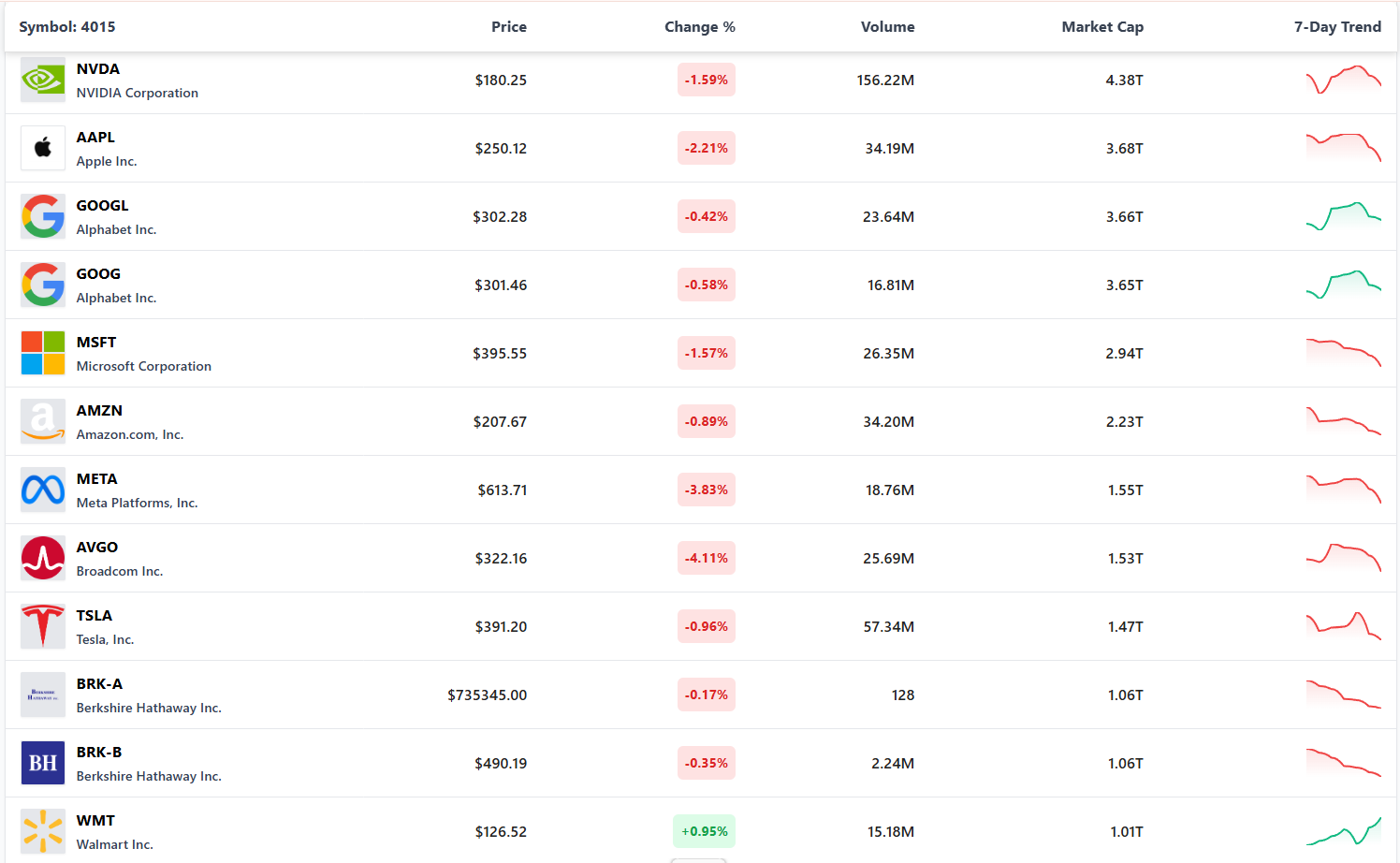
Whether you are monitoring the Australian market for equity opportunities tied to commodity trends or screening for stocks affected by currency movements, Tickerplace puts the data you need in one place. The platform's stock screener lets you filter by market, sector, and financial metrics to identify positions that align with your macro view on JPY/AUD dynamics. For investors building a cross-border portfolio, Tickerplace's research tools and investing education resources provide the context to make currency-aware decisions with confidence.
FAQ
What is the current JPY to AUD exchange rate?
As of june 2026, 1 JPY equals approximately 0.0088 AUD at the mid-market rate. This means 1 AUD buys roughly 113.02 JPY.
How do I convert yen to Australian dollars?
Divide the JPY amount by 113.02, or multiply by 0.0088, to get the AUD equivalent. For example, 10,000 JPY equals approximately 88.00 AUD at the current mid-market rate.
Where can I find live JPY to AUD rates?
XE.com and FXConvertly both publish live JPY/AUD rates updated approximately every five minutes. These platforms show the mid-market rate, which is the standard benchmark for real-time currency conversion.
What causes the JPY/AUD rate to move?
Bank of Japan and Reserve Bank of Australia interest rate decisions, Australian commodity prices (especially iron ore), and global risk sentiment are the primary drivers of JPY/AUD movements.
Is JPY a safe haven currency compared to AUD?
JPY is a recognized safe haven currency that strengthens during periods of global market stress. AUD is a commodity-linked, risk-on currency that tends to weaken when global growth expectations fall.