

TL;DR:
- The yen to AUD exchange rate indicates how many Australian dollars one Japanese yen can buy and is essential for currency conversions and trade. It is based on the mid-market rate, which fluctuates due to economic factors and involves provider margins that affect the actual amount received or paid. Monitoring live rates and understanding the spread helps traders and travelers manage currency exchange costs effectively.
The yen to AUD exchange rate is the amount of Australian dollars one Japanese yen can buy, and understanding this rate is the foundation of every informed currency conversion, trade, or travel budget involving JPY and AUD. The formally recognized term for this pair is the JPY/AUD exchange rate, though "yen to AUD" is the phrase most traders and travelers search for. Tools like Xe, Wise, and Stripe publish real-time mid-market data for this pair, making it easier than ever to track the current rate. Still, the rate you see on a screen and the rate you actually receive are rarely the same number.
What is the yen to AUD exchange rate?
The JPY to AUD exchange rate is the price of one Japanese yen expressed in Australian dollars. At 16:23 UTC on June 9, 2026, Xe's mid-market rate placed 1 JPY at 0.00884010 AUD, meaning 1,000 yen converts to approximately 8.84 AUD. That figure is the mid-market rate, also called the interbank rate. It is the midpoint between the buy price (bid) and the sell price (ask) in the wholesale foreign exchange market.
The mid-market rate is the benchmark used by financial markets and data providers. It is not the rate most individuals or businesses receive when they actually convert currency. Providers such as banks and online transfer services add a margin on top of this benchmark, which is how they generate revenue on currency transactions. Understanding this distinction protects you from assuming a quoted rate reflects what will land in your account.
How is the jpy/aud rate determined?
The rate is set by the interaction of bid and ask prices in the global forex market. According to Stripe, bid is what a provider pays for a currency, while the ask is what you pay to buy it. The gap between these two prices is the bid-ask spread, and it represents a direct transaction cost embedded in every exchange.
Here is how the mechanics work in practice:
- Mid-market rate: The midpoint between bid and ask. This is the benchmark published by Xe, Wise, Google Finance, and Bloomberg.
- Bid price: The rate at which a provider buys yen from you. Always lower than the mid-market rate.
- Ask price: The rate at which a provider sells yen to you. Always higher than the mid-market rate.
- Provider margin: An additional markup layered on top of the spread, which varies by institution. Banks typically apply wider margins than specialist services like Wise.
The mid-market rate is the public benchmark, while customer rates include hidden margins that reduce the effective value of your conversion. A bank might offer you 0.00840 AUD per yen when the mid-market sits at 0.00884. That difference of 0.00044 AUD per yen costs you roughly 4.40 AUD on every 10,000 JPY exchanged.
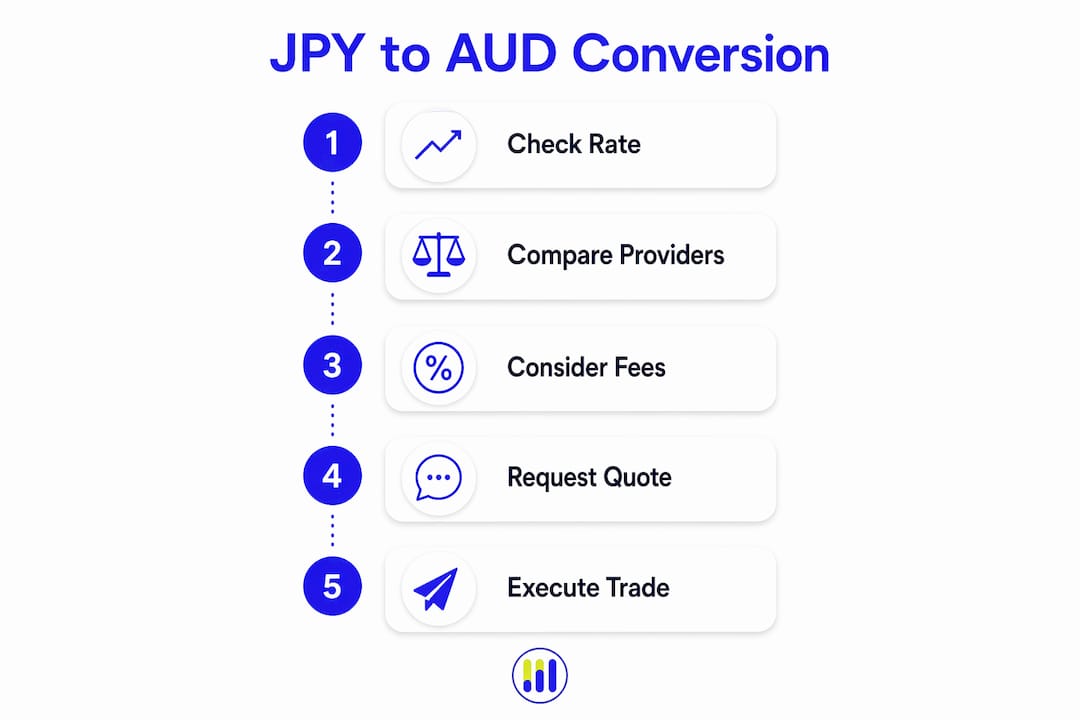
Pro Tip: Before committing to any provider, look up the current mid-market rate on Xe or Wise, then compare it directly to the rate your provider quotes. The gap between those two numbers is your real cost.
What drives yen to AUD rate fluctuations?
Exchange rates move constantly because they reflect the relative economic strength of two countries. The JPY/AUD pair is particularly sensitive to policy decisions from the Bank of Japan and the Reserve Bank of Australia, as well as global commodity prices, since Australia is a major exporter of iron ore and coal.
Key drivers of rate movement include:
- Central bank interest rates: Higher rates in Australia relative to Japan attract capital flows into AUD, pushing the AUD higher against JPY.
- Economic data releases: GDP growth, inflation figures, and employment reports from either country shift market expectations and move the rate.
- Global risk sentiment: JPY is widely regarded as a safe-haven currency. During periods of global uncertainty, investors buy yen, which strengthens JPY and lowers the JPY/AUD rate.
- Trade relations: Australia and Japan maintain a significant bilateral trade relationship. Shifts in commodity demand from Japan directly affect AUD strength.
Wise data from June 3, 2026 illustrates how quickly rates can shift: the JPY to AUD rate fluctuated between a weekly low of 0.00901898 and a high of 0.00917628, a range of roughly 1.7% in seven days. For a traveler converting 500,000 JPY, that swing represents a difference of approximately 79 AUD received. For a trader with larger positions, the impact scales proportionally.
Floating exchange rates adjust quickly based on market conditions, which means the rate you check in the morning may differ meaningfully from the rate available by afternoon.

How to convert yen to australian dollars effectively
Converting yen to AUD accurately requires more than entering numbers into a calculator. You need to account for the spread, provider fees, and the type of service you use. The table below compares the most common conversion channels:
| Channel | Typical Rate vs. Mid-Market | Fees | Best For |
|---|---|---|---|
| High-street bank | 3–5% below mid-market | Fixed transfer fee | Convenience, not cost |
| Online transfer service (Wise) | 0.5–1.5% below mid-market | Low, transparent fee | Regular transfers |
| Airport currency exchange | 5–10% below mid-market | Often none stated | Avoid if possible |
| Forex broker | Near mid-market | Commission per trade | Active traders |
| Xe currency exchange | Varies by partner | Disclosed upfront | Comparison baseline |
For travelers, Wise consistently offers rates closer to the mid-market than traditional banks. For traders, a forex broker with tight spreads on the JPY/AUD pair is the more appropriate tool. Using a yen converter to AUD that accounts for FX spreads and provider fees gives you a realistic picture of what you will actually receive.
Multi-leg conversions add another layer of cost. If your provider routes JPY through USD before converting to AUD, you pay the spread twice. Cross-rate execution costs arise from non-simultaneous quotes and bid-ask mechanics, increasing total expenses beyond what a simple mid-rate multiplication would suggest. Always confirm whether your provider converts directly or through an intermediary currency.
Pro Tip: For large conversions above 100,000 JPY, request a firm quote from at least two providers before executing. Even a 0.5% rate difference on 500,000 JPY saves approximately 22 AUD at current rates.
What are common misconceptions about jpy/aud conversions?
The most damaging misconception in currency conversion is that the mid-market rate equals the rate you will receive. Mid-market rates are benchmarks, not the actual prices traders or travelers get. Spreads and fees determine the final exchanged amount, and those costs are often buried in the quoted rate rather than listed separately.
Several other misconceptions cost people money:
- "The online calculator gives me the real rate." Most calculators display mid-market rates. Your actual rate depends on which provider you use and their current margin.
- "No fee means no cost." Providers advertising zero fees typically recover their margin through a wider spread. The cost is real; it is just less visible.
- "Rates are stable enough to plan around." As Wise data shows, the JPY/AUD rate can move 1.7% in a single week. Locking in a rate through a forward contract is worth considering for large, time-sensitive transfers.
- "Backtesting with mid-market data is accurate." For traders, using mid-market series alone is misleading. Adjusting for the bid-ask spread avoids backtest results that appear profitable but would fail in live execution.
Pro Tip: Treat mid-market rates as a best-case scenario. Expect to receive less once provider margins are factored in, and build that gap into your budget or trading model from the start.
Key takeaways
The JPY/AUD exchange rate is always a mid-market benchmark first, and the rate you actually receive depends entirely on the provider margin and spread applied to your transaction.
| Point | Details |
|---|---|
| Mid-market is not your rate | Providers add spreads and fees that reduce the effective amount you receive or increase your cost. |
| Rate volatility is real | The JPY/AUD rate moved 1.7% in one week in June 2026, which materially affects large conversions. |
| Channel choice matters | Online transfer services like Wise offer rates far closer to mid-market than banks or airport exchanges. |
| Multi-leg conversions cost more | Routing through an intermediary currency adds a second spread, increasing total transaction cost. |
| Backtest with bid-ask data | Traders who model strategies using mid-market rates alone will see unexplained losses in live trading. |
Tickerplace's take on navigating jpy/aud conversions
The single biggest mistake we see from both traders and travelers is treating a published rate as a guaranteed outcome. The mid-market rate is a reference point, not a promise. Every provider sits somewhere between that benchmark and a rate that is meaningfully worse, and the difference is rarely disclosed in plain language.
From our experience monitoring currency pairs and market data, the traders who manage JPY/AUD exposure most effectively do two things consistently. They check the live mid-market rate on a neutral source like Xe before every transaction, and they calculate the effective cost of their provider's rate as a percentage of the mid-market. That percentage is the true cost of the conversion, and it should factor into every decision.
Timing also matters more than most people realize. The JPY/AUD rate responds quickly to Bank of Japan policy signals and Australian commodity export data. Watching ASX live data alongside currency movements gives you a more complete picture of AUD strength before you convert. For travelers, converting during periods of AUD weakness relative to JPY means more yen per dollar spent. For investors, understanding the direction of the rate trend is as important as knowing the current number.
— Tickerplace
Track jpy/aud rates with Tickerplace
Tickerplace provides the real-time market data and financial tools that currency traders and investors need to make informed decisions on pairs like JPY/AUD.
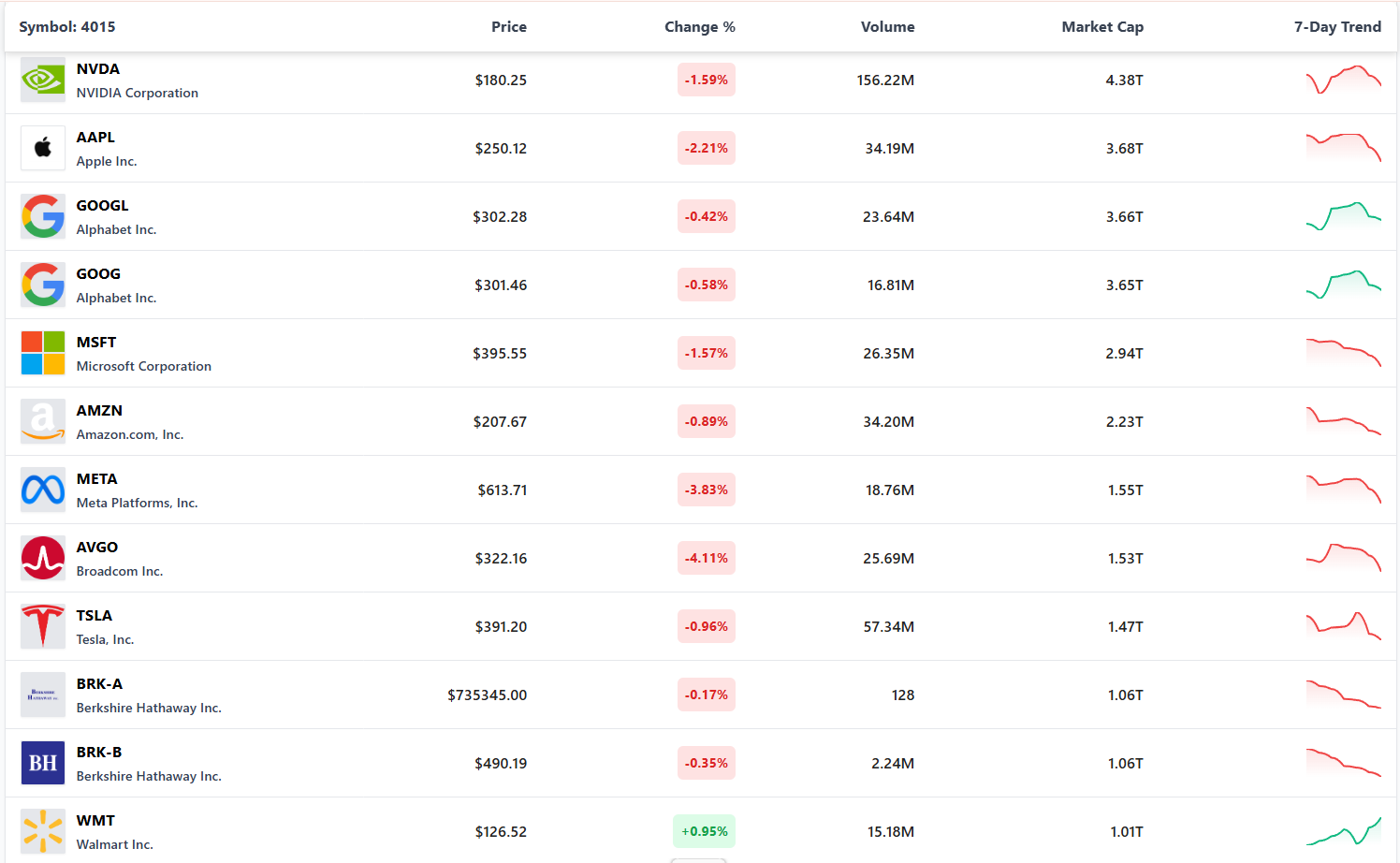
Whether you are planning a large yen conversion, managing forex exposure in your portfolio, or researching AUD-denominated equities, Tickerplace gives you the data infrastructure to act with confidence. The platform's financial calculators and live market feeds let you model conversion scenarios, compare rates, and track the economic indicators that drive JPY/AUD movements. Explore Tickerplace to access the full suite of market research and analysis tools built for serious investors and active traders.
FAQ
What is the current yen to AUD rate?
As of June 9, 2026, Xe's mid-market rate is 1 JPY = 0.00884010 AUD. Rates update continuously, so check a live source like Xe or Wise for the most current figure before any transaction.
How much is 1,000 yen in AUD?
At the mid-market rate of 0.00884010, 1,000 JPY equals approximately 8.84 AUD. The amount you actually receive will be slightly less once your provider's spread and fees are applied.
Why does my bank's rate differ from the rate i see online?
Online calculators typically display the mid-market rate, which is the wholesale benchmark. Banks and exchange services add a margin on top of this rate, which is how they cover costs and generate revenue on the transaction.
Is the AUD to yen conversion rate just the inverse?
Yes. If 1 JPY = 0.00884 AUD, then 1 AUD = approximately 113.12 JPY. The inverse relationship holds mathematically, though bid-ask spreads mean the buy and sell rates will differ slightly in either direction.
What is the best way to convert yen to australian dollars?
Online transfer services like Wise consistently offer rates closer to the mid-market than banks or airport exchanges. For large transfers, comparing at least two providers and confirming whether the conversion is direct or routed through an intermediary currency will minimize your total cost.