

TL;DR:
- The yen to Australian dollar exchange rate is primarily driven by interest rate divergence between the Reserve Bank of Australia and the Bank of Japan. Market sentiment, commodity prices, and intervention also significantly influence the pair, which is highly sensitive to macroeconomic signals. To get the best rate, investors should compare specialized FX providers, use limit orders, and monitor key economic events rather than relying solely on mid-market rates.
The yen to Australian dollar exchange rate is defined as the amount of Australian dollars received per one Japanese yen, currently approximately 0.0088 AUD per 1 JPY as of june 2026. Expressed inversely, the AUD/JPY pair trades near 112.71, meaning one Australian dollar buys roughly 112 Japanese yen. For travelers, expatriates, and investors managing cross-Pacific exposure, this rate determines real purchasing power and portfolio returns. Understanding what drives it, how to read its signals, and where to exchange at the best cost separates informed decisions from expensive ones.
What drives the yen to australian dollar rate?
The Reserve Bank of Australia and the Bank of Japan sit at opposite ends of monetary policy, and that divergence is the single biggest force behind the AUD/JPY rate today. The RBA cash rate stands at 4.35%, following three hikes this year. Higher rates attract capital inflows into Australian dollar assets, pushing AUD higher against lower-yielding currencies like the yen.

Japan, by contrast, maintains ultra-low interest rates and has periodically intervened in currency markets to prevent excessive yen weakness. When the Bank of Japan signals any shift toward tightening, the yen strengthens quickly, compressing the AUD/JPY rate. Investors tracking the 52-week range of 92.04–114.76 can see just how wide that policy-driven swing has been.
Beyond central banks, several macro factors shape the pair:
- Commodity prices: Australia exports iron ore, coal, and liquefied natural gas. Rising commodity prices lift AUD because they signal stronger export revenues and GDP growth.
- Global risk sentiment: The AUD/JPY pair correlates with global equity markets. When investors are risk-on, they sell safe-haven yen and buy higher-yielding AUD. When fear spikes, the reverse happens fast.
- Inflation data: Australian CPI above the RBA's 2–3% target band keeps rate hike expectations alive, supporting AUD strength.
- Japanese government intervention: Tokyo has intervened multiple times in recent years to defend yen levels, creating sharp, short-lived reversals that catch traders off guard.
Pro Tip: Watch the U.S. Federal Reserve's rate decisions alongside RBA and Bank of Japan announcements. Fed policy shifts global capital flows, which ripple directly into the AUD/JPY pair within hours.
How do technical indicators signal aud/jpy moves?
Technical analysis gives investors a structured way to read price momentum and identify potential turning points in the aussie dollar yen pair. The current setup shows a market in consolidation rather than a clear directional trend.
The RSI reading of 43.94 sits below the neutral 50 level, signaling fading bullish momentum. That does not confirm a reversal, but it tells you buyers are losing conviction. Traders use this reading to reduce long exposure or tighten stop-loss levels rather than exit entirely.
Key technical levels to monitor include:
- 100-day simple moving average (SMA): Price holding above this level keeps the broader uptrend intact. A close below it would shift the bias to neutral or bearish.
- Bollinger Bands: When price approaches the upper band near 114.76, it signals resistance and potential mean reversion. The lower band near 92.04 marks the extreme support zone from the past year.
- Support and resistance clusters: Round numbers like 110.00 and 112.00 act as psychological anchors where institutional orders tend to concentrate.
The RSI and moving average indicators are most reliable when read together rather than in isolation. An RSI below 50 with price still above the 100-day SMA is a mixed signal, not a sell signal. Combining these readings with fundamental context, such as RBA meeting outcomes or Japanese trade data, produces a far more complete picture.
Pro Tip: Set price alerts at the 100-day SMA level on platforms like TradingView or FXStreet. A confirmed daily close below that level is a more reliable signal than an intraday breach.
Where can you get the best JPY to AUD exchange rate?
The mid-market rate is the benchmark rate you see quoted on Google or XE. It is not the rate retail customers actually receive. Retail customers face spreads and markups that reduce the net amount exchanged, sometimes by 2–5% depending on the provider.
| Provider Type | Typical Spread | Hidden Fees | Best For |
|---|---|---|---|
| Traditional banks | 2–5% above mid-market | Account fees, wire charges | Convenience, not cost |
| Specialized FX platforms (XE, OFX) | 0.5–1.5% above mid-market | Low to none | Regular transfers |
| Revolut (standard plan) | Mid-market on weekdays | Weekend markup applies | Small, frequent exchanges |
| Airport/hotel kiosks | 5–10% above mid-market | Often additional flat fee | Avoid entirely |
Specialized FX providers consistently offer better rates than traditional banks because their business model depends on volume, not margin per transaction. XE, OFX, and Revolut each serve different use cases. OFX suits larger transfers above $1,000 AUD equivalent. Revolut works well for travelers making smaller, frequent conversions. XE provides transparent mid-market comparisons and direct transfer services.
The key mistake most people make is comparing only the headline rate without factoring in the total cost including fees and transfer time. A rate 0.3% better than a competitor means nothing if a $15 wire fee wipes out the saving on a small transfer.
Practical steps to optimize your currency conversion
Converting japanese yen to australian dollars at the best possible rate requires a process, not a single decision. Follow these steps to minimize cost and maximize the amount received:
- Check the live mid-market rate first. Use XE or Google to establish the benchmark before contacting any provider. This gives you a reference point to measure every quote against.
- Compare at least three providers. Enter your exact transfer amount on XE, OFX, and Revolut to see the all-in cost including fees. The stepwise comparison on reliable platforms consistently surfaces meaningful savings.
- Time your transfer around economic events. RBA rate decisions, Japanese trade balance releases, and U.S. non-farm payrolls all move AUD/JPY. Transferring immediately after a favorable rate move locks in the gain.
- Use a limit order for non-urgent transfers. Most specialized FX platforms allow you to set a target rate. The transfer executes automatically when the market hits your level, removing the need to monitor rates constantly.
- Consider a forward contract for large or recurring transfers. If you need to convert a fixed amount of yen to Australian dollars over the next 3–12 months, a forward contract locks in today's rate and eliminates future exchange rate risk entirely.
Understanding the difference between mid-market and consumer rates is the most important concept for anyone converting currency regularly. Even a 1% improvement on a 1,000,000 JPY transfer saves approximately $88 AUD at current rates.
Key takeaways
The yen to Australian dollar rate is shaped by RBA and Bank of Japan policy divergence, global risk sentiment, and commodity prices, making it one of the most macro-sensitive currency pairs in the Asia-Pacific region.
| Point | Details |
|---|---|
| Current rate | 1 JPY equals approximately 0.0088 AUD; 1 AUD buys roughly 112.71 JPY as of june 2026. |
| Primary rate driver | RBA's 4.35% cash rate versus Japan's ultra-low rates creates the core yield differential. |
| Technical signal | RSI at 43.94 shows fading momentum; price above the 100-day SMA keeps the uptrend intact. |
| Best exchange method | Specialized FX platforms like XE and OFX offer significantly lower spreads than traditional banks. |
| Conversion strategy | Use limit orders and forward contracts to lock in favorable rates and remove timing risk. |
Tickerplace's take on the aud/jpy pair
Most investors treat currency exchange as an afterthought, something to handle at the last minute before a trip or a transfer. That approach costs real money. The AUD/JPY pair is not a simple, stable rate. It moves on central bank signals, commodity cycles, and global risk appetite, sometimes by 3–5% within a single week.
What I have observed consistently is that investors who combine fundamental and technical analysis make better timing decisions than those who rely on either alone. Watching the RSI drop below 50 while the RBA signals a pause is a far more actionable setup than either signal in isolation.
The fee issue is equally underappreciated. A bank quoting you a "competitive rate" on a 500,000 JPY transfer may still cost you $40–60 AUD more than OFX or XE on the same transaction. Over a year of regular transfers, that adds up to a meaningful sum.
My honest advice: treat your currency conversion strategy with the same discipline you apply to your investment portfolio. Set a target rate, use the right platform for your transfer size, and monitor the macro calendar. The AUD/JPY pair rewards preparation and punishes complacency. For investors also tracking how RBA policy affects ASX-listed banks, the currency rate and equity price often move in the same direction during risk-on periods.
— Tickerplace
Track aud/jpy and global markets with Tickerplace
Staying ahead of currency rate movements requires more than a single data point. Tickerplace gives investors and analysts access to real-time market data, financial statements, and research tools built for serious decision-making.
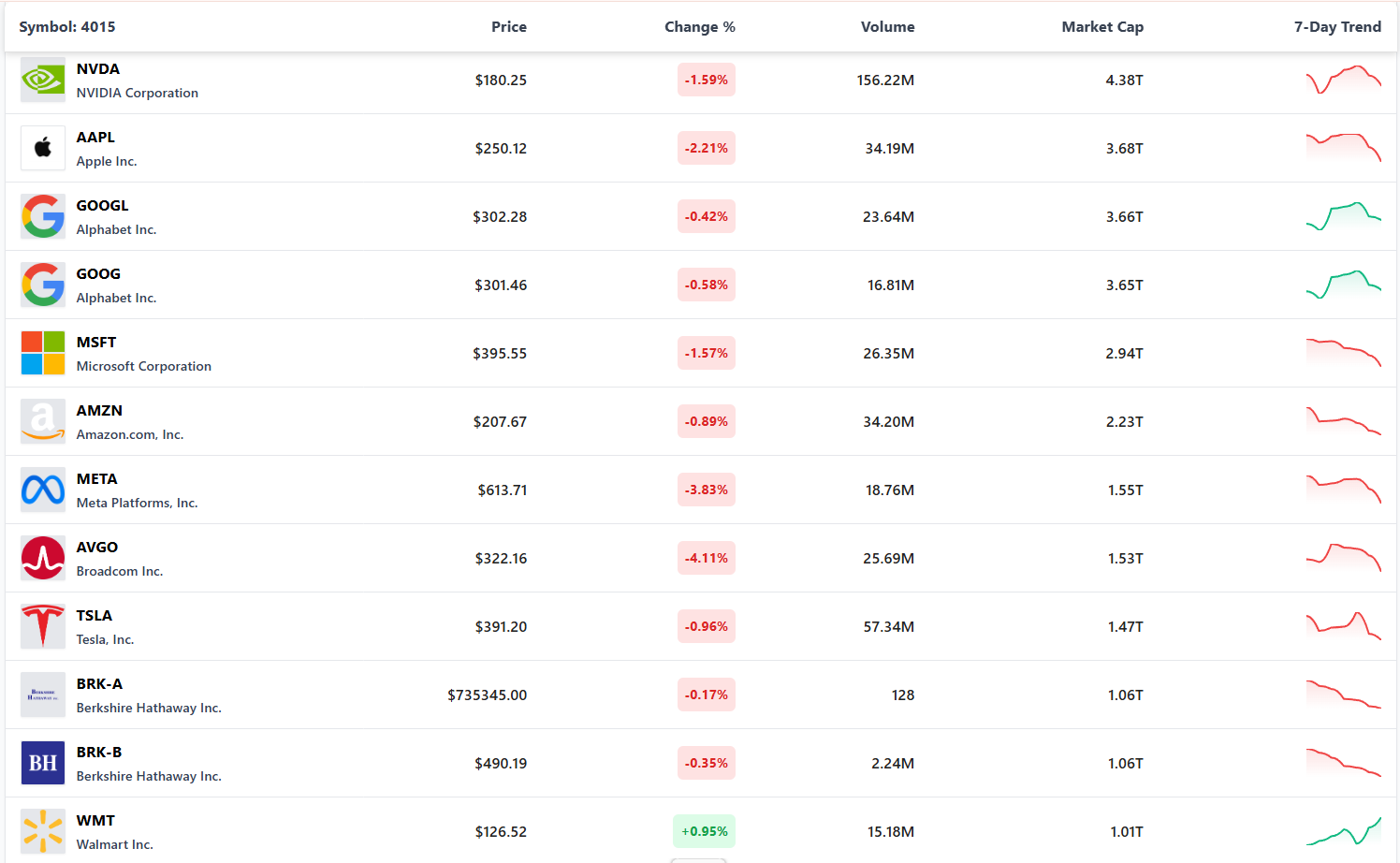
Whether you are monitoring how RBA rate decisions affect your currency exposure or screening ASX equities that benefit from a strong Australian dollar, Tickerplace centralizes the data you need. The platform covers global indices, top movers, and company-level fundamentals, so you can connect macro currency trends to specific investment opportunities without switching between multiple tools. Visit Tickerplace to access real-time rates, stock screening, and financial analysis tools designed for investors who take their research seriously.
FAQ
What is the current yen to australian dollar rate?
As of june 2026, 1 JPY equals approximately 0.0088 AUD, meaning 1,000 JPY converts to roughly 8.80 AUD at the mid-market rate.
Why does the aud/jpy rate change so frequently?
The AUD/JPY rate shifts with RBA and Bank of Japan policy decisions, global risk sentiment, and commodity price movements. These factors can move the pair by several percentage points within days.
Is the mid-market rate what i actually receive when exchanging currency?
No. The mid-market rate differs from retail rates because providers add a spread and sometimes flat fees. Specialized FX platforms like OFX and XE offer rates much closer to mid-market than traditional banks.
What is the 52-week range for the aud/jpy pair?
The 52-week range spans 92.04–114.76 JPY per AUD, reflecting significant volatility driven by central bank policy shifts and global risk appetite changes.
When is the best time to convert yen to australian dollars?
The best time is when the AUD/JPY rate is near the lower end of its recent range and after a favorable RBA announcement. Using a limit order on platforms like OFX removes the need to time the market manually.