

TL;DR:
- Tracking the Qantas share price requires careful attention to timestamp differences across platforms to ensure accurate comparisons. The Qantas Investor Centre offers the most reliable real-time data and analytical tools to support informed investment decisions. Understanding market drivers such as fuel prices, geopolitical events, and analyst targets helps interpret share movements and assess valuation opportunities.
Tracking the Qantas share price sounds straightforward until you open three different platforms and see three slightly different numbers. Qantas (ASX: QAN) is one of Australia's most recognized equities, yet many investors make decisions based on misread timestamps, outdated quotes, or analyst headlines they misinterpret as guarantees. This guide cuts through that confusion. You will learn where to find reliable real-time data, what actually moves the Qantas airlines share price, how to assess its current valuation, and how to build a disciplined monitoring routine that supports smarter decisions.
Key takeaways
| Point | Details |
|---|---|
| Use the official investor source | The Qantas Investor Centre provides the most accurate real-time QAN price data and historical tools. |
| Timestamps explain price gaps | A 10-minute difference between platforms can show different prices; always align quote times before comparing. |
| Fuel prices drive volatility | Geopolitical events and oil price shifts are the dominant short-term drivers of QAN share movements. |
| Valuation metrics signal opportunity | A P/E around seven times FY28 earnings and analyst upside near 30% point to potential undervaluation. |
| Dividends affect total return | Fully franked dividend payouts can materially offset paper losses when calculating your actual investment performance. |
Accessing real-time Qantas share price data
The first thing many investors get wrong is treating all Qantas share price sources as equal. They are not. On May 21, 2026, QAN closed around A$8.71, up roughly 3.1% on the day, with an intraday range between A$8.62 and A$8.82. That same session, the Qantas Investor Centre showed a 4:00 PM update timestamp while Yahoo Finance and Google Finance reflected a 4:10 PM quote. That 10-minute gap sounds trivial, but during volatile trading sessions it can represent a meaningful price difference that distorts your interpretation of momentum.
The Qantas Investor Centre is purpose-built for this. It offers a Share Price Graph, full price history, and a Share Calculator that lets you model investment outcomes over any period. These tools are designed specifically for investor monitoring, not general news consumption, which makes them far more reliable than secondary aggregators when precision matters.
Secondary sources like Yahoo Finance and Google Finance are useful for quick checks and setting watchlists, but you should never compare a price from one platform against another without confirming both are drawing from the same timestamp window.
Here is a quick breakdown of the main sources:
- Qantas Investor Centre: Official source, real-time ASX data, share calculator, and full price history. Best for serious research.
- Yahoo Finance: Good for historical charts and news aggregation, but delays in quote updates can cause confusion.
- Google Finance: Convenient for fast lookups; lacks depth for detailed analysis.
- ASX official website: Confirms listed price and trading volume directly from the exchange.
- Tickerplace: Offers real-time market data alongside technical and fundamental analysis tools, useful for comparing QAN against broader ASX performance.
Pro Tip: Use the Qantas Investor Centre's Share Calculator before making any buy or sell decision. Plug in your entry price, the number of shares, and any dividends received to get an accurate picture of your total return, not just the paper gain or loss.
Market factors that move the QAN share price
Understanding why the share price of Qantas moves is just as important as knowing where it currently sits. Airline stocks occupy a unique position in equity markets: they are highly sensitive to costs they cannot fully control, revenues that shift with consumer confidence, and events happening thousands of miles away.

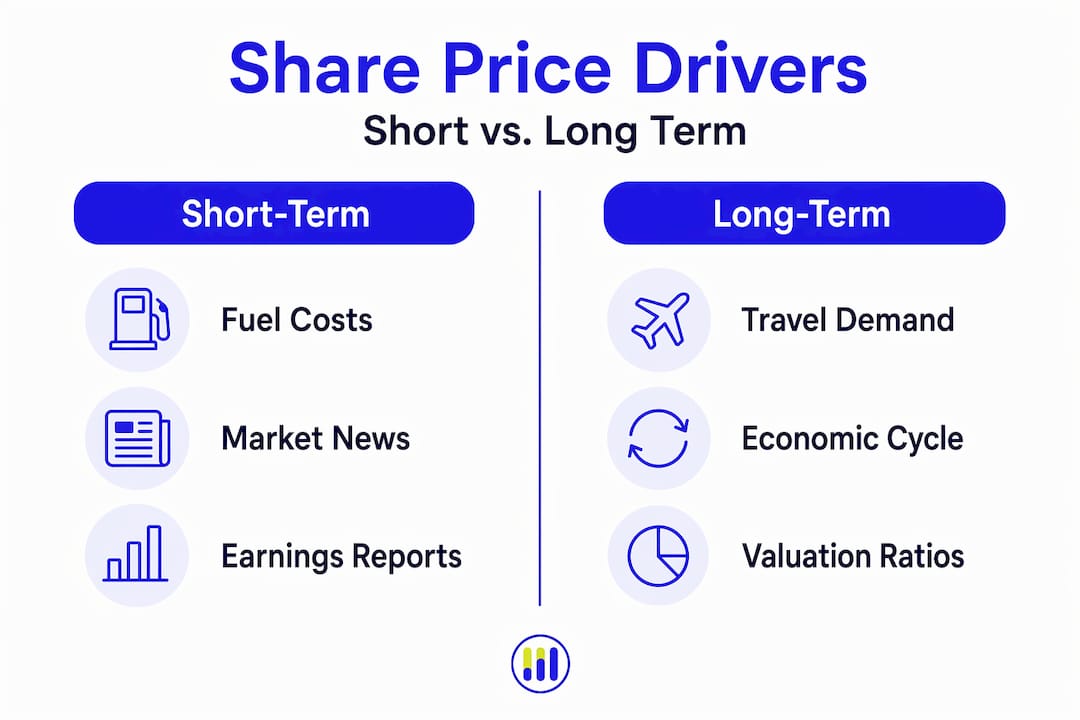
Fuel prices are the dominant short-term driver. Qantas shares dropped 13% in a single week earlier in 2026, largely tied to rising oil prices amid geopolitical tensions, including instability connected to U.S. and Israeli regional conflict affecting WTI crude benchmarks. Qantas does use fuel hedging strategies to reduce exposure to short-term spikes, but those hedging strategies carry limits when geopolitical pressure is sustained over weeks rather than days.
Beyond fuel, macroeconomic cycles affect discretionary travel demand. A softening consumer economy reduces premium cabin bookings faster than economy seats, which directly compresses Qantas's yield per passenger and flows through to earnings forecasts.
The table below shows how these factors interact with broader sector trends:
| Factor | Effect on QAN share price | Airline sector comparison |
|---|---|---|
| Rising oil prices | Negative: compresses margins | Sector-wide negative, affects all carriers |
| Geopolitical instability | Negative: reduces travel demand and raises fuel costs | Stronger negative for international carriers |
| Strong domestic economy | Positive: drives leisure and business travel | Positive for domestic-focused airlines |
| Analyst upgrades | Short-term positive: increases buying pressure | Varies by carrier reputation |
| Dividend announcements | Positive: signals financial health | Positive, especially with franking credits |
Analyst consensus currently sits at a strong buy rating for QAN, with average target prices in the low to mid A$11 range, implying roughly 30% upside from recent trading levels. That is a meaningful signal, though it comes with important caveats.
Pro Tip: Treat analyst price targets as a directional reference, not a delivery schedule. Analyst targets are indicators of potential, and they should be integrated with your own fundamental analysis rather than used as the sole basis for a position.
Evaluating Qantas stock value
Knowing the current share price tells you what the market is paying. Knowing the valuation tells you whether that price makes sense. The two are often very different things.
Qantas's price-earnings ratio sits around seven times forecast FY28 earnings, which is notably below the broader ASX market average. A low P/E ratio does not automatically mean a stock is cheap; it can also reflect structural risk or low growth expectations. In Qantas's case, however, the compression appears partly tied to short-term headwinds rather than a deteriorating long-term business model.
Qantas shares have dropped roughly 16% since February 2026, declining from around A$10.65 to the A$8.90 range. Investors who received the fully franked interim dividend paid in mid-April experienced a materially lower net loss when total return is calculated properly. Dividends do real work in softening the blow of a price correction.
Qantas also declared an interim FY26 dividend of up to A$450 million, including fully franked base dividends. Franking credits are particularly valuable for Australian resident investors, as they reduce the effective tax burden on dividend income.
Key valuation metrics to examine before taking a position in QAN:
- Price-earnings ratio: Currently around 7x FY28 earnings. Compare against ASX200 average for context.
- Analyst consensus target: Mid A$11 range implies significant upside if macro conditions stabilize.
- Dividend yield and franking: Fully franked dividends add after-tax value beyond the raw yield number.
- Total shareholder return: Always account for dividends received when calculating your actual gain or loss.
- Debt levels: Airline balance sheets carry significant debt; review the debt-to-equity ratio before committing capital.
For investors who want to contextualize QAN against other ASX-listed companies, reviewing ASX financial statements can provide useful comparative benchmarks.
Practical steps for daily QAN monitoring
Translating market knowledge into a consistent daily habit is where most individual investors fall short. Here is a focused routine for tracking Qantas shares price movements without information overload:
- Check the official price first. Start each morning at the Qantas Investor Centre to review the prior session's closing price, volume, and any corporate announcements.
- Set price alerts. Use your brokerage platform or a market data service to trigger notifications when QAN moves more than 2% in either direction intraday.
- Monitor oil prices weekly. WTI crude and Brent crude movements are leading indicators for QAN sentiment. A sustained move above key resistance levels in oil typically precedes airline stock pressure.
- Track dividend and capital management announcements. Qantas's capital management page is updated with buyback and dividend news that directly affects shareholder return calculations.
- Review analyst updates monthly. Analyst consensus shifts on QAN can signal changing institutional sentiment before it fully registers in the share price.
My take on tracking Qantas share price effectively
I've watched investors get tripped up by the same mistake repeatedly. They see a headline about Qantas shares dropping, react to the number, and miss the full picture entirely. What I've learned from tracking airline equities closely is that the price you see on any given day is rarely the whole story.
The 16% decline since February 2026 looks alarming in isolation. Factor in the fully franked dividend, and the actual investor experience is meaningfully different. That distinction matters enormously for decision-making, yet most market headlines skip it entirely.
My honest view: relying on secondary platforms for real-time QAN data without checking timestamps is a discipline problem, not an information problem. The tools exist. Investors just need to use them consistently and deliberately. Short-term volatility in airline stocks is structural, not exceptional. Building a monitoring routine that separates noise from signal is what separates patient, informed investors from reactive ones. The investors I've seen succeed with Qantas shares analysis are those who set their criteria, watch the metrics that actually move the needle, and resist the pull of daily price drama.
— Tickerplace
Track Qantas shares smarter with Tickerplace
If you want to move beyond surface-level price checks, Tickerplace gives you the tools to do that in one place. The platform aggregates real-time stock data, historical price charts, and fundamental analysis resources that let you track Qantas stock value alongside the broader ASX market without switching between five different websites.
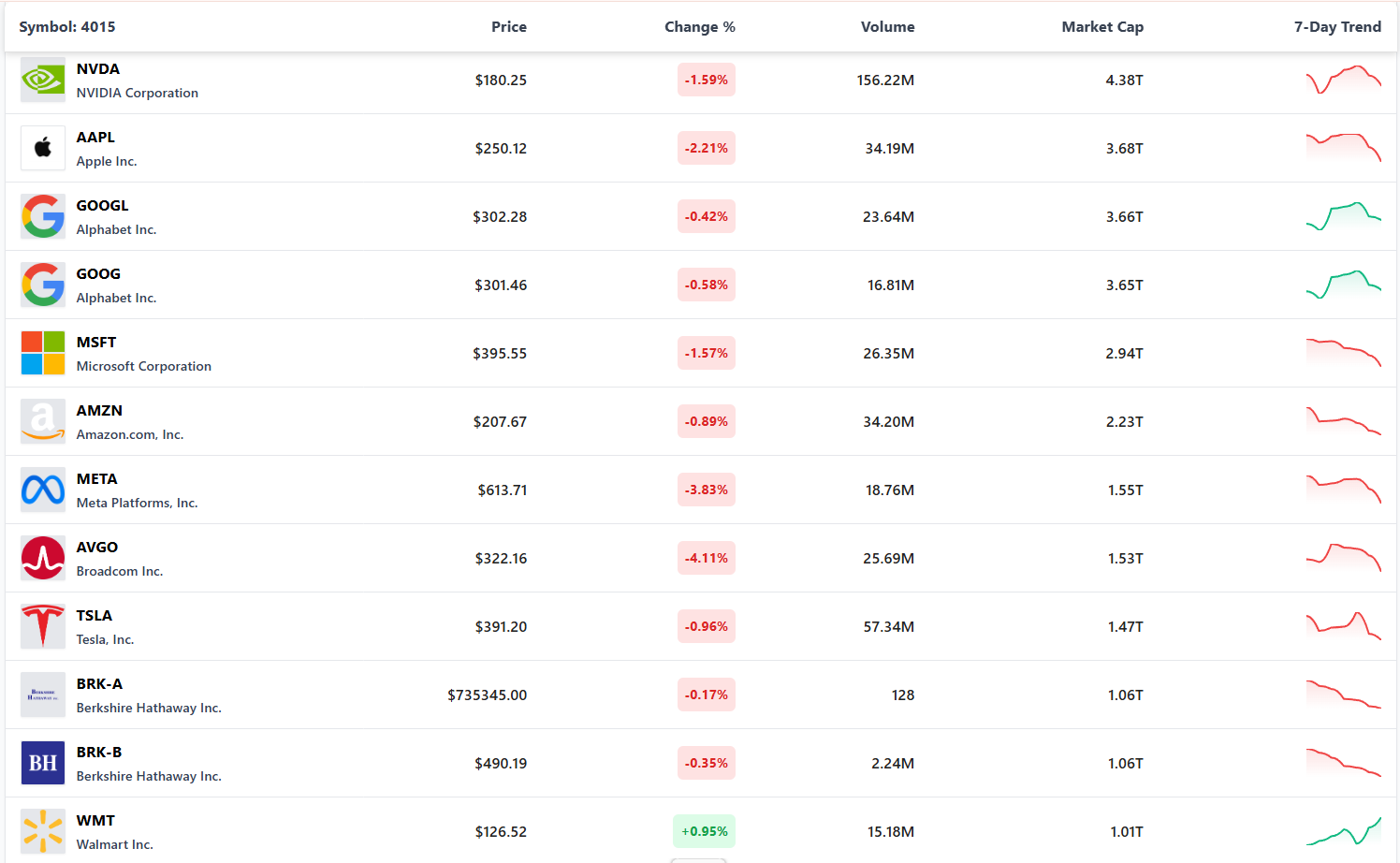
The Tickerplace stock screener lets you filter ASX equities by P/E ratio, dividend yield, and market capitalization, so you can benchmark QAN against comparable companies in seconds. Whether you are assessing entry timing, calculating total return including dividends, or monitoring analyst consensus shifts, Tickerplace puts the data you need in a format that actually supports decisions. Visit Tickerplace to start tracking QAN and the broader market with greater precision.
FAQ
What is the current Qantas share price?
As of May 21, 2026, Qantas (ASX: QAN) traded at approximately A$8.71, up around 3.1% on the day. Always verify current prices through the Qantas Investor Centre or your broker for the most accurate real-time figure.
Why do different platforms show different Qantas share prices?
Timestamp differences between platforms cause this discrepancy. The Qantas Investor Centre updates at 4:00 PM AEST while aggregators like Yahoo Finance may reflect a 4:10 PM quote, resulting in slightly different displayed prices within the same session.
Is Qantas a good investment right now?
Qantas currently trades at around 7 times forecast FY28 earnings with analyst consensus targets in the mid A$11 range, implying roughly 30% upside potential. Fully franked dividends add further value for Australian investors, though fuel price volatility and geopolitical risks remain real factors to weigh.
How do dividends affect the Qantas share price?
Dividend announcements tend to support investor confidence and perceived share value. Qantas declared an interim FY26 dividend of up to A$450 million including fully franked base dividends, and investors who received the April payment experienced a materially lower net loss on the 2026 price decline.
What is the best source for tracking the Qantas share price?
The Qantas Investor Centre is the most reliable source for real-time QAN data, offering price graphs, full history, and a share calculator. For broader market context and comparative analysis, platforms like Tickerplace provide integrated tools alongside real-time ASX data.