

TL;DR:
- The GBP/AUD exchange rate near 1.90 in mid-2026 reflects market consolidation influenced by UK inflation and Australian trade data. Fluctuations are mainly driven by domestic economic releases and geopolitical risks, with provider choice affecting overall transfer costs. Monitoring key data releases and comparing rates can help optimize currency conversions and manage financial exposure.
The pound to Australian dollar (GBP/AUD) exchange rate is the price of one British pound expressed in Australian dollars, set by global market supply and demand, economic data releases, and geopolitical conditions. As of mid-June 2026, the rate consolidates near 1.90, with analysts forecasting a range of 1.87–1.93 depending on UK inflation prints and Australian employment outcomes. Whether you are planning a trip to Sydney, transferring funds, or managing cross-currency investment exposure, understanding what moves this rate saves you real money.
What factors influence the pound to Australian dollar rate?
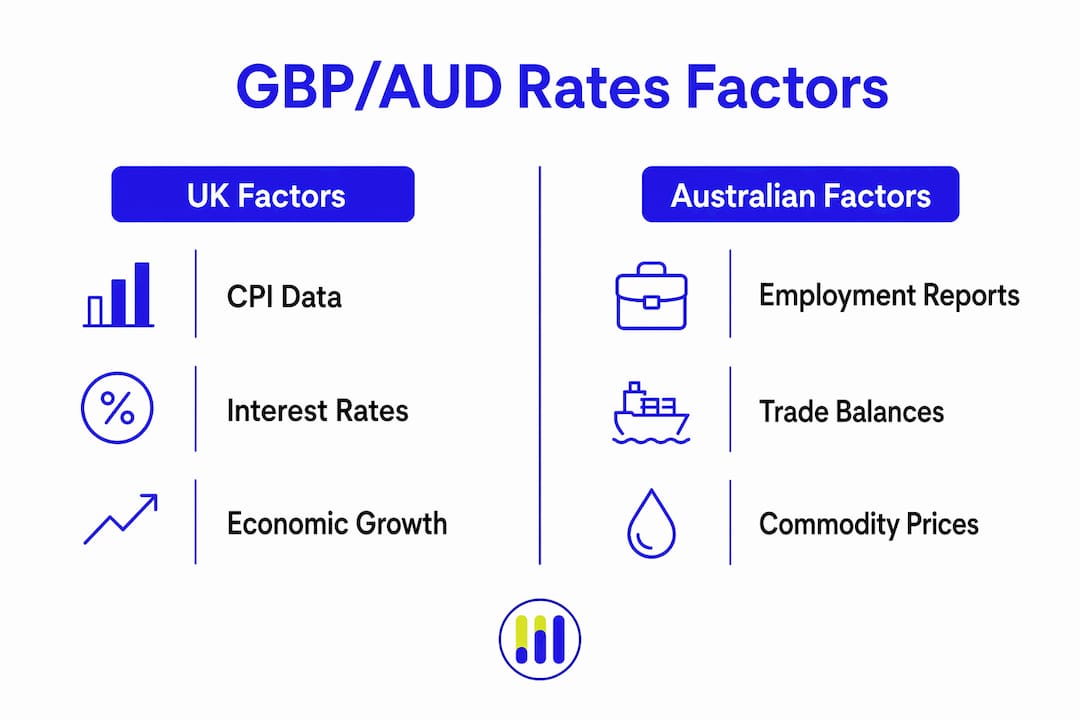
The GBP/AUD rate responds to two distinct economic engines: the United Kingdom's domestic data and Australia's commodity-linked, trade-dependent economy. Neither side operates in isolation, and shifts in global sentiment can override domestic news entirely.
Key drivers on the GBP side include:
- UK inflation (CPI): Higher-than-expected CPI data strengthens the pound by raising expectations for Bank of England rate hikes.
- UK retail sales: Strong consumer spending signals economic resilience, supporting GBP demand.
- Bank of England policy signals: Forward guidance on interest rates directly moves sterling positioning.
Key drivers on the AUD side include:
- Australian employment reports: Strong job creation lifts the AUD; weak data pushes it lower.
- China's economic health: The AUD acts as a proxy for global risk appetite because China is Australia's largest export market. Slowdowns in Chinese demand hit the AUD harder than most domestic news.
- Commodity prices: Iron ore and coal exports underpin Australian trade revenues. Falling commodity prices weaken the AUD even when domestic data looks solid.
Geopolitical events add a third layer. US-Iran tensions and similar risk-off episodes push investors toward safer currencies, generally favoring GBP over the more trade-exposed AUD. When global risk appetite improves, the reverse tends to occur.
Pro Tip: Set calendar alerts for UK CPI release dates and Australian Bureau of Statistics employment reports. These two events trigger the most consistent short-term volatility in GBP/AUD and give you a predictable window to act.

How does GBP/AUD perform in mid-2026?
The GBP/AUD rate closed near 1.90 on June 15, 2026, reflecting a period of consolidation after months of moderate volatility. Analysts at Exchangerates.org.uk place the near-term forecast range at 1.87–1.93, with an upside move toward 1.93 contingent on UK inflation surprising to the upside and Australian employment data disappointing.
Over the 30 days to late May 2026, the rate traded between 1.8658 and 1.8913, a fluctuation range of 1.37%. That range is narrow by historical standards, but it still represents a meaningful difference in the Australian dollars you receive per pound converted.
The most recent seven-day window tells a similar story of contained movement. The intraday high reached 1.8843 while the low touched 1.8778, with the largest single 24-hour move registering at -0.385%. The marginal average decline over that week was just -0.06%. Short-term stability like this can lull converters into complacency, but a single data surprise can push the rate outside that range quickly.
| Metric | Value |
|---|---|
| Rate as of June 15, 2026 | ~1.90 AUD per GBP |
| 30-day range (to late May 2026) | 1.8658–1.8913 |
| 30-day fluctuation | 1.37% |
| 7-day intraday high | 1.8843 |
| 7-day intraday low | 1.8778 |
| Near-term forecast range | 1.87–1.93 |
UK CPI releases and Australian job data remain the two events most likely to push the rate outside this consolidation band. Traders and converters alike should treat those release dates as decision points, not afterthoughts.
What does it actually cost to convert GBP to AUD?
The mid-market rate is the benchmark you see on Google or Xe. It is the midpoint between the buy and sell prices in the interbank market. Retail users never receive this rate. Retail exchange rates always include a spread above the mid-market level, plus transaction fees that vary by provider.
The gap between the mid-market rate and what you actually receive is the true cost of conversion. Many providers advertise "no fees" but embed their profit in a wider spread. Comparing live mid-market rates with the actual transfer amount you receive is the only reliable way to measure total cost.
| Provider type | Typical spread above mid-market | Fixed fee |
|---|---|---|
| High street bank | 3–5% | $10–$30 per transfer |
| Airport exchange bureau | 5–10% | Often none |
| Online transfer service (e.g., Wise) | 0.4–1.5% | Small fixed fee |
| Specialist FX broker | 0.5–2% | Negotiable |
The table above illustrates why provider choice matters as much as timing. Converting £5,000 at a bank charging a 4% spread costs roughly AU$380 more than using an online service charging 0.8%. That difference funds several nights of accommodation in Melbourne.
Practical steps to reduce conversion costs:
- Compare total received amounts, not advertised rates. Use Xe or Wise to benchmark the mid-market rate first.
- Avoid airport bureaus for large amounts. Their spreads are the widest in the market.
- Consider a specialist FX broker for transfers above £10,000. Many offer rate locks and reduced spreads for larger volumes.
- Watch for fee waivers. Some online platforms waive fixed fees on first transfers or promotional periods.
Pro Tip: Use the AUD conversion tools available through financial platforms to cross-check live rates before committing to any provider. A two-minute check can save you hundreds of dollars on larger transfers.
How travelers, investors, and planners can use GBP/AUD data
Exchange rate information serves different purposes depending on your goal. Understanding which lens applies to your situation helps you act on data rather than just observe it.
For travelers: Budget planning requires more than a single rate snapshot. The 1.37% monthly fluctuation range means the Australian dollars you receive per pound can shift noticeably between booking and travel. Locking in a rate through a forward contract or prepaid travel card removes that uncertainty. Avoid converting large amounts at your destination unless you have confirmed the local rate is competitive.
For investors: GBP/AUD trends reveal relative economic momentum between the UK and Australia. An investor holding Australian equities and reporting in GBP faces currency risk that can amplify or erode returns. Monitoring the GBP/AUD forecast range alongside ASX performance data gives a fuller picture of total return. Tickerplace's ASX financial data provides the equity side of that analysis.
For financial planners: Currency risk is a cost that must be modeled explicitly. A client receiving regular GBP income while holding AUD-denominated liabilities faces ongoing exposure. Planners should account for conversion fees and spreads as a recurring expense line, not a one-time event. Scenario planning around the 1.87–1.93 forecast range helps stress-test cash flow projections.
The common thread across all three groups is timing. Geopolitical events, central bank signals, and commodity price moves can shift the rate meaningfully within days. Staying informed is not optional when real money is at stake.
Key takeaways
The GBP/AUD exchange rate near 1.90 in mid-2026 reflects a balance between UK inflation pressures and Australian trade headwinds, with total conversion cost determined as much by provider choice as by the rate itself.
| Point | Details |
|---|---|
| Current rate level | GBP/AUD consolidates near 1.90, with a forecast range of 1.87–1.93 for mid-2026. |
| Main rate drivers | UK CPI, Australian employment data, and China's economic health are the primary volatility triggers. |
| True conversion cost | Retail rates always include a spread above mid-market; compare total received amounts, not advertised rates. |
| Provider choice matters | Online transfer services typically charge 0.4–1.5% spreads versus 3–5% at high street banks. |
| Timing your conversion | Monitor UK CPI and Australian jobs release dates as the most predictable windows for rate movement. |
Tickerplace's take on GBP/AUD conversions
The single most common mistake people make when converting pounds to Australian dollars is treating the advertised rate as the actual rate. It is not. The mid-market rate you see on a search engine is a reference point, not a price you can transact at. Every provider adds a margin, and that margin is where the real cost lives.
From tracking currency markets closely, the pattern is clear: most retail converters focus on the headline rate and ignore the spread entirely. A rate that looks 0.5% better than a competitor's can still cost more in total if the fee structure is opaque. Always request the exact AUD amount you will receive before confirming any transfer.
Timing matters, but it should not become speculation. Waiting for a "perfect" rate while holding cash in GBP is a form of currency risk in itself. A more disciplined approach is to set a target rate, use a rate alert tool, and convert when that level is reached rather than trying to call the top. The 1.87–1.93 forecast range for mid-2026 gives you a reasonable framework for setting those targets without overreaching.
— Tickerplace
Track GBP/AUD and your investments with Tickerplace
Staying ahead of currency movements requires real-time data, not yesterday's closing prices. Tickerplace gives investors and financial planners access to live market data, financial statements, and research tools that support smarter decisions across both currency and equity markets.
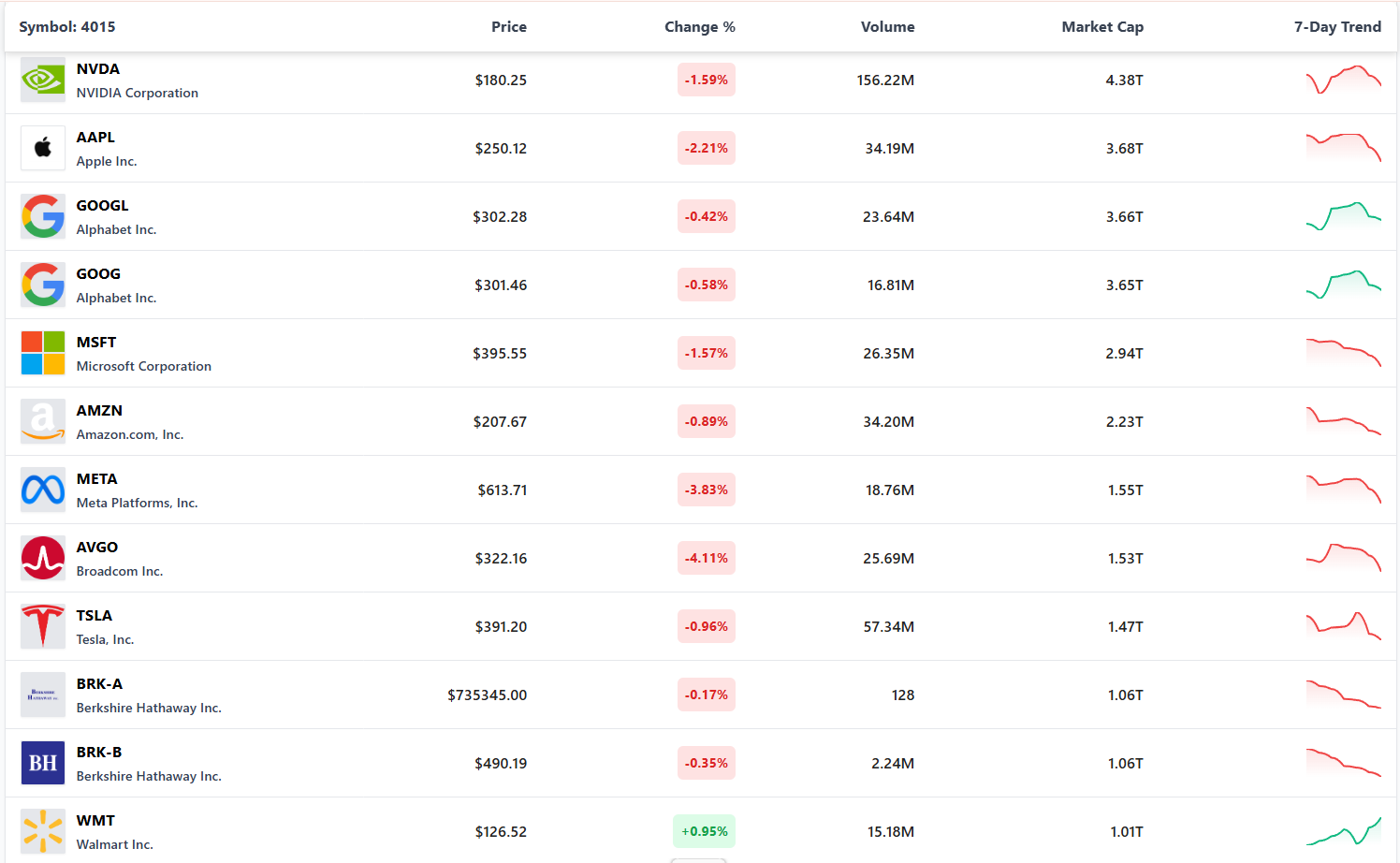
Whether you are monitoring the AUD's sensitivity to Chinese trade data or stress-testing a cross-currency portfolio, Tickerplace's financial research tools provide the data infrastructure you need. The platform's investment return calculator helps you model how currency fluctuations affect total returns on Australian holdings. Explore Tickerplace's free tools and bring the same rigor to your currency decisions that you apply to your stock selections.
FAQ
What is the current pound to Australian dollar rate?
As of mid-June 2026, the GBP/AUD rate consolidates near 1.90, with analysts forecasting a range of 1.87–1.93 depending on upcoming UK inflation and Australian employment data.
Why does the Australian dollar move with China's economy?
China is Australia's largest export market, so AUD performance tracks Chinese growth expectations closely. A slowdown in Chinese demand for Australian commodities weakens the AUD even when domestic Australian data is positive.
What is the difference between the mid-market rate and the retail rate?
The mid-market rate is the interbank benchmark shown by tools like Xe or Google. Retail rates always include a spread and sometimes fixed fees, meaning you receive fewer Australian dollars than the mid-market rate implies.
When is the best time to convert pounds to AUD?
The best time to convert GBP to AUD is around key data releases, specifically UK CPI and Australian employment reports, when the rate moves most predictably. Setting a target rate and using a rate alert removes the guesswork from timing decisions.
How much does it cost to transfer GBP to AUD?
Costs vary significantly by provider. High street banks typically charge spreads of 3–5% above mid-market, while online transfer services like Wise charge 0.4–1.5%. For large transfers, a specialist FX broker often offers the most competitive total cost.