

TL;DR:
- Different platforms can show varying Coles share prices due to data sourcing and timing differences, which investors must understand. Reliable sources include the official Coles investor-relations page and brokerage platforms for real-time data, complemented by historical analysis and benchmarking for context. Key share price drivers include earnings, dividends, macroeconomic factors, and market sentiment, with dividends playing a crucial role for income-focused investors.
Checking the Coles share price sounds straightforward until you notice two different platforms showing two different numbers at the same moment. One site says A$21.60, another shows A$21.72, and suddenly you are not sure which figure to trust or how to act on it. This disconnect is not a glitch; it reflects real differences in data sourcing, timing, and methodology that every serious investor needs to understand. This guide breaks down where to find reliable Coles share price data, what moves the price, how dividends factor into the picture, and how to compare Coles against other ASX stocks to sharpen your investment decisions.
Key Takeaways
| Point | Details |
|---|---|
| Check reliable sources | Always use Coles’ official investor page or trusted financial platforms for share price data. |
| Monitor dividend dates | Owning Coles shares before the ex-dividend date is key for receiving payouts and anticipating price moves. |
| Compare and contextualize | Review Coles share price in context with other ASX stocks for informed investment decisions. |
| Beware of price timing | Share prices can lag by a few minutes depending on the data vendor, so confirm timestamps to avoid decisions based on outdated information. |
Understanding Coles share price data and sources
With so many sources offering Coles' share price, let's break down where to find trustworthy data and how timing plays a role.
Getting accurate share price data is the foundation of any sound analysis. The Coles Group official home displays a share price around A$21.65 on its investor-relations page, along with a dedicated share-price section updated regularly. That page should be your baseline, because it pulls directly from official ASX-reported trades.
However, not every platform you visit is working from the same feed or the same moment in time. An important data vendor variation to monitor: "current price" varies depending on the vendor and timestamp, with some providers like Morningstar running on a 20-minute delay versus real-time feeds on others. When you compare price moves day-to-day across different tools, always record the timestamp and whether the quote is delayed or live.
Here is a quick overview of common data sources and their characteristics:
| Source | Data type | Typical delay | Best use |
|---|---|---|---|
| Coles investor-relations page | Official ASX feed | Near real-time | Baseline price verification |
| Broker platforms | Real-time or near real-time | 0-5 minutes | Active trading decisions |
| Financial news sites | Delayed or aggregated | 15-20 minutes | General monitoring |
| Free screener tools | Delayed | 15-20 minutes | Trend analysis and screening |
Once you have confirmed your data source and its timing, you can begin building context around price movements by reviewing ASX price history and cross-referencing fundamental data available through the ASX financials section. Tracking historical price ranges, 52-week highs and lows, and volume patterns gives you a much richer picture than any single quoted number.
Key sources worth bookmarking:
- Coles Group investor-relations website for official data
- Your brokerage platform for real-time execution prices
- Reliable screener tools for comparative and historical analysis
- The list of ASX-listed stocks for sector benchmarking
Pro Tip: Always note the exact timestamp when you screenshot or record any share price for your analysis log. A price recorded at 10:05 AM versus 3:55 PM on the same trading day can differ meaningfully, especially around earnings announcements or dividend events.
Key drivers of Coles share price movements
Once you can reliably track Coles' share price, it's crucial to understand what actually moves it.

Share price is never static, and for a company like Coles Group, a major ASX-listed retailer, the catalysts can come from multiple directions simultaneously. Understanding these drivers lets you anticipate reactions rather than simply react to them.
Company-specific drivers include earnings results, revenue guidance updates, cost management announcements, and capital expenditure decisions. When Coles reports stronger-than-expected sales figures or margin improvements, the market typically reacts with a price increase. Disappointing results or lowered guidance have the opposite effect.
Dividend announcements are particularly impactful for a stock like Coles because it attracts income-focused investors. A fully franked interim dividend with an ex-dividend date of March 10 and a payment date of March 30 creates a predictable price cycle: the share price often rises in anticipation and then drops by approximately the dividend amount on the ex-dividend date.
Broader ASX and macroeconomic signals such as Reserve Bank of Australia interest rate decisions, inflation data, and consumer confidence surveys all influence Coles' valuation. As a consumer staples company, Coles is generally considered defensive, meaning its earnings hold relatively steady during economic slowdowns. But "defensive" does not mean "immune" to market-wide selloffs.
Here is a comparison of short-term versus long-term price drivers:
| Driver type | Short-term impact | Long-term impact |
|---|---|---|
| Earnings results | High (immediate reaction) | Moderate (shapes earnings expectations) |
| Dividend announcements | Moderate (ex-date drop) | High (sustains income investor base) |
| Interest rate changes | Moderate | High (affects discount rate and valuation) |
| Macroeconomic conditions | Low to moderate | High (affects consumer spending) |
| Competitive pressures | Low | High (affects market share and margins) |
"Coles' defensive earnings profile makes it a relative safe haven in volatile markets, but investors still need to account for valuation and yield sustainability before entering a position."
Key factors to watch on a regular basis:
- Quarterly sales updates and annual earnings reports
- ASX announcements regarding dividends and capital management
- RBA interest rate decisions and their effect on the broader consumer staples sector
- Competitor behavior and supermarket pricing trends
Dividends and Coles as an income stock
Dividends play a major role in Coles' investment story. Let's see how to capitalize on them.
Coles Group has positioned itself as a reliable income stock for Australian investors, and the dividend component of its total return is substantial. For income-focused investors, knowing the mechanics of Coles' dividend program is just as important as watching the daily price.
Tracking ex-dividend dates is the standard methodology for dividend-focused investors because eligibility is based on owning shares before the ex-dividend date. Miss that date by even one trading day, and you forfeit the payment entirely.
The most recent dividend cycle is a clear example. Coles declared a fully franked interim dividend with an ex-dividend date of March 10, 2026 and a payment date of March 30, 2026. Full franking is a meaningful advantage for Australian resident investors because they can use the attached franking credits to offset their tax liability, effectively boosting the after-tax yield.
Here is a step-by-step approach to monitoring Coles dividends effectively:
- Identify the upcoming ex-dividend date by checking the ASX announcements platform or the Coles investor-relations page.
- Calculate the gross yield using both the dividend amount and the franking credit value to understand the true after-tax return.
- Review the payout ratio from the Coles financials page to assess whether the dividend is sustainable given current earnings.
- Use a dividend income calculator to model your projected annual income at different share price and yield scenarios.
- Enter your position before the ex-dividend date if the valuation supports it, not simply to capture a single dividend payment.
Statistic callout: Fully franked dividends can add approximately 30% to the effective yield for investors in the top Australian marginal tax bracket, because the franking credits offset personal income tax otherwise owed.
Pro Tip: Chasing the dividend without considering the share price entry point is a risky strategy. If you buy just before the ex-dividend date at an inflated price and the stock drops post-dividend, you may end up with a net loss even after receiving the payment.
Comparing Coles share price with other ASX stocks
To put Coles' numbers in perspective, a comparison with its ASX peers is invaluable.
Raw share price tells you very little on its own. A stock trading at A$21.65 is not inherently cheaper or more expensive than one trading at A$50. The right comparison involves market capitalization, dividend yield, price-to-earnings ratio, and sector classification.
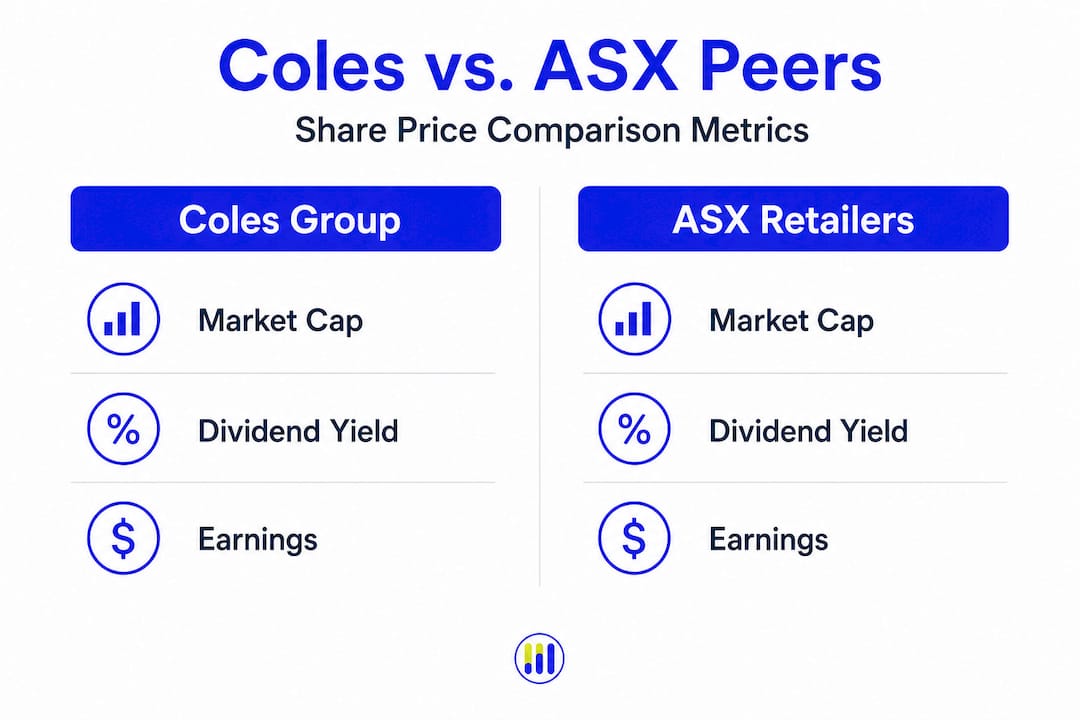
With Coles' share price near A$21.65, here is how that figure fits into a broader ASX context:
| Metric | Why it matters for comparison |
|---|---|
| Market capitalization | Reflects overall company size, not just share price |
| Dividend yield | Compares income potential across ASX blue chips |
| Price-to-earnings (P/E) ratio | Shows how the market values earnings per dollar |
| Sector classification | Groups Coles with consumer staples peers for fair benchmarking |
| 52-week price range | Provides context for current price relative to historical highs and lows |
Using the ASX stock list to screen for consumer staples companies with similar market capitalization and yield profiles gives you a credible peer group. From there, you can apply a stock average price tool to assess your average cost basis if you are building a position over time.
Key considerations when benchmarking Coles:
- Compare P/E ratios across similar ASX-listed consumer staples and retail companies
- Assess relative dividend yield and franking status
- Review revenue growth trajectories rather than just current earnings
- Consider debt-to-equity ratios to gauge financial stability across peers
Blue chip stocks in poker represent the highest-value chips on the table. Coles carries that status on the ASX, but like any blue chip, its value depends on the game being played, whether your priority is growth, income, or capital stability.
What most investors miss about Coles share price analysis
Armed with data and context, let's challenge some assumptions and share advanced insights.
Many investors approach Coles share price analysis the same way they check the weather: a quick glance, a surface-level read, and then a decision made without real depth. This is particularly common with defensive consumer staples stocks, where the assumption is that stability makes deep analysis unnecessary.
That assumption is expensive. The daily price movement of Coles is rarely the most important data point. What matters far more is the total return, which combines capital appreciation, dividend income, and franking credit benefits. An investor who bought Coles purely based on a rising price chart but ignored a deteriorating payout ratio or rising debt levels would have missed a critical warning signal.
The deeper ASX analysis tools available today make it easier than ever to go beyond price. Reviewing cash flow statements, monitoring the sustainability of dividend payouts against free cash flow, and tracking management commentary across multiple reporting periods are habits that separate serious analysts from casual price watchers.
Another common mistake: treating Coles' price in isolation from the broader market cycle. When interest rates rise, income stocks like Coles face valuation pressure because bonds and term deposits become more competitive alternatives. Understanding that relationship helps you contextualize price weakness without panicking and price strength without overextending.
A disciplined, data-driven approach that captures total return, accounts for market-wide forces, and prioritizes dividend sustainability consistently produces more reliable outcomes than chasing short-term price momentum.
Explore investment tools for smarter Coles share analysis
Empowered with a sharper perspective, take your Coles investing research further with these resources.
Tracking a single data point is no longer enough for investors serious about ASX opportunities. Tickerplace brings together the tools you need to move from observation to confident action.
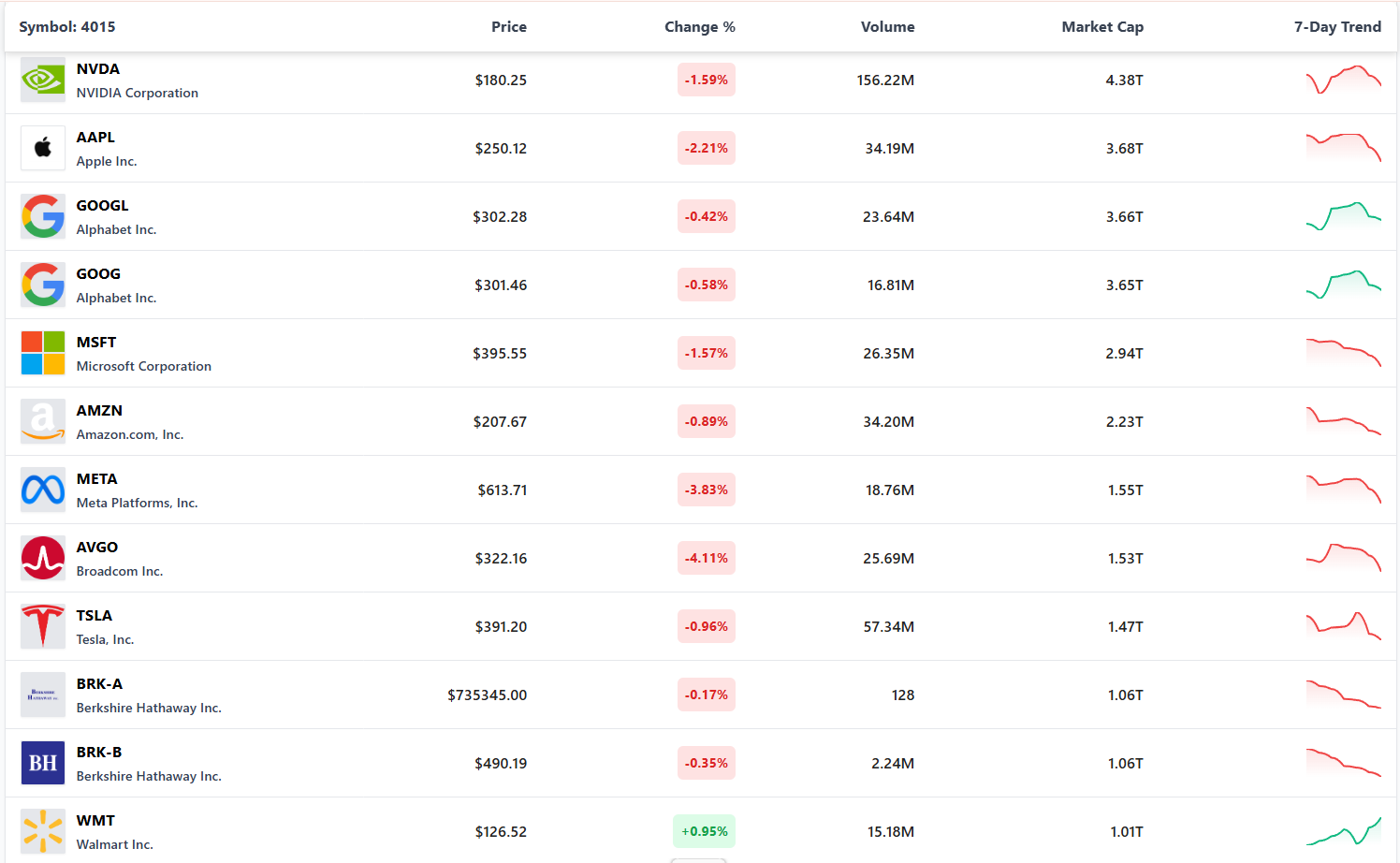
With Tickerplace research tools, you can access real-time price data, historical charts, fundamental metrics, and dividend tracking all in one place. The platform's ASX stock screener lets you filter ASX-listed companies by yield, P/E ratio, market cap, and sector, so you can benchmark Coles against peers in seconds rather than hours. Whether you are building an income portfolio centered on franked dividends or scanning the ASX for undervalued opportunities, the investing education resources on Tickerplace help you apply analytical frameworks with greater confidence. Every data point you have explored in this article is accessible and actionable within the platform.
Frequently asked questions
Where can I find the official Coles share price?
You can check the latest Coles share price on the Coles investor-relations page, which displays regularly updated official data sourced from ASX-reported trades.
Why do Coles share prices differ between websites?
Coles share prices differ because some sites use delayed data vendor quotes rather than real-time feeds, so the timestamp and data source must always be verified before making decisions based on the figure.
How can I receive Coles' next dividend?
To receive the next Coles dividend, you must own the shares before the ex-dividend date, because eligibility requires purchase before that date as officially announced on the ASX.
How do dividends affect Coles' share price?
Coles' share price typically drops by approximately the dividend amount on the ex-dividend date, reflecting the payout to eligible shareholders; the most recent example involved a fully franked interim dividend with an ex-date of March 10, 2026.