

Choosing the right stocks can feel overwhelming when you’re staring at hundreds of options and conflicting opinions. Many individual investors struggle with this uncertainty, unsure whether they’re making informed decisions or just guessing. Effective stock analysis techniques can transform this anxiety into confidence by providing structured methods to evaluate opportunities. This guide walks you through proven approaches to analyze stocks step by step, combining financial insights with practical tools to help you invest smarter and reduce costly mistakes.
Key takeaways
| Point | Details |
|---|---|
| Stock analysis combines financial and market data | Understanding both financial statements and market indicators creates a complete picture of investment potential. |
| Fundamental and technical methods work together | Using both approaches strengthens your evaluation by revealing intrinsic value and optimal timing. |
| Structured processes prevent common errors | Following systematic steps helps avoid emotional decisions and confirmation bias. |
| Modern tools streamline the analysis workflow | Stock screeners and financial platforms make complex analysis accessible to individual investors. |
Preparing for stock analysis: key fundamentals and tools
Before diving into actual stock evaluation, you need the right foundation. Think of this stage as gathering your ingredients before cooking a meal. Without proper preparation, even the best recipe falls flat.
Start by collecting essential financial documents. You’ll need access to income statements, balance sheets, and cash flow statements for any company you’re considering. These three documents form the backbone of financial analysis. Understanding financial statements is crucial to evaluating stocks effectively. Income statements reveal profitability trends, balance sheets show what a company owns versus owes, and cash flow statements track actual money movement.
Next, familiarize yourself with key financial ratios that translate raw numbers into meaningful comparisons. The price to earnings ratio tells you how much investors pay per dollar of earnings. Return on equity measures how efficiently a company uses shareholder money. Debt to equity ratio reveals financial leverage and risk levels. These metrics appear repeatedly in analysis, so understanding them saves time and builds confidence.
Modern technology makes analysis more accessible than ever. Stock screeners let you filter thousands of companies by specific criteria in seconds. Charting tools visualize price movements and patterns. Financial news aggregators keep you updated on market developments. Setting up a dedicated workspace with these resources creates consistency in your process.
Pro Tip: Create a simple spreadsheet template with your most used ratios and metrics. This saves time when comparing multiple stocks and ensures you evaluate each opportunity using the same criteria.
Here’s a quick reference for essential financial ratios:
| Ratio | What It Measures | Healthy Range |
|---|---|---|
| Price to Earnings | Valuation relative to earnings | 15 to 25 for most sectors |
| Return on Equity | Profitability from shareholder capital | Above 15% generally strong |
| Debt to Equity | Financial leverage and risk | Below 2.0 for most industries |
| Current Ratio | Short term liquidity | 1.5 to 3.0 indicates stability |
Your analysis toolkit should include:
-
Access to company financial statements and SEC filings
-
A reliable stock screener with customizable filters
-
Charting software for technical analysis
-
Financial news sources for timely updates
-
A financial metrics guide for reference
With these fundamentals in place, you’re ready to move beyond preparation into actual analysis. The goal isn’t perfection but rather building a repeatable process that improves your decision quality over time.
Step by step process for fundamental stock analysis
Fundamental analysis digs into what a company is actually worth based on its business performance and financial health. This approach focuses on intrinsic value rather than short term price movements.
Begin by examining revenue trends over the past three to five years. Is the company growing consistently, or do sales fluctuate wildly? Steady growth usually signals a sustainable business model. Next, look at profit margins. A company might have impressive revenue, but if costs consume most of it, profitability suffers. Compare gross margin, operating margin, and net margin to understand where money gets made or lost.

Cash flow deserves special attention because it reveals actual money generation. Fundamental analysis involves detailed examination of company financials and market position. A company can report profits on paper while bleeding cash, which creates problems. Free cash flow, calculated as operating cash flow minus capital expenditures, shows money available for dividends, debt repayment, or growth investments.
Financial ratios transform absolute numbers into relative comparisons. Calculate the price to earnings ratio by dividing share price by earnings per share. A lower ratio might indicate undervaluation, though context matters. Compare the ratio to industry peers and historical averages. Return on equity shows how well management deploys shareholder capital. Above 15% generally indicates strong performance, but again, compare to competitors.
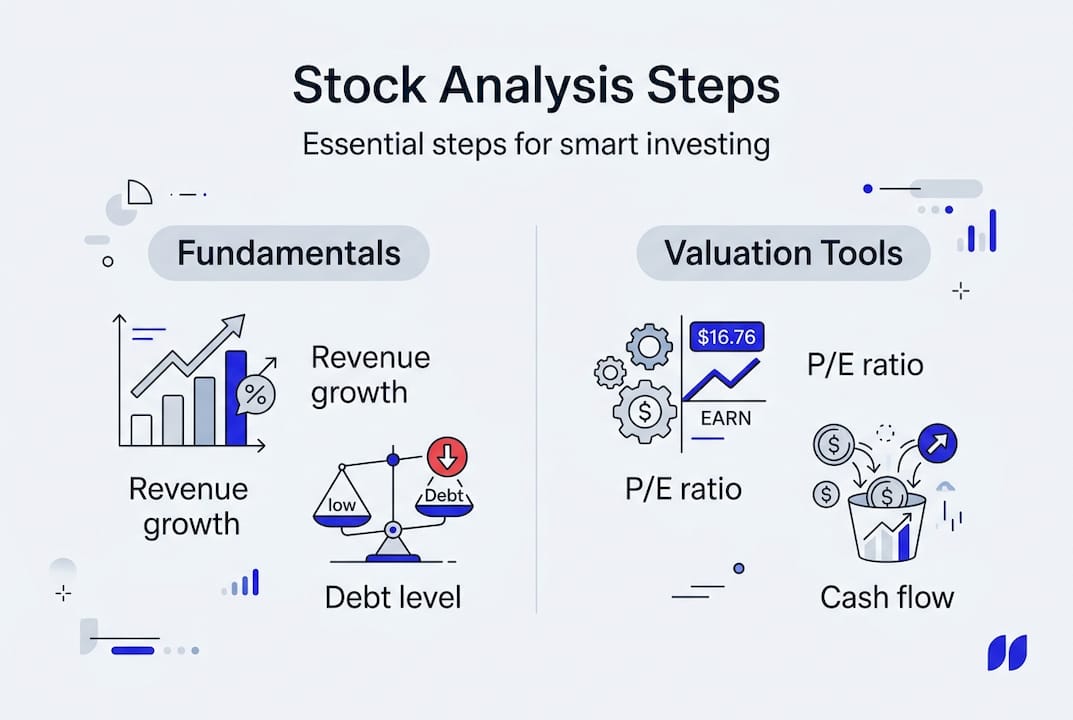
Debt levels require careful evaluation. Some debt is normal and even beneficial, but excessive leverage creates risk. The debt to equity ratio compares total debt to shareholder equity. Below 2.0 works for most industries, though capital intensive businesses like utilities naturally carry more debt. Interest coverage ratio, calculated as earnings before interest and taxes divided by interest expense, shows how easily a company pays interest obligations.
Pro Tip: Don’t just look at current ratios. Track how they’ve changed over several years to spot improving or deteriorating trends that single snapshots miss.
Here’s your fundamental analysis checklist:
-
Review three to five years of financial statements for trend analysis
-
Calculate and compare key valuation ratios to industry benchmarks
-
Assess competitive advantages like brand strength, patents, or network effects
-
Evaluate management quality through past decisions and capital allocation
-
Research industry dynamics and competitive threats
-
Consider macroeconomic factors affecting the business
Competitive advantages, often called moats, protect profits from competitors. Does the company have strong brand recognition? Proprietary technology? High switching costs that keep customers loyal? These factors help maintain profitability over time.
Management quality matters more than many investors realize. Research the leadership team’s track record. Do they make smart capital allocation decisions? Are they transparent in communications? Have they successfully navigated challenges before? Good management can turn around struggling businesses, while poor leadership destroys even promising companies.
Industry and macroeconomic factors provide crucial context. A well run company in a declining industry faces headwinds. Economic cycles affect different sectors differently. Technology often thrives during expansion, while utilities remain stable during downturns. Understanding these dynamics helps you assess whether a stock’s performance reflects company specific issues or broader trends.
Incorporating technical analysis to refine stock evaluation
While fundamental analysis tells you what to buy, technical analysis helps determine when to buy it. This approach studies price patterns and market behavior to identify optimal entry and exit points.
Start by understanding chart types. Line charts show closing prices over time, providing a clean view of overall trends. Bar charts add opening prices, highs, and lows for each period, revealing intraday volatility. Candlestick charts use colored bodies to show whether prices closed higher or lower than they opened, making patterns easier to spot. Most traders prefer candlesticks for their visual clarity.
Moving averages smooth out price noise to reveal underlying trends. The 50 day moving average tracks shorter term momentum, while the 200 day average shows longer term direction. When the 50 day crosses above the 200 day, called a golden cross, it signals potential upward momentum. The opposite, a death cross, suggests downward pressure. These aren’t perfect predictors but provide useful context.
Technical indicators such as moving averages and volume patterns help refine stock timing. The relative strength index measures whether a stock is overbought or oversold on a scale of 0 to 100. Readings above 70 suggest overbought conditions and potential pullbacks. Below 30 indicates oversold conditions and possible bounces. The moving average convergence divergence indicator tracks momentum changes by comparing short and long term moving averages.
Volume analysis adds another dimension. Rising prices on increasing volume suggest strong conviction behind the move. Price increases on declining volume often prove unsustainable. Look for volume spikes during breakouts or breakdowns, as they confirm the significance of price movements.
Pro Tip: Use technical analysis to time purchases of fundamentally sound stocks rather than chasing momentum in questionable companies. The best results come from combining both approaches.
Support and resistance levels mark price points where buying or selling pressure historically emerges. Support represents a floor where buyers step in, while resistance acts as a ceiling where sellers appear. Breaking through these levels often leads to significant moves, especially on high volume.
Here’s how fundamental and technical analysis complement each other:
| Aspect | Fundamental Analysis | Technical Analysis |
|---|---|---|
| Primary Focus | Company value and financial health | Price patterns and market timing |
| Time Horizon | Long term investment decisions | Short to medium term entry and exit |
| Key Tools | Financial statements and ratios | Charts and technical indicators |
| Best For | Identifying quality companies | Optimizing purchase and sale timing |
| Limitations | Doesn’t predict short term moves | Ignores underlying business fundamentals |
Key technical tools to master:
-
Candlestick charts for pattern recognition
-
Moving averages for trend identification
-
Relative strength index for momentum assessment
-
Volume analysis for confirmation signals
-
Support and resistance levels for entry and exit planning
The most successful investors use both approaches strategically. Fundamental analysis identifies companies worth owning. Technical analysis helps you buy at better prices and avoid purchasing during temporary peaks. This combination reduces risk while improving potential returns.
Timing matters more than many realize. Buying a great company at the wrong time can lead to years of underperformance or losses. Technical analysis helps you wait for favorable setups rather than rushing into positions. Patience combined with solid analysis beats impulsive decisions based on excitement or fear.
Common mistakes to avoid and verifying your stock analysis
Even experienced investors make mistakes when analyzing stocks. Recognizing these pitfalls helps you avoid costly errors and improve your decision quality over time.
Overreliance on single metrics creates blind spots. A low price to earnings ratio might look attractive, but it could signal problems rather than opportunity. Maybe earnings are about to decline, or the industry faces disruption. Always examine multiple metrics and cross reference findings. A complete picture emerges only when you consider valuation, profitability, growth, and financial health together.
Confirmation bias tricks you into seeing what you want to see. If you like a stock, you unconsciously seek information supporting that view while dismissing contradictory evidence. Combat this by actively searching for reasons not to buy. Play devil’s advocate with your own thesis. If you can’t find legitimate concerns, you’re probably not looking hard enough.
Emotional investing destroys returns. Fear causes panic selling during temporary downturns. Greed leads to chasing overvalued stocks. Avoiding cognitive biases and verification errors is key to successful stock analysis. Stick to your predetermined criteria and process rather than reacting to market noise or short term volatility.
Pro Tip: Write down your investment thesis before buying, including specific reasons and expected outcomes. This document helps you evaluate whether original assumptions remain valid when considering whether to hold or sell later.
Verification prevents mistakes from becoming losses. Cross check data across multiple sources. Financial statements from company investor relations should match SEC filings. If numbers differ, investigate why. Use at least two independent sources for any critical information.
Common verification mistakes to avoid:
-
Accepting outdated financial data without checking report dates
-
Ignoring footnotes in financial statements that reveal important details
-
Failing to compare metrics against industry peers for context
-
Overlooking management discussion sections that explain results
-
Trusting a single analyst opinion without independent verification
Follow this verification checklist:
-
Confirm all financial data matches official company filings
-
Compare your calculated ratios against published analyst figures
-
Verify that industry comparisons use appropriate peer companies
-
Check that your analysis considers recent news and developments
-
Review your assumptions for logical consistency and realism
-
Test your thesis by seeking contradictory evidence
Recency bias causes overweighting of recent events. A company’s strong last quarter doesn’t guarantee future performance. Look at longer time periods to identify true trends versus temporary fluctuations. Three to five years of data provides better perspective than focusing solely on recent results.
Anchoring bias occurs when you fixate on a specific price point. Maybe you saw a stock at $50 and now it’s $75, so you wait for it to drop back. But if fundamentals improved significantly, $75 might actually be cheap. Evaluate current value based on present circumstances, not arbitrary historical prices.
Herd mentality leads to buying popular stocks without proper analysis. Just because everyone talks about a company doesn’t make it a good investment. Some of the best opportunities are overlooked stocks that others ignore. Do your own research rather than following crowds.
“The stock market is filled with individuals who know the price of everything, but the value of nothing.” This wisdom reminds us that thorough analysis matters more than tracking daily price movements.
Maintain a decision journal documenting each investment choice, your reasoning, and outcomes. Over time, patterns emerge showing which analysis methods work best for you and where you consistently make mistakes. This feedback loop accelerates learning and improvement.
Enhance your stock analysis with Tickerplace tools
Putting these analysis techniques into practice requires access to reliable data and efficient tools. Tickerplace offers comprehensive resources designed specifically for individual investors and analysts who want to make informed decisions.
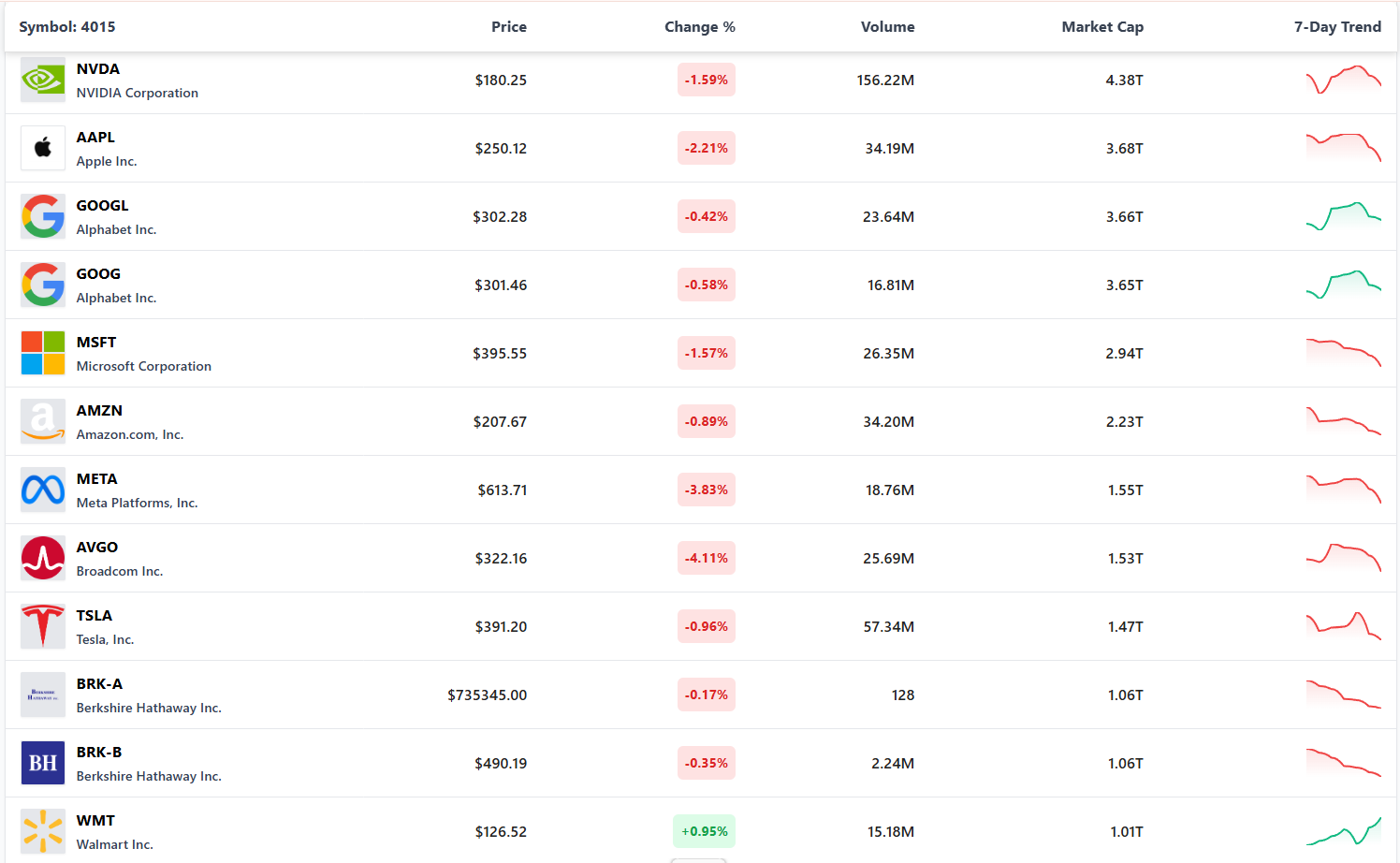
The platform provides updated financial statements, real time market data, and company specific information all in one place. Instead of jumping between multiple websites, you can access income statements, balance sheets, and cash flow reports alongside current stock prices and market news. This integration saves time and reduces the chance of working with inconsistent data.
Tickerplace’s stock screener lets you filter thousands of companies using the criteria you’ve learned in this guide. Set parameters for price to earnings ratios, return on equity, debt levels, and dozens of other metrics. The screener instantly identifies stocks matching your requirements, turning hours of manual research into minutes of focused analysis.
Beyond raw data, Tickerplace offers educational resources through its investing guide to deepen your understanding of analysis concepts. Whether you’re clarifying a specific ratio or learning advanced techniques, these materials support your continued growth as an investor. The platform’s user friendly interface makes complex financial information accessible without overwhelming you with unnecessary complexity.
How do I start analyzing stocks with no prior experience?
Begin by learning to read basic financial statements, focusing on the income statement first since it’s the most straightforward. Many investors find success starting with larger, established companies that have simpler business models and extensive analyst coverage. Use the investing education guide at Tickerplace to build foundational knowledge through structured lessons. Practice analyzing a few stocks thoroughly rather than superficially reviewing many, as depth builds competence faster than breadth when you’re starting out.
What are the most reliable financial metrics to consider?
Focus on valuation ratios like price to earnings, profitability measures such as return on equity, and solvency indicators including debt to equity. Key metrics include P/E ratio, return on equity, and debt to equity ratio as primary evaluation tools. No single metric tells the complete story, so combine multiple measures to build a comprehensive view. Compare metrics against industry averages and historical ranges rather than using absolute thresholds, since what’s healthy varies significantly across sectors.
How can I combine fundamental and technical analysis effectively?
Use fundamental analysis to identify financially sound companies with strong competitive positions and growth potential. Once you’ve found quality candidates, apply technical analysis to determine optimal entry points based on price trends and momentum indicators. Using both analyses helps understand intrinsic value and market timing simultaneously. This combination reduces the risk of buying good companies at poor prices or chasing momentum in fundamentally weak businesses.
What are common pitfalls to watch out for when analyzing stocks?
Common pitfalls include confirmation bias, overreliance on single metrics, and emotional decisions driven by fear or greed. Many investors also fail to verify data across multiple sources or ignore important context like industry trends and economic conditions. Avoid making decisions based solely on recent performance without examining longer term patterns. Cross check your analysis against independent sources and actively seek information that challenges your initial conclusions rather than only looking for supporting evidence.