
Active traders know the frustration: you scan hundreds of stocks daily, chase momentum plays on gut feeling, and watch promising setups collapse because you entered too late or sized positions poorly. Without a structured workflow, even experienced traders fall into emotional traps like FOMO and overtrading. This guide delivers a proven framework combining preparation routines, momentum strategies, and research-backed risk management to help you make smarter decisions consistently. You’ll discover how the ‘Up on Volume’ scan generates most actionable ideas, why fixed risk per trade protects your capital, and how to avoid common pitfalls that erode returns.
Table of Contents
-
Building A Reliable Stock Trading Workflow: Preparation And Tools
-
Executing Your Trades: Strategy, Risk Management, And Timing
-
Leveraging Advanced Insights And Technology In Your Trading Workflow
Key takeaways
| Point | Details |
| Up on Volume scan dominance | This single research tool generates 95% of actionable trading ideas for disciplined traders. |
| Fixed risk controls losses | Risk a consistent percentage per trade and size positions based on stop distance to prevent account destruction. |
| Momentum beats moving averages | Recent studies show momentum strategies deliver superior returns compared to traditional indicators. |
| Emotional discipline matters | FOMO and chasing extended stocks lead to poor entries and increased losses that compound over time. |
| Repeatable process wins | A diversified, systematic workflow beats sporadic brilliance every time. |
Building a reliable stock trading workflow: preparation and tools
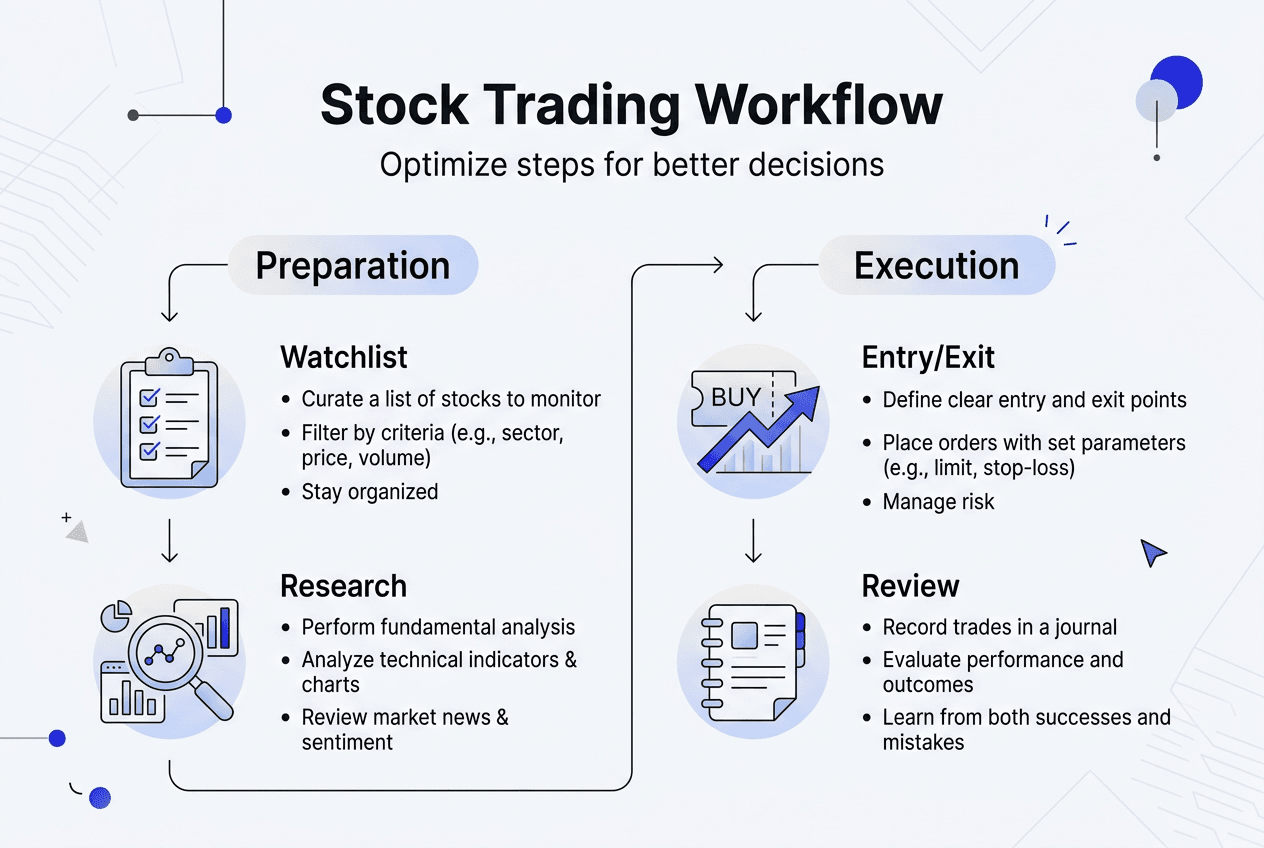
Your trading day starts before the market opens. Successful traders don’t hunt for random opportunities; they follow a repeatable research process that surfaces high-probability setups. The cornerstone of this preparation is the ‘Up on Volume’ scan, which sources 95% of actionable trading ideas by identifying stocks with rising volume and price momentum. This scan filters thousands of tickers down to a manageable watchlist of candidates showing institutional interest and breakout potential.
Start each morning by running this scan through your stock screener platform. You’re looking for stocks that meet specific criteria: volume at least 50% above average, price up 2% or more, and clean technical patterns like consolidations or flag formations. This systematic approach eliminates guesswork and keeps you focused on setups with proven edge. Don’t chase every ticker that pops up; apply fundamental filters like market cap minimums, sector preferences, and earnings quality to narrow your list further.
Once you’ve identified candidates, organize them into a structured watchlist with clear entry triggers, stop levels, and price targets. This preparation phase should include:
-
Reviewing overnight news and earnings announcements that could impact your watchlist stocks
-
Analyzing technical setups on multiple timeframes to confirm momentum alignment
-
Checking fundamental metrics like revenue growth and institutional ownership
-
Setting price alerts for key breakout or breakdown levels
-
Documenting your trade thesis for each stock to avoid emotional pivots later
The beauty of this trading routine workflow is its consistency. You’re not relying on luck or hot tips from social media. Instead, you’re building a repeatable system that identifies stocks when smart money is accumulating, giving you an informational edge before retail crowds pile in. This preparation phase typically takes 30 to 45 minutes but saves hours of reactive scrambling during market hours.
Executing your trades: strategy, risk management, and timing
Preparation means nothing without disciplined execution. The moment you enter a trade, your workflow shifts from research to risk control. Start by implementing fixed risk per trade models where you risk only 1% to 2% of your total account on any single position. This approach prevents account destruction by equalizing the impact of each trade, ensuring no single loss wipes out weeks of gains. Calculate your position size based on the distance between your entry price and stop loss, not on how bullish you feel about the stock.
Momentum-based entry signals have proven superior to traditional moving average crossovers in recent performance studies. When your watchlist stock triggers an entry, look for volume confirmation and price breaking above a defined resistance level with conviction. Avoid the temptation to enter before the breakout completes; patience here prevents getting shaken out by false starts. Your entry checklist should verify:
-
Price has broken above resistance on above-average volume
-
The stock is not already extended 10% or more from its breakout point
-
Your stop loss placement allows for normal volatility without being too wide
-
Position size matches your fixed risk percentage based on stop distance
-
Market conditions support the trade direction (check index behavior and sector strength)
Timing matters enormously. FOMO leads to poor entries when you chase stocks that have already run 15% in a day or enter positions simply because everyone else is talking about them. These emotional pull-ins typically result in buying near short-term tops, forcing you to endure drawdowns that test your conviction. Instead, wait for pullbacks to support levels or consolidation periods that offer better risk-reward ratios.
Pro Tip: Set a maximum number of trades per day (three to five) to prevent overtrading during choppy markets. Quality setups beat quantity every time, and limiting your executions forces you to be selective.
Regularly review your stop-loss placements as trades develop. If a stock moves in your favor, consider trailing your stop to lock in profits while giving the position room to run. Adjust position size for subsequent entries based on current account equity, not your starting balance. This dynamic risk management keeps your exposure aligned with actual capital at risk. Access investing education resources to deepen your understanding of position sizing formulas and volatility-adjusted stops.
Avoiding common pitfalls and optimizing your workflow
Even with solid preparation and execution, behavioral mistakes can derail your trading workflow. Overtrading causes burnout and account erosion, especially during choppy or range-bound market conditions when clear setups are scarce. Recognize the signs: you’re forcing trades that don’t meet your criteria, entering positions out of boredom, or revenge trading after a loss. On days when your scan produces few quality setups, the best trade is often no trade.

Emotional decision-making amplifies losses. When you see a stock rocketing higher without you, FOMO whispers that you’re missing out on easy money. This psychological trap leads to chasing extended stocks at precisely the wrong moment, buying tops instead of breakouts. Smart traders stay patient and act only when odds are in their favor, understanding that missing a move is far less costly than catching a reversal.
Maintain discipline through these practices:
-
Stick to predefined trade setups documented in your preparation phase
-
Set daily loss limits (for example, stop trading after losing 3% of account value in one day)
-
Diversify across multiple sectors to avoid concentration risk in correlated positions
-
Keep a trading journal documenting entries, exits, and emotional state to identify patterns
-
Review your workflow weekly to spot recurring mistakes and refine your process
Pro Tip: If you find yourself constantly second-guessing exits or moving stops to avoid losses, you’re likely trading position sizes that are too large for your risk tolerance. Scale down until you can follow your plan without emotional interference.
Patience separates consistently profitable traders from those who blow up accounts. Your workflow should include planned rest periods and market holidays when you step away completely. This prevents the fatigue that clouds judgment and leads to sloppy execution. Focus on mental discipline in trading as much as technical skills, because even the best strategy fails when emotions override logic.
“The goal of a successful trader is to make the best trades. Money is secondary.” This mindset shift helps you focus on process over outcomes, reducing the emotional weight of individual wins and losses.
Avoid the trap of constantly tweaking your workflow after every losing trade. Give your system time to prove itself over 50 to 100 trades before making significant changes. Variance is real, and short-term results often mislead. Track your performance metrics (win rate, average win versus average loss, maximum drawdown) to make data-driven adjustments rather than emotional reactions. Understanding trading problems and risk management helps you distinguish between system failures and normal statistical noise.
Leveraging advanced insights and technology in your trading workflow
Cutting-edge research is reshaping how traders optimize their workflows in 2026. Comparative studies reveal that momentum strategies consistently outperform moving average approaches across diverse market conditions. While moving averages lag price action and generate late signals, momentum indicators capture trend strength in real time, allowing earlier entries with better risk-reward profiles. This finding validates the ‘Up on Volume’ scan methodology, which inherently focuses on momentum rather than lagging indicators.
Emerging AI models and orchestration frameworks are beginning to show promise in supporting disciplined trading. One recent AI orchestration framework achieved 20.42% returns with strong risk metrics by combining multiple specialized agents for market analysis, risk assessment, and execution timing. However, most AI trading agents still underperform simple buy-and-hold strategies, so approach these tools with healthy skepticism. The value lies not in fully automated trading but in using AI to surface insights, validate trade theses, and identify patterns you might miss manually.
Consider how technology can enhance each workflow stage. Advanced screeners now incorporate machine learning to identify stocks with similar historical patterns to past winners. Real-time sentiment analysis tools scan social media and news to gauge retail and institutional interest. Brokerage platforms offer system design insights through API access, allowing you to backtest strategies and optimize parameters before risking capital. The key is integrating these tools without abandoning the disciplined framework that protects you from emotional mistakes.
| Strategy Type | Average Annual Return | Risk-Adjusted Performance | Best Use Case |
| Momentum (price and volume) | 18% to 24% | High Sharpe ratio, lower drawdowns | Trending markets, breakout trades |
| Moving averages (crossovers) | 8% to 12% | Moderate Sharpe, frequent whipsaws | Stable trends, longer timeframes |
| AI-assisted frameworks | 15% to 20% | Variable, depends on model quality | Complex multi-factor analysis |
| Combined approaches | 10% to 16% | Mixed results, requires customization | Diversified strategy portfolios |
This trading strategy comparison highlights why your workflow should prioritize momentum signals while using technology to refine entries and manage risk. Don’t chase the latest AI hype without understanding its limitations. The momentum strategy study demonstrates that simpler, well-executed approaches often beat complex algorithms that overfit to historical data.
Stay current with ongoing research by following academic journals and practitioner blogs that publish real-world trading results. The AI trading framework research offers valuable insights into how institutional players are thinking about automation, even if you’re not ready to implement these systems yourself. Understanding the landscape helps you adapt your workflow as new tools mature and proven strategies evolve. Technology should amplify your discipline, not replace it.
Enhance your stock trading workflow with Tickerplace tools
Now that you understand the components of an optimized trading workflow, it’s time to put theory into practice. Tickerplace offers comprehensive research and screening tools designed specifically for active traders who need reliable data and efficient workflows. Our platform lets you replicate the ‘Up on Volume’ scan that generates most actionable trade ideas, with customizable filters for volume thresholds, price movement, and technical patterns.
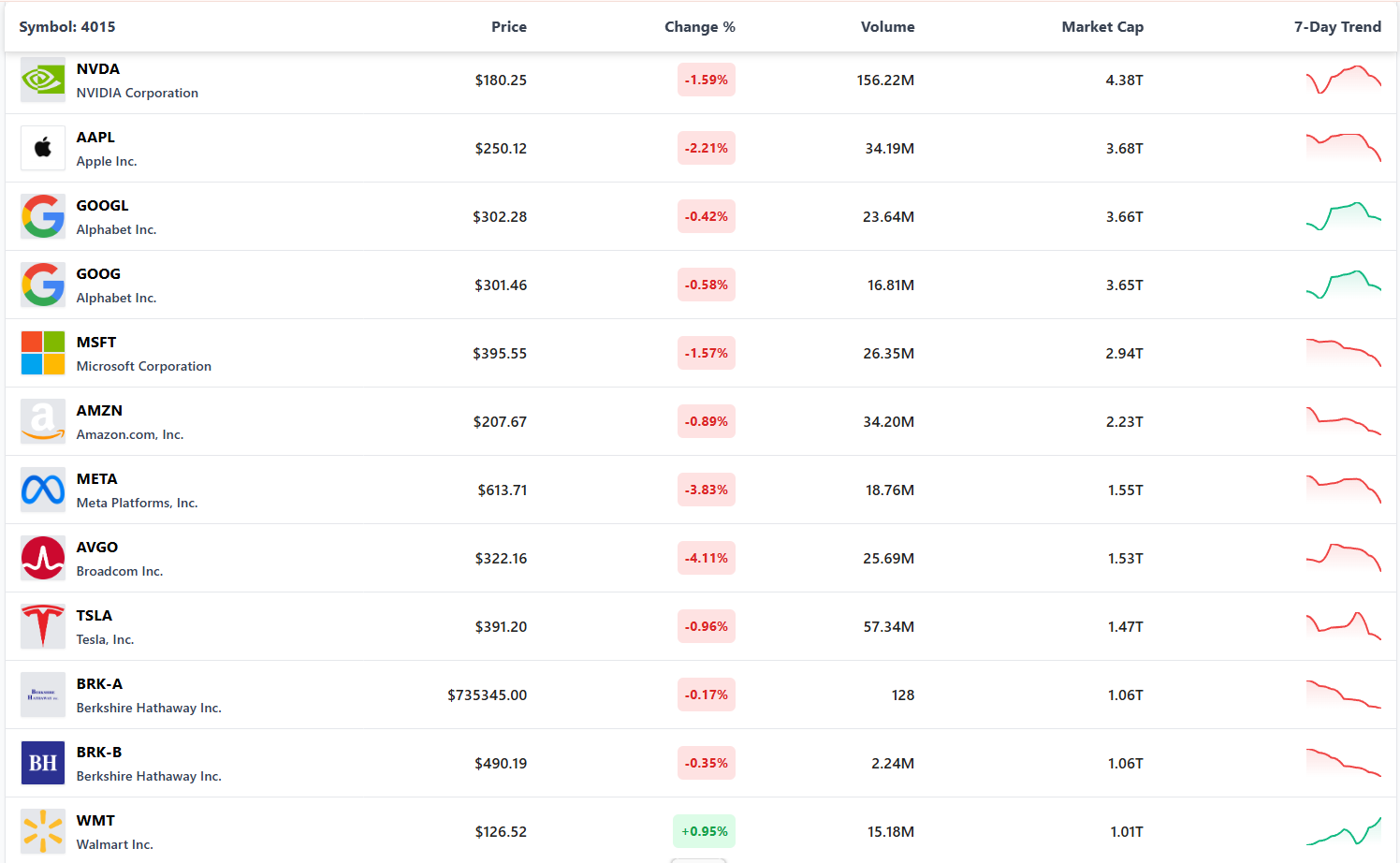
Use the stock screener tool to build daily watchlists in minutes, applying fundamental and technical criteria that match your strategy. Access real-time market data, company metrics, and technical analysis to validate trade setups before you commit capital. Our investing education resources provide ongoing learning to refine your risk management and strategy selection. Tickerplace streamlines the research process so you can focus on disciplined execution and continuous improvement.
Frequently asked questions
What is the ‘Up on Volume’ scan and why is it important?
The ‘Up on Volume’ scan identifies stocks experiencing rising price and volume simultaneously, signaling institutional accumulation and breakout potential. It serves as the primary research tool for building daily watchlists because it surfaces stocks with momentum before retail crowds notice. Using a stock screener with this scan function saves hours of manual chart review and anchors a repeatable, disciplined workflow. Implemented consistently, it provides a steady stream of high-probability setups that form the foundation of successful trading strategies.
How can I manage risk effectively in my trading workflow?
Effective risk management starts with fixed risk per trade models where you risk only 1% to 2% of your account on each position, preventing any single loss from significantly impacting your capital. Determine position size by dividing your risk amount by the distance between entry and stop loss, ensuring consistent exposure across all trades. Avoid emotional overtrading by setting daily loss limits and stepping away when you hit them, protecting both capital and mental clarity. Regularly review and adjust risk parameters as your account grows, and access risk management strategies to deepen your understanding of volatility-adjusted position sizing.
What strategies have proven to outperform in recent studies?
Momentum strategies focusing on price and volume have demonstrated significantly better returns than moving average crossover methods, with annual performance often exceeding traditional indicators by 10 percentage points or more. Combined strategies yield mixed results, highlighting that simply layering multiple indicators doesn’t guarantee superior performance and may introduce conflicting signals. Stay updated with ongoing research published in academic journals and practitioner studies to adapt your approach as market dynamics evolve. Consider AI-assisted tools cautiously, evaluating their real-world performance over meaningful time periods before integrating them into your workflow, and explore trading strategy performance analysis to compare approaches.
How do I avoid FOMO and emotional trading mistakes?
Recognize that FOMO stems from comparing your results to others’ highlight reels rather than focusing on your own process and long-term performance. Commit to entering only setups that meet your predefined criteria, documented during your preparation phase, regardless of what’s trending on social media. Set a maximum number of trades per day to prevent reactive decisions during volatile periods when emotions run highest. Keep a detailed trading journal that tracks not just entries and exits but also your emotional state, helping you identify patterns where feelings override logic and allowing you to develop countermeasures before those situations recur.