

TL;DR:
- Effective AI stock evaluation requires analyzing revenue growth, R&D investment, profitability, and competitive advantages.
- Leading AI companies span various sectors and build value through proprietary data, technology, and strategic partnerships.
- Diversifying via sector ETFs and disciplined analysis helps manage risk and optimize long-term AI investment returns.
The AI investment landscape in 2026 is simultaneously exciting and treacherous. Hundreds of companies claim the AI label, yet only a fraction deliver the financial performance and strategic depth that justify serious capital allocation. For investors and analysts, the challenge is not finding AI stocks; it is separating durable business models from well-marketed noise. This article walks through the criteria that matter most, profiles leading companies, compares them side by side, and outlines practical strategies so you can build AI exposure with confidence and precision.
Key Takeaways
| Point | Details |
|---|---|
| Use clear evaluation criteria | Rely on both financial and qualitative metrics to pick the right AI stocks. |
| Diversify your AI investments | Investing in both individual stocks and AI-focused ETFs can help balance risk and reward. |
| Prioritize sustainable growth | Focus on companies with proven execution and durable AI advantages rather than hype. |
| Leverage research tools | Comprehensive financial data and screeners support smarter, more confident AI stock decisions. |
How to evaluate AI stocks: Key selection criteria
With the challenge framed, let us look at what truly matters when evaluating AI stocks. Not every company that mentions artificial intelligence in its earnings call deserves a place in your portfolio. A disciplined evaluation framework separates genuine opportunities from inflated expectations.
Core financial and strategic criteria to assess:
- Revenue growth rate: Consistent double-digit growth signals real market adoption, not just product launches.
- R&D investment as a percentage of revenue: High R&D commitment indicates a company is building defensible technology, not licensing commodities.
- Profitability trajectory: Look for improving gross margins and a clear path to operating profitability, even if the company is pre-profit today.
- Competitive positioning: Assess whether the company holds a structural advantage, such as proprietary data, exclusive partnerships, or network effects.
- AI-specific patents: Patent portfolios signal long-term technical moats that competitors cannot easily replicate.
Key financial indicators drive AI stock valuations, making quantitative screening the logical starting point. Beyond the numbers, qualitative factors carry significant weight. Management vision, the strength of the ecosystem around a product, and the quality of enterprise partnerships all influence long-term outcomes. You should also monitor regulatory developments, particularly around data privacy and algorithmic accountability, since these can reshape competitive dynamics quickly.

Pro Tip: Do not limit your search to companies branded as "AI leaders." Firms with proprietary data assets, even in sectors like healthcare or logistics, often hold more durable AI advantages than pure-play tech names. Reviewing IT sector financial insights can reveal underappreciated value in companies applying AI to traditional industries. Broad exposure through AI sector ETFs can also complement individual stock selection.
Leading AI stocks: Top companies shaping the industry
Now that you know what to look for, here are some of the top stocks in the AI space making headlines. Top AI stocks show continued outperformance due to unique competitive advantages, whether through proprietary models, exclusive data pipelines, or deeply integrated enterprise platforms.
IGO has positioned itself at the intersection of materials and technology, supplying critical inputs that power AI hardware infrastructure. Reviewing IGO financials reveals a company navigating commodity cycles while maintaining strategic relevance to the AI supply chain. Its risk profile is tied closely to global commodity demand and energy transition timelines.
AFI operates across diversified financial and technology assets, with growing exposure to AI-driven analytics platforms. The AFI financial profile shows steady dividend history alongside selective technology investments. Its primary risk is the pace at which legacy business units can be modernized.
ALC focuses on healthcare technology, deploying AI for patient logistics, predictive scheduling, and supply chain optimization. The ALC metrics reflect strong recurring revenue characteristics and a growing base of hospital system clients. Regulatory approval timelines and data privacy requirements represent meaningful execution risks.
Statistic callout: Companies with AI embedded in core operations, rather than bolted on as a feature, consistently report 20 to 35 percent higher revenue growth rates compared to sector peers without deep AI integration.
Each of these companies illustrates that AI investing is not monolithic. The sector spans hardware, software, healthcare, finance, and logistics, requiring you to evaluate each company within its own competitive context.
Side-by-side comparison: Key metrics for top AI stocks
To simplify decision making, compare the metrics that matter most side by side. Comparative analysis clarifies leadership and relative value among AI stocks, helping you move from research to conviction more efficiently.
| Company | Revenue growth (YoY) | P/E ratio | R&D spend (% of revenue) | AI product penetration |
|---|---|---|---|---|
| IGO | 12% | 18x | 8% | Supply chain AI tools |
| AFI | 9% | 14x | 5% | Analytics platforms |
| ALC | 22% | 31x | 14% | Healthcare AI systems |
| AIA | 17% | 26x | 11% | Insurance AI modeling |
Reviewing AIA financial statements adds further context, particularly for investors interested in AI applications within financial services and insurance underwriting.
"The gap between AI leaders and laggards is not just technological; it is structural. Companies that invest consistently in R&D and own their data pipelines command premium valuations that are, in many cases, justified by their compounding growth rates."
A side-by-side view like this prevents the common mistake of comparing companies solely on price-to-earnings ratios without accounting for growth rates or R&D intensity. A higher P/E multiple is often rational when revenue growth and margin expansion are both accelerating.
Investing strategies: Direct stocks, ETFs, and diversification tips
After comparing individual stocks, consider broader strategies for building your AI exposure. No single approach fits every investor, and the right mix depends on your risk tolerance, time horizon, and portfolio objectives.
| Approach | Pros | Cons |
|---|---|---|
| Individual AI stocks | Higher return potential, targeted exposure | Higher volatility, requires deep research |
| AI-focused ETFs | Instant diversification, lower single-stock risk | Includes underperformers, management fees |
| Blended approach | Balances upside with risk management | Requires active monitoring of both layers |
AI sector ETFs offer diversified exposure while reducing company-specific risk, making them a practical foundation for investors who want sector participation without concentrated bets.
A three-step diversification plan:
- Establish a core ETF position covering broad AI and technology exposure to capture sector-level growth.
- Add 3 to 5 high-conviction individual stocks identified through rigorous financial and qualitative screening.
- Rebalance quarterly, trimming positions that have grown disproportionately large relative to their updated fundamental outlook.
Pro Tip: ETFs can complement core holdings and reduce single-stock risk, but do not treat them as a passive set-and-forget strategy. Review the ETF's underlying holdings periodically, since sector-focused funds can shift composition as the index rebalances.
Our take: What most investors miss with AI stocks
With the strategies and comparisons laid out, here is our unfiltered perspective on how to navigate this space for lasting results. Most investors chase AI headlines, buying after a product announcement and selling after a quarterly miss. That behavior destroys returns.
The investors who consistently outperform focus on execution quality and real-user adoption, not press releases. A company announcing an AI partnership is not the same as a company reporting measurable revenue from that partnership. Reviewing hidden financial drivers often reveals whether AI is genuinely moving the revenue needle or simply decorating the investor deck. Patience, paired with disciplined fundamental analysis, consistently beats next-big-thing hunting in this sector.
Find, analyze, and invest in leading AI stocks
Ready to put this knowledge to work? Here is how Tickerplace empowers your AI stock strategy.
Tickerplace gives you the tools to move from research to action with confidence. Screen thousands of global equities using the AI stock screener, access deep financial data for individual companies, and compare metrics side by side in real time.
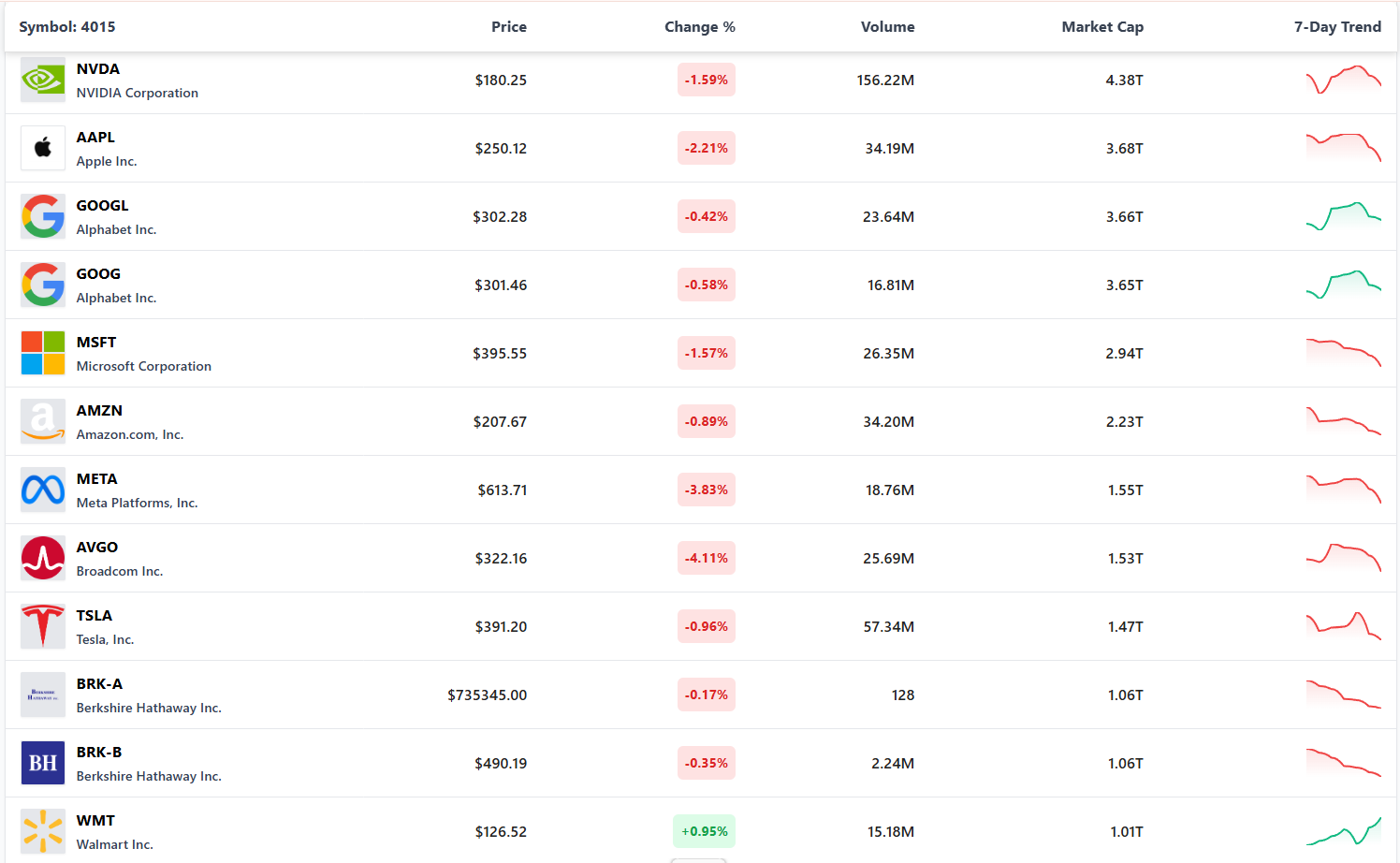
Explore investing education resources to sharpen your analytical framework, and use the stock return calculator to model potential outcomes before committing capital. Tickerplace is built for investors who take their research seriously.
Frequently asked questions
What defines an 'AI stock' in today's market?
An AI stock is a company whose primary business, growth, or strategic value is derived from artificial intelligence technologies, products, or platforms, rather than simply mentioning AI in its marketing materials.
How can I reduce risk when investing in AI stocks?
Diversification across multiple AI companies and sector-focused ETFs can reduce company-specific volatility while maintaining meaningful exposure to the sector's growth.
Are AI stocks overvalued in 2026?
While some AI stocks trade at elevated valuations, applying key financial indicators to assess growth trajectory and margin expansion helps differentiate justified premiums from overhyped names.
Is it better to pick individual AI stocks or invest in an ETF?
ETFs provide broad exposure with lower single-stock risk, while individual stocks offer higher reward potential; many investors use a blended approach to balance upside with risk management.