
Evaluating IT services companies demands more than scanning revenue numbers. Investors face the challenge of interpreting diverse performance metrics, from billable utilization rates to EBITDA margins, while navigating valuation approaches that vary by company maturity and growth stage. Understanding which financial benchmarks truly matter and how to apply them separates informed investment decisions from guesswork. This article breaks down essential financial metrics, proven valuation strategies, and practical criteria that help you identify top-performing IT services companies and make smarter portfolio choices in a competitive market landscape.
Key Takeaways
| Point | Details |
|---|---|
| Core metrics to track | Billable utilization, gross margin, and EBITDA margin are the core benchmarks investors use to gauge IT services performance. |
| Utilization and margins interplay | High utilization does not guarantee profitability if margins are weak, and strong margins may mask capacity shortfalls. |
| Valuation by maturity | EV/EBITDA is preferred for mature IT services firms, whereas revenue multiples suit growth oriented firms. |
| Top decile headroom | Compare utilization to the top decile benchmark of 88 percent to identify margin expansion headroom. |
Key financial benchmarks for evaluating IT services companies
Billable utilization stands as the cornerstone metric for IT services analysis. The industry median hovers around 75%, measuring the percentage of consultant hours that generate client revenue versus total available hours. This metric directly impacts revenue generation capacity and signals how effectively a company deploys its workforce. When you see utilization rates consistently above 80%, you are looking at a company with superior project pipeline management and resource allocation.
Gross margin reveals profitability at the project delivery level. The median sits near 52%, representing revenue minus direct labor costs and subcontractor expenses. Companies achieving gross margins above 60% typically possess specialized expertise, premium client relationships, or proprietary methodologies that command higher billing rates. Lower margins might indicate commoditized services, intense price competition, or inefficient delivery models that erode profitability.
EBITDA margin measures operating efficiency after accounting for overhead and administrative costs. The industry median stands at approximately 9.8%, though top performers reach 20% or higher. This metric helps you assess whether a company can convert revenue growth into actual operating profit. Declining EBITDA margins often signal rising sales and marketing costs, increased administrative overhead, or pricing pressure that management has not addressed through operational improvements.
Revenue per consultant provides a productivity benchmark, averaging around $200,000 annually across the industry. This figure varies significantly by service line and geographic market. Companies generating $250,000 or more per consultant typically focus on higher-value advisory services rather than staff augmentation. Track this metric over time to spot productivity improvements from automation, offshore leverage, or portfolio shifts toward premium offerings.
Pro Tip: Compare a company’s utilization rate against the top decile benchmark of 88% rather than just the median. This reveals how much operational headroom exists for margin expansion without requiring new client wins or rate increases.
| Metric | Median | Top Decile | Investment Signal |
|---|---|---|---|
| Billable utilization | 75% | 88% | Operational excellence indicator |
| Gross margin | 52% | 65%+ | Service differentiation and pricing power |
| EBITDA margin | 9.8% | 20%+ | Operating leverage and scalability |
| Revenue per consultant | $200K | $250K+ | Service mix and productivity |
These benchmarks work best when analyzed together rather than in isolation. A company with high utilization but low gross margins might be filling capacity with low-margin work. Conversely, high gross margins with poor utilization suggests demand issues or pipeline problems. Review IPL financial statements and IFL financial statements to see how real companies stack up against these industry standards.
Valuation strategies for mature IT services companies
EV/EBITDA emerges as the preferred valuation multiple for mature IT services companies because their business model generates steady cash flow with minimal capital expenditure requirements. Unlike manufacturing or infrastructure businesses, IT services firms need limited physical assets to operate. Their primary assets are people and intellectual capital, making EBITDA a cleaner proxy for cash generation than metrics requiring depreciation adjustments. When you evaluate established players with predictable revenue streams, EV/EBITDA multiples between 8x and 15x typically represent fair value, depending on growth rates and competitive positioning.
Revenue multiples serve better for high-growth companies still investing heavily in market expansion or burning cash to capture market share. These firms might show negative or minimal EBITDA while building scale, making EBITDA-based valuation meaningless or misleading. Use EV/Revenue multiples as a cross-validation tool even for profitable companies, particularly when comparing against pure-play competitors or assessing acquisition premiums. Multiples ranging from 1.5x to 3.5x revenue appear commonly in the sector, with cloud-focused and digital transformation specialists commanding premium valuations.
Combining both approaches strengthens your valuation analysis. Calculate EV/EBITDA for the primary assessment, then verify the implied valuation makes sense relative to revenue multiples of comparable companies. Significant divergence between the two methods often signals either margin expansion opportunities or compression risks that deserve deeper investigation. This dual-lens approach helps you avoid overpaying for companies with temporarily inflated margins or missing value in businesses undergoing profitable turnarounds.
Pro Tip: Layer in return on equity alongside EV/EBITDA when evaluating IT services investments. Companies generating 20%+ ROE while trading at reasonable EBITDA multiples often deliver superior long-term returns because they compound earnings efficiently without requiring constant capital infusions.
-
EV/EBITDA multiples account for capital structure differences between companies, making peer comparisons more reliable than price-to-earnings ratios
-
Use the EV/EBITDA calculator to quickly assess whether current trading multiples align with historical ranges and peer valuations
-
Calculate enterprise value properly by including all debt, minority interests, and subtracting cash to get accurate multiples
-
Apply the enterprise value calculator to model different scenarios and stress-test your valuation assumptions
Valuation multiples shift with market conditions and sector sentiment. During economic uncertainty, investors compress multiples as revenue visibility decreases and margin pressure intensifies. Conversely, during digital transformation booms, multiples expand as companies compete for scarce IT talent and specialized capabilities. Track how multiples trend across market cycles to identify opportune entry points when quality companies trade below their historical ranges without fundamental deterioration.
Top-performing IT services companies: Metrics comparison
Industry growth has decelerated to a 4-7% annual pace, down from the double-digit rates seen during peak digital transformation spending. This slowdown reflects market maturation, economic headwinds, and clients becoming more selective about technology investments. Within this slower-growth environment, performance dispersion between top and median performers has widened dramatically. Companies with differentiated capabilities and strong client relationships continue capturing disproportionate value while commodity players struggle with pricing pressure and margin compression.
Utilization rates tell a striking story about operational excellence. Median utilization has declined to approximately 69%, reflecting softer demand and increased bench time between projects. Top performers maintain utilization above 80% by cultivating deeper client relationships that generate repeat work, building specialized practices with consistent demand, and managing workforce planning more precisely. This 11-point gap translates directly into revenue and profitability differences that compound over time.
EBITDA margin dispersion reveals even more dramatic performance gaps. While median margins hover around 10%, top decile companies achieve margins reaching 28% or higher. These superior performers leverage offshore delivery models more effectively, command premium pricing through specialized expertise, and maintain leaner overhead structures. They also demonstrate pricing power, successfully implementing rate increases that stick because clients perceive unique value in their services rather than viewing them as interchangeable vendors.
| Performance Tier | Revenue Growth | Utilization | EBITDA Margin | Key Differentiators |
|---|---|---|---|---|
| Top Decile | 10-15% | 80-88% | 20-28% | Specialized capabilities, pricing power, operational excellence |
| Median | 4-7% | 69-75% | 9-11% | Balanced service portfolio, moderate efficiency |
| Bottom Quartile | 0-3% | 55-65% | 3-7% | Commoditized services, pricing pressure, execution challenges |
Higher utilization and pricing power correlate strongly with valuation premiums in public markets. Companies demonstrating both characteristics typically trade at EV/EBITDA multiples 30-50% above median competitors. Investors reward operational consistency and margin resilience, particularly during economic downturns when these qualities become scarce. Focus your analysis on companies showing improving utilization trends and stable or expanding margins, as these patterns often precede multiple expansion and stock price appreciation.
Examine CPU financial statements to see how specific companies perform against these benchmarks. Look beyond the current quarter to identify multi-year trends in utilization, margin progression, and revenue quality. Companies consistently performing in the top quartile across multiple metrics deserve premium valuations, while those hovering near median levels should trade at discounts unless clear catalysts exist for performance improvement.
-
Market positioning matters more than size; niche leaders often outperform diversified generalists on margins and growth
-
Geographic mix influences margins significantly, with North American delivery commanding higher rates than purely offshore models
-
Client concentration risk becomes critical; companies deriving over 20% of revenue from single clients face valuation discounts
-
Talent retention metrics provide early warning signals, as rising attrition typically precedes utilization and margin deterioration
Investment decision criteria and practical tips for investors
Building a systematic evaluation framework prevents emotional decisions and helps you maintain discipline across market cycles. Start by benchmarking each company’s utilization, gross margin, and EBITDA margin against both industry medians and top percentile performers. Companies consistently exceeding median benchmarks deserve closer analysis, while those trailing across multiple metrics require compelling turnaround narratives to justify investment. This quantitative screening eliminates weaker candidates quickly and focuses your research time on genuine opportunities.
Apply EV/EBITDA multiples as your primary valuation tool for mature companies, but validate your conclusions with revenue multiples and peer comparisons. Calculate the implied growth rate embedded in current valuations to assess whether market expectations seem reasonable given the company’s track record and market position. Companies trading at premium multiples must demonstrate clear paths to sustaining above-market growth or expanding margins to justify higher valuations. Conversely, discount multiples might signal overlooked value if operational metrics show improvement trajectories.
Pricing power and operational efficiency separate sustainable performers from temporary winners. Look for companies that maintain or expand margins during revenue growth periods, demonstrating they can scale without proportional cost increases. Track gross margin trends closely, as erosion here typically indicates commoditization pressure or competitive intensity that threatens long-term profitability. Companies with improving gross margins while growing revenue possess rare competitive advantages worth premium valuations.
Pro Tip: Monitor quarterly changes in utilization rates as leading indicators for revenue and margin trends. Declining utilization often precedes revenue misses by one or two quarters, while improving utilization signals accelerating growth before it appears in reported results.
“EV/EBITDA is the key multiple to gauge mature IT services companies due to their capex-light and stable cash flow model.”
Implement a structured checklist approach for every investment candidate:
-
Financial metrics assessment: Compare utilization, gross margin, EBITDA margin, and revenue per consultant against industry benchmarks and historical company performance
-
Valuation alignment: Calculate EV/EBITDA and EV/Revenue multiples, compare to peers and historical ranges, assess whether current valuation reflects fundamentals or sentiment
-
Growth prospects evaluation: Analyze service portfolio positioning, client diversification, geographic expansion opportunities, and addressable market dynamics
-
Cash flow consistency: Review free cash flow generation, working capital management, and capital allocation track record to ensure earnings quality
This framework works across market environments because it focuses on fundamental business quality rather than short-term momentum. During market corrections, apply the same criteria to identify quality companies trading at temporary discounts. In bull markets, use these standards to avoid overpaying for mediocre businesses riding sector enthusiasm.
Cash flow deserves particular attention in IT services analysis. Companies with strong EBITDA but poor cash conversion often face working capital challenges from extended payment terms or aggressive revenue recognition. Calculate free cash flow as a percentage of EBITDA, targeting companies that convert 70% or more consistently. Lower conversion rates might indicate collection issues, unbilled revenue problems, or accounting aggressiveness that warrants skepticism.
Leverage investing education resources to deepen your understanding of valuation methodologies and financial analysis techniques. The more fluent you become with these tools, the faster you can evaluate opportunities and the more confident your investment decisions become. Continuous learning separates investors who compound wealth from those who chase performance without understanding underlying fundamentals.
Explore advanced stock market tools for IT services investing
Applying these financial benchmarks and valuation strategies becomes significantly easier with the right analytical tools. Tickerplace provides comprehensive financial statements, real-time market data, and advanced screening capabilities designed specifically for investors analyzing IT services companies and broader equity markets. Access detailed income statements, balance sheets, and cash flow data to calculate the metrics discussed throughout this article without manual data entry or spreadsheet complexity.
The platform’s EV/EBITDA calculator streamlines valuation analysis by automatically pulling current market data and financial statements to compute multiples instantly. Compare companies side by side, track historical multiple trends, and identify valuation anomalies that might signal investment opportunities. The stock screener tool lets you filter the entire IT services universe by utilization proxies, margin thresholds, growth rates, and valuation multiples to surface candidates matching your specific investment criteria.
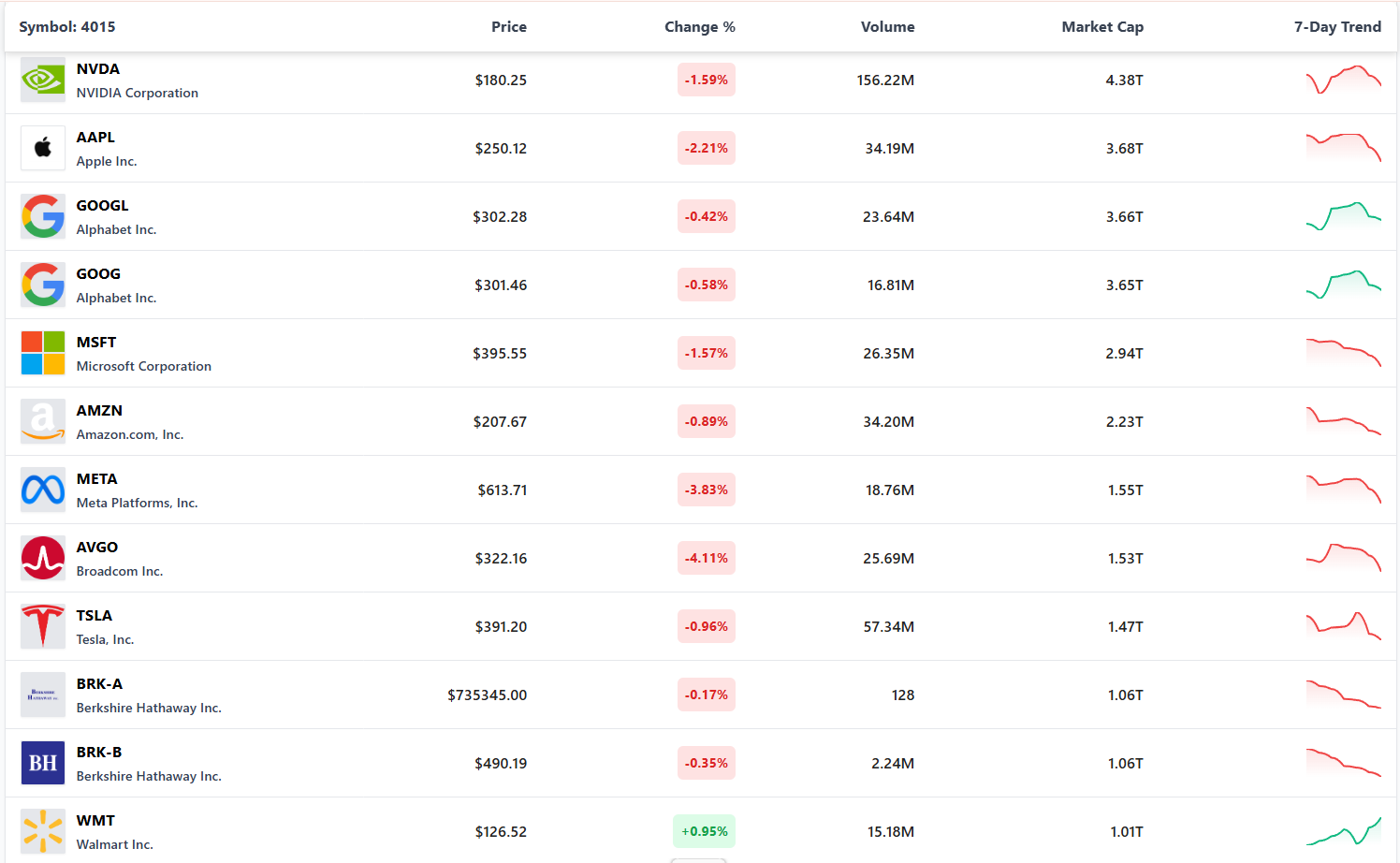
Pro Tip: Use integrated calculators to validate your investment thesis efficiently by modeling different growth scenarios and margin assumptions. Stress-testing your assumptions with real-time data builds conviction in your best ideas while revealing weaknesses in marginal candidates before you commit capital.
These tools transform hours of manual research into minutes of focused analysis, letting you evaluate more opportunities with greater depth. Whether you are building a concentrated portfolio of top-tier IT services companies or seeking undervalued turnaround candidates, having accurate data and powerful analytical tools at your fingertips improves both decision quality and execution speed.
Frequently asked questions
What financial metrics matter most when analyzing IT services companies?
Billable utilization, gross margin, and EBITDA margin serve as the core performance indicators for IT services analysis. These metrics reveal operational efficiency, pricing power, and profitability in ways that revenue growth alone cannot capture. Track them quarterly to identify improving or deteriorating business fundamentals before they fully reflect in stock prices.
Why is EV/EBITDA preferred over EV/Revenue for mature firms?
EV/EBITDA better reflects cash flow generation and operating efficiency in mature IT services companies because their capex-light business models convert EBITDA to cash reliably. Revenue multiples remain useful primarily for high-growth or early-stage firms where profitability has not yet materialized. Combining both approaches provides the most complete valuation picture.
How can investors identify top-performing IT services companies?
Look for companies maintaining utilization rates above 80%, EBITDA margins exceeding 15%, and demonstrated pricing power through stable or expanding gross margins. Compare these metrics against industry medians and top decile benchmarks rather than absolute levels. Companies consistently performing in the top quartile across multiple dimensions typically justify premium valuations and deliver superior long-term returns.
What valuation multiple range is reasonable for IT services stocks?
Mature IT services companies typically trade between 8x and 15x EV/EBITDA, depending on growth rates, margin profiles, and competitive positioning. Specialized firms with strong pricing power and margin expansion potential command the higher end of this range. Commodity players or those facing margin pressure trade toward the lower end. Always compare multiples to both historical ranges and current peer valuations to assess relative attractiveness.