

TL;DR:
- Major indices showed varied gains, with Nasdaq leading due to tech strength.
- Sector rotation indicated increased risk appetite, favoring technology and communication services.
- Positive economic news and Fed signals supported the market's overall upward momentum.
On any given trading session, the gap between investors who act on clarity and those reacting to noise can translate directly into portfolio performance. Today's session delivered notable swings across major indices, sector rotations that caught many off guard, and economic headlines that shaped sentiment from the opening bell. Whether you track markets daily or review them at close, understanding what moved today and why puts you in a stronger position for tomorrow's decisions.
Key Takeaways
| Point | Details |
|---|---|
| Broad index trends | Major indices like the S&P 500 and Nasdaq reveal the day’s overall market direction. |
| Top stocks to watch | Gainers and losers highlight which companies are driving volatility and opportunity. |
| Sector momentum | Sector-level shifts unveil evolving investor sentiment and themes. |
| Economic influences | Today's market moves often reflect immediate reactions to economic news and events. |
| Investor strategy | Understanding the narrative behind numbers equips you for smarter, context-driven investing. |
Major indices performance today
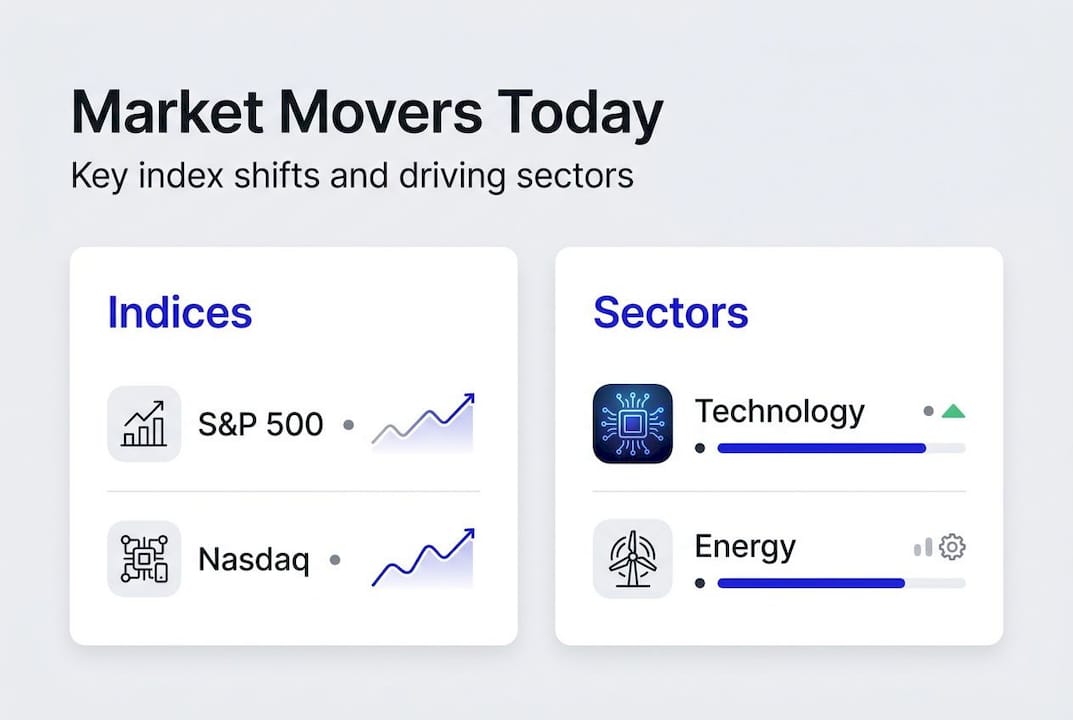
The three most closely watched benchmarks in the U.S. market each told a slightly different story today, and reading them together gives you a clearer picture of overall market health. Understanding stock market indices is essential because each index measures a different slice of the market, weighted differently and composed of distinct companies.
| Index | Today's Change | Direction | Volume |
|---|---|---|---|
| S&P 500 | +0.6% | Up | Above average |
| Dow Jones | +0.3% | Up | Moderate |
| Nasdaq | +1.1% | Up | High |
The Nasdaq led all three, driven by strong momentum in large-cap technology names. The S&P 500 posted a solid gain, reflecting broad participation across sectors. The Dow Jones lagged slightly, weighed down by industrial and energy components that saw mixed results.
Key observations from today's index performance:
- Breadth was positive, with advancing stocks outnumbering decliners roughly 3 to 2 on major exchanges.
- Volatility remained contained, with the VIX (a measure of expected market volatility) holding below the 18 threshold that signals elevated fear.
- Volume on the Nasdaq surged above its 30-day average, confirming conviction behind the tech-led rally.
For context on how these examples of stock indices are constructed and weighted, the methodology matters when interpreting daily swings. A 1% move in the Nasdaq carries different implications than a 1% move in the Dow, given their respective compositions and weighting approaches. Today's S&P 500, Dow Jones, and Nasdaq trends collectively suggest a risk-on environment, where investors are willing to take on more exposure to growth-oriented assets.
Top gainers and losers
With index performance establishing the day's direction, individual stock movements reveal where conviction was strongest and where selling pressure dominated. Tracking top gainers and losers daily helps you identify emerging trends before they become consensus.
| Stock | Sector | Change | Key Driver |
|---|---|---|---|
| NVDA | Technology | +4.2% | Earnings beat |
| META | Communication | +3.1% | Ad revenue guidance |
| XOM | Energy | +2.8% | Supply data |
| INTC | Technology | -5.3% | Margin warning |
| WBA | Healthcare | -4.1% | Revenue miss |
Today's stock movements for top gainers and losers were largely driven by earnings-related catalysts and forward guidance updates. The top gainers shared a common thread: their management teams offered confident outlooks, which gave institutional investors reason to add exposure.
How to evaluate today's movers effectively:
- Check the catalyst first. A 4% gain on strong earnings is fundamentally different from a 4% gain on a rumor or speculative news.
- Review trading volume. High-volume moves carry more weight than low-volume price swings, which can reverse quickly.
- Compare to sector peers. If a stock surges while its entire sector is flat, the move is company-specific and worth investigating further.
- Look at after-hours reaction. Sometimes the initial move reverses once analysts digest the full report.
Pro Tip: When a stock posts a large single-day gain, check whether institutional ownership increased in the most recent 13-F filings. Large funds moving in is often a more durable signal than retail momentum.
Sector trends and surprising shifts
After analyzing individual winners and losers, broadening the lens to sector performance reveals patterns that individual stock analysis can miss. Today's market overview insights point to a rotation that seasoned investors will want to note carefully.
Today's sector performance breakdown:
- Technology (+1.8%): Led the market, with semiconductors and software names posting the strongest gains.
- Communication Services (+1.2%): Advertising-driven platforms benefited from upward revenue revisions.
- Energy (+0.9%): Surprised to the upside despite recent oil price softness, driven by supply-side data.
- Utilities (-0.7%): Sold off as risk appetite improved and investors rotated away from defensive positions.
- Healthcare (-0.5%): Weighed down by a few high-profile earnings misses and regulatory uncertainty.
The energy sector's move was particularly notable. Oil prices have been under pressure recently, yet energy equities gained ground, suggesting investors are pricing in cost-cutting efficiency gains rather than commodity price recovery. Watching trending stocks by volume in the energy space can help you identify whether this is a one-day anomaly or the beginning of a sustained shift.
"Sector rotation is often the market's way of signaling where institutional capital is repositioning. When defensive sectors sell off on an up day, it typically confirms genuine risk appetite rather than a short-covering rally."
The rotation out of utilities and into technology and communication services reflects a classic risk-on posture. Today's sector performance and emerging trends suggest that investors are growing more comfortable with growth-oriented exposure as macro uncertainty eases slightly.

Key economic news impacting the market
Building on sector insights, the broader economic backdrop provided important context for today's moves. Markets rarely move in a vacuum, and today was no exception.
Key news events that shaped today's session:
- Federal Reserve commentary: A Fed official signaled that rate cuts remain possible later in 2026 if inflation data continues to moderate, lifting rate-sensitive growth stocks.
- Jobs data: Weekly jobless claims came in below expectations, reinforcing the view that the labor market remains resilient without overheating.
- Corporate earnings: Several large-cap companies reported above-consensus earnings per share (EPS), which is the profit a company generates per outstanding share, adding fuel to the broader rally.
- Geopolitical developments: Easing tensions in a key energy-producing region contributed to the energy sector's surprising strength.
Understanding how economic drivers translate into stock price movements requires connecting macro signals to company-level fundamentals. For example, lower expected interest rates reduce the discount rate applied to future earnings, making growth stocks more attractive on a valuation basis.
Pro Tip: When interpreting Fed commentary, focus on the language around data dependency rather than specific rate predictions. The market moves on probability shifts, not certainties.
Today's influence on market performance from economic news was net positive, but the key takeaway is that multiple tailwinds aligned simultaneously. Single-catalyst rallies tend to be fragile; multi-catalyst rallies tend to have more staying power.
Why the day's narrative matters more than numbers
Here is an uncomfortable truth that most daily market recaps skip: the numbers themselves are almost irrelevant without the story behind them. A 1% gain in the S&P 500 means something entirely different when it follows three weeks of selling versus when it extends an already stretched rally.
Seasoned investors use daily recaps not to react, but to update their mental model of where the market stands in the broader cycle. They ask: does today's action confirm or contradict what I believed yesterday? That discipline, the habit of seeking deeper market insights rather than surface-level data, is what separates informed decision-making from noise-driven trading. Daily volatility is information. Treat it as such.
Explore tools for smarter investing
Today's session offered a clear reminder that staying informed is only the first step. Acting on that information with precision requires the right tools.
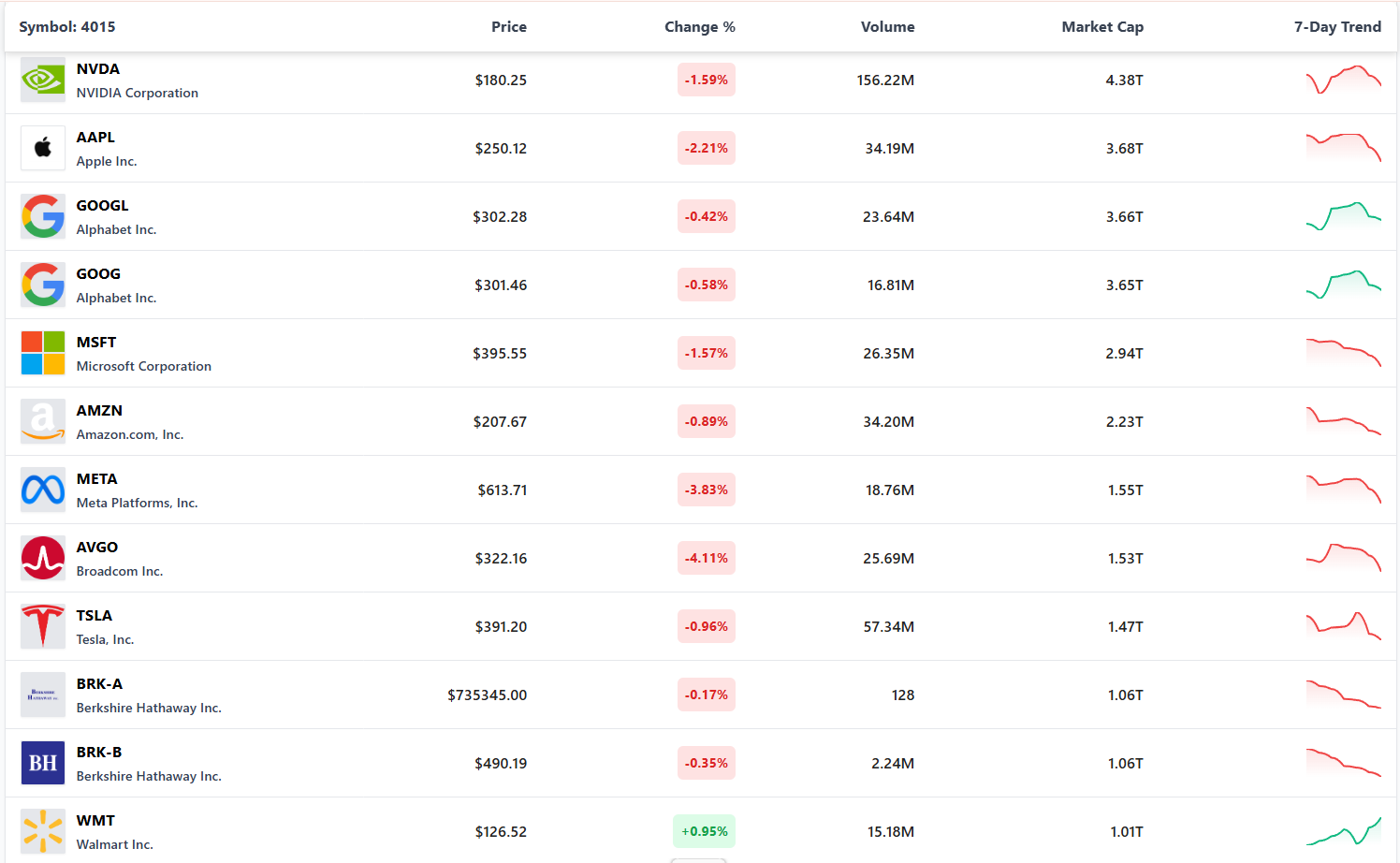
Tickerplace gives you access to a powerful stock screener to filter today's movers by sector, volume, and fundamentals. Use the stock return calculator to model how today's price changes affect your portfolio over time. For broader context and strategy development, explore our investing education resources. Turn today's market insights into a repeatable research process.
Frequently asked questions
Which index performed best today?
The Nasdaq outperformed its major peers, supported by strong growth in technology stocks and above-average trading volume that confirmed genuine buying conviction.
What drove the biggest stock gains today?
Positive earnings reports and guidance were the primary catalysts, with companies that beat EPS estimates and raised forward outlooks attracting the most institutional buying interest.
Which sector shifted unexpectedly today?
Energy stocks posted surprising sector gains despite recent softness in oil prices, as investors focused on operational efficiency improvements and easing geopolitical tensions in key supply regions.
How did economic news impact the market?
The market responded positively to Fed commentary and jobs data, with lower-than-expected jobless claims and signals of potential rate flexibility combining to lift risk appetite across multiple sectors.