

TL;DR:
- The stock market is a structured system for buying and selling company ownership for all investors.
- Stock prices fluctuate due to market dynamics, driven by fundamentals, investor sentiment, and economic factors.
- Long-term, diversified investing in index funds outperforms active trading and minimizes risk.
Many investors assume the stock market is a territory reserved for Wall Street professionals, seasoned traders, or those with deep pockets. That assumption is wrong, and it costs everyday people real wealth-building opportunities. The market's mechanics are learnable, and once you understand how it works, you stop guessing and start making decisions grounded in knowledge. This guide breaks down what the stock market is, how stocks generate returns, what moves prices, and how to manage risk effectively from the very start.
Key Takeaways
| Point | Details |
|---|---|
| Stock market basics | The stock market connects investors and companies, making ownership and growth accessible to anyone. |
| Stocks as ownership | When you own stock, you own a piece of a company with potential for growth and risks attached. |
| Long-term wins | Long-term, diversified investing outperforms frequent trading and survives market drops. |
| Diversify and stay calm | Don't panic in market downturns—spread your investments and keep your focus on long-term goals. |
What the stock market really is
The stock market is often pictured as a frantic trading floor filled with shouting brokers. In reality, it is a structured system for buying and selling ownership stakes in companies. As stocks are traded on exchanges like the NYSE and Nasdaq, individual investors, large institutions, pension funds, and mutual funds all participate on equal footing.
The two dominant exchanges in the U.S. list more than 6,000 publicly traded companies combined. Each of those companies issued shares to the public through an initial public offering (IPO), and those shares now trade continuously during market hours.
Key participants in the stock market include:
- Individual investors: People buying and selling shares through brokerage accounts
- Institutional investors: Firms like pension funds, mutual funds, and insurance companies managing large pools of capital
- Market makers: Entities that ensure liquidity by always being ready to buy or sell a given stock
- Regulators: The SEC oversees exchanges to maintain transparency and fairness
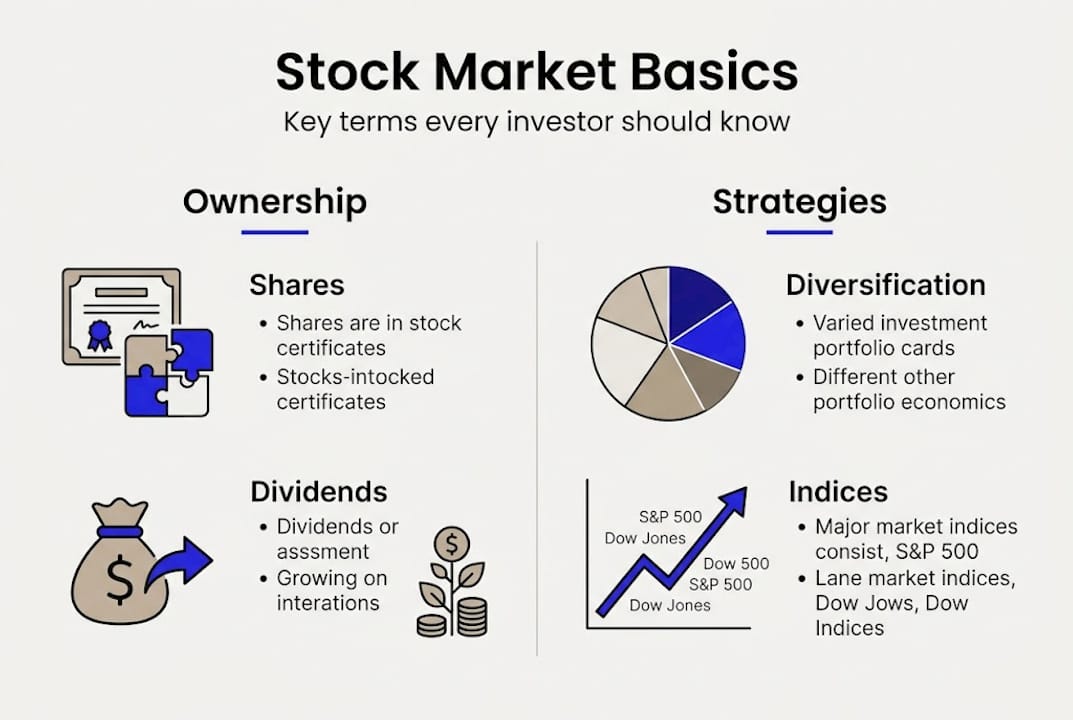
To track how the overall market is performing, investors rely on indices. Understanding how market indices work is essential because they serve as a benchmark for individual portfolios.
| Index | Companies tracked | Primary focus |
|---|---|---|
| S&P 500 | 500 large-cap U.S. firms | Broad market performance |
| Dow Jones Industrial Average | 30 blue-chip companies | Industrial and economic health |
| Nasdaq Composite | 3,000+ companies | Technology and growth stocks |
Using indices for smarter investing helps you gauge whether your portfolio is keeping pace with the broader market or lagging behind.
How stocks work: Ownership, types, and earnings
Understanding where and how stocks are traded sets the stage for exploring what a stock actually is. When you buy a share, you are purchasing partial ownership in that company. Stocks represent fractional ownership in a company, entitling holders to a portion of profits through dividends or capital appreciation.

There are two primary types of stock, and knowing the difference matters:
Comparison: Common stock vs. preferred stock
| Feature | Common stock | Preferred stock |
|---|---|---|
| Voting rights | Yes | Typically no |
| Dividend priority | Lower | Higher |
| Growth potential | Higher | Lower |
| Risk level | Higher | Moderate |
How do stocks create returns for investors? There are two main channels:
- Dividends: Some companies distribute a portion of profits to shareholders on a regular basis, providing steady income.
- Price appreciation: If a company grows and earns more, its stock price typically rises, allowing you to sell shares for more than you paid.
- Reinvestment: Reinvesting dividends compounds your returns over time, accelerating portfolio growth significantly.
Before committing capital, it pays to learn how to analyze stocks to separate sound opportunities from speculative ones. Equally important is understanding risk in stock ownership because every share carries the possibility of loss alongside reward.
Pro Tip: If you are new to equities, start by studying companies in industries you already understand. Familiarity with a business model makes it far easier to evaluate whether a stock's price reflects genuine value.
What drives stock prices?
After grasping what you actually own when you buy stocks, it is crucial to understand why their prices change. Stock prices are determined by supply and demand, influenced by company fundamentals, economic data, and investor sentiment.
In the short term, prices often swing due to emotional reactions: a surprising earnings report, a regulatory announcement, or simply a shift in market mood. Over the long term, prices tend to reflect a company's actual financial performance.
Common drivers of stock price movement:
- Earnings reports: Quarterly results that beat or miss analyst expectations frequently trigger large price moves
- Economic indicators: Inflation data, interest rate decisions, and employment figures shape investor confidence
- Industry trends: A technological shift or regulatory change can lift or sink entire sectors
- Investor sentiment: Fear and greed create short-term price distortions that often correct over time
- Geopolitical events: Trade disputes, elections, and global crises inject uncertainty into markets
Statistic to remember: The S&P 500 has delivered an average annual return of roughly 8 to 10 percent since 1928, despite recessions, wars, and financial crises.
Focusing on evaluating stock performance using real financial data rather than headlines gives you a major advantage over investors who react emotionally to short-term noise.
Pro Tip: Track price changes alongside earnings growth. When a stock rises sharply without improving fundamentals, that divergence is often a warning sign.
Market cycles, risk, and the power of diversification
Stock prices do not move in isolation; they are part of broader market cycles, which matter to every investor. Markets move through three primary phases:
| Market phase | Definition | Typical duration |
|---|---|---|
| Bull market | Sustained price increases of 20%+ | Months to years |
| Bear market | Sustained decline of 20% or more | Weeks to months |
| Correction | Decline of 10 to 20% from recent highs | Days to weeks |
Key principles for navigating cycles:
- Accept that downturns are normal, not signals to exit
- Avoid panic selling, which locks in losses and misses recoveries
- Stay diversified across sectors, geographies, and asset classes
- Think in years, not quarters, when measuring performance
Long-term investing outperforms short-term trading for most investors because compounding, dividend reinvestment, and reduced transaction costs accumulate substantially over time.
Diversification is the single most practical tool for managing risk. Diversification reduces risk through index funds and ETFs that track broad benchmarks like the S&P 500, spreading exposure across hundreds of companies at once.
Learning to use stock filters effectively can help you identify positions that complement an already diversified portfolio rather than doubling down on concentrated risk.
"The stock market is a device for transferring money from the impatient to the patient." — Warren Buffett
Why most beginners overcomplicate stock market basics
Here is an uncomfortable truth: the investors who struggle most are often the ones doing the most. Chasing trending stocks, reacting to every news cycle, or searching for a complex strategy to outsmart the market usually produces worse results than simply buying low-cost index funds and holding them consistently.
Simplicity is genuinely an edge in investing. Most retail investors who attempt active trading underperform the market. As research confirms, most retail traders lose money due to fees, emotional decisions, and poor timing.
The hardest skill in investing is not picking the right stock. It is staying calm when headlines turn alarming and resisting the urge to act. Mastering smarter investment decisions starts with respecting the basics, not bypassing them in search of shortcuts.
Take your next step: Tools for smarter investing
Understanding stock market basics is a meaningful first step. The next is putting that knowledge to work with the right tools. Tickerplace gives you access to real-time data, screening capabilities, and research resources built specifically for investors who want clarity, not noise.
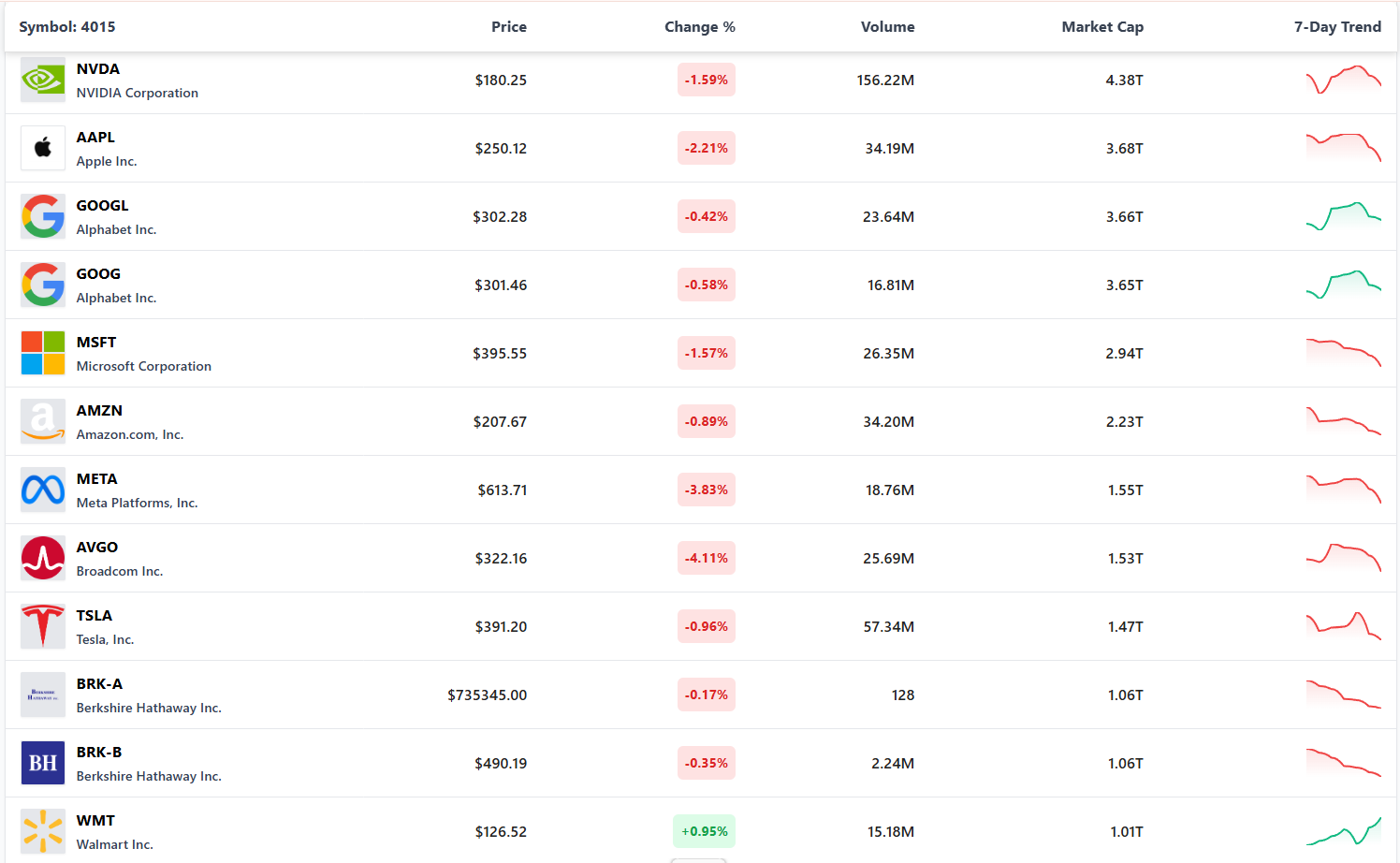
Explore the stock screener to filter equities by fundamentals, sector, and performance metrics. Deepen your knowledge through investing education resources designed to move you from foundational understanding to confident, evidence-based decisions. The market rewards those who prepare.
Frequently asked questions
How do beginners start investing in the stock market?
Open a brokerage account and consider starting with low-cost index funds, which provide broad diversification and are widely recognized as ideal for beginners seeking steady long-term growth.
Are stock market downturns permanent?
No. Corrections and crashes are a normal part of market history, and markets have consistently recovered and reached new highs over time, making panic selling one of the costliest mistakes an investor can make.
What is the difference between stocks and mutual funds?
Stocks are shares of a single company, while mutual funds pool capital from many investors to purchase a diversified basket of stocks or securities, reducing the concentration risk that comes with single-stock exposure.
Why should I avoid day trading as a beginner?
Day trading carries significant risk, and most retail traders lose money because of high transaction fees, emotional decision-making, and the near-impossibility of consistently timing the market. Long-term investing builds more reliable, compounding wealth.