

TL;DR:
- Palantir's Q1 2026 earnings release on May 4, 2026, is expected to cause significant stock volatility, with a roughly 10.5% implied move. Investors should analyze multiple factors, including earnings, macro signals, sector sentiment, and technical levels, to make informed decisions. A disciplined, pre-planned strategy that recognizes market uncertainty and avoids emotional reactions is key to successful long-term investing.
Palantir's Q1 2026 earnings report arrives after market close on May 4, 2026, with options implying a ~10.5% move in either direction. That kind of volatility grabs attention, but it also separates reactive traders from prepared investors. Many market participants watch the price move and scramble to react, rather than understanding the structural forces that produced it. This article gives you the frameworks, data, and strategies you need to move from headline-chaser to informed decision-maker when it comes to Palantir stock price.
Key Takeaways
| Point | Details |
|---|---|
| Earnings drive volatility | Palantir’s stock price can swing sharply around major earnings reports. |
| Context beats headlines | Understanding financial data and competitive positioning is vital, not just following the latest news. |
| AI sector comparisons | Palantir’s stock should be weighed against other leading AI companies on both growth and risk. |
| Have a disciplined plan | A clear, consistent investment strategy is crucial for handling price swings and market noise. |
What's moving Palantir's stock price right now?
With major news looming, it's critical to understand what forces are shaping Palantir's price movement today. Earnings season is the single most powerful short-term catalyst for a stock like Palantir, and the upcoming Q1 2026 report is no exception. However, earnings are rarely the only factor in play.
The earnings catalyst
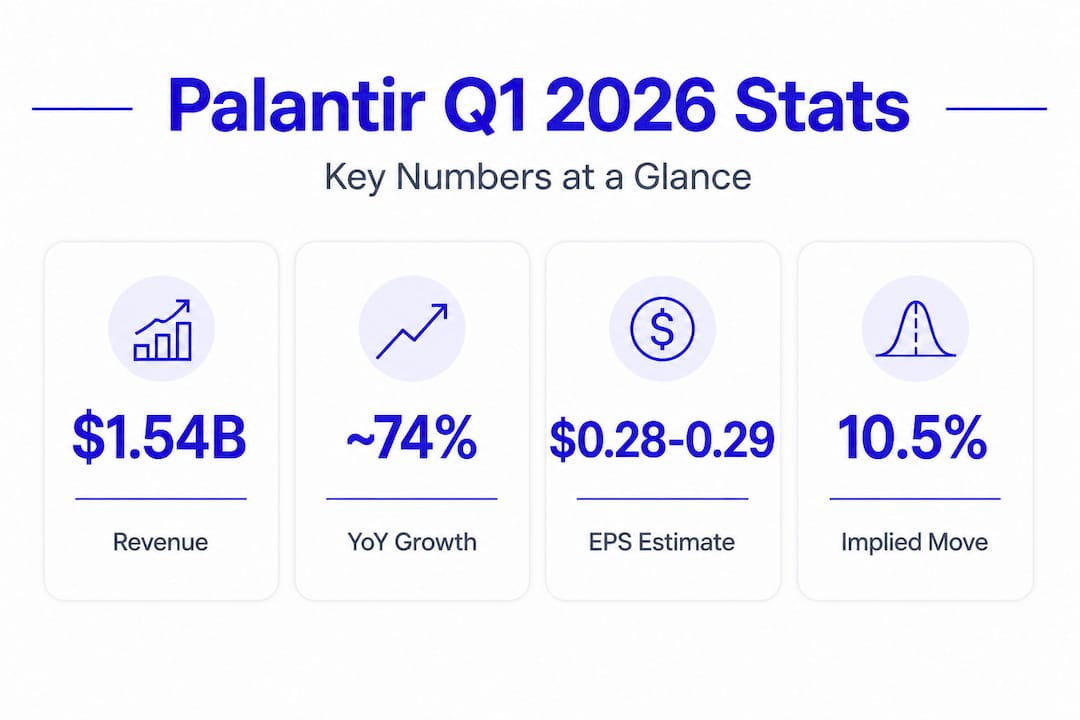
The consensus expects ~$1.54B revenue for Q1 2026, representing roughly 74% year-over-year growth, with EPS estimates between $0.28 and $0.29. These are demanding expectations, meaning even a slight miss could trigger a sharp sell-off, while a meaningful beat could push the stock materially higher. Options pricing already reflects significant uncertainty.
| Metric | Q1 2026 Consensus |
|---|---|
| Revenue | ~$1.54 billion |
| Year-over-year growth | ~74% |
| EPS estimate | $0.28 to $0.29 |
| Implied options move | ~10.5% |
Additional price drivers
Beyond earnings, several other forces influence Palantir's stock price on a daily basis:
- Macro environment: Rising interest rates or broad market risk-off sentiment can compress valuations for high-growth tech stocks, including Palantir.
- Tech sector momentum: Positive news from other top AI stocks often lifts Palantir's share price through sector-wide sentiment shifts.
- Analyst commentary: Upgrades, downgrades, and price target revisions from major institutions generate significant short-term price action.
- Government contract news: Palantir's revenue mix includes substantial U.S. government contracts, so any policy or budget announcements can directly affect sentiment.
- Political developments: Growing scrutiny of defense tech companies adds a layer of headline risk that purely commercial AI firms do not face.
Understanding which of these is driving any given price move helps you make a measured response rather than an emotional one.

How to analyze Palantir stock beyond the headlines
Knowing what moves the price is just the start. Here's how you can go deeper and shift from reactive to proactive as an investor. The most effective investors use a combination of fundamental, technical, and sentiment analysis rather than relying on any single lens.
A step-by-step framework for evaluating Palantir
-
Review the quarterly earnings report in full. Look past the headline revenue number. Focus on commercial revenue growth (non-government), customer count expansion, and operating margin trajectory. These figures reveal whether Palantir is building durable revenue streams or remaining overly dependent on government contracts.
-
Check company financials for trends over multiple quarters. A single quarter rarely tells the full story. Revenue acceleration, improving free cash flow, and narrowing losses over several periods are stronger signals than any one data point.
-
Assess the valuation relative to growth. Palantir trades at a premium price-to-sales and price-to-earnings ratio compared to many peers. The question is whether the growth rate justifies that premium. With consensus projecting 74% YoY revenue growth, analysts are pricing in continued execution.
-
Scan technical price levels. Support and resistance zones, moving averages, and relative strength readings help you identify entry and exit points that align with your risk tolerance, rather than guessing based on news flow.
-
Monitor institutional positioning. Large funds accumulating or distributing shares ahead of earnings often leave footprints in options flow, short interest data, and 13-F filings.
| Analysis type | What to look for | Why it matters |
|---|---|---|
| Fundamental | Revenue growth, margins, cash flow | Validates long-term investment case |
| Technical | Support levels, moving averages | Guides entry and exit timing |
| Sentiment | Options implied volatility, short interest | Reflects market expectations |
Pro Tip: Separate short-term hype from signals with sustained impact. A 10% post-earnings jump driven by a single strong quarter is different from a business that is consistently widening its commercial customer base and improving unit economics. The latter is what builds lasting portfolio value.
Comparing Palantir: Where does it stand among AI stocks?
It's also essential to know how Palantir stacks up against its technology peers, especially within the high-growth AI market. Not all AI stocks behave the same way, and understanding Palantir's distinct profile helps you calibrate your expectations and risk assessment accurately.
Palantir occupies a unique niche. Unlike pure-play software companies or semiconductor firms powering the AI buildout, Palantir delivers AI-driven analytics platforms to both government and enterprise clients. That dual revenue base creates both stability and political headline risk that competitors without government exposure do not carry.
Key differentiators among AI stocks
- Government contract dependency: Palantir derives a significant share of revenue from defense and intelligence agencies, a characteristic that most commercial AI peers do not share to the same degree.
- AIP (Artificial Intelligence Platform) traction: Palantir's recent commercial growth has been driven largely by enterprise adoption of its AIP product, which is gaining momentum among Fortune 500 clients.
- Valuation premium: Palantir's price-to-sales ratio sits well above many comparably sized AI stock investing targets, meaning the stock has less margin for execution error.
- Revenue growth rate: At an expected 74% YoY growth rate for Q1 2026, Palantir is growing faster than many established software companies, though sustaining that pace will be the critical test.
| Company type | Growth profile | Valuation risk | Government exposure |
|---|---|---|---|
| Palantir | Very high | High premium | Significant |
| Commercial SaaS peers | Moderate to high | Moderate | Minimal |
| AI semiconductor firms | High cyclical | Variable | Limited |
Pro Tip: Look beyond AI sector buzz. Some companies benefit from short-term narrative tailwinds without the underlying business metrics to support elevated valuations. Palantir's differentiation lies in its data integration capabilities and long-standing customer relationships, factors that take time to fully appreciate through quarterly numbers alone.
Key strategies for navigating Palantir's price swings
With the broader context set, let's get tactical about handling Palantir's volatility, particularly around pivotal announcements like the upcoming Q1 2026 earnings release.
"Options markets are pricing in a move of approximately 10.5% following Palantir's Q1 2026 earnings announcement, reflecting the market's assessment of meaningful uncertainty in either direction."
That level of implied volatility is both an opportunity and a warning. Here is how disciplined investors approach it:
-
Set price alerts before earnings. Establish alert levels at key technical supports and resistances so you are not glued to a screen but still respond promptly when price action demands attention.
-
Define your risk in advance. Decide exactly how much of your position you are willing to lose before you place the trade, not after the price moves. Stop-loss orders, position sizing, and pre-set exit levels remove much of the emotional guesswork.
-
Study the options market for clues. Elevated implied volatility in Palantir options signals that informed market participants expect a large move. Reviewing put-to-call ratios and skew data can indicate whether the market leans toward an upside or downside surprise before the number lands.
-
Consider scaled entries. Rather than committing your full intended position ahead of earnings, consider entering in tranches: one portion before the announcement and a second portion after you see the initial reaction. This strategy reduces timing risk without excluding you from potential gains.
-
Review your AI stock analysis periodically. Markets shift. A thesis that was valid six months ago may need updating based on new contract wins, competitor moves, or changes in government spending priorities.
Pro Tip: Stick to your plan. Emotional trades, whether buying into a spike or panic-selling on a drop, consistently underperform rule-based strategies. Define your process before the volatility hits and execute it calmly when it does.
The overlooked truth: Why disciplined strategy beats market noise for Palantir investors
Stepping back from the mechanics, here is a perspective on what consistently separates successful Palantir investors from the crowd. And it rarely has anything to do with being faster or smarter in the moment.
Most retail investors lose money on earnings plays not because they read the financials wrong, but because they execute emotionally. They see Palantir surge 12% after a strong beat and chase the move at the top. They watch it drop 9% on guidance concerns and sell at the bottom. The mechanics of the trade are fine; the behavior destroys the outcome.
The investors who have fared best in high-volatility, high-conviction names like Palantir share a few uncommon traits. They form a thesis well before the earnings date. They stress-test it against scenarios where Palantir beats, meets, or misses consensus. They decide in advance what each outcome means for their position. When the number lands, they are not deciding what to do; they are executing a plan they already made.
This is especially relevant given the AI sector lessons from prior cycles, where companies with strong fundamentals saw temporary price collapses simply because the market's short-term expectations were too high. Investors who stayed focused on the business, not the noise, were ultimately rewarded.
There is also a quieter behavioral edge in understanding what you do not know. Implied volatility of 10.5% around earnings means the market genuinely cannot determine the direction. Acknowledging that uncertainty, rather than convincing yourself you have an edge you do not, is one of the most valuable disciplines in trading high-momentum stocks.
Level up your Palantir investing with robust data and smarter tools
You now have the context and analytical frameworks. Here is how to go further with your own research and put these strategies into practice efficiently.
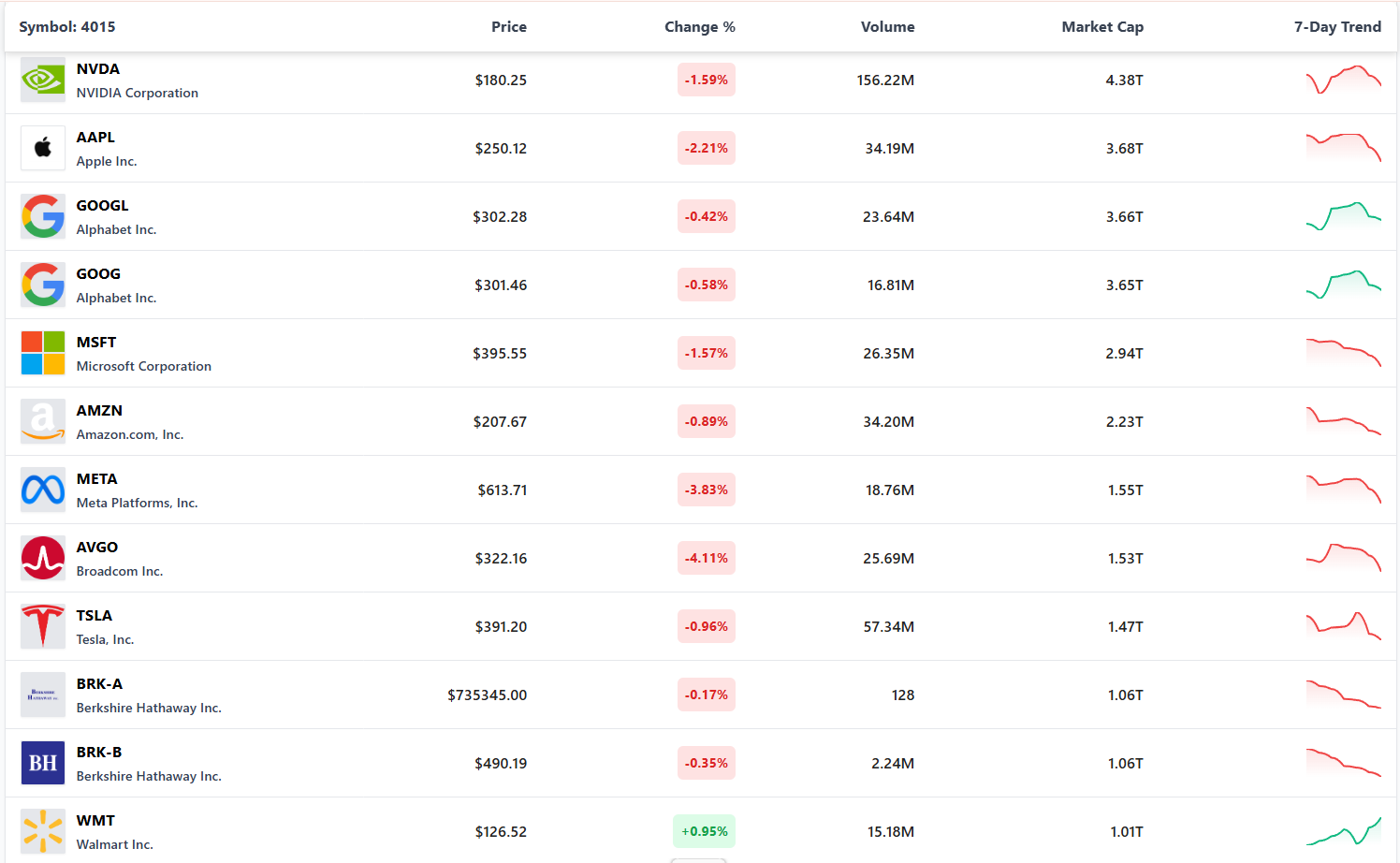
Tickerplace equips active investors with the data access and research tools needed to move from informed to truly prepared. Use the stock screener to filter and benchmark Palantir against its AI and tech peers on key metrics like revenue growth, price-to-sales, and earnings surprise history. Dive into earnings data, balance sheets, and income statements through the platform's structured financial views. For investors looking to build deeper market knowledge alongside better tools, the investing education resources on Tickerplace provide the foundational and advanced content you need. Smart decisions start with better data; Tickerplace is built to give you both.
Frequently asked questions
When will Palantir report earnings next?
Palantir is scheduled to report Q1 2026 earnings after market close on May 4, 2026.
What is the current earnings expectation for Palantir?
Analysts expect Q1 2026 revenue of approximately $1.54 billion with EPS between $0.28 and $0.29, representing roughly 74% year-over-year revenue growth.
How volatile is Palantir stock around earnings?
Options markets suggest a move of roughly 10.5% following Palantir earnings announcements, reflecting meaningful uncertainty in both directions.
What are the main risks for Palantir investors?
Major risks include earnings disappointments relative to elevated consensus expectations, increasing competition in enterprise AI, and regulatory or political developments affecting government contract revenue.
Can I compare Palantir's performance with other AI stocks?
Yes, you can benchmark Palantir against other AI companies using financial data platforms, industry reports, and sector-specific screening tools to compare growth rates, valuations, and earnings track records side by side.