

TL;DR:
- The GBP to AUD exchange rate is approximately 1.88 AUD per GBP as of June 2026, influenced by economic and market factors. Using FCA-regulated currency specialists and monitoring mid-market rates can significantly reduce transfer costs. Timing transfers before 14:00 GMT and understanding market drivers help optimize currency conversions.
The GBP to AUD exchange rate is defined as the value of one British Pound Sterling expressed in Australian Dollars. As of june 2026, one GBP buys approximately 1.88 AUD, making this one of the more actively watched currency pairs among traders, expatriates, and businesses moving money between the United Kingdom and Australia. Tools like XE and CurrencyTransfer give you live rate access in seconds, but knowing how to read those rates and act on them is where real value is created. This guide covers rate mechanics, transfer methods, provider comparisons, and the market forces shaping the pair in 2026.
What is the current GBP to AUD exchange rate?
The mid-market rate is the true benchmark for GBP AUD currency conversion. It sits at the midpoint between global buy and sell prices, updated continuously during trading hours. XE reports a mid-market rate of approximately 1.8793 AUD per GBP as of may 2026. That figure is the fairest measure of what one pound is actually worth in Australian dollars at any given moment.
Live rates fluctuate throughout the trading day based on order flow, economic data releases, and market sentiment. The 30-day average for GBP/AUD sits around 1.8821, with the pair trading within a range of roughly 1.8658 to 1.8913 over that period. That 0.027-point spread may look small, but on a £50,000 transfer it translates to a meaningful difference in AUD received.
Platforms like XE and Investing.com display GBP AUD live rates with real-time charts, historical overlays, and rate alert features. The 52-week range for the pair spans 1.8535 to 2.1042, which tells you the pair has seen significant movement over the past year. Tracking that range helps you judge whether the current rate is near a historical floor or ceiling.
| Metric | Value |
|---|---|
| Mid-market rate (May 2026) | ~1.8793 AUD per GBP |
| 30-day average | ~1.8821 AUD per GBP |
| 30-day range | 1.8658 – 1.8913 |
| 52-week range | 1.8535 – 2.1042 |
| Recent weekly trend | +0.94% |
How to convert GBP to AUD: methods and timing
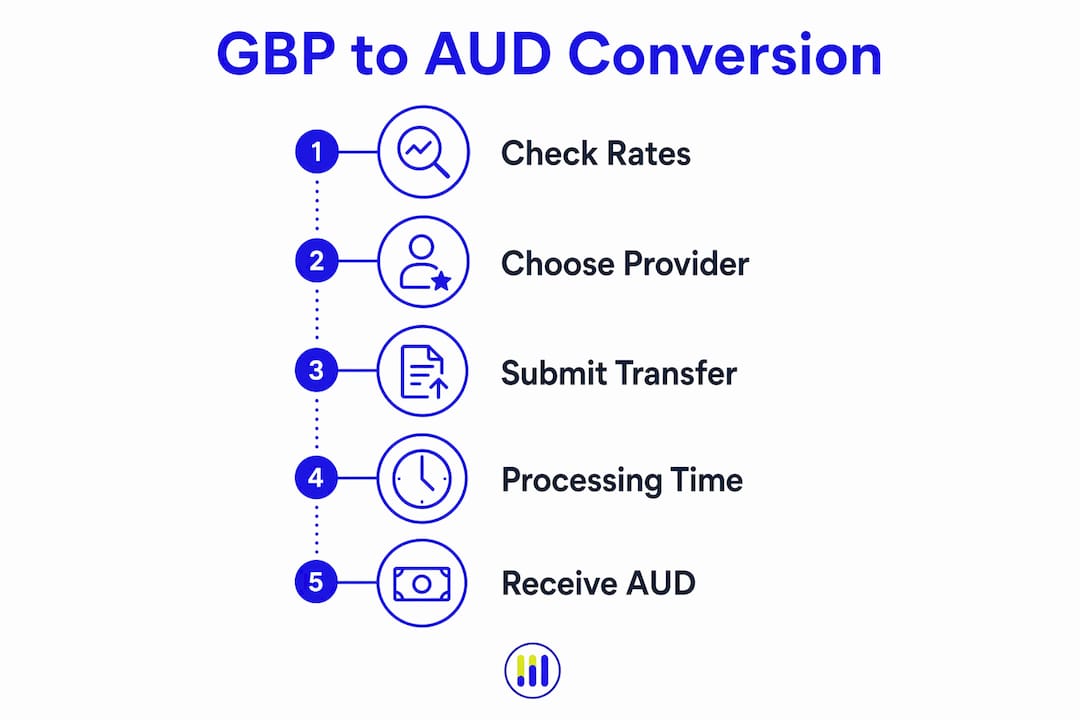
Choosing the right transfer method directly affects how much AUD lands in the recipient account. The four main options are bank wire transfers, online currency specialists, peer-to-peer platforms, and cash exchange bureaus. Each carries different speed, cost, and convenience trade-offs.
- Bank wire transfers. Standard bank transfers take 1–2 business days for GBP to AUD. They are reliable but often carry the widest exchange margins and fixed fees.
- Priority or SWIFT transfers. These can settle the same day if submitted before the 14:00 GMT cut-off. Speed comes at a premium, and fees vary by institution.
- Online currency specialists. Providers like CurrencyTransfer connect you to competitive rates from regulated dealers. Transfer times are typically 1–2 business days, often at lower cost than banks.
- Cash exchange. Airport bureaus and high-street exchange desks offer the worst rates. Use them only for small amounts when no other option exists.
Actual delivery times depend on the provider's internal verification checks, the recipient bank's processing schedule, and the availability of the payment rail used. Australia and the UK operate in very different time zones, which can add a full business day to processing if a transfer misses the cut-off window.
Pro Tip: Submit your GBP to AUD transfer before 14:00 GMT on a weekday to maximize the chance of same-day processing. Transfers submitted on Friday afternoons routinely settle the following Monday.
Banks vs. currency specialists: which offers the better rate?
The exchange rate margin is the gap between the mid-market rate and the rate a provider actually offers you. Banks embed their profit in this margin rather than charging a transparent fee. The result is that you receive fewer Australian dollars than the mid-market rate would suggest, often without realizing it.

FCA-regulated currency specialists consistently offer rates closer to the mid-market benchmark than high-street banks. The difference matters more as the transfer size grows. A 0.5% margin difference on a £10,000 transfer produces a meaningful gap in AUD received. On £100,000, that gap becomes substantial.
| Provider type | Typical margin vs. mid-market | Transfer fee | Best for |
|---|---|---|---|
| High-street bank | 2%–4% | £15–£30 | Small, infrequent transfers |
| Online bank | 0.5%–1.5% | Low or zero | Regular mid-size transfers |
| Currency specialist | 0.1%–0.5% | Often zero | Large or frequent transfers |
| Airport bureau | 5%–10% | None stated | Emergency cash only |
Pro Tip: Always compare the rate offered to the current mid-market rate on XE before confirming any transfer. The percentage difference is your true cost, regardless of what the provider calls it.
Comparing offered rates to mid-market rates is the single most effective habit for reducing conversion costs. Most individuals skip this step and pay the price in lost AUD. For transfers above £5,000, the savings from using a currency specialist over a bank can easily exceed the time spent comparing providers.
What factors drive GBP AUD rate movements?
The GBP/AUD rate responds to economic and political developments in both countries, as well as global risk sentiment. Understanding these drivers helps you time conversions more effectively and interpret rate forecasts with appropriate skepticism.
Key factors that move the pair include:
- Australian economic growth. Slowing Australian growth weakens the AUD against major currencies including GBP. When Australia's GDP data disappoints, expect AUD to soften.
- Global trade tensions. Australia is a major commodity exporter. When global trade volumes contract or tariff disputes escalate, export demand impacts AUD strength directly.
- Investor risk aversion. AUD is considered a risk-sensitive currency. During periods of global uncertainty, investors move into safe-haven assets, which typically pushes AUD lower against GBP.
- UK monetary policy. Bank of England rate decisions influence GBP strength. Rate hikes tend to support GBP; rate cuts or dovish guidance weaken it.
- Commodity prices. Iron ore and coal are Australia's top exports. Rising commodity prices support AUD; falling prices weaken it.
The 52-week range of 1.8535 to 2.1042 shows how wide the pair can swing over a year. A rate near the bottom of that range favors those sending AUD back to GBP. A rate near the top favors those converting GBP into AUD. Knowing where the current rate sits within the historical range gives you a practical reference point for timing decisions.
For a deeper look at the economic and political factors shaping GBP to AUD volatility in 2026, Tickerplace has published a dedicated conversion guide covering the macro drivers in detail.
Key Takeaways
The most cost-effective approach to GBP to AUD conversion combines mid-market rate monitoring with FCA-regulated currency specialists and attention to transfer timing.
| Point | Details |
|---|---|
| Mid-market rate is the benchmark | Compare any offered rate to XE's mid-market rate to calculate your true conversion cost. |
| Specialists beat banks on margins | FCA-regulated currency specialists offer rates 1%–3% closer to mid-market than high-street banks. |
| Timing affects delivery speed | Submit transfers before 14:00 GMT to qualify for same-day or next-day settlement. |
| AUD is risk-sensitive | Australian dollar strength tracks global trade conditions, commodity prices, and investor sentiment. |
| 52-week range guides timing | The GBP/AUD 52-week range of 1.8535 to 2.1042 provides context for whether current rates are favorable. |
Tickerplace's take on navigating GBP to AUD in 2026
The most common mistake we see among individuals converting GBP to AUD is treating the rate displayed by their bank as a fixed cost of doing business. It is not. That rate includes a margin the bank sets unilaterally, and it changes based on the bank's commercial interests, not market conditions alone.
The practical fix is straightforward. Pull the mid-market rate from XE before every transfer. Then ask your provider what rate they are offering. The difference, expressed as a percentage, is your real fee. Once you see that number clearly, the case for using an FCA-regulated currency specialist on any transfer above £5,000 becomes obvious.
Timing matters too, but not in the way most people think. Trying to predict short-term GBP AUD rate movements is unreliable even for professional traders. What you can control is avoiding known bad timing: Friday afternoon submissions, transfers during major UK or Australian public holidays, and transfers initiated without completing verification in advance. Those delays cost money in a moving market.
For traders watching the pair as part of a broader portfolio strategy, the ASX live data available through Tickerplace provides real-time context on Australian equities that often move in correlation with AUD strength. Currency and equity signals together give a more complete picture than either alone.
— Tickerplace
Track GBP AUD rates with Tickerplace
Tickerplace gives traders and investors the real-time market data needed to make informed decisions across currency-sensitive sectors.
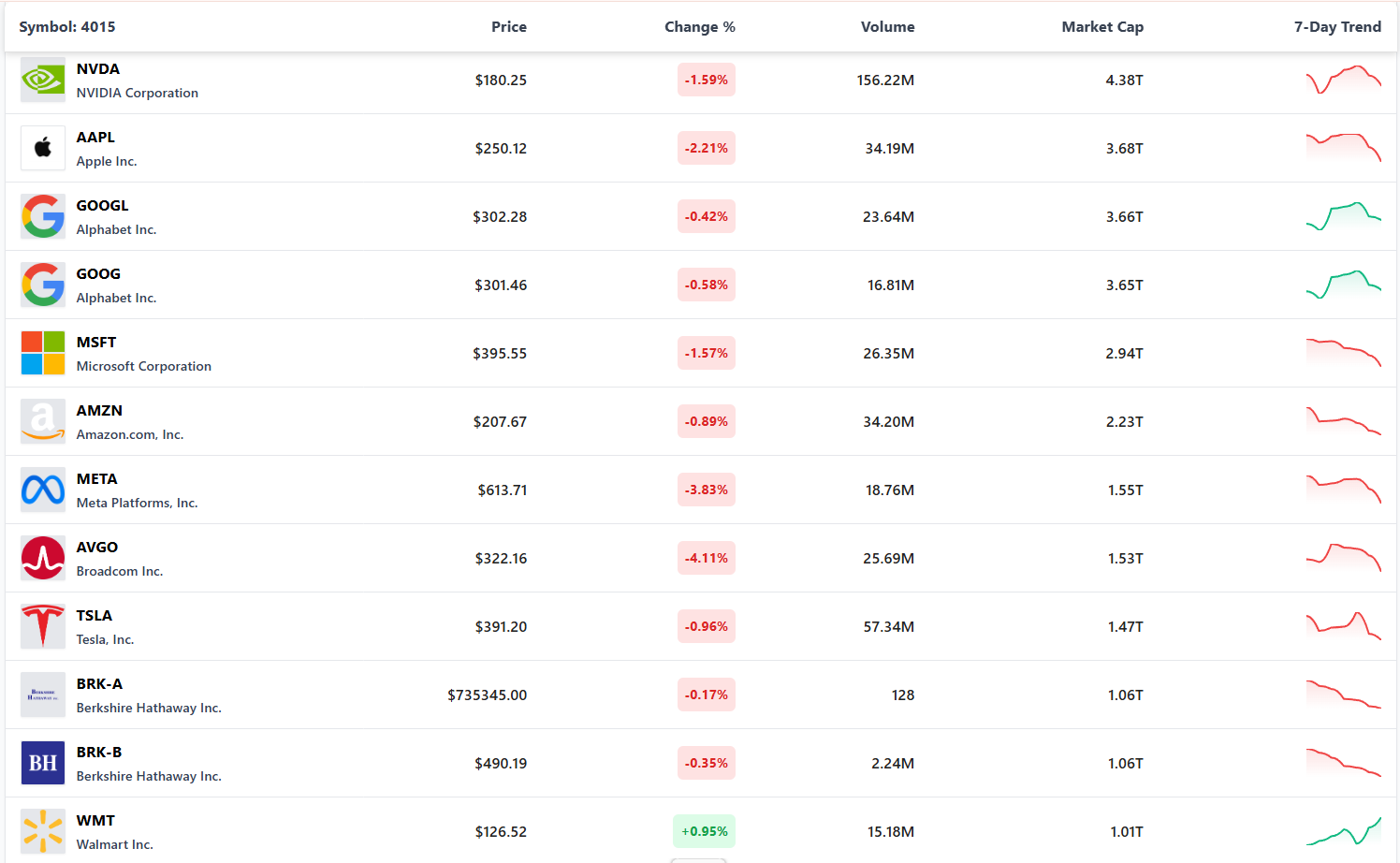
Whether you are monitoring GBP AUD live rates as part of a broader investment strategy or screening for equities exposed to currency movements, Tickerplace provides the tools to do it efficiently. The stock screener at Tickerplace lets you filter companies by sector, region, and financial metrics, making it straightforward to identify ASX-listed stocks that benefit from a stronger or weaker AUD. For a full view of market data, indices, and research tools, visit Tickerplace and explore the platform built for serious market participants.
FAQ
What is the GBP to AUD exchange rate today?
As of june 2026, the GBP to AUD rate hovers around 1.88 AUD per GBP, with a recent weekly increase of approximately 0.94%. Check XE or FXConvertly for the current live rate.
What is the mid-market rate and why does it matter?
The mid-market rate is the midpoint between global buy and sell prices for a currency pair. It serves as the fairest benchmark for GBP AUD currency conversion and reveals the true margin embedded in any rate a bank or provider quotes you.
How long does a GBP to AUD transfer take?
Standard bank transfers take 1–2 business days. Priority SWIFT transfers can settle the same day if submitted before 14:00 GMT, though delivery times also depend on provider verification and banking hours in both countries.
Are currency specialists better than banks for converting GBP to AUD?
FCA-regulated currency specialists typically offer exchange rates 1%–3% closer to the mid-market rate than high-street banks. On large transfers, that margin difference produces a significant increase in AUD received.
What drives the GBP AUD rate up or down?
The pair responds to Australian economic growth data, global commodity prices, UK monetary policy decisions from the Bank of England, and shifts in global investor risk sentiment. A weaker global trade environment generally pressures AUD lower against GBP.