
TL;DR:
Most stock market gains are concentrated in a small, select group of outperforming stocks.
Monitoring and systematically tracking top performers can significantly enhance returns, with momentum strategies showing a 6-8% annual advantage.
Effective monitoring requires precise screening, disciplined rebalancing, and combining momentum with value and quality filters to manage risks.
Most stock market gains concentrate in a surprisingly small pool of stocks. Research shows less than 7% of trades account for the majority of profits in systematic approaches, yet most investors spread attention too thin across dozens of positions. The investors who consistently outperform tend to watch fewer, better stocks with greater discipline. This guide breaks down the evidence behind monitoring top performers, shows you how to do it efficiently, addresses the real risks involved, and gives you a practical framework to apply these insights within your own portfolio.
Key Takeaways
| Point | Details |
|---|---|
| Tiny group drives returns | A small percentage of stocks generate most market profits, so focusing on them is critical. |
| Evidence backs monitoring | Decades of data confirm that tracking and acting on top performers can yield higher returns with momentum strategies. |
| Manage with discipline | Combining monitoring with diversification and clear exit rules helps avoid common pitfalls and costly mistakes. |
| Use the right tools | Screeners and structured watchlists make following top stocks and acting on trends simpler and smarter for investors. |
Why top stocks matter: The evidence for monitoring
Having set the context for market returns, let’s examine what research shows about top stocks and why monitoring them consistently changes outcomes.
The stock market is not a level playing field of equal opportunities. A small subset of equities drives the overwhelming majority of total returns over any meaningful time horizon. This concentration effect means that missing even a handful of top performers in a given year can significantly drag down overall portfolio results.

Momentum investing, which involves systematically tracking and holding recent outperformers, has been one of the most studied phenomena in finance. The landmark Jegadeesh-Titman research demonstrated that momentum strategies delivered an annual premium of roughly 6 to 8% in U.S. equities over decades. That is not a rounding error. It is a structural edge backed by repeatable evidence.
More recent simulations reinforce this. Trend-following approaches applied to top stocks delivered a 15.19% compound annual return (gross) across simulations from 1991 to 2024. Compare that to passive index benchmarks over the same period, and the case for active monitoring becomes harder to dismiss.
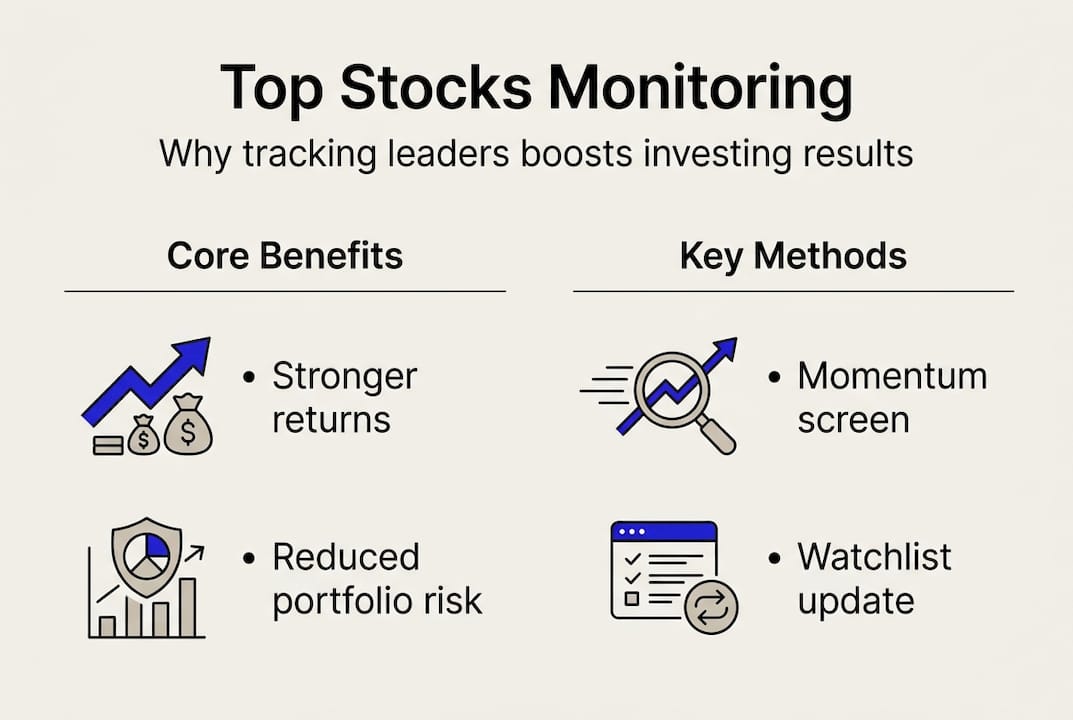
| Strategy | Approximate annual return | Key driver |
|---|---|---|
| Passive S&P 500 index | ~10.5% (historical avg.) | Broad market exposure |
| Momentum (top stocks) | ~16-17% (gross, simulated) | Trend-following, top performers |
| Value investing | ~11-13% | Undervaluation reversion |
The key takeaways from the evidence are:
-
Concentration of returns is a market reality, not a theory
-
Momentum persists because markets underreact to new information
-
Systematic monitoring captures these skewed profits more reliably than gut-feel stock picking
-
Combining monitoring with stock filters that beat the S&P 500 sharpens your edge further
How to monitor top stocks effectively
Once you know monitoring works, the next question is how to do it efficiently, no matter your level of experience.
Identifying top stocks is only half the equation. The other half is building a repeatable process that keeps your watchlist current without consuming your entire schedule. Since fewer than 7% of trades drive most systematic profits, your screening criteria must be precise enough to isolate those outperformers before the crowd catches on.
Here is a practical step-by-step monitoring framework:
-
Define your screening criteria. Choose filters based on price momentum (52-week highs, relative strength), analyst upgrades, or positive earnings surprises. Each filter targets a different signal of outperformance.
-
Build a focused watchlist. Limit your active list to 20 to 30 stocks. A smaller, higher-conviction list is easier to monitor and act on than a sprawling catalog of 200 names.
-
Set price and volume alerts. Real-time alerts prevent you from missing breakout moves. Most platforms allow you to trigger notifications on volume spikes or price thresholds.
-
Re-rank weekly or biweekly. Outperformance shifts. A stock leading the market in January may lag by March. Systematic re-ranking keeps your list aligned with current momentum.
-
Track sector rotation. Top stocks often cluster in leading sectors. Monitoring top biotech stocks in 2026, for example, can reveal broader sector momentum before it becomes mainstream.
| Method | Pros | Cons |
|---|---|---|
| Manual watchlist | Full control, low cost | Time-intensive, prone to bias |
| Automated screener | Fast, systematic, scalable | Requires setup and calibration |
| Analyst upgrade alerts | Professional signal input | Lagging; consensus can be slow |
Pro Tip: Re-rank your watchlist every two weeks using relative strength scores. Stocks that drop out of the top tier should trigger a review, not an automatic hold. Discipline in pruning is just as important as discipline in selecting.
Also consider using stock filters with better results to layer multiple criteria, reducing the chance of acting on a single noisy signal.
Risks, limitations, and critical nuances
Effective monitoring does not mean risk-free investing. Understanding and sidestepping common pitfalls is crucial.
Momentum strategies carry a well-documented vulnerability: momentum crashes. When market sentiment reverses sharply, recent winners often fall faster than the broader market. This is not a rare edge case; it is a recurring feature of momentum-driven approaches.
Key risks to manage include:
-
Momentum reversals: Sharp market corrections can rapidly unwind months of gains in top performers
-
High turnover costs: Frequent rebalancing generates transaction costs and short-term capital gains taxes
-
Reporting lags: Institutional filings like 13F reports reflect holdings from 45 days prior, making them a lagging rather than leading indicator
-
Overconfidence bias: Outperformance in one quarter does not guarantee it in the next
“High turnover can erode returns for smaller portfolios; momentum strategies are most viable for net AUM over $1M with active turnover controls.”
The cost drag is real. For smaller portfolios, index funds consistently outperform most active stock pickers over long periods, primarily because of lower fees and reduced behavioral errors. This does not mean monitoring top stocks is futile for individual investors; it means the approach must be cost-conscious and disciplined.
Pro Tip: Combine momentum screens with value or quality filters, such as low debt-to-equity ratios or strong return on equity, to reduce exposure to overextended stocks. This blend lowers the probability of buying into a momentum name just before it reverses. Learn more about analyzing stocks for smarter decisions to build this kind of layered approach.
Applying monitoring insights: From research to results
With the risks in mind, here is how you can integrate top stock monitoring into your own investment workflow.
Monitoring top stocks is most powerful when it functions as one layer of a broader strategy, not a standalone system. Research confirms that combining momentum with value and quality factors provides better diversification because their return correlations vary across market cycles. When momentum lags, quality and value factors can offset losses.
Here is how to apply this in practice:
-
Allocate a defined portion of your portfolio to momentum-driven top stocks, perhaps 20 to 30%, while keeping the remainder in diversified core holdings.
-
Adapt to shifting performance drivers. Recent growth stock outperformance was driven by surprise profitability, but valuations can revert. Monitor whether the underlying earnings story still holds.
-
Set explicit exit rules. Decide in advance: if a stock drops 10 to 15% from its recent high, you exit. Removing emotion from exit decisions is where most individual investors lose discipline.
-
Review your process quarterly. Use stock filters with research backing to assess whether your screening criteria are still capturing the right signals.
-
Document your decisions. Keeping a simple investment log helps you identify patterns in both your wins and your mistakes over time.
The investors who benefit most from monitoring top stocks are those who treat it as a systematic process, not a reactive one.
A smarter way to monitor top stocks: What most investors get wrong
Most investors approach top stock monitoring in one of two flawed ways. They either chase recent winners after the move has already happened, or they identify the right stocks but hold them far too long without a structured exit plan.
The uncomfortable truth is that results matter more than narratives. A stock with a compelling story but deteriorating price momentum is not a top stock. It is a story. Disciplined watchlist rebalancing, systematic exits, and blending momentum with quality and value signals are the underused edges that separate consistent performers from reactive ones. Smarter stock analysis is not about finding more information. It is about acting on the right information at the right time with predefined rules.
Turbocharge your strategy with the right tools
Ready to put theory into practice? The tools you use to monitor top stocks matter as much as the strategy itself.
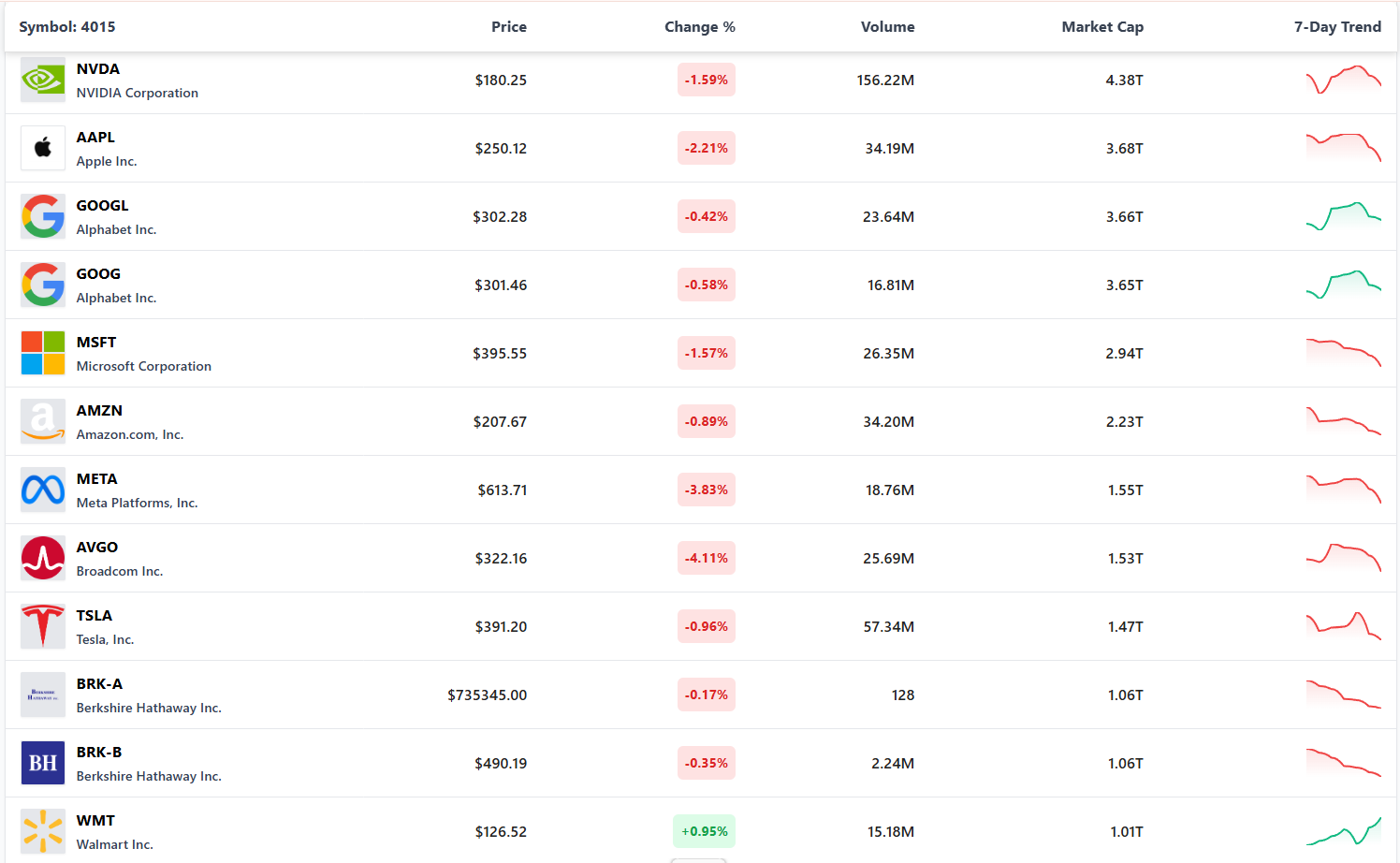
Tickerplace gives you access to a powerful stock screener built to filter equities by momentum, fundamentals, and sector performance in real time. Use the stock return calculator to model potential outcomes before committing capital. And if you want to sharpen your overall approach, the investing education resources on Tickerplace provide research-backed frameworks to help you build and refine your monitoring process with confidence.
Frequently asked questions
What defines a ‘top stock’ for monitoring?
Top stocks are those consistently outperforming the market in price trends, earnings growth, or institutional attention. Momentum investing isolates these top return drivers by ranking stocks on recent relative performance.
Can tracking top stocks beat index investing?
Some research shows outperformance is possible with disciplined momentum strategies, but index funds outperform most active pickers over the long term due to lower costs and reduced behavioral errors.
How can I avoid momentum crashes when monitoring top stocks?
Combine momentum with value and quality screens, and use predetermined exit rules to reduce large drawdown risks. Momentum and quality blends improve overall risk control across market cycles.
Are all top stocks worth investing in?
No. High valuations, sector headwinds, or company-specific risks can lead to mean reversion despite recent momentum. Growth outperformance often reverts when the earnings surprise that drove it fades or valuations stretch too far.