

TL;DR:
- The stock market declined due to rising oil prices, mixed earnings, and higher Treasury yields.
- Oil surges, especially from geopolitical tensions, increase inflation fears and impact sectors differently.
- Bond yield increases reflected inflation concerns, prompting a shift from stocks to safer fixed-income assets.
Why is the stock market down today? Key factors explained
The US stock market declined on April 23, 2026, catching many investors off guard after a sustained rally that had pushed major indices to record highs. Three forces collided to erase weeks of gains in a single session: a dramatic spike in oil prices tied to renewed geopolitical tensions, a wave of mixed corporate earnings from high-profile companies, and rising Treasury yields amplifying inflation concerns. This breakdown explains each driver in plain terms, so you can make sense of the move and position your thinking accordingly.
Key Takeaways
| Point | Details |
|---|---|
| Sharp intraday declines | After weeks of gains, the S&P 500, Dow, and Nasdaq saw notable pullbacks. |
| Oil prices as trigger | A surge past $105 per barrel, fueled by US-Iran tensions, led today’s market drop. |
| Mixed earnings reaction | Major companies’ earnings and guidance amplified market volatility. |
| Sector performance splits | Industries like airlines were hit hard while select semiconductors rebounded. |
| Bond yields and inflation | Spiking Treasury yields on inflation fears pushed some investors out of stocks. |
Stock index movements: What happened today?
Now that we've set the stage, let's quantify exactly how the major indices reacted and what those numbers mean for your portfolio.
All three major US benchmarks closed in the red after a period of remarkable strength. Reviewing today's market movements gives you a fuller picture of how quickly sentiment shifted, but here's the essential data from the session.
| Index | Change (Points) | Change (%) | Closing Level |
|---|---|---|---|
| S&P 500 | -29.50 | -0.4% | 7,108.40 |
| Dow Jones | -179.71 | -0.4% | 49,310.32 |
| Nasdaq | -219.06 | -0.9% | 24,438.50 |
The S&P 500 fell 29.50 points (0.4%) to 7,108.40, the Dow lost 179.71 points (0.4%) to settle at 49,310.32, and the Nasdaq dropped 219.06 points (0.9%) to 24,438.50. On the surface, a 0.4% decline sounds modest. But the intraday story was far more dramatic.
"The market pulled back after a weeks-long rally that had erased prior conflict-driven losses, halting near record highs. An oil spike caused an intraday S&P 500 drop of 1.3% before a partial recovery into the close."
That intraday swing illustrates how sensitive markets had become. When indices sit at record levels, investors are already watching nervously for a reason to take profits. Understanding how indices work is essential here: a broad index like the S&P 500 captures the weighted performance of 500 companies, so a sharp move signals widespread selling, not just isolated weakness. The Nasdaq's steeper 0.9% loss reflects its heavier concentration in tech and growth stocks, which tend to react more sharply to yield and earnings concerns.
Why oil prices triggered a sharp sell-off
The numbers show the market's losses, but what drove such a sharp reversal? The answer starts with oil prices.
Oil is the most direct input cost for a vast range of industries. When prices surge suddenly, it functions like an unexpected tax on the entire economy. Today, Brent crude rose 3.1% to $105.07 per barrel, peaking above $107 intraday, driven by escalating US-Iran tensions in the Strait of Hormuz. That single waterway handles roughly 20% of global oil trade, so any disruption there carries outsized market weight.
Statistic callout: Brent crude peaked above $107 per barrel intraday, its highest level in months, before settling at $105.07 after a 3.1% single-session gain.
Understanding key market indices helps contextualize why oil-driven inflation fears ripple so broadly. When oil rises sharply, two things happen simultaneously. First, corporate profit margins get squeezed as transportation, manufacturing, and logistics costs climb. Second, inflation expectations rise, which puts pressure on the Federal Reserve to maintain or increase interest rates.
Not every sector suffers equally, though. The table below compares the sector winners and losers when oil spikes sharply.
| Sector | Typical impact when oil spikes | Today's direction |
|---|---|---|
| Energy | Positive (revenue boost) | Gained |
| Airlines | Negative (fuel cost surge) | Fell sharply |
| Transportation/Logistics | Negative (operating costs) | Fell |
| Consumer Discretionary | Negative (less spending power) | Mixed to negative |
| Technology | Mixed to negative (inflation fears) | Fell |
Pro Tip: Geopolitical flashpoints near major oil chokepoints, particularly the Strait of Hormuz, the Suez Canal, and the Bosporus, can move energy prices faster than almost any other catalyst. Adding geopolitical risk monitoring to your pre-market routine can help you anticipate short-term volatility before it hits your portfolio.
Company earnings: Why mixed results matter on a volatile day
Beyond oil, what else put pressure on stocks? Today's earnings headlines added fuel to the fire.
Earnings season is already a high-stakes period. When it coincides with external shocks like surging oil prices, individual company results can trigger sector-wide moves that far exceed what the numbers alone would justify. Today, several notable companies reported results that disappointed investors, and the market's reaction was swift.
Key movers from today's earnings reports:
- Tesla (TSLA): -3.6% — The company issued a higher capital expenditure forecast, projecting over $25 billion toward robotics and factory expansion. Investors reacted negatively to the near-term cash burn implications, even with the long-term growth narrative intact.
- ServiceNow (NOW): -17.7% — Despite meeting earnings expectations, the company's guidance raised concerns about AI-driven disruption to its core business model, triggering one of the session's steepest single-stock declines.
- IBM (IBM): -8.3% — Slowing software segment growth disappointed investors who had expected stronger momentum from the company's AI integration push.
ServiceNow's 17.7% drop is particularly instructive. The company actually met Wall Street's earnings expectations, yet still lost nearly a fifth of its market value in a single session. This happens when investor sentiment shifts from optimism to concern about future growth, and guidance language plays a larger role than reported numbers.

For top performing stocks, a single bad earnings day doesn't erase a long-term investment thesis. But in an already tense market environment, negative guidance from influential companies can cascade into broader sector selling.
Pro Tip: When a stock drops sharply on earnings that otherwise met expectations, check the guidance language carefully before reacting. Management's forward outlook often matters more to institutional investors than the reported quarter, and understanding this distinction can help you avoid overreacting to short-term price swings.
Sector breakdown: Who felt the pain, and who gained?
Drilling down further, let's see how the day's drivers played out across different industries.
The oil surge and earnings disappointments didn't affect every sector equally. Airlines bore the sharpest immediate pain, since jet fuel is their single largest operating cost. Southwest Airlines fell 4.1%, a direct reflection of how quickly a fuel cost spike erodes profit margin expectations for an industry already operating on thin margins.
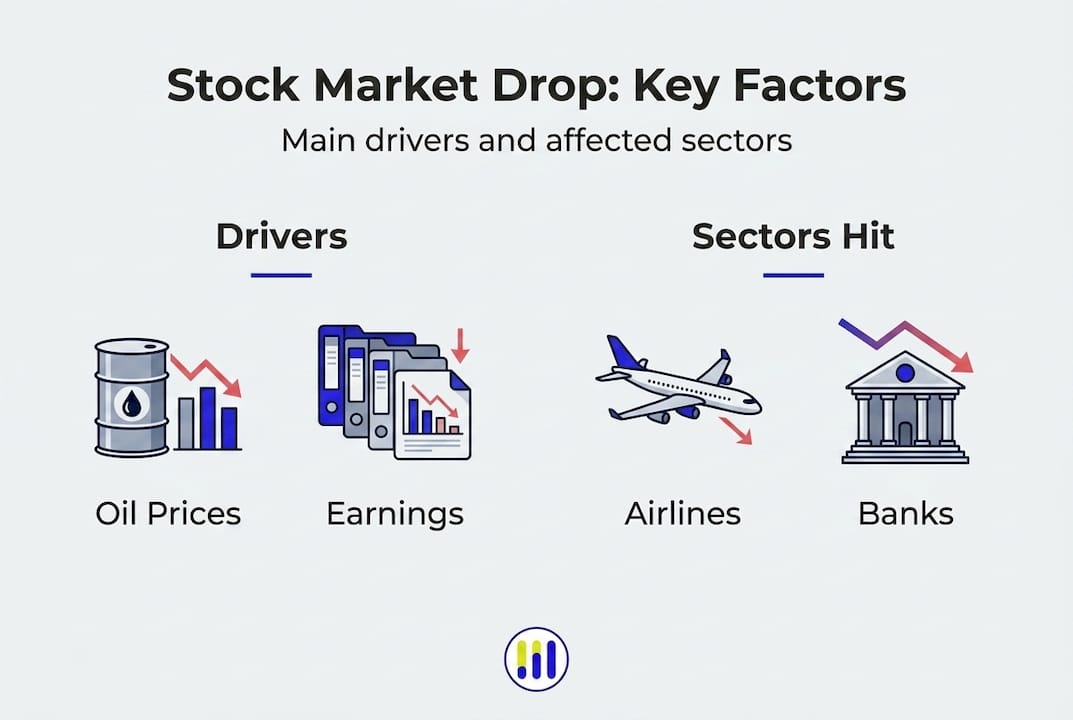
Semiconductors told a different story. Texas Instruments surged 19.4% on strong earnings, one of the session's standout performers and a reminder that sector rotation can create real opportunities even on broadly negative days.
| Sector/Company | Move | Primary driver |
|---|---|---|
| Southwest Airlines | -4.1% | Oil fuel cost surge |
| Texas Instruments | +19.4% | Strong earnings beat |
| IBM | -8.3% | Slowing software growth |
| ServiceNow | -17.7% | Guidance concerns |
| Tesla | -3.6% | High capex forecast |
For investors tracking industry performance across sectors, what to watch during turbulent sessions includes:
- Energy stocks: Often the direct beneficiary of oil surges; worth monitoring as short-term hedges.
- Airline and transport names: First-order losers when oil spikes; watch for overselling beyond fundamental impact.
- Semiconductor sector: Tends to move on its own earnings cycle, often independent of macro headwinds.
- Consumer staples: Typically defensive during broad selloffs; useful as a sentiment barometer.
Why bond yields and inflation matter for stock moves
While oil and earnings powered the headlines, a less obvious driver was lurking: the Treasury bond market.
When oil prices spike, investors immediately recalibrate their inflation expectations. Higher inflation means the Federal Reserve is less likely to cut interest rates, and it could even raise them. That dynamic pushed the 10-year Treasury yield to 4.32%, adding another layer of pressure to equity valuations.
Statistic callout: A move from 4.20% to 4.32% in the 10-year Treasury yield may seem small, but for growth and tech stocks valued on long-duration earnings projections, even a 12 basis-point rise can meaningfully reduce their theoretical present value.
Here's how the bond yield feedback cycle typically works:
- Oil prices surge, raising near-term inflation expectations.
- Investors sell Treasuries, pushing bond prices down and yields up.
- Higher yields make bonds more attractive as a risk-free alternative to stocks.
- Money rotates from equities to bonds, reducing demand for stocks.
- Equity valuations compress, particularly for growth and tech stocks with high price-to-earnings ratios.
- Broader market selling accelerates, as algorithmic trading amplifies the initial move.
Using a resource like the inflation calculator can help you model how different inflation scenarios affect purchasing power and portfolio returns over time, a practical step for investors evaluating positioning during high-yield environments.
Our take: Why sharp selloffs don't always signal panic
With all the day's drivers unpacked, here's our nuanced perspective on what it all means.
The instinct to treat every red day as a warning sign is understandable, but it's rarely accurate. Today's pullback followed a weeks-long rally that had erased conflict-driven losses and pushed indices to record territory. A pause, or even a sharp intraday reversal of 1.3%, is entirely consistent with how markets behave after prolonged upward runs. It's not panic. It's digestion.
Experienced investors anticipate these resets. They understand that near record highs, any credible negative catalyst, whether geopolitical, inflationary, or earnings-driven, gives profit-takers the justification they've been waiting for. The selling accelerates quickly, feels alarming, and then often stabilizes just as fast. Reviewing key insights for investors through multiple market cycles reveals a consistent pattern: volatility is a feature of healthy markets, not an exception to them.
Next steps: Track the market with smarter tools
Armed with these insights, it's time to be proactive about tracking and understanding future moves.
Volatile sessions like today underscore why reactive investing is costly. The Tickerplace platform gives you the real-time data, screening capabilities, and research tools to stay ahead of the next move rather than scrambling to interpret it afterward.
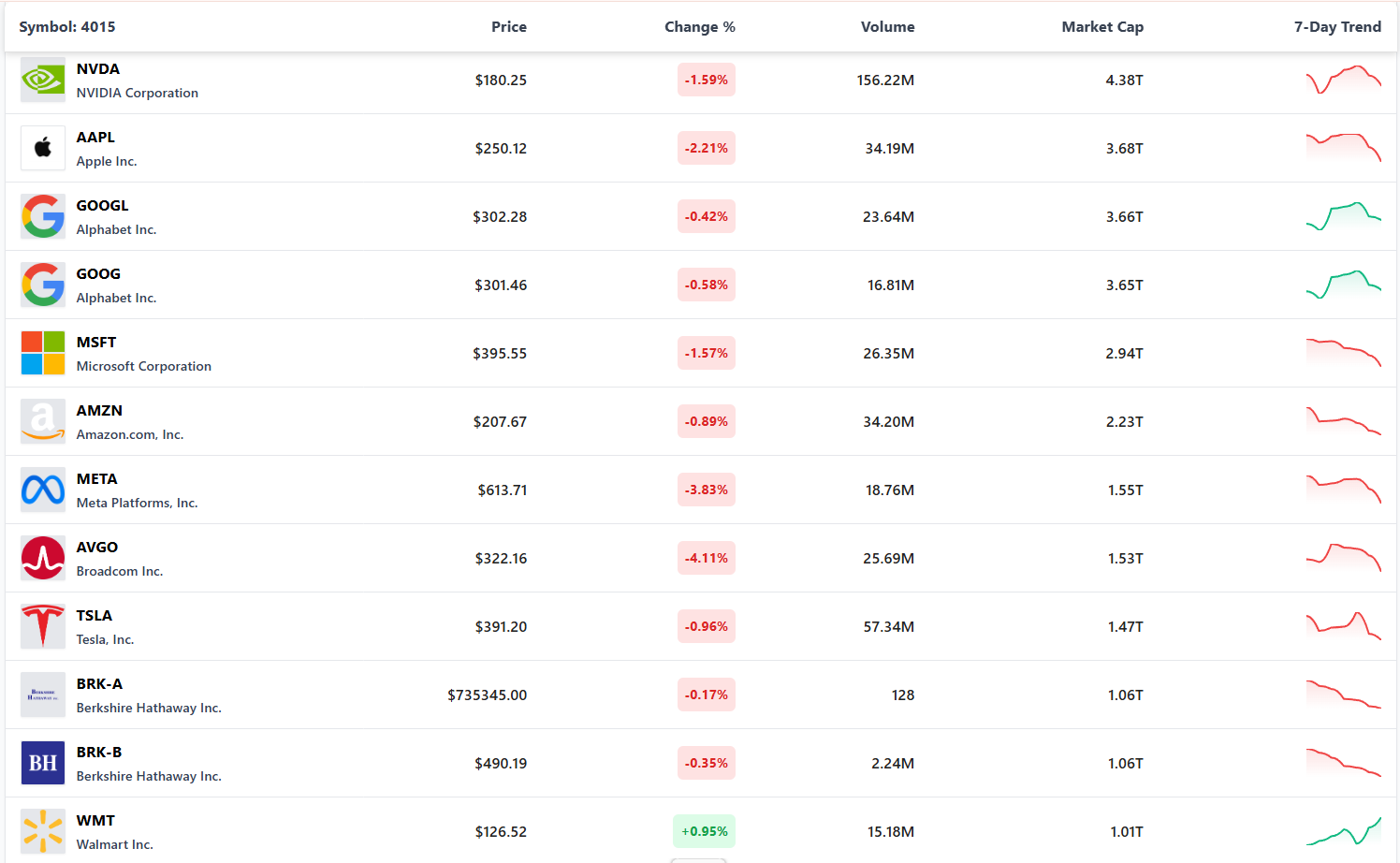
Use the stock screener to filter for sectors rotating into strength, run scenario analysis with built-in calculators, and build your market knowledge through investing education resources designed for active market participants. When the next oil spike or earnings shock hits, you'll be positioned to act with clarity rather than react with uncertainty.
Frequently asked questions
What caused the stock market to fall today?
Today's drop was driven by surging oil prices from escalating US-Iran tensions in the Strait of Hormuz, mixed corporate earnings from Tesla, IBM, and ServiceNow, and rising Treasury yields that amplified investor fears about inflation.
Which sectors were most affected by the decline?
Airlines fell sharply, with Southwest down 4.1% due to surging fuel costs, while semiconductors bucked the trend as Texas Instruments surged 19.4% on strong earnings, demonstrating how sector-specific dynamics can diverge sharply from the broader market.
Did bonds play a role in today's stock market drop?
Yes, the 10-year Treasury yield rose to 4.32% as oil-driven inflation concerns mounted, making fixed-income assets more competitive and drawing capital away from equities, particularly growth and technology stocks with elevated valuations.
How did index performance compare to recent days?
Major indices reversed after hitting record highs, with the S&P 500 dropping 0.4% to 7,108.40, the Dow falling 0.4% to 49,310.32, and the Nasdaq declining 0.9% to 24,438.50, ending a weeks-long winning streak driven by post-conflict optimism.