
Short selling carries a reputation for being the exclusive domain of hedge funds and Wall Street professionals, but that perception is largely a misconception. At its core, short selling is a strategy where an investor borrows shares, sells them on the open market, and aims to buy them back later at a lower price, pocketing the difference. Understanding how it works, what it costs, and how it affects markets is genuinely valuable for any serious investor, even if you never place a single short trade yourself. This guide walks through the mechanics, the real risks, practical strategies, and the broader market effects of short selling.
Key Takeaways
| Point | Details |
|---|---|
| Short selling basics | You sell borrowed shares hoping to buy them back cheaper and profit when prices drop. |
| Major risks involved | Losses on a short sale can be unlimited if the stock price rises, making risk control vital. |
| Different strategies available | Consider alternatives like put options and inverse ETFs to manage risk more effectively. |
| Market impact clarified | Short sellers help markets correct overvalued stocks and provide critical price signals. |
Understanding short selling: The basics
Many investors assume short selling is simply “betting against” a company, but that framing misses the full picture. Short selling is also a legitimate tool for hedging existing positions, managing portfolio risk, and expressing a well-researched view on overvalued securities. When used thoughtfully, it can serve as a counterbalance to long positions in a diversified strategy.
The process of borrowing and selling shares follows a clear sequence that any investor can learn. Brokers facilitate the borrowing of shares from other account holders, and the short seller takes on the obligation to return those shares at a later date. This is not a fringe activity reserved for professionals; individual investors with margin accounts can access it through most major brokerages.
When you are analyzing stocks for potential short candidates, the same fundamental and technical skills you use for long investing apply. Here is a breakdown of the basic steps in a short selling transaction:
-
Identify a stock you believe is overvalued or likely to decline
-
Borrow shares through your broker’s margin account
-
Sell the borrowed shares at the current market price
-
Monitor the position as the stock price moves
-
Buy to cover by repurchasing shares at a lower price
-
Return the shares to the lender and keep the price difference as profit
How short selling works: Step-by-step mechanics
With the basics defined, let’s look at exactly how each phase of short selling plays out in practice. The mechanics of short selling involve several distinct steps, each with its own requirements and considerations.
-
Open a margin account. Standard brokerage accounts do not allow short selling. You need a margin account, which requires meeting minimum equity thresholds set by your broker and FINRA.
-
Identify the stock. Research which security you want to short. Fundamental analysis, technical signals, and sector trends all inform this decision.
-
Locate borrowable shares. Your broker must confirm that shares are available to borrow. Some stocks are labeled “hard to borrow” and carry higher fees.
-
Place the sell order. Once shares are located, you sell them at the current market price. The proceeds are typically held as collateral in your account.
-
Monitor your position. Track the stock price closely. If it rises significantly, your losses grow and margin requirements may increase.
-
Buy to cover. When you are ready to close the position, you repurchase the same number of shares and return them to the lender.
When optimizing your trading workflow, keeping a close eye on margin requirements is non-negotiable. Brokers can issue a margin call at any time if your account equity falls below the required level, forcing you to add funds or close positions immediately.
Pro Tip: Before placing your first short trade, compare brokers specifically on their margin rates and borrow fee structures. A broker with lower borrow fees can meaningfully improve your net return on a short position held for several weeks.
Key risks and costs of short selling
Once you understand the steps, it is crucial to recognize the serious risks and expenses involved before attempting short selling. The risk profile of a short position is fundamentally different from a long position, and that difference matters enormously.
The most significant risk is unlimited loss potential. When you buy a stock, the maximum loss is what you paid. When you short a stock, there is no ceiling on how high the price can rise, meaning losses are theoretically unlimited. This is not a theoretical concern; it plays out in real markets regularly.
“Short selling carries the risk of unlimited losses, margin calls that force position closure, and the possibility of a short squeeze driving prices sharply higher.” — Ryan O’Connell Finance
Key risks and costs to understand include:
-
Unlimited losses if the stock price rises instead of falls
-
Margin calls that require you to deposit additional funds or close positions
-
Short squeezes, where rising prices force short sellers to buy back shares, accelerating the price increase
-
Borrow fees on hard-to-borrow stocks, which can exceed 50% annualized in extreme cases
-
Dividend obligations, meaning you must pay any dividends issued while you hold the short position
The GameStop short squeeze of 2021 is the most widely cited modern example. Retail investors coordinated buying activity that drove the stock from roughly $20 to nearly $500 in a matter of days, inflicting catastrophic losses on short sellers who had borrowed heavily. That event was dramatic, but it was not unique in kind, only in scale.
Short selling strategies for individual investors
With the risks in mind, let’s look at the types of strategies you can actually use, placed side by side for comparison. Not every approach to profiting from a declining stock requires you to borrow shares directly.
Common strategies range from direct short selling to defined-risk alternatives that are far more accessible for individual investors.
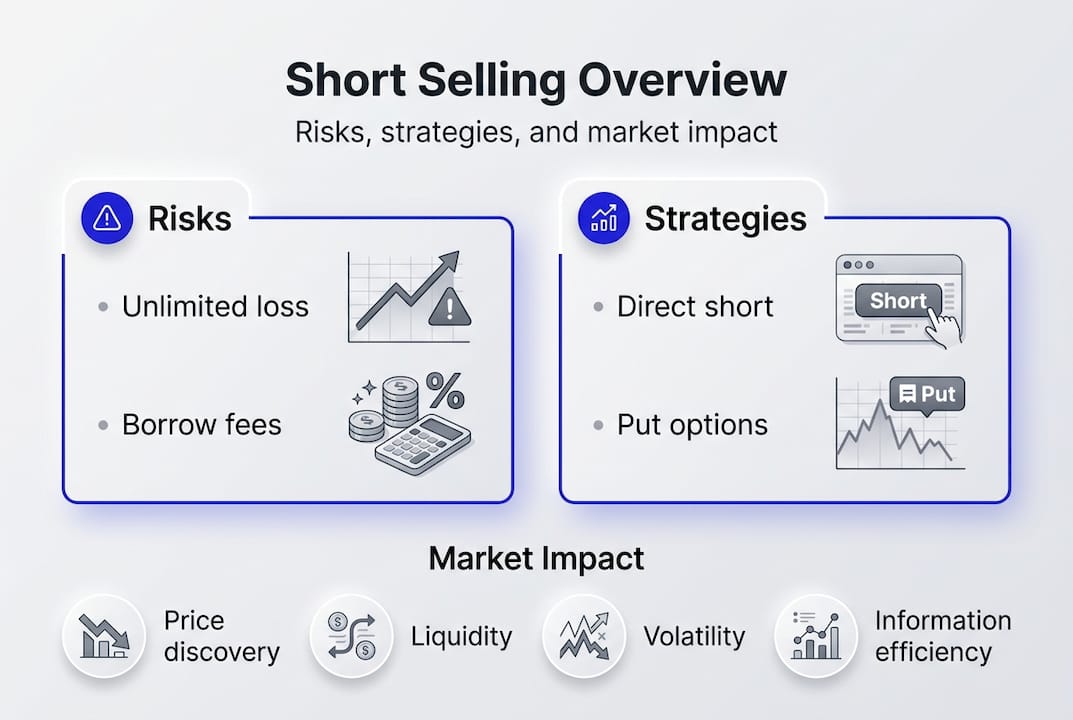
| Strategy | Max loss | Capital required | Complexity | Risk level |
|---|---|---|---|---|
| Direct short selling | Unlimited | High (margin) | High | Very high |
| Put options | Premium paid | Low to moderate | Moderate | Defined |
| Inverse ETFs | Amount invested | Low | Low | Moderate |
| Pair trading | Varies | Moderate | High | Moderate |
Here is how you might approach selecting a strategy:
-
Assess your risk tolerance. If unlimited loss potential is unacceptable, eliminate direct short selling from consideration immediately.
-
Evaluate your capital. Margin accounts require minimum balances; options and ETFs can be accessed with less capital.
-
Consider your time horizon. Inverse ETFs are designed for short-term use and can decay in value over time due to daily rebalancing.
-
Match complexity to your experience. Options require understanding of premium, expiration, and Greeks before you trade them effectively.
Using a profit/loss calculator before entering any position helps you model outcomes across different price scenarios. Pairing that with solid reading of market data gives you a clearer picture of whether the trade makes sense.
Pro Tip: If you are new to bearish strategies, start with put options rather than direct short selling. Your maximum loss is capped at the premium you pay, giving you a defined-risk way to learn how these positions behave in real market conditions.
Market impact: What do short sellers really do?
After understanding strategies, it is important to see the bigger picture of short selling’s impact on markets. Short sellers are often portrayed as villains, but research tells a more nuanced story.
Empirical research consistently shows that short sellers are among the most informed participants in the market. They conduct rigorous analysis, often uncovering accounting irregularities or business model weaknesses before the broader market catches on. Their activity contributes to price discovery, the process by which markets incorporate all available information into stock prices.
| Stock category | Relative performance (12-month) |
|---|---|
| Heavily shorted stocks | Tend to underperform the market |
| Lightly shorted stocks | Tend to perform in line or above market |
| Stocks with rising short interest | Often signal upcoming negative catalysts |
Short interest data, which shows what percentage of a stock’s float is sold short, is a widely watched signal. When short interest is very high, it can indicate either that informed sellers see real problems, or that a short squeeze is possible if positive news emerges.
Short squeezes are rare, affecting less than 1% of stocks on any given trading day. GameStop and a handful of other 2021 meme stocks were outliers, not the norm. Regulators monitor short selling volumes precisely because concentrated short positions can occasionally amplify volatility, even if the long-term effect of short selling is generally stabilizing.
Understanding the relationship between short interest and stock split effects can also inform your analysis, since corporate actions often shift the dynamics of short positions significantly.
“Short sellers, on average, are informed traders who improve market efficiency by pushing overvalued stocks toward their true price.” — Larry Swedroe, Substack
Take the next step in mastering stock strategies
Armed with this understanding of short selling, the logical next step is putting these concepts into practice with the right tools. Tickerplace gives you the resources to move from theory to action efficiently.
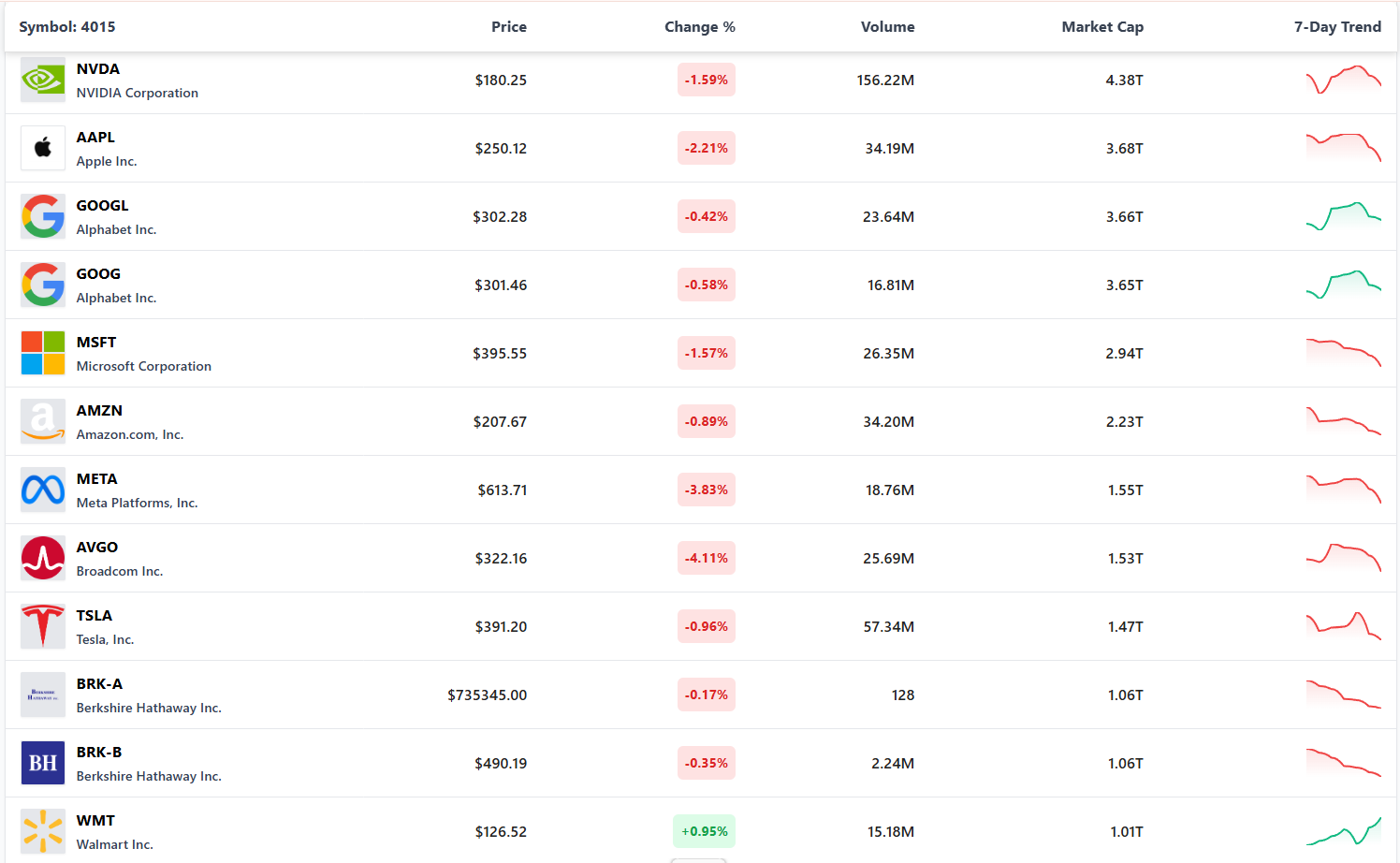
Start with the stock screener to filter equities by short interest, valuation metrics, and technical signals, helping you identify potential candidates worth researching further. Use the stock return calculator to model how different entry and exit points affect your net return before committing capital. For a broader foundation in investment strategy, the investing education guide covers everything from portfolio construction to advanced trading concepts, giving you the context to apply short selling knowledge within a complete investment framework.
Frequently asked questions
Can you lose more than you invest when short selling?
Yes, short selling exposes you to unlimited loss potential because there is no ceiling on how high a stock price can rise, meaning losses can far exceed your initial margin deposit.
How common are short squeezes like GameStop?
Short squeezes affect less than 1% of stocks on any given trading day, making dramatic events like GameStop 2021 statistical outliers rather than typical market behavior.
What fees do I pay when short selling?
You pay margin interest on borrowed funds, stock borrow fees that can exceed 50% annualized on hard-to-borrow shares, and you must cover any dividends the stock pays while your short position is open.
Is short selling suitable for beginners?
Direct short selling is generally best suited for experienced investors; beginners are better served by defined-risk alternatives like put options or inverse ETFs, which cap potential losses at the amount invested.