
TL;DR:
Trading volume reveals market participation and strengthens trend confirmation.
High volume supports credible breakouts and signals potential reversals.
Volume indicators enhance analysis by confirming price movements and detecting unusual activity.
Many investors focus almost entirely on price when making trading decisions, but price alone tells only part of the story. Trading volume, the number of shares exchanged in a given period, often reveals the conviction behind a price move and can signal whether a trend is likely to hold or reverse. Ignoring volume is like reading a headline without the article. This guide walks you through what trading volume is, how it shapes price movements, and how to use volume indicators to make more informed, confident decisions in the market.
Key Takeaways
| Point | Details |
|---|---|
| Trading volume definition | Trading volume is the total number of shares or assets traded over a period, a crucial metric for understanding market activity. |
| Influence on price trends | Volume often confirms or accelerates price movements, helping traders interpret underlying market sentiment. |
| Volume differs by stock size | Small, mid, and large cap stocks experience unique volume behaviors that affect trading strategies and risk. |
| Indicators improve decisions | Using volume-based tools and indicators helps investors make smarter buy or sell choices and manage risk. |
What is trading volume and why it matters
Trading volume definition) refers to the total number of shares bought and sold during a specific time period, whether that is a single trading session, a week, or a month. Every completed transaction between a buyer and a seller counts as volume. It is one of the most direct measures of market activity available to traders and investors.
Volume matters because it reflects participation. A price increase on low volume suggests weak conviction; the same increase on high volume suggests broad market agreement. This distinction is critical when you are deciding whether to enter or exit a position.
Here is what trading volume helps you do:
-
Confirm price trends: Rising prices paired with rising volume signal a strong, sustainable trend.
-
Spot potential reversals: A price move that lacks volume support often fades quickly.
-
Assess liquidity: Stocks with consistently high volume are easier to buy or sell without moving the price significantly.
-
Identify volatility windows: Sudden volume spikes often precede sharp price swings, giving you an early warning signal.
Key stat: SEC Rule 144) limits sales to a fraction of average trading volume to prevent market impact, which shows just how seriously regulators treat volume as a market stability metric.
Understanding volume is not just for day traders. Long-term investors use it to gauge whether institutional money is flowing into or out of a position, which can inform portfolio rebalancing decisions as well.
How trading volume influences stock price movements
Volume and price are closely linked, but the relationship is more nuanced than most traders initially expect. High volume does not automatically mean a price will rise; it means the move, in whatever direction, carries more weight.

When a stock breaks above a resistance level on heavy volume, that breakout is far more credible than one on thin trading. Conversely, a price drop on low volume may simply reflect a lack of buyers rather than genuine selling pressure. Learning to read these signals together is a core skill in reading market data.
| Scenario | Volume level | Signal interpretation |
|---|---|---|
| Price rises | High | Strong bullish trend confirmation |
| Price rises | Low | Weak move, possible false breakout |
| Price falls | High | Strong bearish selling pressure |
| Price falls | Low | Mild pullback, trend may continue |
Research adds an important layer here. Volume shocks predict overnight returns positively but not intraday, and this finding holds across market capitalizations. This means volume spikes are more useful for positioning before the close than for intraday scalping.
“Volume is the fuel that drives price. Without it, even the most compelling chart pattern can stall.”
Pro Tip: When you spot a volume spike, check whether it aligns with a news catalyst. Unexplained volume surges sometimes signal informed trading ahead of announcements, which can be an early signal worth watching.
Volume trends across small, mid, and large cap stocks
Trading volume does not behave the same way across all stocks. Company size, measured by market capitalization, plays a significant role in how volume patterns form and what they signal. You can use the market cap calculator to quickly assess where a stock falls.
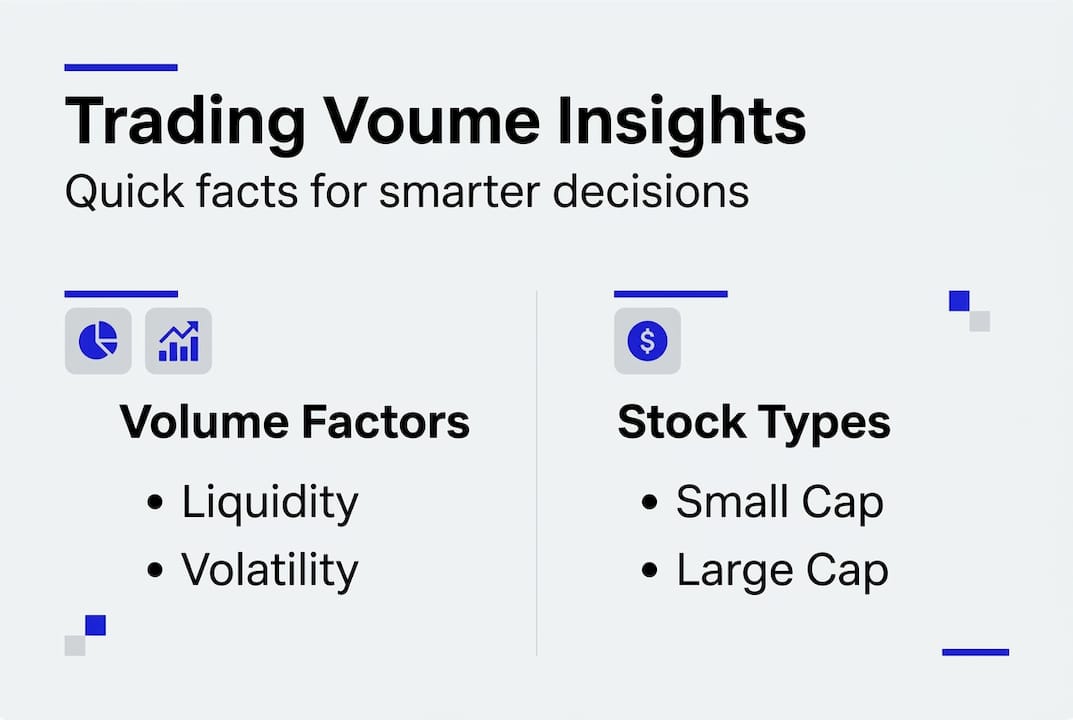
| Market cap tier | Typical daily volume | Price sensitivity to volume |
|---|---|---|
| Small cap | Low to moderate | High, moves easily on small trades |
| Mid cap | Moderate | Balanced, moderate sensitivity |
| Large cap | High | Low, requires large volume to shift price |
Here is how volume behavior breaks down by cap tier:
-
Small cap stocks often trade fewer shares daily, which means even modest volume spikes can cause significant price swings. This creates opportunity but also risk.
-
Mid cap stocks tend to show more consistent volume patterns, making trend confirmation more reliable for swing traders.
-
Large cap stocks like those listed among the largest companies by market cap require enormous volume shifts to produce meaningful price changes, but their patterns are more stable.
Importantly, volume shock research confirms that the predictive power of volume shocks on overnight returns holds across all cap sizes, not just small or speculative stocks. This makes volume analysis broadly applicable regardless of your investment focus. For a deeper breakdown of how market cap affects investment strategy, the market capitalization guide is a strong starting point.
Calculating average trading volume and its practical uses
Average trading volume (ATV) gives you a baseline for evaluating whether current volume is normal or unusual. The calculation is straightforward and easy to apply to any stock.
How to calculate average trading volume:
-
Select your time period, typically 20 or 30 trading days.
-
Add up the total shares traded across all days in that period.
-
Divide the total by the number of days.
-
The result is your average daily volume for that period.
For example, if a stock traded 10 million shares over 20 days, its average daily volume is 500,000 shares. If it suddenly trades 2 million shares in one session, that is a 4x spike worth investigating.
Practical uses of average trading volume include:
-
Liquidity assessment: Stocks with higher ATV are easier to enter and exit without slippage.
-
Abnormal activity detection: A session that trades 3 to 5 times the average often signals news, institutional activity, or a breakout.
-
Regulatory context: SEC Rule 144) uses average volume to cap how much restricted stock can be sold in a given period, protecting market stability.
Pro Tip: Use the average price calculator alongside volume data to understand whether price changes during high-volume sessions represent genuine value shifts or short-term noise.
Using trading volume indicators for informed trading decisions
Volume on its own is useful, but volume indicators combine raw data with price action to generate clearer signals. These tools help you move from observation to actionable decisions.
The most widely used volume indicators include:
-
On-Balance Volume (OBV): Adds volume on up days and subtracts it on down days. A rising OBV alongside a rising price confirms a healthy trend.
-
Volume Weighted Average Price (VWAP): Shows the average price weighted by volume throughout the day. Traders use it as a benchmark to evaluate whether they are buying or selling at a fair price.
-
Accumulation/Distribution (A/D): Tracks whether a stock is being accumulated or distributed by comparing closing prices to the trading range, weighted by volume.
These indicators work best when used together rather than in isolation. Volume shock research reinforces that volume signals are more reliable as confirmation tools than as standalone predictors. Pairing them with your broader market data strategies strengthens your overall analysis framework.
Why most traders underestimate trading volume’s impact
After years of observing how traders approach the market, one pattern stands out: most beginners fixate on price charts and treat volume as an afterthought. This is a costly habit. Price tells you what happened; volume tells you why it matters.
Volume reveals market conviction in ways that price alone cannot. A stock climbing steadily on declining volume is often a warning sign, not a buying opportunity. Many traders miss this because they are conditioned to chase price momentum without asking whether the move has real support behind it.
The hard-won lesson is this: volume analysis is not a secondary tool. It is a primary filter. When you align price signals with volume confirmation, you reduce the chance of acting on false breakouts or misleading trends. For context on how company size affects these dynamics, the market cap insights resource adds useful perspective.
Take your trading volume skills further with Tickerplace
Understanding trading volume is a genuine edge, and Tickerplace gives you the tools to act on that knowledge directly.
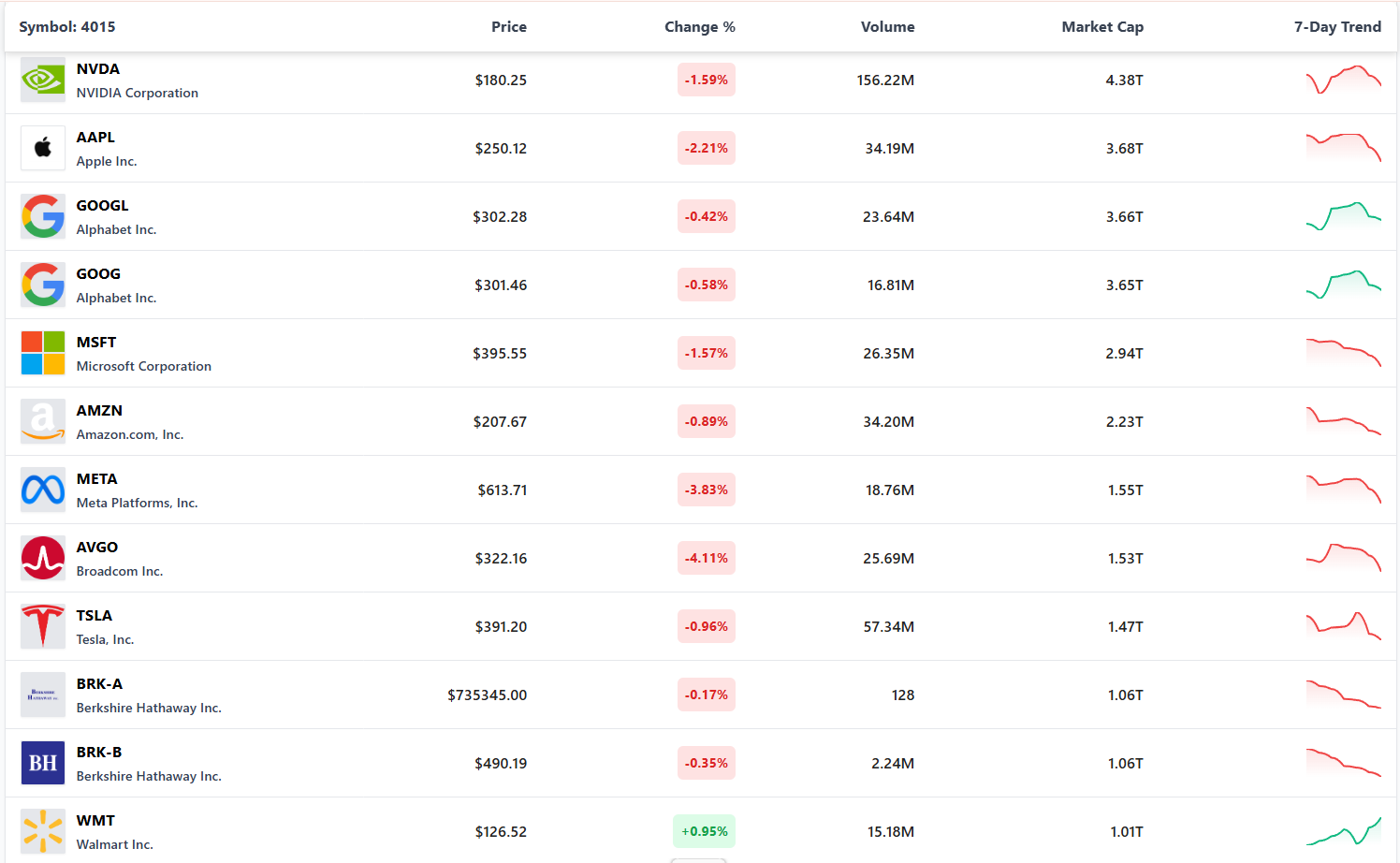
Use the stock screener to filter stocks by volume trends and identify unusual activity before it becomes headline news. The stock return calculator helps you model how volume-driven price moves affect your actual returns. And if you want to build a stronger foundation across all aspects of market analysis, the investing education guide is the right place to start. Tickerplace brings real-time data, practical tools, and research resources together in one place so your decisions are always grounded in evidence.
Frequently asked questions
How does trading volume affect liquidity?
Higher trading volume) generally means better liquidity, allowing stocks to be bought and sold more easily without causing significant price changes.
What is considered good trading volume for a stock?
Good trading volume is relative to a stock’s own average; a session trading well above its average volume) is typically viewed as a positive signal for liquidity and market interest.
Can trading volume predict stock price movements?
Volume shocks can predict overnight returns positively, but their predictive power is limited intraday, so volume is best used as a confirmation tool rather than a standalone predictor.
How do I calculate average trading volume?
Divide the total shares traded) over a chosen period by the number of trading days to get your average daily volume for comparison.