

TL;DR:
- Stock screeners filter stocks based on value, growth, profitability, risk, and liquidity metrics.
- Combining multiple proven filters improves stock selection and outperforms passive benchmarks over time.
- Regularly refining criteria and complementing quantitative screens with qualitative analysis enhances investment outcomes.
With over 50,000 publicly traded stocks worldwide, narrowing the field to a shortlist of genuine opportunities is one of investing's most demanding tasks. Most investors face information overload, sifting through noisy data, conflicting signals, and market headlines that rarely point to durable value. Stock screening cuts through that noise by applying structured, quantitative filters to isolate equities worth closer analysis. This article provides practical, research-backed screening tips, covering the metrics that matter, the strategies that hold up, and the pitfalls that derail even disciplined investors.
Key Takeaways
| Point | Details |
|---|---|
| Define your criteria | Start with proven metrics like value, growth, and profitability to focus your stock search. |
| Use research-backed strategies | Strategies like Piotroski F-Score and Magic Formula have outperformed the S&P 500 in backtests. |
| Compare screening methods | Assess the strengths and weaknesses of popular screeners before making decisions. |
| Refine and adapt | Regularly revisit your filters and account for new market information and research. |
Understand what makes a good stock screener
A stock screener is a tool that filters equities from a large universe based on user-defined financial and technical criteria. Think of it as a first-pass quality gate: it doesn't make the investment decision, but it eliminates candidates that don't meet your standards before you spend time on deeper analysis.
Effective screeners draw on five core dimensions:
- Value: Is the stock trading below intrinsic worth? Metrics like price-to-earnings (P/E) and price-to-book (P/B) ratios are the foundation.
- Growth: Are revenues and earnings expanding at a sustainable rate?
- Profitability: Does the business generate consistent returns? Return on equity (ROE) and operating margins are key signals.
- Risk: How volatile is the stock relative to the broader market? Using risk analysis with beta helps contextualize downside exposure.
- Liquidity: Can you enter and exit positions without moving the price? Average daily volume matters here.
Methodology matters as much as the metrics you choose. Systematic approaches grounded in academic research consistently outperform ad hoc filters. Applying stock filters for better results rooted in proven frameworks gives your screen a structural advantage from the start.
Research confirms that research-backed screens outperform the market over time, with systematic models like the Piotroski F-Score and Magic Formula generating returns that exceed passive benchmarks across multiple market cycles.
The takeaway: building a screener around a validated framework, rather than gut instinct alone, is the single most important discipline investors can adopt.
Key metrics and filters to use for effective screening
Understanding how screeners work leads naturally to the question of which metrics deserve priority. Not all financial ratios carry equal predictive weight. Here are the most effective filters, defined clearly:
- P/E ratio (Price-to-Earnings): Measures what investors pay for each dollar of earnings. Lower values may signal undervaluation, though context by sector is essential.
- ROE (Return on Equity): Shows how efficiently a company generates profit from shareholders' equity. ROE above 15% is generally considered strong.
- PEG ratio (Price/Earnings-to-Growth): Adjusts the P/E for growth rate. A PEG below 1.0 often indicates a stock is undervalued relative to its growth trajectory.
- Debt-to-equity ratio: Signals financial leverage. High ratios can indicate fragility during downturns.
- Free cash flow (FCF): Represents actual cash a company generates after capital expenditures. Consistent positive FCF is a strong quality signal.
- Revenue and earnings growth rates: Forward-looking filters that identify compounders early.
Applying multiple filters simultaneously sharpens the screen dramatically. A stock that clears value, profitability, and growth thresholds in combination is far more compelling than one passing a single test. Understanding how to analyze stocks with these metrics in tandem builds a more defensible shortlist.

Backtesting validates this multi-factor approach. An undervalued growth screener returned +23% over a recent test period versus the S&P 500's +17%, though that gap reflects a relatively short window and should not be extrapolated mechanically. Learning to evaluate stock performance with appropriate skepticism keeps expectations grounded.
Pro Tip: Avoid using more than 8 to 10 filters at once. Over-filtering produces a universe so small that diversification becomes impossible and the results may reflect data mining rather than genuine signal.
Popular screening strategies compared
Now let's see how different screening strategies stack up in real investing. Each major approach carries distinct criteria, evidence, and trade-offs worth understanding before committing to one.
| Strategy | Core criteria | Strength | Limitation |
|---|---|---|---|
| Value investing | Low P/E, P/B, high dividend yield | Proven long-term track record | Can trap investors in declining businesses |
| Growth investing | High revenue/earnings growth, strong momentum | Captures compounders early | Prone to overvaluation in bull markets |
| Quality (F-Score) | Profitability, leverage, efficiency scores | Filters financially sound firms | May miss early-stage opportunities |
| Magic Formula | High earnings yield + high return on capital | Simple, rules-based, backtested | Requires patience; underperforms in short windows |
| GARP (Growth at a Reasonable Price) | PEG ratio, moderate growth, fair valuation | Balances growth and value | Requires more subjective judgment |
Research-backed strategies outperform passive benchmarks most reliably when rules are applied consistently, without overriding the model when results look uncomfortable in the short term.
To compare screeners head-to-head effectively, follow these steps:
- Define your investment objective: income, growth, capital preservation, or total return.
- Select two or three candidate strategies that align with that objective.
- Apply each strategy to the same stock universe using advanced screening tools.
- Compare overlap and divergence in the resulting shortlists.
- Back-test each over at least five years of data, adjusting for survivorship bias.
- Choose the strategy whose methodology you can apply consistently without abandoning it mid-cycle.
Pitfalls and how to refine your stock screens
Knowing the strategies, it's equally important to recognize the limits and refine your approach. Screening is powerful, but every screen has blind spots.
Common pitfalls include:
- Survivorship bias: Historical data often excludes companies that failed or were delisted, making past performance look better than it was.
- Data lags: Financial statements are backward-looking. A stock passing your screen today may have already deteriorated operationally.
- Overfitting: Designing a screen around historical patterns that won't repeat is a subtle but costly error.
- Ignoring qualitative factors: Screens can't capture management quality, regulatory risk, or industry disruption.
Backtest periods can be too short, meaning results that look compelling over a two or three year window may simply reflect a favorable market cycle rather than a durable edge. This is especially relevant for momentum-based screens, which tend to shine in trending markets and stumble in choppy conditions.
Refinement means treating your screen as a living framework. Revisit your criteria when macro conditions shift: rising interest rates, for example, often make high-debt screens more punishing. Use the valuation checker to cross-verify individual names that emerge from your filter before committing capital.
Pro Tip: Once a stock clears your quantitative filters, spend at least 30 minutes reviewing qualitative factors: recent earnings calls, management commentary, and any material news events. Numbers are the map, not the territory.
A smarter approach to stock screening
Stock screening is a starting point, not a final answer. The investors who consistently outperform don't abandon judgment once a screen spits out a list. They treat that list as a set of hypotheses to test, each one demanding a critical second look.
The uncomfortable truth is that most screens fail not because their metrics are wrong, but because investors override them emotionally or chase recent backtest performance. A screen built on sound fundamentals, applied with patience and reviewed for smarter investment decisions, produces better outcomes than chasing whichever formula dominated last quarter. Discipline, not complexity, is the real edge.
Take your stock screening further with Tickerplace
If you're ready to implement smarter screens, Tickerplace gives you the tools to do it efficiently and accurately.
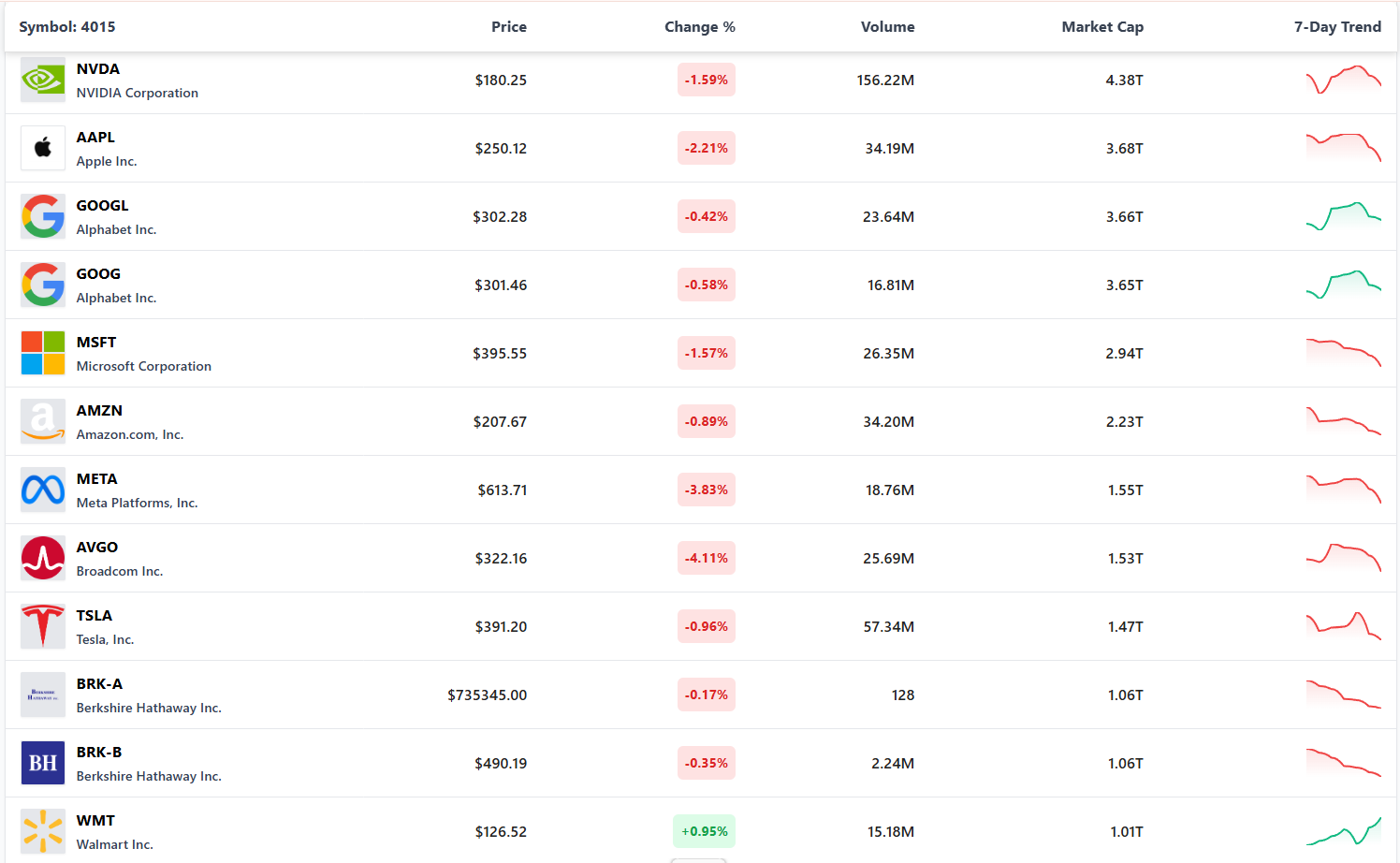
The Stock Screener on Tickerplace lets you apply value, growth, quality, and factor-based filters across global equities in real time, with clean data and an interface built for serious investors. Pair screening with the platform's Investing Education resources to sharpen your criteria over time. Whether you're refining an existing strategy or building a new one from scratch, Tickerplace provides the data environment you need to work with confidence.
Frequently asked questions
What is the most effective stock screening strategy?
Research supports systematic screens like the Piotroski F-Score and Magic Formula, which have consistently outperformed benchmarks over certain test periods when applied with discipline and patience.
Which financial metrics matter most in screening stocks?
Metrics like P/E ratio, ROE, free cash flow, and debt-to-equity are essential foundations; an undervalued growth screener returning +23% versus the S&P 500's +17% illustrates the added value of combining multiple filters.
Should I rely only on backtested screen results?
No. Backtest periods are often short and influenced by specific market cycles, so always supplement screen results with current qualitative analysis and broader market context.
How often should I update my screening criteria?
Review and adjust your filters at least quarterly, or whenever significant macroeconomic conditions shift, such as changes in interest rates, sector rotations, or broad market volatility regimes.