
TL;DR:
- Stock futures provide short-term market signals and strategic advantages for individual investors.
- They are mainly used for hedging, speculation, and realizing quick portfolio adjustments.
- Futures offer valuable insight into institutional sentiment but should be used tactically, not predictively.
Stock futures are frequently dismissed as instruments reserved for institutional desks and seasoned derivatives traders, yet that assumption leaves individual investors without one of the most revealing market signals available. Whether you are managing a concentrated equity position, anticipating a major earnings release, or simply trying to read where the broader market is heading before the opening bell, understanding how stocks futures work gives you a measurable analytical edge. This guide cuts through the complexity, providing practical frameworks, concrete examples, and actionable strategies so you can incorporate futures data into your investment process with confidence.
Key Takeaways
| Point | Details |
|---|---|
| Stocks futures fundamentals | Stocks futures are contracts to buy or sell a stock at a fixed price on a future date, useful for strategies beyond simple investing. |
| Investor motivations | Investors use stocks futures mainly for hedging, speculation, and tactical portfolio adjustments. |
| Comparing instruments | Futures, options, and ETFs each serve unique roles; understanding their differences can help optimize your strategy. |
| Practical application | Analyzing futures data and market signals improves timing, risk management, and decision-making. |
| Balanced perspective | Stocks futures are valuable tools when used wisely, but come with challenges that require experience and discipline. |
What are stocks futures and how do they work?
A stock future is a standardized contract that obligates the buyer to purchase, and the seller to deliver, a specific underlying asset at a predetermined price on a set expiration date. Unlike buying shares outright, you are not exchanging ownership today; you are locking in terms for a future transaction. That distinction matters enormously for how you manage capital and risk.
To navigate futures markets effectively, you need to be comfortable with a handful of core terms:
- Underlying asset: The specific stock or index the contract references, such as Apple Inc. shares or the S&P 500 index.
- Expiration date: The date on which the contract settles, typically quarterly (March, June, September, December).
- Margin: The good-faith deposit required to hold a futures position, usually a fraction of the contract's total value.
- Leverage: Because margin is small relative to contract size, futures amplify both gains and losses compared to holding the underlying stock directly.
- Mark-to-market: Futures accounts are settled daily, meaning gains and losses are credited or debited each trading session rather than at expiration.
Futures are traded on regulated exchanges such as the Chicago Mercantile Exchange (CME) and Intercontinental Exchange (ICE), which standardize contract sizes and ensure counterparty performance through a central clearinghouse. This structure reduces counterparty risk significantly compared to over-the-counter derivatives.
Futures serve three primary market functions. First, they enable speculation, allowing traders to express directional views without tying up the full capital required to own shares. Second, they facilitate hedging, letting portfolio managers offset downside risk in existing positions. Third, they contribute to price discovery, as futures prices incorporate forward-looking expectations about earnings, interest rates, and macroeconomic conditions. For a broader view of how indices factor into this process, the stock indices guide provides useful context on how benchmark construction influences futures pricing.
Why do investors use stocks futures?
With the mechanics established, the more strategic question becomes: why do sophisticated investors consistently turn to futures rather than simply adjusting their stock positions? Three motivations stand out.
- Hedging risk: A portfolio manager holding a large position in a single technology stock can use S&P 500 futures to offset broad market exposure without liquidating shares and triggering a taxable event. The futures position moves inversely to a market decline, cushioning the portfolio.
- Speculation with capital efficiency: Because margin requirements are typically 5% to 15% of the notional contract value, a trader can control a large position with relatively modest capital, amplifying returns when the directional call is correct.
- Enhancing portfolio returns: Institutional investors frequently use futures overlays to adjust beta exposure quickly, responding to macro shifts far faster than rebalancing an entire equity portfolio would allow.
Institutional participants also use futures to position ahead of scheduled catalysts. Before a Federal Reserve announcement or a major earnings release, open interest in index futures often spikes, reflecting large players taking directional stances. Monitoring these shifts gives you a window into institutional sentiment that pure stock-price analysis cannot provide.
"Futures markets are not crystal balls, but they are among the most honest real-time indicators of where informed capital is flowing." This perspective from professional derivatives traders underscores why futures data deserves a place in any serious analyst's toolkit.
Pro Tip: Never ignore basis risk. Basis is the difference between the futures price and the spot price of the underlying asset. When you use index futures to hedge a single-stock position, the hedge is imperfect because your stock may not move in lockstep with the index. Quantifying that gap using stock risk analysis with beta helps you size the hedge more accurately and avoid overconfidence in the protection it provides.
Stocks futures vs. other derivatives: A comparison
Investors often conflate futures with options or exchange-traded funds (ETFs), but the instruments serve distinct purposes and carry meaningfully different risk profiles.
| Feature | Futures | Options | ETFs |
|---|---|---|---|
| Obligation | Both parties obligated | Buyer has right, not obligation | No obligation; ownership of basket |
| Leverage | High (via margin) | Moderate (via premium) | Low to none |
| Counterparty risk | Cleared centrally | Cleared centrally | Exchange-listed, minimal |
| Expiration | Fixed quarterly dates | Flexible (weekly to LEAPS) | No expiration |
| Best use case | Hedging, directional bets | Income, protection, speculation | Long-term exposure, diversification |
| Cost structure | Commission plus margin interest | Premium plus commission | Expense ratio plus commission |
Key distinctions worth remembering:
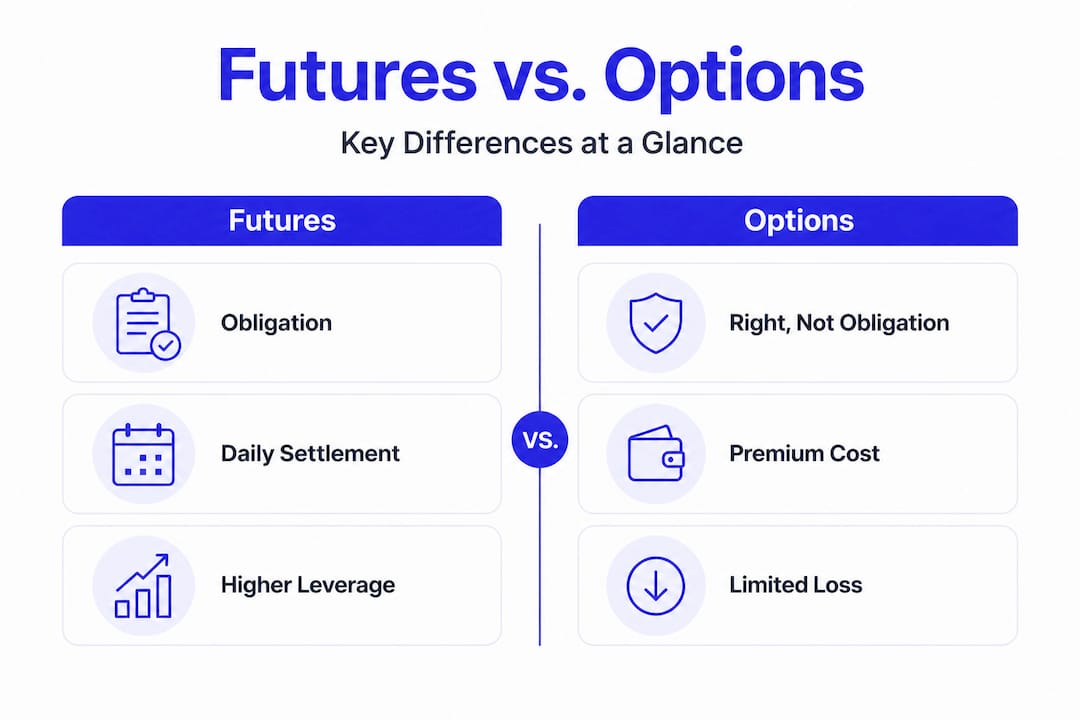
- Futures vs. options: Options give the buyer the right but not the obligation to transact, which limits downside to the premium paid. Futures obligate both sides, meaning losses can exceed the initial margin deposit.
- Futures vs. ETFs: ETFs track an index passively and are ideal for long-term, buy-and-hold investors. Futures are better suited for short-term tactical adjustments or hedges where speed and capital efficiency matter.
- When to use each: Use futures when you need to move quickly, manage large notional exposure with limited capital, or express a short-term directional view. Use options when you want asymmetric payoff profiles. Use ETFs when you want diversified exposure without active management. Understanding how indices for smart investing are constructed helps you select the right futures contract or ETF to match your target exposure.
How to analyze and incorporate stocks futures into your strategy
Knowing what futures are is one thing; using them effectively in your workflow is another. Here is a structured process for reading futures data and acting on it.
- Identify the relevant contract: Select the futures contract that most closely matches your exposure, whether a single-stock future, an index future like the E-mini S&P 500, or a sector-specific contract.
- Read the futures curve: Compare near-term contract prices to longer-dated contracts. A market in contango (far-dated contracts priced higher than near-dated) often signals expectations of rising prices or higher carrying costs. Backwardation (near-dated priced higher) can indicate near-term supply pressure or strong immediate demand.
- Analyze open interest: Rising open interest alongside rising prices confirms trend strength. Rising prices with falling open interest may indicate a short-covering rally rather than genuine buying conviction.
- Monitor volume: Abnormal volume spikes ahead of scheduled events often reveal institutional positioning before the news breaks.
- Incorporate implied volatility: When options on futures show elevated implied volatility, the market is pricing in uncertainty, which can signal caution for directional bets.
| Indicator | What it measures | Bullish signal | Bearish signal |
|---|---|---|---|
| Futures price vs. spot | Premium or discount to cash | Futures at premium | Futures at discount |
| Open interest | Total outstanding contracts | Rising with price | Falling with price |
| Volume | Trading activity | Surge on up moves | Surge on down moves |
| Implied volatility | Expected price swings | Low and stable | Spiking sharply |
Pro Tip: Watch for contango or backwardation as early warning signals. A sudden shift from contango to backwardation in equity index futures has historically preceded periods of heightened volatility. Pairing this observation with evaluating stock performance metrics helps you decide whether to reduce exposure or hold firm. Integrating these signals into a structured trading workflow optimization process ensures you act on data rather than impulse.

A realistic take: Why stocks futures are both overrated and underrated
Here is the candid assessment most guides skip: retail traders simultaneously overestimate the danger of futures and underestimate their analytical value.
The overestimation of risk comes from leverage. Yes, leverage amplifies losses. But the solution is position sizing, not avoidance. A trader who allocates only 2% to 3% of portfolio capital to a futures position carries no more absolute risk than owning a volatile small-cap stock. The instrument is not inherently reckless; the sizing decision determines the risk.
The underestimation of value is more costly. Futures data, particularly open interest trends and the shape of the futures curve, gives you information that stock price charts simply do not contain. Professional traders watch these signals obsessively because they reveal where large capital is committed, not just where prices have been.
The biggest trap, however, is treating futures as a predictive oracle for long-term trends. They are not. Futures reflect short-term sentiment and positioning, not fundamental value. An investor who sees S&P 500 futures up 1% before the open and concludes the bull market is intact is misreading the signal entirely. That move might reverse by noon. The proper use of futures is tactical, not forecasting. Pairing futures signals with disciplined analyzing stocks wisely using fundamental and technical analysis produces far better outcomes than relying on either approach alone.
Beginners should start by simply observing futures data without trading it. Track pre-market futures moves against actual open prices for 30 days. The gap between what futures implied and what actually happened will teach you more about their limitations and genuine utility than any theoretical explanation.
Level up your trading with powerful tools
Understanding stocks futures is only the first step; applying that knowledge efficiently requires the right platform. Tickerplace brings together real-time market data, advanced screening capabilities, and in-depth research tools designed for investors and analysts who take their process seriously.
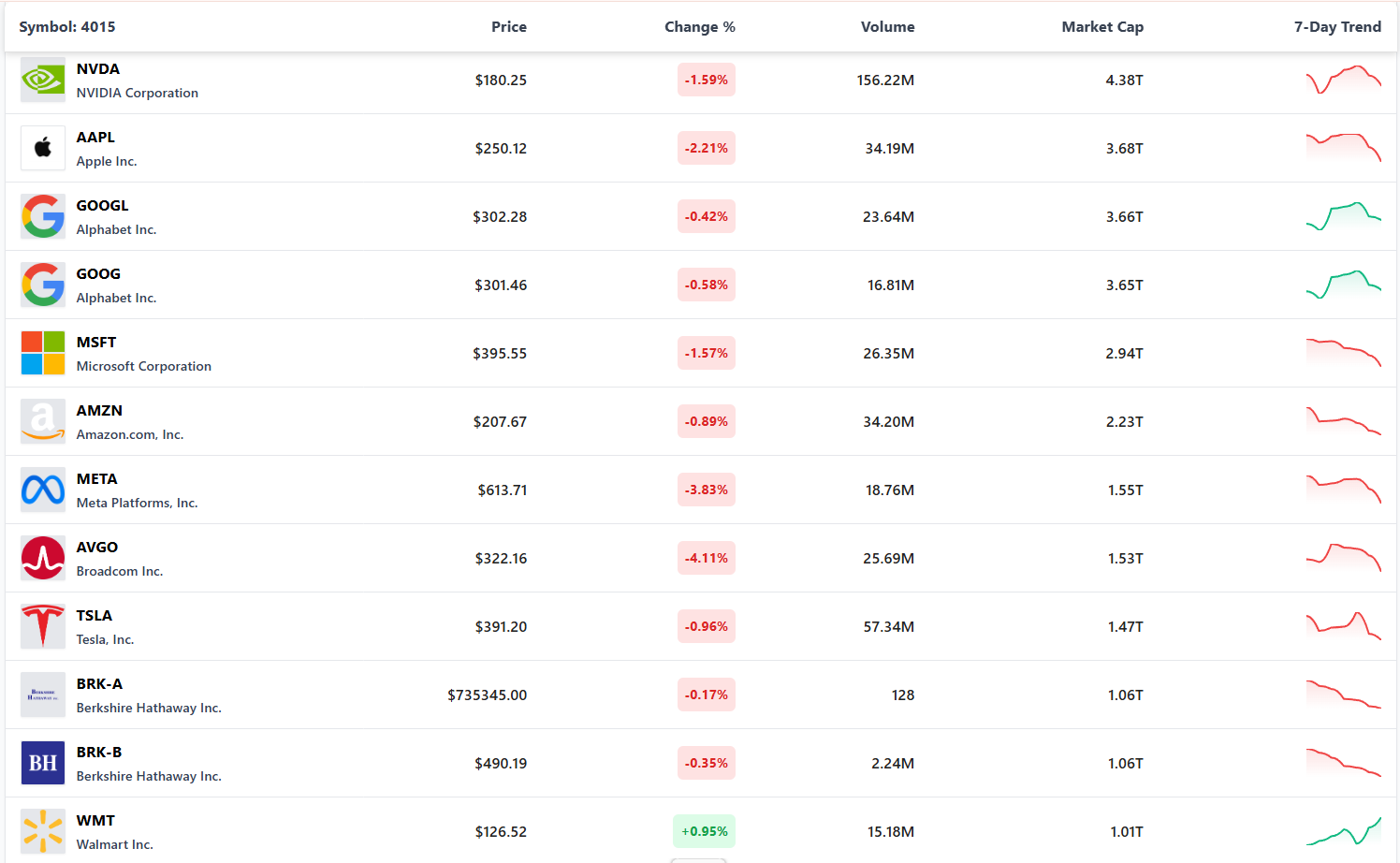
Whether you are screening for stocks with unusual futures activity, tracking index futures ahead of major events, or building a research-driven strategy, the stock screener gives you the filtering power to act on what you have learned. For investors who want to continue building their analytical foundation, the investing education center offers structured resources covering everything from derivatives basics to advanced portfolio strategy. Smarter decisions start with better data, and Tickerplace is built to deliver both.
Frequently asked questions
Are stocks futures riskier than regular stocks?
Stocks futures carry distinct risks including leverage and daily margin settlement, but with disciplined position sizing they are not inherently riskier than owning volatile equities outright.
Do individual investors need a special account to trade stock futures?
Yes, trading futures requires a margin account with specific approval from your brokerage, as well as meeting minimum capital thresholds set by the exchange and broker.
How do stocks futures affect the cash market?
Futures influence cash market prices through price discovery and arbitrage activity, as traders continuously align futures and spot prices to eliminate risk-free profit opportunities.
Can stocks futures be used to predict market direction?
Futures reflect near-term positioning and sentiment effectively, but they are unreliable indicators of long-term market direction and should be used as tactical signals rather than forecasts.
What are the main costs of trading stocks futures?
Primary costs include brokerage commissions, margin interest on overnight positions, and slippage on entry and exit; managing these costs through disciplined trade execution is essential for profitability.