
Most investors assume risk management is simply about avoiding losses. That assumption is costly. The risk management process is actually a structured discipline that defines risk tolerance, then measures, monitors, and modifies risks to stay aligned with that tolerance. It is not a defensive posture; it is a strategic one. This article walks through the core frameworks, measurement tools, and practical techniques that serious investors and analysts use to make better decisions, protect capital, and pursue returns with clear-eyed awareness of what they are taking on.
Key Takeaways
| Point | Details |
|---|---|
| Risk management is strategic | Aligning risk with investment goals is essential for successful portfolio management. |
| Frameworks provide structure | Effective risk management relies on robust frameworks with governance, measurement, and mitigation. |
| Measurement tools matter | VaR, sensitivity measures, and stress tests help evaluate and control financial risk exposure. |
| Modification techniques work | Diversification, position sizing, and risk budgeting reduce portfolio risk and improve outcomes. |
| Comparisons reveal nuances | Risk parity strategies often underperform traditional allocations, highlighting the importance of evidence-based decision making. |
Defining risk management and its significance
Risk management is far more than a checklist of things that could go wrong. At its core, it is a continuous process that connects every investment decision to a defined set of goals and constraints. When done well, risk management enhances decision-making by aligning the risks an organization or portfolio takes with the outcomes it is actually trying to achieve.

For investors and analysts, this alignment matters because markets are dynamic. A position that fits your risk tolerance today may not fit it after a rate hike, an earnings miss, or a geopolitical shock. Risk management provides the governance structure to catch those shifts early.
The key functions of a sound risk management process include:
-
Defining risk tolerance: Establishing the maximum level of loss or volatility acceptable for a given portfolio or mandate
-
Measuring current risk exposures: Quantifying how much risk is actually present across positions and asset classes
-
Monitoring ongoing changes: Tracking how market conditions and portfolio composition shift risk levels over time
-
Modifying exposures: Adjusting positions, hedges, or allocations when risk drifts outside acceptable bounds
Strong risk oversight in finance organizations also requires clear governance, meaning defined roles, accountability structures, and escalation paths when risk limits are breached.
“Risk management is not about eliminating risk. It is about taking the right risks, in the right amounts, for the right reasons.”
Risk management frameworks and core components
Understanding the definition sets a foundation; now, let’s look at the structural framework that supports effective risk management in practice. A risk management framework includes risk governance, risk identification, measurement, mitigation, infrastructure, policies, communication, and integration across the organization.
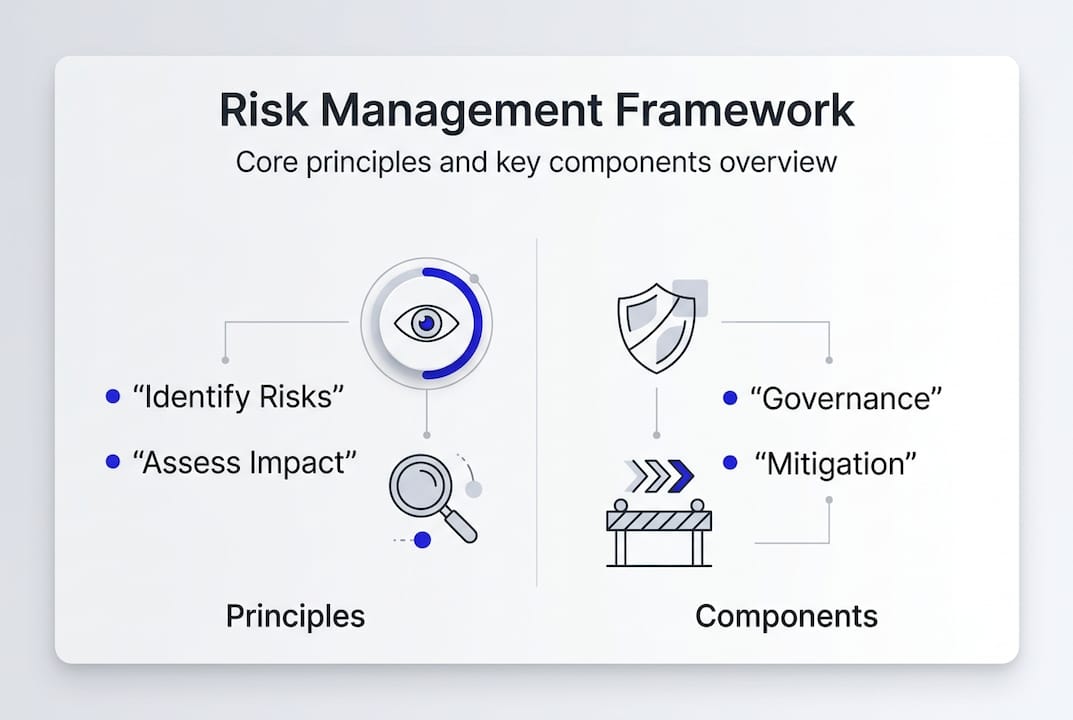
Each component plays a distinct role. Risk governance sets the tone from the top, establishing who owns risk decisions and how they are reviewed. Risk identification catalogs the types of risk present, from market and credit risk to liquidity and operational exposures. Measurement translates those risks into quantifiable terms. Mitigation covers the actions taken to reduce or transfer risk. Infrastructure refers to the systems, data, and technology that support the entire process.
Here is how the core components compare in function:
| Component | Primary function | Key output |
|---|---|---|
| Risk governance | Sets authority and accountability | Risk policy and oversight structure |
| Risk identification | Catalogs risk types and sources | Risk register or inventory |
| Risk measurement | Quantifies exposures | VaR, beta, duration metrics |
| Risk mitigation | Reduces or transfers risk | Hedges, limits, diversification |
| Communication | Shares risk data across stakeholders | Reports, dashboards, alerts |
| Integration | Embeds risk into investment decisions | Risk-adjusted return targets |
Effective risk oversight in finance organizations depends on all these components working together, not in isolation. A firm with excellent measurement tools but weak governance will still make poor risk decisions.
Tools and methodologies used in measuring risk
With the framework in hand, let’s explore the specific measurement tools investors can use to quantify risk. Key methodologies for measuring market risk include Value at Risk (VaR), sensitivity measures, scenario analysis, and stress testing.
Each tool answers a different question about your portfolio’s risk profile:
-
Value at Risk (VaR): Estimates the minimum loss expected over a defined period at a given confidence level. For example, a 1-day 95% VaR of $500,000 means there is a 5% chance of losing more than $500,000 in a single day.
-
Expected Shortfall (ES): Also called Conditional VaR, ES measures the average loss in the worst-case scenarios beyond the VaR threshold. It addresses VaR’s shortcomings by capturing tail risk more accurately.
-
Sensitivity measures: Beta quantifies a portfolio’s sensitivity to broad market moves; duration measures interest rate sensitivity for fixed income positions.
-
Scenario analysis: Models portfolio performance under specific hypothetical or historical events, such as the 2008 financial crisis or a sudden 200-basis-point rate increase.
-
Stress testing: Pushes portfolios through extreme but plausible conditions to identify vulnerabilities that standard metrics miss.
VaR estimates minimum loss at a confidence level, but its limitations are real: it can significantly underestimate tail risks during market dislocations. This is why regulators have been pushing toward Expected Shortfall. The regulatory shift to Expected Shortfall under the Fundamental Review of the Trading Book (FRTB) reflects a broader recognition that tail risk deserves more rigorous treatment.
Using the present value calculator alongside these risk metrics helps you contextualize potential losses in today’s dollar terms, adding another layer of precision to your analysis.
Pro Tip: Never rely on a single risk metric. Combine VaR with stress testing and scenario analysis to get a fuller picture of your portfolio’s true risk exposure.
Risk modification techniques: Practical strategies for investors
Measuring risk is crucial; next, we’ll cover how you can actively modify risk exposures to fit your goals. Risk modification techniques include position sizing, diversification, hedging with derivatives, and constraints like risk budgeting.
Here are the primary techniques investors use:
-
Position sizing: Limiting the capital allocated to any single position reduces the impact of an adverse move. Many systematic strategies cap individual positions at 2% to 5% of total portfolio value.
-
Stop-loss limits: Predefined exit points that trigger a sale when a position falls below a set threshold, preventing small losses from becoming large ones.
-
Diversification: Spreading capital across uncorrelated assets reduces unsystematic risk. Maximum diversification strategies have been shown to outperform minimum variance portfolios in empirical studies, delivering better out-of-sample risk reduction.
-
Hedging with derivatives: Options, futures, and swaps allow investors to offset specific risk exposures without liquidating core positions.
-
Risk budgeting: Allocating a defined amount of risk, rather than capital, to each strategy or asset class. This ensures that no single allocation dominates the portfolio’s overall risk profile.
Diversification reduces unsystematic risk, but the method of diversification matters. Simply holding more stocks does not guarantee lower risk if those stocks are highly correlated. True diversification targets low or negative correlations across holdings.
The investment return calculator can help you model how different position sizes and diversification choices affect your expected returns and risk-adjusted outcomes.
Pro Tip: Risk budgeting is particularly powerful for multi-strategy portfolios. Assign each strategy a risk allocation, then monitor whether actual risk consumption stays within budget as market conditions change.
Risk parity strategies versus traditional asset allocation
With hands-on risk modification tools covered, let’s contrast two prominent portfolio strategies to see how risk is allocated and managed. The debate between risk parity and traditional 60/40 allocation is one of the most consequential in modern portfolio construction.
Risk parity theory holds that equalizing risk contributions across asset classes, rather than allocating by capital weight, produces more stable and efficient portfolios. In practice, this often means holding more bonds and using leverage to bring all asset classes to a comparable risk level.
Here is how the two approaches compare:
| Dimension | Risk parity | Traditional 60/40 |
|---|---|---|
| Allocation basis | Equal risk contribution | Fixed capital weights |
| Leverage use | Often required | Rarely used |
| Bond exposure | High | Moderate |
| Equity exposure | Lower (risk-adjusted) | Dominant |
| Performance in rising rate environments | Challenged | More resilient |
The empirical evidence is sobering for risk parity advocates. Risk parity strategies have underperformed traditional 60/40 portfolios in net returns and risk-adjusted metrics across multiple market cycles. The leverage required to equalize risk contributions adds cost and introduces its own vulnerabilities.
“Minimum risk portfolios suffer from instability; maximum diversification offers lower out-of-sample risk and more consistent performance.”
For investors evaluating these strategies, the risk parity and traditional allocation comparison is worth examining in the context of your specific mandate and time horizon. Valuation tools like the P/B ratio calculator and PE ratio calculator can help you assess whether the underlying assets in either strategy are priced appropriately for the risk being taken.
Key considerations when choosing between the two:
-
Interest rate sensitivity: Risk parity portfolios carry significant duration risk; rising rates in 2022 exposed this vulnerability sharply.
-
Leverage costs: Borrowing to equalize risk contributions erodes net returns, especially in high-rate environments.
-
Rebalancing complexity: Risk parity requires more frequent rebalancing to maintain equal risk contributions as volatility shifts.
-
Simplicity versus sophistication: A well-constructed 60/40 portfolio with thoughtful diversification often delivers competitive risk-adjusted returns without the operational complexity of risk parity.
Explore risk management tools on Tickerplace
Applying these risk management principles requires access to accurate, real-time data and analytical tools that keep pace with market conditions.
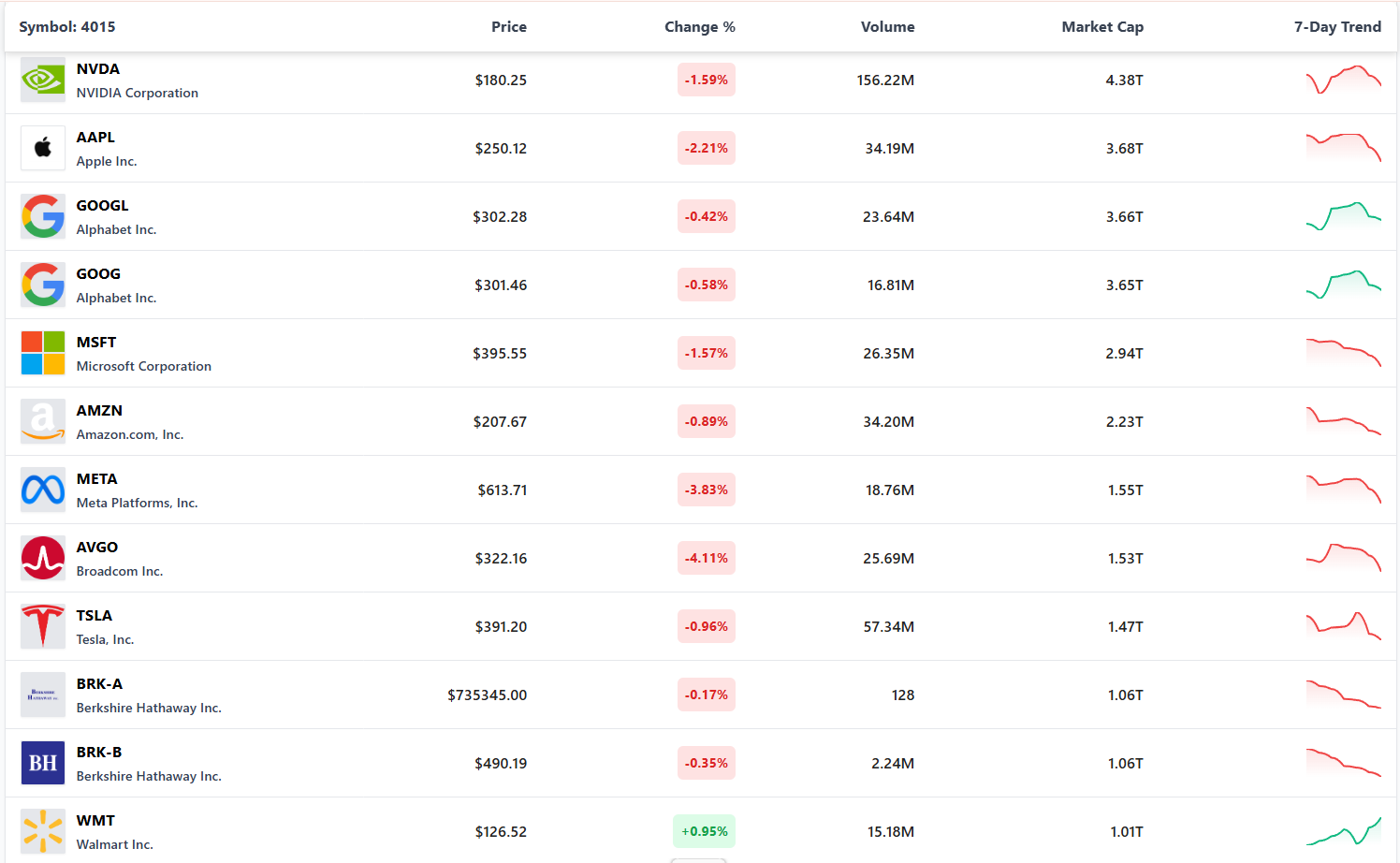
Tickerplace provides investors and analysts with the market data, screening tools, and research resources needed to put these frameworks into practice. From tracking real-time equity prices and market capitalization to running fundamental and technical analysis on global stocks, the platform supports every stage of the risk management process. Whether you are sizing positions, evaluating diversification across sectors, or stress-testing your portfolio against historical scenarios, Tickerplace gives you the data infrastructure to act with confidence. Visit tickerplace.com to explore the full suite of tools available to active market participants.
Frequently asked questions
What is Value at Risk (VaR) and how does it work?
VaR estimates minimum loss at a specific confidence level over a defined time period, making it a standard starting point for market risk measurement. However, it can underestimate losses during extreme market events, which is why analysts increasingly pair it with Expected Shortfall.
How does diversification help manage investment risk?
Diversification reduces unsystematic risk by spreading exposure across assets with low or negative correlations, and empirical research shows maximum diversification strategies can outperform minimum variance approaches over time.
What are the main components of an effective risk management framework?
The main components are risk governance, identification, measurement, mitigation, infrastructure, policies, communication, and integration, each serving a distinct function within the overall process.
Why are risk parity strategies controversial?
Risk parity strategies have underperformed traditional 60/40 portfolios in net returns and risk-adjusted metrics, and the leverage required to equalize risk contributions adds cost and complexity that can erode performance.
What’s the role of stress testing in risk management?
Stress testing examines how a portfolio performs under extreme but plausible market conditions, revealing vulnerabilities that standard risk metrics like VaR are not designed to capture.