

TL;DR:
- Effective stock evaluation requires clear goals, relevant metrics, and disciplined pre-screening.
- Combining fundamental analysis with technical timing enhances decision confidence.
- Benchmarking performance against indices and using risk-adjusted metrics ensures true investment value.
Most investors have experienced it: you buy a stock based on a promising headline or a single impressive number, only to watch it underperform for months. The problem is rarely the stock market itself. It is the evaluation process, or the lack of one. Relying on incomplete data leads to costly decisions that compound over time. This guide walks you through a structured, results-backed framework for evaluating stock performance, covering goal alignment, fundamental and technical analysis, and risk-adjusted benchmarking so you can make smarter, more confident investment decisions.
Key Takeaways
| Point | Details |
|---|---|
| Start with your goals | Choosing the right metrics depends on whether you favor growth or value strategies. |
| Analyze both fundamentals and technicals | A mix of financial data and market trends gives the clearest performance picture. |
| Benchmark and adjust for risk | Compare returns to benchmarks like the S&P 500 and use risk metrics for accurate evaluation. |
| Use multiple metrics | Relying on several complementary indicators leads to smarter, more reliable investing decisions. |
Identify your goals and key metrics
Before you look at a single stock, you need to know what you are looking for. Investors who skip this step end up applying the wrong metrics to the wrong companies, which is one of the most common and avoidable mistakes in stock selection.
Start by deciding your investing style. Are you a growth investor focused on companies expanding revenue rapidly? Or a value investor seeking underpriced stocks with strong cash flows? Many experienced investors blend both approaches depending on market conditions.
Once you know your style, select metrics that align with it. As noted in guidance on how to compare stocks, growth investors prioritize revenue growth, return on equity (ROE), and gross margins, while value investors focus on low price-to-earnings (P/E) ratios, free cash flow (FCF), and low debt-to-equity (D/E) ratios.
Metrics by investor type:
| Investor Type | Key Metrics |
|---|---|
| Growth | Revenue growth, ROE, gross margins |
| Value | P/E ratio, FCF, debt-to-equity ratio |
| Blend | Mix of above based on sector and cycle |
Before screening any stocks, write down your non-negotiable criteria. For example, you might require a minimum ROE of 15% or a D/E ratio below 1.0. Learning to analyze stocks effectively starts with this kind of disciplined pre-screening. Understanding company fundamentals will also help you choose the right criteria for your goals.
Pro Tip: Never use a single metric across all scenarios. A high P/E ratio might signal overvaluation in a utility company but be perfectly reasonable for a high-growth tech firm.
Gather and analyze fundamental data
With your metrics defined, the next step is to collect and dissect the company's actual financial data. Fundamental analysis is the backbone of any serious stock evaluation process.
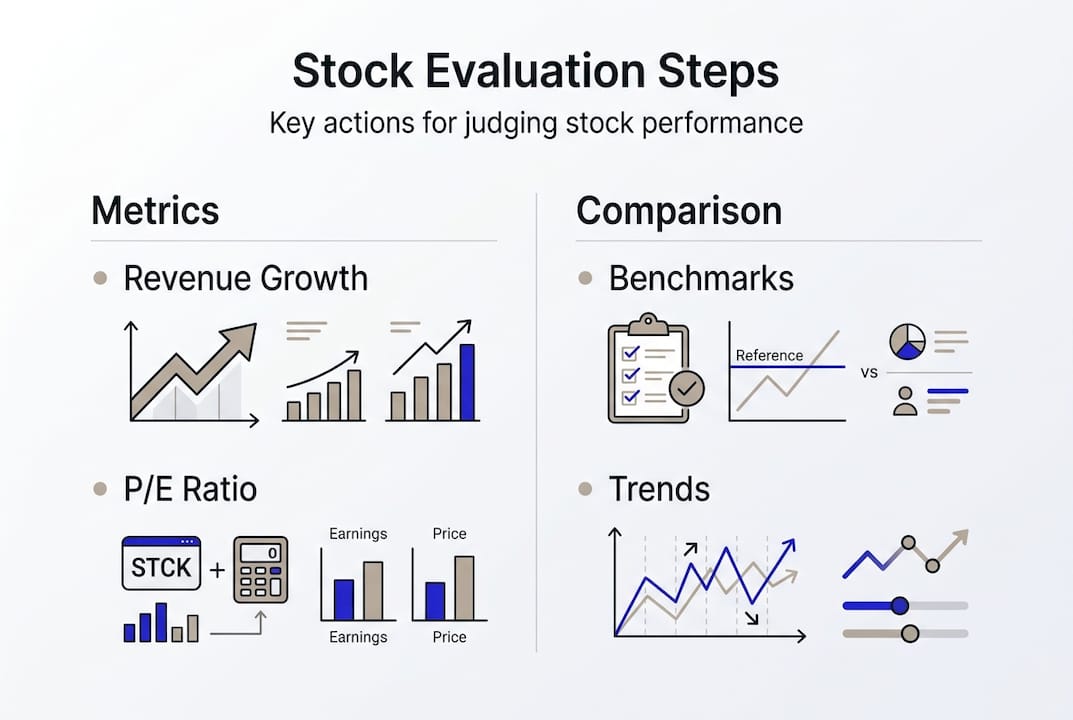
You should review three core financial statements for at least three to five years:
- Income statement — shows revenue, expenses, and profitability trends
- Balance sheet — reveals assets, liabilities, and shareholder equity
- Cash flow statement — tracks actual cash generated and spent by the business
From these statements, calculate and compare key ratios. Fundamental analysis evaluates stock performance by examining financial statements to assess revenue growth, profitability margins, ROE, return on invested capital (ROIC), debt levels, and free cash flow, with key ratios including P/E, price-to-book (P/B), price-to-sales (P/S), D/E, and PEG for valuation.

Key ratios reference table:
| Ratio | What it measures | Healthy signal |
|---|---|---|
| P/E | Valuation relative to earnings | Sector-appropriate |
| ROE | Profitability on equity | Above 15% |
| D/E | Financial leverage | Below 1.0 (general) |
| FCF Yield | Cash generation efficiency | Positive and growing |
Always analyze trends, not just snapshots. Growing revenue paired with expanding margins signals strong fundamentals. You can review sample company financials to see how this data is structured in practice.
Pro Tip: Watch for red flags like declining ROE over consecutive years or a rising D/E ratio without a corresponding increase in revenue. These patterns often precede earnings disappointments.
Use technical analysis for market timing
Once you assess a stock's business fundamentals, you can fine-tune your timing using technical analysis. While fundamentals tell you what to buy, technical analysis helps you decide when to act.
Technical analysis studies price movements, volume, and charts to identify trends, support and resistance levels, and short-term price predictions. Here is what to focus on:
- Trend direction: Use moving averages (50-day and 200-day) to identify whether a stock is in an uptrend, downtrend, or moving sideways. A stock trading above its 200-day moving average is generally considered bullish.
- Support and resistance levels: These are price zones where buying or selling pressure has historically been strong. Buying near support and selling near resistance improves your entry and exit timing.
- Volume confirmation: A price breakout accompanied by high trading volume is far more reliable than one on thin volume. Volume validates the move.
Practical guidance on reading market data can help you interpret these signals within the context of broader market conditions.
Technical and fundamental analysis work best together. Blend them for a fuller picture of any stock you are considering.
Technical analysis is especially valuable for timing entries and exits, which can meaningfully affect your actual returns even when you have selected the right stock.
Assess performance using benchmarks and risk adjustment
After gathering data and timing your investments, the final check is to ensure a stock is truly delivering results relative to benchmarks and its risk profile. Strong absolute returns can still be poor performance if the risk taken was excessive.
Start by comparing your stock's returns to a suitable index. For U.S. equities, the S&P 500 is the standard. Value stocks historically outperform growth by 3 to 4% annually, and the S&P 500 average annual return is approximately 10%. If your stock is not beating the S&P 500 consistently, you need to understand why.
Next, calculate risk-adjusted return metrics. Sharpe, Treynor, and Jensen's Alpha are the three primary measures, and higher values indicate better performance relative to the risk taken.
Steps to compute and interpret each metric:
- Sharpe ratio: Subtract the risk-free rate from your return, then divide by standard deviation. Above 1.0 is generally good.
- Treynor ratio: Subtract the risk-free rate from your return, then divide by beta. Useful for diversified portfolios.
- Jensen's Alpha: Measures excess return above what the CAPM model predicts. Positive alpha means outperformance.
For deeper context on stock risk analysis, beta is a foundational metric that shows how much a stock moves relative to the market.
A fresh perspective: Why multi-metric frameworks beat shortcuts
Here is something most investing guides will not tell you directly: the metric that worked brilliantly last cycle may actively mislead you in the next one. Growth stocks dominated the 2010s, but value stocks have shown stronger resilience in higher-rate environments. Avoiding single metrics and instead using frameworks that account for growth stage, sector dynamics, and macroeconomic context is what separates disciplined investors from reactive ones.
Beyond numbers, behavioral biases among analysts and investors play a measurable role in how stocks are priced and evaluated. Overconfidence, anchoring to a prior price, and herd behavior all distort judgment, even among professionals. Recognizing these tendencies in your own process is as important as any ratio. For deeper analysis strategies, building a repeatable evaluation checklist and revisiting it each quarter keeps your process grounded in evidence rather than emotion.
No single number tells the whole story. Blend approaches for smarter investing.
Pro Tip: Create a one-page evaluation checklist covering fundamentals, technicals, benchmarks, and behavioral checks. Review it before every buy or sell decision.
Take your stock analysis further with Tickerplace
Putting this framework into practice is much faster when you have the right tools at your fingertips.
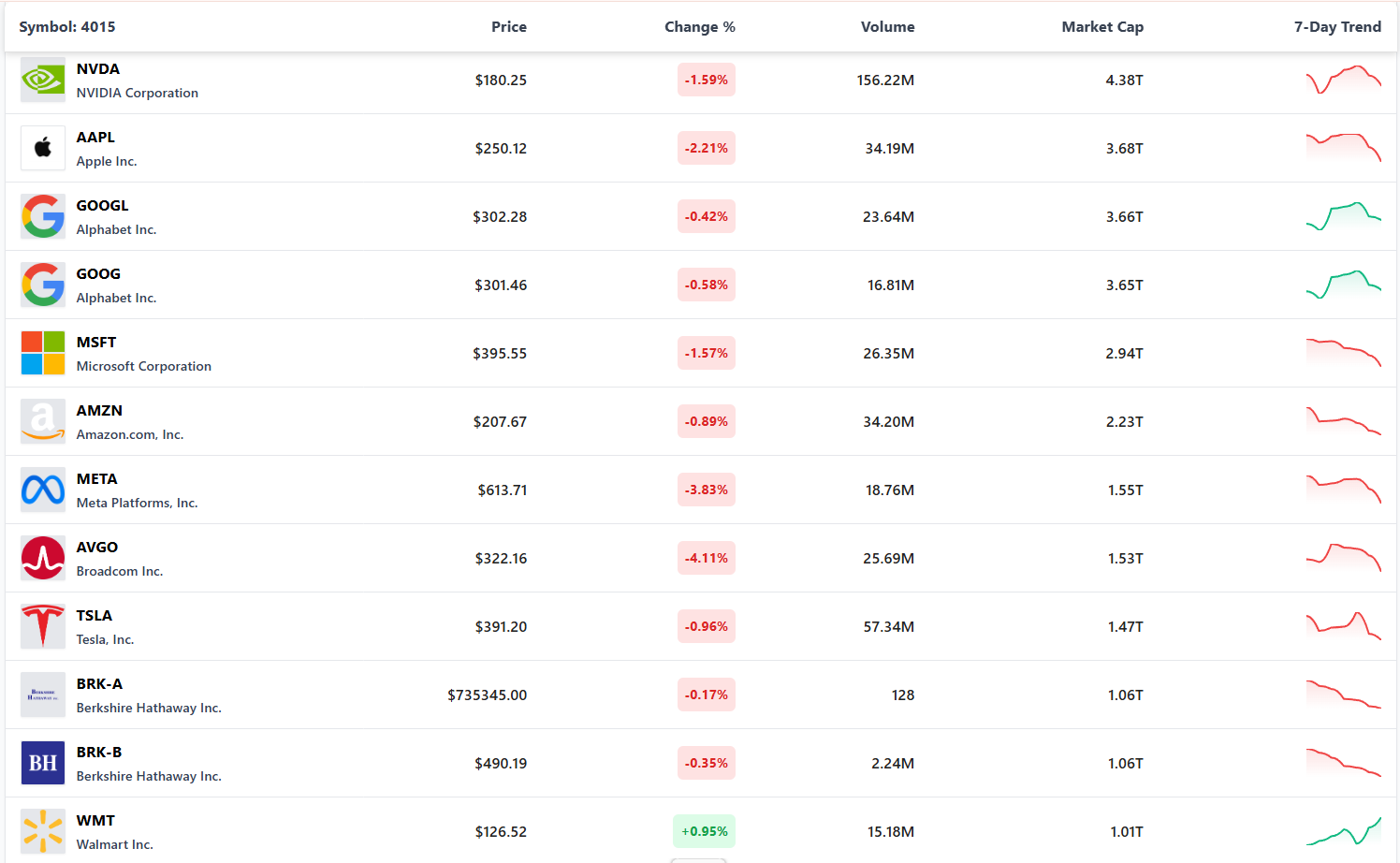
Tickerplace gives you direct access to real-time company data, advanced screening, and research tools designed for serious investors. Use the stock screener to filter stocks by the exact metrics covered in this guide, from P/E and ROE to FCF yield and debt ratios. The stock return calculator lets you model risk-adjusted performance before you commit capital. Whether you are building a watchlist or stress-testing an existing position, Tickerplace streamlines every step of the evaluation process.
Frequently asked questions
What are the three most important stock evaluation metrics?
Revenue growth, P/E ratio, and ROE are key for most investors, but the best metric always depends on your investing style and the company's sector.
How do I know if a stock is risky?
Use Sharpe ratio and beta to measure a stock's risk profile relative to the broader market and its expected return.
Why should I compare a stock to the S&P 500?
The S&P 500 is the most widely used benchmark for U.S. equities. With an average annual return of ~10%, it sets a clear performance bar. Consistent underperformance against it is a strong signal to reconsider your position.
Can I rely solely on technical analysis?
Technical analysis is a powerful timing tool, but using it without fundamental analysis increases the risk of selecting structurally weak companies that look good on a chart.
How often should I re-evaluate stock performance?
At minimum, review your holdings quarterly and after any major earnings release or significant company news. Historical benchmarks and updated financials provide the context you need for each review.