

TL;DR:
- Evaluating dividend sustainability requires analyzing payout ratio, coverage ratio, and free cash flow.
- Utilities, REITs, energy, financials, and telecom sectors consistently offer high dividend yields.
- Disciplined focus on dividend growth and payout stability outperforms chasing the highest yield alone.
High dividend stocks attract investors who want their portfolio to generate consistent, reliable income without relying solely on price appreciation. Yet finding stocks that truly deliver on their yield promise is harder than it looks. A high number on a dividend yield screen can mask deteriorating financials, an unsustainable payout, or sector-specific risks that quietly erode total returns. This article breaks down how to evaluate dividend stocks using proven quantitative criteria, which sectors and sample stocks to consider, how to compare candidates side by side, and when a high dividend strategy actually fits your goals.
Key Takeaways
| Point | Details |
|---|---|
| Focus on sustainability | The ideal dividend payout ratio is between 30% and 75% for long-term stability. |
| Use key financial ratios | Assess dividend yield, coverage, and free cash flow before investing. |
| Diversify by sector | Spread investments across utilities, REITs, energy, and telecom for robust income. |
| Don’t chase extreme yields | Overly high yields often come with hidden risks like unsustainable dividends. |
How to evaluate high dividend stocks
Selecting a high dividend stock begins with understanding the numbers behind the yield. The dividend yield itself, calculated as annual dividends per share divided by the stock price, is only the starting point. What truly matters is whether the company can sustain and grow that payment over time.
The most important metrics to examine are:
- Dividend payout ratio: The percentage of earnings paid as dividends. Key ratios for assessment include a payout ratio ideally between 30% and 75%; below 30% may signal an overly conservative distribution policy, while above 75% raises sustainability concerns.
- Dividend coverage ratio: Earnings per share divided by dividends per share. A ratio above 1.5x is generally considered healthy.
- Free cash flow to equity (FCFE): This measures actual cash available to shareholders after capital expenditures. Strong FCFE means dividends are funded by real earnings, not debt.
- Net debt to EBITDA: A lower ratio (generally below 3x) signals manageable leverage, reducing the risk of a dividend cut during downturns.
Comparing these figures to industry peers is equally critical. A utility stock with a 70% payout ratio is not inherently risky because that sector traditionally operates with stable, regulated cash flows. A retailer with the same ratio might be a red flag. Learning to evaluate stock performance step-by-step helps place each metric in proper context.
Qualitative factors also deserve attention: management's stated commitment to the dividend, dividend growth history, industry tailwinds, and competitive positioning all influence whether today's high yield becomes tomorrow's income stream or a value trap.
| Metric | Healthy range | Warning zone |
|---|---|---|
| Payout ratio | 30% to 75% | Above 80% |
| Coverage ratio | Above 1.5x | Below 1.0x |
| Net debt/EBITDA | Below 3x | Above 5x |
| FCFE vs. dividends | FCFE exceeds payments | FCFE below dividends |
Pro Tip: Before using a dividend income calculator to project returns, verify that the payout ratio is within a sustainable range. An attractive projected income means nothing if the dividend is cut within two years.
Top sectors and examples: Where high dividends thrive
With criteria in mind, it's time to see which sectors and stocks actually deliver on high yield. Historically, five sectors stand out for consistent, above-average dividend distributions.

Utilities are among the most reliable dividend payers, supported by regulated revenue streams and predictable demand. Companies like NextEra Energy and Duke Energy have maintained yields in the 3% to 4.5% range, backed by stable earnings. Rate-sensitive by nature, utility stocks tend to underperform when interest rates rise sharply, so monitoring the macro environment matters.
Real Estate Investment Trusts (REITs) are legally required to distribute at least 90% of taxable income to shareholders, which produces some of the highest yields available, often 4% to 8%. Realty Income and VICI Properties are examples of REITs with long track records of monthly dividend payments. The trade-off is sensitivity to credit markets and property valuations.
Energy companies, especially midstream pipeline operators like Enterprise Products Partners and Kinder Morgan, consistently deliver yields of 5% to 7%. Their income is tied to the volume of oil and gas transported rather than commodity prices, offering more stability than pure-play producers. Still, energy policy shifts and energy transition risks warrant careful review.
Financial sector stocks, including major banks and insurance companies, offer yields of 2.5% to 5%, with steady dividend growth over time. JPMorgan Chase and MetLife exemplify financially strong dividend payers in this category.
Telecom stocks like Verizon and AT&T have long attracted income investors with yields exceeding 5%. However, massive capital expenditure requirements for 5G infrastructure can pressure free cash flow. Use a dividend yield calculator to verify whether those headline yields are matched by solid underlying cash generation.
| Sector | Average yield range | Key risk |
|---|---|---|
| Utilities | 3% to 4.5% | Interest rate sensitivity |
| REITs | 4% to 8% | Credit market and valuation risk |
| Energy (midstream) | 5% to 7% | Regulatory and transition risk |
| Financials | 2.5% to 5% | Economic cycle exposure |
| Telecom | 4% to 6% | High capital expenditure burden |
Pro Tip: Spreading your dividend holdings across at least three of these sectors reduces the income disruption risk if one sector faces a prolonged downturn. A diversified dividend yield explained strategy is far more durable than concentrating in a single high-yield sector.
Compare and shortlist: Evaluating high yield picks
Now that you have a pool of sector leaders, let's compare them head-to-head. A systematic ranking process separates genuine income opportunities from yield traps.
Follow these steps to build a reliable shortlist:
- Screen by yield range. Start by filtering candidates with yields between 3% and 7%. Yields above 8% deserve extra scrutiny; they often reflect a falling stock price rather than growing dividends.
- Apply payout and coverage ratio filters. Eliminate any stock where the payout ratio exceeds 80% or the dividend coverage ratio falls below 1.2x, as flagged by key assessment ratios.
- Check free cash flow consistency. Confirm that FCFE has covered dividends in each of the past five fiscal years, not just the most recent year.
- Rank by dividend growth rate. A stock yielding 4% that has grown its dividend at 6% annually is likely more valuable long-term than a 6% yield with zero growth.
- Compare to sector averages. A stock yielding well above its sector average warrants investigation. Use stock filters for better results to benchmark candidates against their peers automatically.
"The greatest risk in dividend investing is not a low yield; it is a high yield that cannot be maintained. Discipline around payout sustainability will protect income investors far more reliably than chasing the highest number on a screen."
| Stock | Yield | Payout ratio | 5-year dividend growth | Coverage ratio |
|---|---|---|---|---|
| Realty Income (O) | 5.5% | 76% | 3.2% | 1.4x |
| NextEra Energy (NEE) | 3.8% | 58% | 10.1% | 1.7x |
| Enterprise Products (EPD) | 6.9% | 71% | 4.5% | 1.5x |
| Verizon (VZ) | 6.2% | 82% | 2.0% | 1.2x |
| JPMorgan Chase (JPM) | 2.7% | 31% | 8.3% | 3.2x |
This table illustrates how raw yield alone tells an incomplete story. Verizon's 6.2% yield comes with a payout ratio above 80%, a warning signal. NextEra Energy's lower yield is offset by double-digit dividend growth, making it potentially more valuable over a ten-year horizon. Also consider the PEG ratio calculator to align growth expectations with valuations.
When high dividend stocks make sense—or don't
After comparing and shortlisting, investors must weigh when a high dividend strategy fits their broader goals. High dividend stocks are not universally superior; context determines whether they enhance or undermine portfolio performance.
Situations where high dividend stocks excel:
- Retirement income portfolios: Investors drawing down savings benefit from regular dividend payments that reduce reliance on selling shares to fund expenses.
- Low-growth environments: When equity markets trade sideways, dividend income becomes a meaningful component of total return.
- Inflation hedging through dividend growth: Companies that consistently raise dividends can help offset purchasing power erosion over time.
- Portfolio stabilization: High-yield sectors like utilities and REITs often exhibit lower beta, dampening overall portfolio volatility during market stress.
Situations where high dividend strategies backfire:
- Rising interest rate environments: High-yield stocks compete directly with bonds for income-seeking capital. When Treasury yields rise sharply, dividend stock valuations often compress.
- Chasing unsustainable payouts: A dividend cut triggers immediate price declines and income loss simultaneously, a double setback for income investors.
- Ignoring total return: Investors who focus exclusively on yield sometimes hold stocks with flat or declining price trajectories, reducing actual wealth creation.
- Sector concentration risk: Overloading on a single high-yield sector (for example, holding only REITs) exposes the portfolio to synchronized drawdowns.
Review the full investing education guide to align your dividend strategy with broader asset allocation principles.
Pro Tip: Match your target yield to your actual income need, not to the highest available yield. If your portfolio requires a 4% income distribution, there is no reason to accept the added risk of a 7% yield stock when solid 4% to 5% payers with stronger fundamentals are available.
Why dividend discipline outperforms 'chasing yield'
The most persistent mistake in dividend investing is treating yield as the primary score to maximize. A stock yielding 9% looks compelling on a screen, but that number almost always reflects market skepticism about the dividend's durability. The investors who build genuinely resilient income portfolios focus instead on dividend growth rate and payout sustainability.
A company that starts at a 3% yield and grows it by 8% annually doubles its effective yield on original cost in roughly nine years. That patient, disciplined approach to stock evaluation insights consistently outperforms the strategy of loading up on today's highest yields. The market eventually rewards financial discipline. Those who prioritize a growing, well-covered dividend over a temporarily elevated one protect their income in downturns and participate meaningfully in long-term wealth accumulation.
Easily find, compare, and track high dividend stocks
If you're ready to put these strategies into action, Tickerplace offers easy-to-use tools to get started.
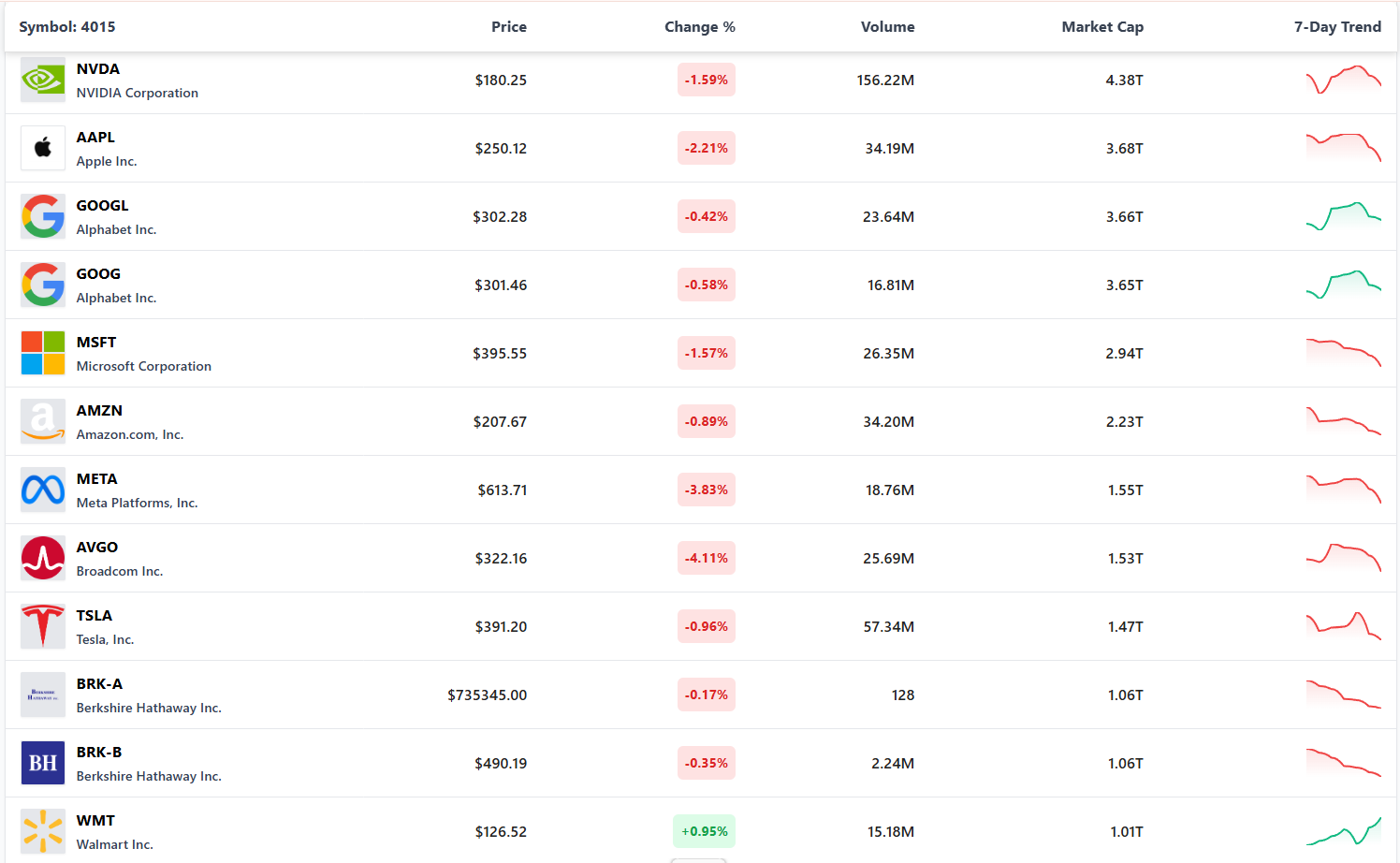
Tickerplace's stock screener allows you to filter equities by dividend yield, payout ratio, sector, and dozens of additional fundamental metrics, making it straightforward to identify candidates that meet your criteria without manually combing through individual filings. Pair the screener with Tickerplace's investing education resources to deepen your understanding of the ratios and strategies covered here. From real-time market data to advanced research tools, Tickerplace equips investors with everything needed to analyze, compare, and confidently track high dividend stocks within a single, well-organized platform.
Frequently asked questions
What is considered a high dividend yield?
A high dividend yield is typically above the market average (around 1.5% to 2% for the S&P 500), but sustainable yields generally range from 3% to 7% depending on the sector. Yields above 8% often signal financial stress rather than generosity.
How do I know if a company's high dividend is sustainable?
Analyze the dividend payout ratio (ideally 30% to 75%), dividend coverage ratio, and free cash flow to equity compared to industry peers, as a stock that scores well on all three is far less likely to cut its dividend.
Why do some high dividend stocks have higher risk?
Stocks with unusually high yields may have unsustainable payout ratios or deteriorating financials, signaling higher risk of dividend cuts, which simultaneously reduces income and often drives a sharp decline in share price.
Which sectors usually offer the highest dividends?
Utilities, REITs, energy, and telecom sectors are known for consistently offering high dividend yields, with REITs often at the top due to their legal requirement to distribute at least 90% of taxable income.