

TL;DR:
- "ASX TDY" commonly refers to the Australian Securities Exchange's daily performance, specifically the S&P/ASX 200 index, not any stock ticker. The ticker TDY belongs to Teledyne Technologies on the NYSE and is unrelated to the Australian market. Recent ASX gains, such as the +1.98% on June 12, were driven primarily by geopolitical optimism and sector-specific factors rather than broad fundamental improvements.
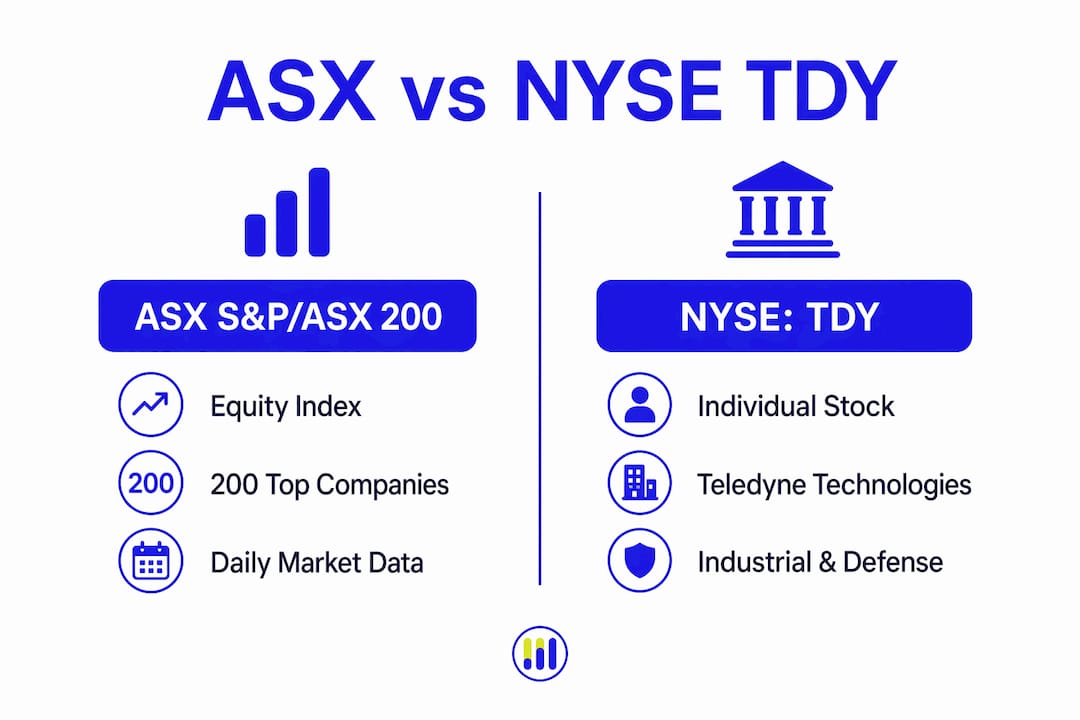
"ASX TDY" is shorthand investors use to describe the Australian Securities Exchange's daily market performance, most commonly referencing the S&P/ASX 200 index, though it is frequently confused with the NYSE-listed ticker TDY (Teledyne Technologies). This ambiguity is not trivial. Acting on the wrong interpretation can send you analyzing a U.S. defense contractor when you meant to track Australia's benchmark equity index. This article clarifies both, covers the latest ASX performance, and gives you a practical framework for using this data in your trading decisions.
What does "ASX TDY" actually mean?
The phrase "ASX TDY" has no single authoritative definition as a listed security. No ASX-listed stock carries the ticker TDY. The term is best understood as a colloquial search query combining "ASX" (Australian Securities Exchange) with "TDY" (shorthand for "today"). Investors searching this phrase are almost always looking for the ASX market today snapshot, specifically the S&P/ASX 200 index close, daily percentage change, and sector movements.
The confusion compounds because TDY is a real and active ticker on the New York Stock Exchange, representing Teledyne Technologies. If you search "ASX TDY" and land on Teledyne data, you are looking at the wrong asset entirely. Recognizing this distinction before you act is the single most important step any trader can take with this query.
How has the ASX 200 performed recently?
The S&P/ASX 200 is Australia's primary equity benchmark, tracking the 200 largest companies by market capitalization listed on the ASX. It is the index most investors mean when they reference ASX daily performance.
On june 12, 2026, the ASX 200 closed at 8,804.00, up 170.8 points, a gain of +1.98% for the session. That is a strong single-day move. The All Ordinaries, which tracks a broader set of Australian-listed companies, closed at 9,006.1, up +1.92% on the same day.
The table below summarizes the key data points from that session:
| Metric | Value |
|---|---|
| ASX 200 Close | 8,804.00 |
| Daily Point Change | +170.8 |
| Daily % Change | +1.98% |
| All Ordinaries Close | 9,006.1 |
| All Ordinaries % Change | +1.92% |
A gain of nearly 2% in a single session is notable. It signals a strong shift in investor sentiment, not a gradual drift upward. Understanding what drove that move matters as much as the number itself.
What drove the recent ASX market surge?
The june 12 rally was driven by geopolitical optimism, specifically investor bets on a potential US-Iran peace deal. Easing tensions in the Middle East typically reduce oil price risk and lift global risk appetite, which flows into equity markets including the ASX.
However, the sector breakdown told a more complex story. IG analyst Tony Sycamore noted that the peace deal narrative did not fully explain which sectors were gaining. That observation matters because it points to a broader truth: market sentiment shifts can lift indices even when the stated catalyst does not logically connect to every sector moving higher.
Key drivers behind the session included:
- Geopolitical risk reduction: Optimism over US-Iran negotiations reduced perceived global risk, lifting equities broadly.
- Interest rate expectations: Ongoing expectations of rate stability or cuts in Australia supported rate-sensitive sectors like real estate and utilities.
- Sentiment momentum: Positive offshore leads from U.S. markets carried into the ASX open, amplifying domestic gains.
- Sector divergence: Not all sectors moved for the same reason, reinforcing that a single macro narrative rarely explains an entire index move.
Short-term ASX moves often reflect shifts in sentiment rather than changes in company fundamentals. That distinction is critical when you are deciding whether to act on a single day's performance data.
Pro Tip: Before trading on a strong ASX session, identify which two or three sectors drove the gain. If the move is concentrated in one area, the broader index headline overstates the opportunity for stocks outside that sector.
How does nyse:tdy differ from ASX TDY?
Teledyne Technologies (NYSE:TDY) is a U.S.-based industrial and defense technology company. It is entirely unrelated to the Australian Securities Exchange. Investors who confuse "ASX TDY" with Teledyne are looking at a completely different asset class, currency, and regulatory environment.
Teledyne's Q1 2026 net sales reached $1,560.1 million, a 7.6% increase year over year. The company also raised its full-year GAAP EPS guidance to a range of $20.08 to $20.44, with non-GAAP EPS guidance of $23.85 to $24.15. Those are strong results for a large-cap industrial. They are also completely irrelevant to your ASX portfolio unless you specifically hold NYSE:TDY.
The table below compares the two to make the distinction concrete:
| Attribute | S&P/ASX 200 | NYSE:TDY (Teledyne) |
|---|---|---|
| Asset Type | Equity Index | Individual Stock |
| Exchange | Australian Securities Exchange | New York Stock Exchange |
| Currency | Australian Dollar (AUD) | U.S. Dollar (USD) |
| Recent Performance | +1.98% (june 12, 2026) | Q1 2026 revenue +7.6% YoY |
| Relevance to ASX | Primary benchmark | None |
Professional analysis of Teledyne requires reviewing both GAAP and non-GAAP earnings figures alongside SEC quarterly filings to understand the gap between reported and operational profitability. That is a separate research process from tracking the ASX index.
Pro Tip: When searching for ASX updates, use the index ticker ^AXJO directly in financial platforms to avoid landing on unrelated TDY results. Tickerplace's ASX company list also helps you confirm whether a ticker exists on the ASX before acting.
How should you use ASX daily data in trading decisions?
Interpreting ASX index data correctly requires a structured approach. The following steps reduce the risk of acting on incomplete or misread information:
- Confirm the asset. Verify whether your query refers to the ASX 200 index or a specific listed stock. No ASX stock carries the ticker TDY, so any result showing TDY data is from a foreign exchange.
- Check the session close and daily change. The closing value and percentage change give you the headline. The ASX financial data for the session provides the point change and volume context needed to assess conviction behind the move.
- Map the move to macro drivers. Identify whether the session gain or loss was driven by geopolitical news, rate decisions, commodity prices, or offshore leads. Sentiment-driven moves can reverse quickly if the catalyst fades.
- Review sector performance. A broad index gain can mask weakness in specific sectors. Check which sectors outperformed and which lagged before drawing conclusions about market direction.
- Avoid leveraged ETF confusion. Products like the Direxion 7–10 Year Treasury Bull 3X Shares (TYD) carry daily reset and path dependency effects. These instruments behave differently from standard index exposure and can produce unexpected outcomes over multi-day holding periods.
Pro Tip: Set a two-step verification habit: first confirm the asset type, then confirm the exchange. Thirty seconds of verification prevents the kind of misidentification that costs real money.
Key takeaways
Accurate interpretation of "ASX TDY" requires confirming the asset type first, then mapping index performance to its actual macro drivers rather than accepting headline narratives at face value.
| Point | Details |
|---|---|
| ASX TDY means index data | The phrase refers to S&P/ASX 200 daily performance, not any ASX-listed stock ticker. |
| NYSE:TDY is unrelated | Teledyne Technologies trades on the NYSE and has no connection to the Australian market. |
| Sentiment drove the june 12 rally | The +1.98% ASX 200 gain reflected geopolitical optimism, not broad fundamental improvement. |
| Sector divergence matters | Index-level gains do not mean every sector or stock moved for the same reason. |
| Verify before you trade | Confirm asset type, exchange, and macro context before acting on any ASX daily update. |
Tickerplace's take on market data clarity
The most expensive mistake individual investors make is not a bad stock pick. It is acting on the wrong data because they never confirmed what they were actually looking at. "ASX TDY" is a perfect example of a query that feels specific but is genuinely ambiguous. At Tickerplace, we see this pattern repeatedly: an investor searches a term, lands on results for a U.S. ticker, and interprets that data as Australian market performance.
The june 12 session is instructive in another way. A nearly 2% single-day gain sounds like a clear buy signal. But when you dig into the sector data, the picture is more nuanced. Gains concentrated in a few sectors driven by a geopolitical headline are fragile. If the US-Iran peace narrative shifts, those gains can unwind just as fast. Investors who chased the headline without checking sector composition took on more risk than the index number suggested.
The discipline of verification is not glamorous, but it is what separates traders who build consistent returns from those who react to noise. A comprehensive dashboard that links the latest close, sector breakdown, and macro context in one place is not a luxury. It is the baseline for making informed decisions in a market that moves on sentiment as much as fundamentals.
— Tickerplace
Track ASX performance with Tickerplace
Staying current on ASX index movements and individual stock data requires reliable, real-time tools. Tickerplace provides exactly that, from live ASX price data and sector breakdowns to stock screening and financial calculators designed for active investors.
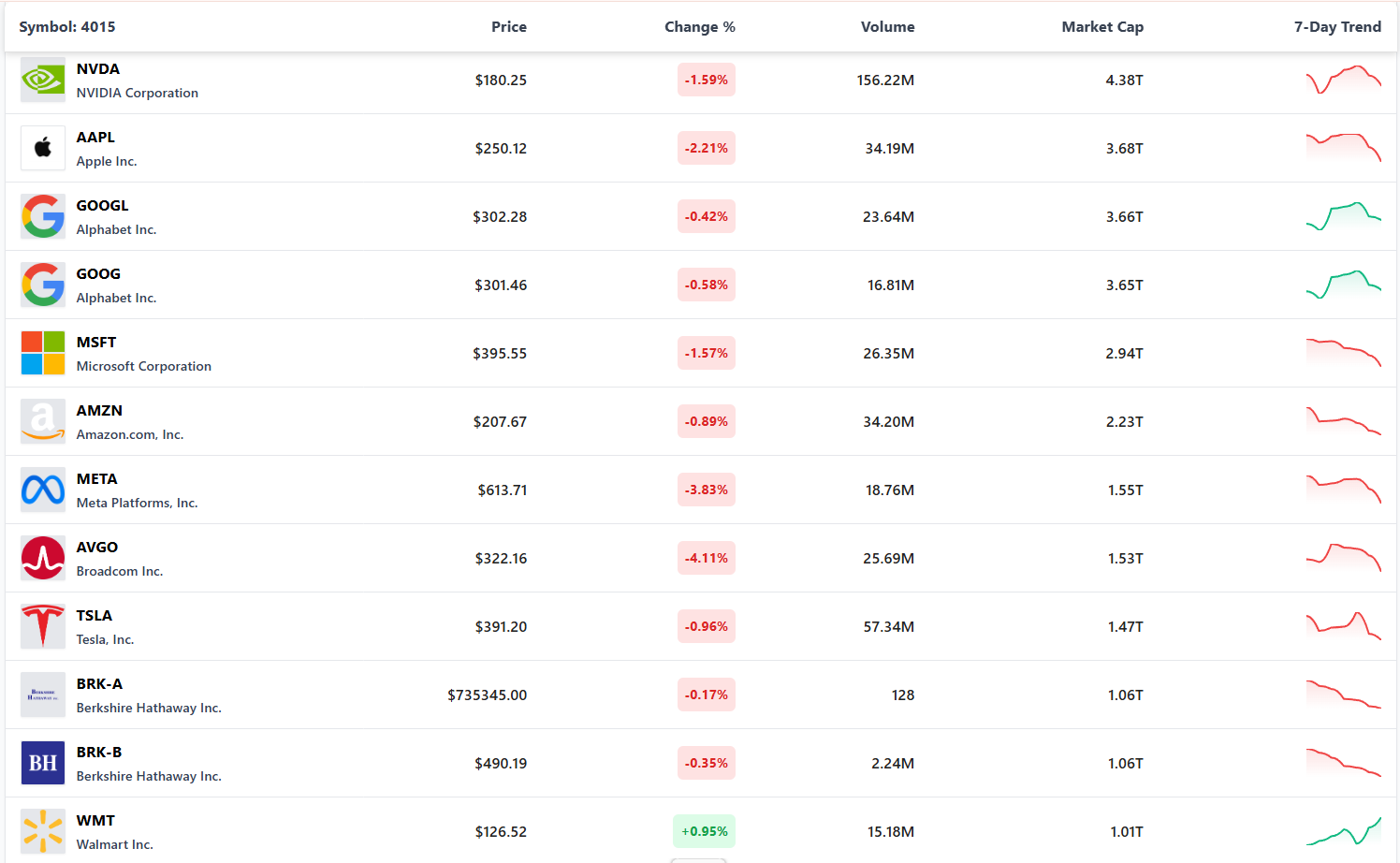
Whether you are monitoring the S&P/ASX 200 for daily index shifts or screening individual ASX-listed companies by market capitalization and fundamentals, Tickerplace gives you the data infrastructure to act with confidence. The platform's stock screener lets you filter ASX equities by sector, valuation metrics, and performance criteria, so you spend less time searching and more time analyzing. For investors who want to go deeper, the investment return calculator helps you model position outcomes before you commit capital.
FAQ
What does "ASX TDY" mean in finance?
"ASX TDY" is a colloquial search term referring to the Australian Securities Exchange's daily market performance, most commonly the S&P/ASX 200 index. No ASX-listed security carries the ticker TDY.
Is TDY listed on the ASX?
TDY is not listed on the ASX. The ticker TDY belongs to Teledyne Technologies, which trades on the New York Stock Exchange and is a U.S. industrial and defense technology company.
What was the ASX 200 performance on june 12, 2026?
The S&P/ASX 200 closed at 8,804.00 on june 12, 2026, up 170.8 points or +1.98%, driven primarily by optimism over a potential US-Iran peace deal.
Why do investors confuse ASX TDY with teledyne technologies?
The ticker symbol TDY is associated with Teledyne Technologies on the NYSE, and search engines sometimes surface this result alongside ASX queries. Confirming the exchange and asset type before acting eliminates this risk.
What are the risks of leveraged etfs with similar ticker names?
Leveraged ETFs like TYD (Direxion 7–10 Year Treasury Bull 3X Shares) use daily resets that create path dependency effects. Returns over multiple days can differ significantly from the expected multiple of the underlying index return.