

TL;DR:
- Pre-market activity provides critical signals that influence all investors' trading decisions, not just day traders. Monitoring global markets, economic releases, earnings reports, headlines, volume, and price action before the open allows for data-driven, strategic planning. Ignoring these early indicators increases the risk of reactive mistakes and missed opportunities in the market.
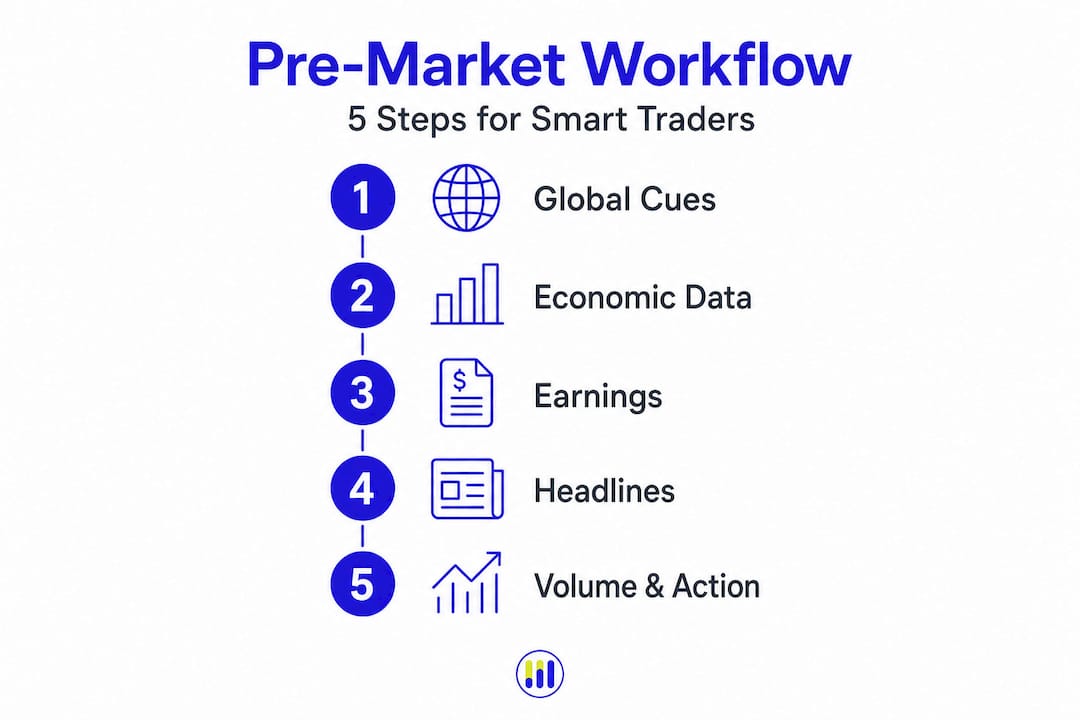
Pre-market activity is often dismissed as a concern only for active day traders, but that assumption is costly. Every investor, whether managing a long-term portfolio or executing tactical trades, can benefit from understanding what the market signals in the hours before the opening bell. The five pre-market checks outlined here provide a structured, repeatable approach to reading early indicators, reducing reactive decisions, and entering each trading session with a clear, data-backed plan.
Key Takeaways
| Point | Details |
|---|---|
| Global cues matter | Overnight market activity and global events can define US stock trends before the bell. |
| Economic data moves markets | Key reports released before open can cause early price swings in major sectors. |
| Earnings spark volatility | Morning earnings surprises often trigger sharp moves in stocks and ETFs. |
| News impacts trading | Major headlines and analyst ratings before the open can reset market sentiment fast. |
| Watch pre-market action | Volume and price behavior in pre-market hours highlights which stocks may lead at the open. |
Monitor overnight global market activity
To start, it's crucial to see how markets around the world set the stage for trading at home. The U.S. market does not open in a vacuum. By the time American exchanges begin regular trading, Asian markets like the Nikkei 225 and Hang Seng have already closed, and European markets such as the FTSE 100 and DAX are well into their sessions. These international moves often carry directional signals that experienced investors track closely.
Global market activity often shapes pre-market trends and U.S. market volatility. A significant drop in the Shanghai Composite, for example, may trigger risk-off sentiment that ripples into U.S. futures. Similarly, a surprise interest rate decision from the European Central Bank can immediately shift currency markets, which in turn affects multinational earnings expectations.
Key global indicators to review each morning:
- Asian market closes: Nikkei 225 (Japan), Hang Seng (Hong Kong), Shanghai Composite (China)
- European market direction: FTSE 100 (UK), DAX (Germany), CAC 40 (France)
- U.S. index futures: S&P 500, Nasdaq 100, and Dow Jones futures before the open
- Currency moves: EUR/USD, USD/JPY, and the Dollar Index (DXY)
- Commodity prices: Crude oil, gold, and copper as economic barometers
| Global Index | Region | What It Signals |
|---|---|---|
| Nikkei 225 | Asia | Risk appetite and yen strength |
| DAX | Europe | Manufacturing and export health |
| FTSE 100 | Europe | Commodity exposure and sterling trends |
| S&P 500 Futures | U.S. | Baseline market sentiment for the open |
Pro Tip: If U.S. futures are down more than 1% and both Asian and European markets closed lower, treat that as a high-caution morning. Reduce position sizes and widen your stop-loss levels until regular trading clarifies the direction.
Check key economic data releases
With global influences covered, the next focus is on scheduled economic data releases that can jolt the market at the open. The U.S. Bureau of Labor Statistics, the Federal Reserve, and other agencies regularly publish reports between 8:00 a.m. and 9:30 a.m. Eastern Time. These releases land directly in the most sensitive window for price setting.

Economic indicators such as employment and inflation data commonly impact pre-market trading. A hotter-than-expected Consumer Price Index (CPI) reading can immediately crush rate-sensitive growth stocks and push financials higher. A weak jobs report might do the opposite, triggering speculation about Federal Reserve rate cuts.
The five most market-moving pre-market economic reports:
- Non-Farm Payrolls (NFP): Released the first Friday of each month; moves equities, bonds, and the dollar simultaneously.
- Consumer Price Index (CPI): Inflation data that directly influences Fed rate expectations and tech sector valuations.
- Retail Sales: Measures consumer spending; a leading indicator for discretionary and consumer staples sectors.
- Initial Jobless Claims: Released every Thursday; provides weekly labor market health signals.
- GDP Estimates: Quarterly releases that reset the macro narrative for entire asset classes.
| Economic Report | Typical Release Time (ET) | Sectors Most Affected |
|---|---|---|
| Non-Farm Payrolls | 8:30 a.m. | Financials, Consumer Discretionary |
| CPI | 8:30 a.m. | Tech, Real Estate, Utilities |
| Retail Sales | 8:30 a.m. | Consumer Discretionary, Retail ETFs |
| Jobless Claims | 8:30 a.m. | Broad market, small-caps |
Statistic callout: Markets have historically moved an average of 1.5% to 2% on major CPI release mornings, making inflation reports one of the single largest single-day volatility triggers in equity markets.
Timing your review of these reports at least 30 minutes before you place any trade gives you time to assess market reaction, not just the headline number.
Review major earnings reports
Beyond economic data, company-specific news like earnings can cause rapid moves right out of the gate. Many large-cap companies report quarterly earnings before the market opens, and those results set the tone not just for that stock but for entire sectors.
Analyzing earnings before the bell requires understanding both the reported figure and the market's prior expectation. A company can report record profits and still drop 8% if the results fall short of analyst consensus forecasts. This is known as an earnings surprise, and its direction determines opening momentum.
"Pre-market earnings reports, especially from large-cap stocks, set the tone for sectors and the broader market."
What to evaluate in a pre-market earnings report:
- Earnings per share (EPS) vs. consensus: Did the company beat, meet, or miss expectations?
- Revenue performance: Top-line growth tells you about demand, not just cost-cutting.
- Guidance revisions: Forward guidance often matters more than backward-looking results.
- Sector ETF impact: A major bank beating earnings can lift the entire financial sector ETF, not just that stock.
- Management commentary: Conference call tone and outlook language move stocks well beyond the numbers.
Pro Tip: Before the open, check whether a reporting company holds more than 5% weight in a popular sector ETF. If it does, that earnings report can shift the ETF price significantly, creating either an opportunity or a risk in your existing positions.
Scan for market-moving headlines and analyst calls
While earnings move individual stocks, broader headlines and analyst opinions can shape the entire morning's mood. Markets respond to information, and the hour before the bell tends to concentrate the most impactful news flow of the entire day.
Pre-market headlines and analyst ratings ahead of the opening bell can quickly change investor sentiment and trigger volatility. Analyst upgrades and downgrades from major institutions carry significant weight, especially when they come with price target changes that imply meaningful upside or downside from current levels.
How to filter meaningful headlines from noise:
- Prioritize regulatory and legal news: FDA decisions, SEC actions, or antitrust rulings can move individual stocks 15% to 30% in pre-market trading alone.
- Track M&A announcements: Merger and acquisition news often creates immediate, large-scale moves in both the acquirer and the target company.
- Monitor central bank communications: Any statement or speech from Fed officials can reset rate expectations instantly.
- Watch for analyst consensus shifts: When three or more major firms issue downgrades on the same stock in one morning, that pattern is rarely coincidental.
Statistic callout: Analyst upgrades from Tier 1 investment banks have been associated with average next-day returns of approximately 2.5% to 4% for the affected stock, while downgrades can produce similar negative moves.
The goal is not to chase every headline but to identify which ones directly intersect with your current holdings or watchlist targets.
Assess pre-market trading volumes and price action
After absorbing the headlines, zero in on the stocks with the most attention, revealed by early trading activity. Pre-market volume and price gaps are among the most direct signals of where momentum will concentrate once the regular session begins.
Pre-market volume and price movement signal where attention and volatility will be highest once regular trading starts. A stock trading three times its average daily volume before 9:00 a.m. Eastern Time is telling you that institutional and retail participants are already highly engaged.
Key pre-market price action signals to monitor:
- Volume spikes: Any stock trading at 2x or more of its 30-day average pre-market volume deserves attention.
- Gap ups and gap downs: Large price gaps before the open often close partially during the first 30 minutes, creating short-term trading setups.
- Relative strength vs. futures: A stock holding gains while the broader index futures are declining shows unusual underlying demand.
- Bid/ask spreads: Wide spreads in pre-market indicate lower liquidity, which means price swings can be exaggerated and entry/exit costs are higher.
| Pre-Market Signal | What It Suggests | Recommended Action |
|---|---|---|
| Volume 3x+ above average | High institutional interest | Add to watchlist; wait for open confirmation |
| Gap up 5%+ on earnings | Strong buyer enthusiasm | Watch for pullback entry or momentum play |
| Gap down on guidance cut | Seller pressure expected | Reassess existing positions; set stops |
| Low volume, small gap | Thin liquidity event | Exercise caution; wider spreads likely |
Use pre-market analytics tools to cross-reference volume data with news catalysts, ensuring you understand the reason behind each unusual move before acting on it.
Why most investors misread pre-market signals
Having covered what to look for, it is equally important to understand the common mistakes and smarter approaches to pre-market signals. The single biggest error is overreacting to pre-market moves without waiting for confirmation during regular trading hours. A stock that jumps 6% in pre-market on a news catalyst can reverse entirely within the first 15 minutes of regular trading, especially if the underlying catalyst is ambiguous or already priced into options markets.
The second mistake is ignoring pre-market data altogether. Some investors believe that pre-market movements are irrelevant noise. In reality, persistent pre-market trends, particularly those backed by high volume and fundamental catalysts, tend to carry forward into regular sessions far more often than they reverse.
Balancing instinct with data means you should use a structured trading workflow that assigns each pre-market signal a weight based on its type. Earnings surprises with volume confirmation are high-weight signals. A single analyst upgrade without accompanying volume is lower weight. The discipline to rank signals, rather than react to all of them equally, is what separates consistent traders from reactive ones.
Finally, knowing when to observe rather than act is a genuine edge. The first 15 minutes of a trading session after a major catalyst tend to be the most volatile and least predictable. Waiting for the initial wave to settle, then entering when price action confirms a direction, typically produces better outcomes than trading the open blindly.
Upgrade your pre-market edge with Tickerplace
If you're ready to apply these lessons and maximize your pre-market decisions, powerful tools can make all the difference. Tickerplace consolidates the data points covered in this article into a single, well-organized platform designed specifically for investors who take pre-market preparation seriously.
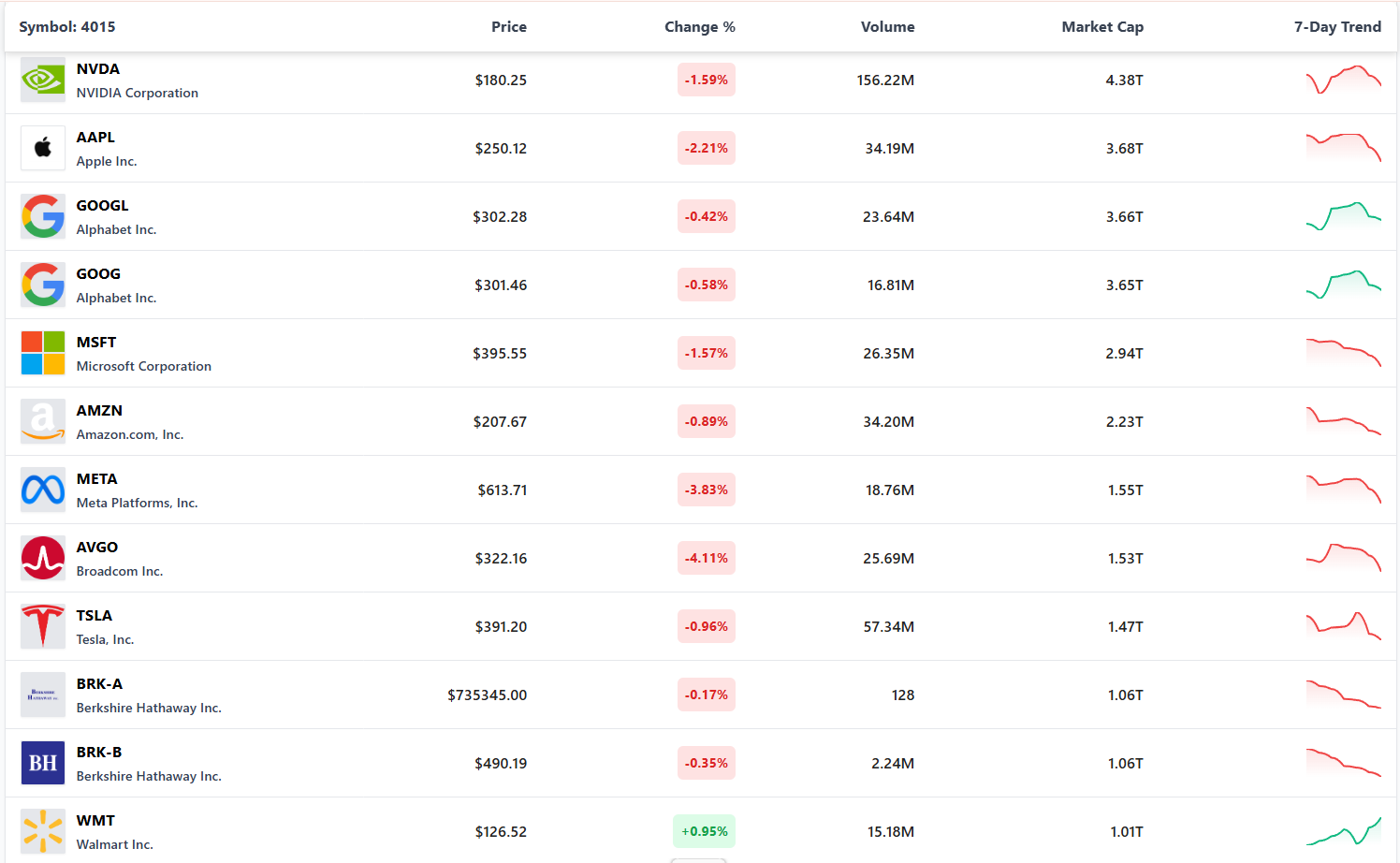
Whether you're using the Stock Screener to identify top pre-market movers by volume and price gap, or exploring Investing Education resources to deepen your understanding of market signals, Tickerplace delivers the clarity active investors need. The platform's all-in-one market tools bring together global index data, earnings calendars, analyst ratings, and technical analysis in real time. You spend less time hunting for information and more time acting on it with confidence.
Frequently asked questions
Why does pre-market trading matter for everyday investors?
Pre-market activity often sets the tone for regular trading and can reveal early trends, helping investors position themselves more effectively; volume and price signals before the open indicate where volatility will concentrate once the session starts.
Which economic reports are most likely to impact opening prices?
Jobs data, inflation reports, and retail sales figures are among the most influential, as employment and inflation data commonly drive significant pre-market price moves across multiple sectors.
How do I find which companies report earnings before the market opens?
Many financial news sites and platforms provide pre-market earnings calendars; large-cap earnings reports in particular tend to set the tone for entire sectors and the broader market on any given morning.
What's the best way to quickly check pre-market volume and price action?
Use a dedicated market platform or your brokerage's pre-market scanner to identify top movers; early volume and price data reveals where institutional attention is concentrated before regular trading begins.