
Many investors chase hot tips or price momentum, hoping to catch the next big winner. Yet without understanding what truly drives a company’s value, you risk buying overpriced stocks or missing genuine opportunities. Analyzing company fundamentals offers a disciplined way to uncover intrinsic worth, filter out market noise, and build a portfolio grounded in business reality. This guide explains why fundamental analysis matters and how you can use it to sharpen your investment decisions.
Key Takeaways
| Point | Details |
|---|---|
| Intrinsic value focus | Fundamental analysis determines intrinsic value by examining financial statements, economic indicators, management quality, and industry trends to identify mispricings. |
| Long term investing edge | It helps filter out short term market noise and focuses decisions on durable value. |
| Key methods | Ratio analysis, discounted cash flow modeling, and qualitative moat assessment illuminate value drivers. |
| Time and assumption sensitivity | The approach can be time consuming and depends on assumptions that can swing valuations. |
What is fundamental analysis and why does it matter?
Fundamental analysis determines intrinsic value by examining financial statements, economic indicators, management quality, and industry trends to identify mispricings. Unlike traders who rely on price charts, fundamental analysts dig into a company’s actual business performance to assess whether the current market price reflects true worth. This approach helps you separate hype from substance, revealing stocks trading below their intrinsic value or those overpriced by market euphoria.
Intrinsic value represents what a company is genuinely worth based on its ability to generate cash flows, not what the market happens to price it at today. Short-term price movements often reflect sentiment swings, news cycles, or technical factors that have little to do with underlying business health. By focusing on fundamentals, you gain a clearer picture of long-term potential and can make decisions anchored in economic reality rather than market psychology.
Core aspects examined in fundamental analysis include:
-
Income statements to evaluate revenue growth, profit margins, and earnings trends
-
Balance sheets to assess asset quality, debt levels, and financial stability
-
Cash flow statements to understand liquidity and capital allocation efficiency
-
Competitive moats that protect a company from rivals and sustain profitability
-
Macroeconomic factors like interest rates, inflation, and industry cycles that shape business conditions
This comprehensive view allows you to gauge whether a stock offers genuine value or merely reflects temporary market enthusiasm. For investors committed to building wealth over time, understanding these fundamentals is essential. Tickerplace offers investing education resources that help you master these concepts and apply them systematically. When you analyze fundamentals, you shift from speculating on price movements to investing in businesses with durable competitive advantages and sound financial footing.

Key methodologies for analyzing company fundamentals
Key methodologies include ratio analysis, DCF modeling, and qualitative assessment of competitive moats. Ratio analysis uses metrics like price-to-earnings (P/E), return on equity (ROE), and debt-to-equity to benchmark a company’s performance and valuation against peers. A low P/E might signal undervaluation if earnings are stable, while high ROE indicates efficient use of shareholder capital. Debt-to-equity reveals financial leverage and risk exposure, helping you assess whether a company can weather economic downturns.
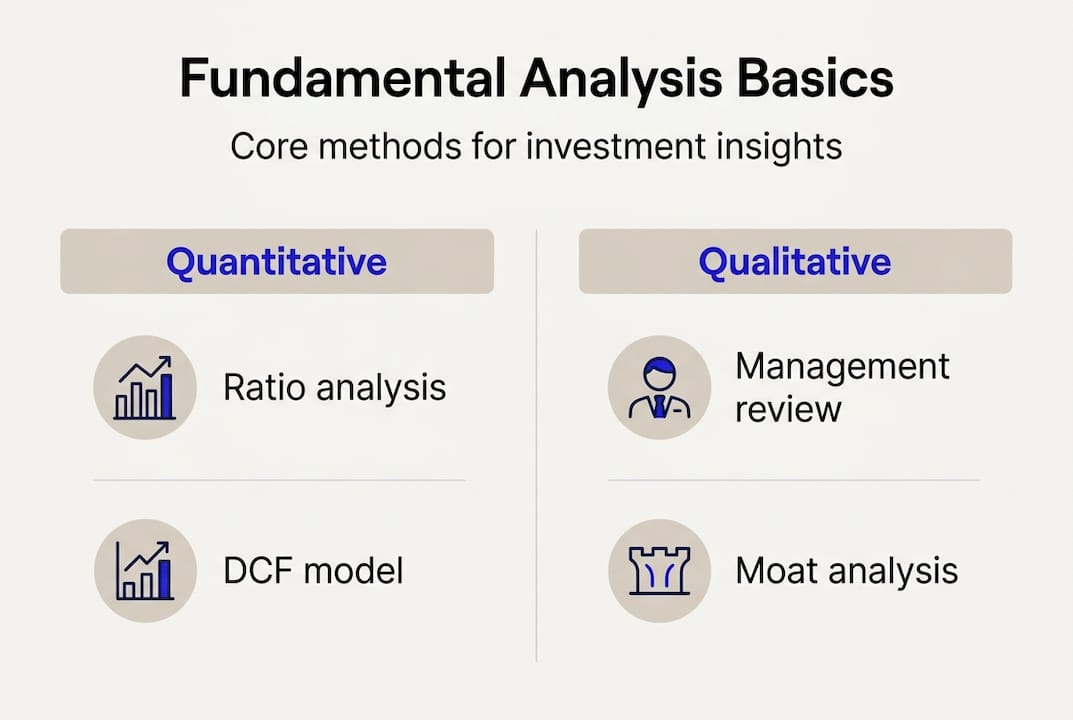
Discounted cash flow (DCF) modeling projects future free cash flows and discounts them to present value using the weighted average cost of capital (WACC). This method estimates what a company’s future earnings stream is worth today, accounting for the time value of money and risk. The formula involves forecasting cash flows for a projection period, calculating a terminal value, and discounting both back to the present. Accuracy depends on assumptions about growth rates, discount rates, and terminal multiples, so sensitivity analysis is critical.
Qualitative factors complement quantitative metrics by evaluating competitive moats and management quality. A strong moat might come from brand loyalty, network effects, regulatory barriers, or cost advantages that competitors cannot easily replicate. Management quality matters because skilled leaders allocate capital wisely, adapt to market shifts, and execute strategies that compound shareholder value over time. Assessing these intangibles requires judgment and experience, but they often separate great investments from mediocre ones.
Here’s a step-by-step DCF valuation procedure:
-
Forecast free cash flows for the next five to ten years based on historical trends and business outlook
-
Estimate a terminal value using a perpetual growth rate or exit multiple
-
Calculate WACC by weighting the cost of equity and debt according to capital structure
-
Discount projected cash flows and terminal value back to present using WACC
-
Sum discounted values to arrive at enterprise value, then adjust for net debt to get equity value
Consider this comparison of key ratios across three example companies:
| Company | P/E Ratio | ROE (%) | Debt-to-Equity |
|---|---|---|---|
| REA Group | 42.3 | 28.5 | 0.15 |
| ARB Corporation | 18.7 | 22.1 | 0.08 |
| Carsales.com | 31.2 | 34.7 | 0.42 |
REA Group’s higher P/E reflects market expectations of strong growth, while its low debt-to-equity signals financial stability. ARB Corporation trades at a lower multiple despite solid ROE, potentially offering value if growth prospects improve. Carsales.com combines high ROE with moderate leverage, balancing profitability and financial risk.
Pro Tip: Always triangulate valuation methods and stress-test assumptions to avoid pitfalls. Run multiple scenarios varying growth rates and discount rates to see how sensitive your intrinsic value estimate is to changes. If a small tweak in assumptions drastically alters valuation, you need more conservative inputs or a wider margin of safety before investing.
Advantages, limitations, and comparison with technical analysis
Fundamental analysis provides long-term investment edge by focusing on business health over short-term price noise, helping spot undervalued stocks and avoid overvalued ones. This approach aligns well with value investing principles, where you buy assets trading below intrinsic worth and hold them until the market recognizes true value. By grounding decisions in financial data and business fundamentals, you reduce exposure to speculative bubbles and sentiment-driven volatility.
Empirical evidence shows fundamental signals predict returns robustly, even after data-mining adjustments, stronger in high-sentiment or high-arbitrage-limit stocks. This research validates that metrics like earnings quality, accruals, and cash flow ratios consistently forecast future performance. In markets where sentiment runs high or arbitrage is difficult, fundamental signals become even more powerful because mispricings persist longer and offer greater profit potential.
Limitations of fundamental analysis include:
-
Time-consuming data gathering and detailed financial modeling requirements
-
Missing short-term trading opportunities driven by momentum or technical patterns
-
Sensitivity to input assumptions in DCF and other valuation models
-
Risk of value traps where cheap stocks stay cheap due to deteriorating fundamentals
-
Difficulty quantifying qualitative factors like management quality or brand strength
These constraints mean fundamental analysis works best for investors with longer time horizons and patience to wait for the market to recognize intrinsic value. If you need quick gains or trade frequently, technical analysis focusing on price trends and timing might suit your style better. However, combining both approaches outperforms standalone methods by leveraging the strengths of each.
“Fundamental analysis excels for long-term value investing by identifying mispriced assets based on business reality, while technical analysis aids short-term trading through price pattern recognition. Hybrid strategies that integrate both dimensions consistently outperform pure fundamental or pure technical approaches, optimizing timing and value assessment simultaneously.”
This perspective highlights that you don’t have to choose one over the other. Use fundamental analysis to select stocks with strong intrinsic value, then apply technical tools to time entry and exit points more precisely. This combination reduces risk and enhances returns by ensuring you invest in quality businesses at favorable prices. For resources to deepen your investment education, explore guides that cover both fundamental and technical concepts.
How to apply fundamental analysis in your investment strategy
For investors and analysts, fundamental analysis enhances strategies by quantifying intrinsic value, filtering noise, and providing objective buy, hold, or sell signals grounded in business reality. Start by gathering comprehensive financial data using reliable sources or stock screeners. Tickerplace’s stock screener allows you to filter companies by valuation ratios, profitability metrics, and growth rates, narrowing your universe to candidates worth deeper analysis.
Once you identify potential investments, follow a stepwise evaluation process. First, assess financial health by reviewing income statements, balance sheets, and cash flow statements for trends in revenue, margins, debt levels, and liquidity. Next, run a DCF valuation to estimate intrinsic value, using conservative assumptions and sensitivity analysis to account for uncertainty. Then, check competitive advantages by evaluating moats, management track records, and industry positioning. Finally, compare peer multiples to see if your target trades at a discount or premium relative to similar companies.
Common mistakes to avoid and best practices include:
-
Overreliance on a single valuation method without cross-checking results
-
Ignoring qualitative factors like management integrity or competitive threats
-
Failing to update assumptions as new information emerges
-
Chasing stocks with low P/E ratios without understanding underlying business risks
-
Neglecting macroeconomic context that can impact entire sectors or markets
Pro Tip: Combine data from multiple companies and stress test valuation sensitivity to enhance robustness. If you analyze REA’s financial data alongside peers, you gain perspective on industry norms and can spot outliers that signal opportunity or risk. Vary key inputs like terminal growth rates or WACC by 1-2 percentage points to see how much your intrinsic value estimate shifts. If small changes produce wildly different valuations, demand a larger margin of safety before committing capital.
Continual learning and discipline drive long-term investment success. Markets evolve, industries transform, and new data reshapes valuations. Stay curious, refine your analytical skills, and maintain the discipline to walk away from stocks that don’t meet your criteria. By embedding fundamental analysis into your routine, you build a repeatable process that compounds knowledge and returns over time.
Explore tools to enhance your fundamental analysis
Tickerplace offers a comprehensive platform for investors seeking real-time market data, detailed financial statements, and advanced screening tools to support fundamental analysis. Whether you’re evaluating income statements, comparing valuation ratios, or researching competitive positioning, Tickerplace’s stock market tool simplifies data gathering and accelerates your workflow. The stock screener lets you filter thousands of equities by criteria that matter most to your strategy, surfacing candidates with strong fundamentals before you dive into detailed modeling.
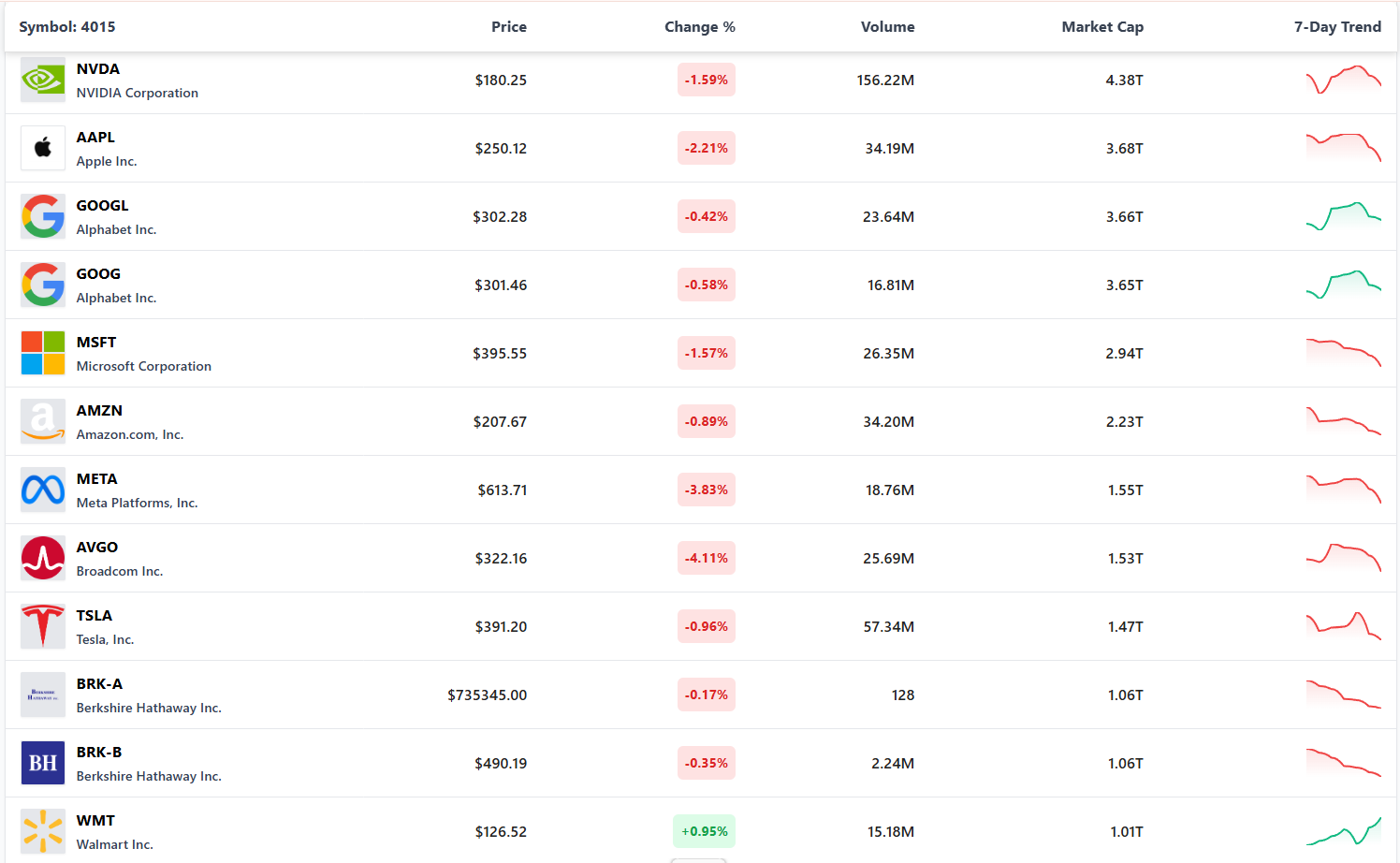
These resources help you apply the methodologies discussed throughout this guide with confidence and precision. Access company-specific pages for balance sheets, cash flow statements, and key ratios, then use those insights to build DCF models or benchmark against peers. For ongoing education and deeper dives into investment concepts, explore investing education guides that cover everything from ratio analysis to portfolio management. By leveraging professional tools alongside disciplined analysis, you position yourself to make smarter, data-driven investment decisions.
FAQ
What is fundamental analysis in investing?
Fundamental analysis evaluates a company’s true value by examining financial statements, management quality, competitive advantages, and market factors. It helps you decide if a stock is undervalued or overvalued relative to its intrinsic worth. By focusing on business fundamentals rather than price trends, you gain insight into long-term potential and can invest with greater confidence.
How does discounted cash flow (DCF) help in analyzing company fundamentals?
DCF models future free cash flows and discounts them to present value, estimating intrinsic stock value based on expected earnings. It requires assumptions about growth rates, discount rates, and terminal values, shaping valuation outcomes. Sensitivity analysis reveals how changes in inputs affect your estimate, helping you gauge risk and set appropriate margins of safety.
What are common limitations of fundamental analysis?
Fundamental analysis can be time-intensive, requiring detailed financial modeling and data gathering that may not suit short-term traders. It may miss rapid price moves driven by sentiment or technical factors, and valuations depend on assumptions that, if incorrect, can mislead decisions. Value traps occur when cheap stocks stay cheap due to deteriorating fundamentals, making qualitative judgment essential alongside quantitative metrics.
Can fundamental and technical analysis be used together?
Yes, combining both optimizes timing and value assessment, leveraging the strengths of each approach. Fundamental analysis identifies stocks with strong intrinsic value, while technical analysis helps time entry and exit points more precisely. Hybrid strategies consistently outperform standalone methods by integrating business reality with market sentiment and price patterns, reducing risk and enhancing returns.