

Most investors know the price-to-earnings ratio exists, but few understand what it actually reveals about stock value. As of early 2025, the cyclically-adjusted P/E ratio hit 41.1x, a level seen less than 10% of the time since 1983. This extreme reading raises questions about market valuations and whether stocks are overpriced. This guide cuts through the confusion, explaining what P/E ratio means, how to calculate it, what historical data tells us about performance, and how to apply it smartly in your 2026 investment decisions.
Key takeaways
| Point | Details |
|---|---|
| P/E ratio measures valuation | It compares a stock’s price to its earnings per share, showing how much you pay for each dollar of profit. |
| High P/E signals expensive markets | Current cyclically-adjusted P/E levels are historically elevated, suggesting US equities may be overvalued. |
| Low P/E stocks outperform historically | Value stocks with low P/E ratios have delivered higher returns than high P/E growth stocks over time. |
| Context matters for interpretation | Industry norms, growth prospects, and market conditions influence whether a P/E is truly high or low. |
| Combine P/E with other metrics | Use P/E alongside price-to-book, EV/EBITDA, and fundamental analysis for comprehensive stock evaluation. |
What is the price-to-earnings ratio and how is it calculated?
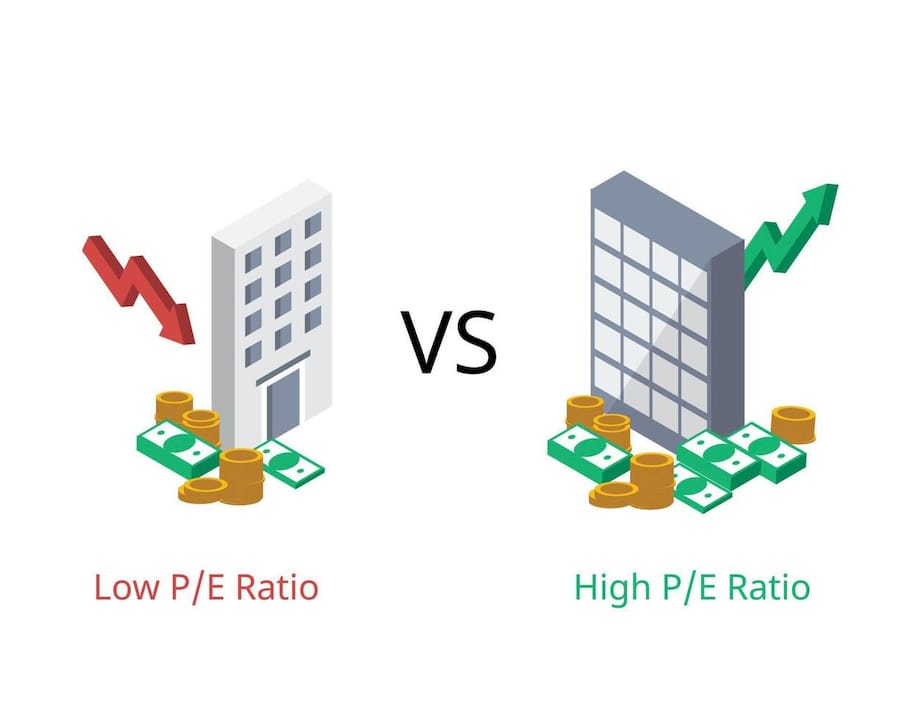
The price-to-earnings ratio is the most widely used metric for assessing stock valuation. It tells you how much investors are willing to pay for each dollar of a company’s earnings. The formula is straightforward: divide the current market price per share by earnings per share. If a stock trades at $100 and the company earned $5 per share last year, the P/E ratio is 20.
Earnings per share measures the profit allocated to each outstanding share of common stock. Companies calculate EPS by dividing net income by the number of shares outstanding. This figure appears on every income statement and forms the foundation of P/E ratio calculations. Understanding EPS is essential because P/E ratios are only as reliable as the earnings data behind them.
Two main P/E variations exist. Trailing P/E uses actual earnings from the past 12 months, providing a factual baseline. Forward P/E relies on analyst projections of future earnings, offering insight into growth expectations but introducing estimation risk. Most financial websites display trailing P/E by default, but checking both versions gives you a fuller picture of market sentiment.
Interpreting P/E helps you assess whether a stock is expensive or cheap relative to its profit generation. A P/E of 15 means investors pay $15 for every $1 of annual earnings. Higher ratios suggest optimism about future growth, while lower ratios may indicate undervaluation or concerns about the company’s prospects. The key is comparing P/E to relevant benchmarks.
Key calculation elements include:
-
Current market price per share from recent trading data
-
Earnings per share from the most recent fiscal year or quarter
-
Adjustments for one time items or extraordinary expenses that distort earnings
-
Consideration of share buybacks or dilution affecting share count
Why the price-to-earnings ratio matters: valuation and market context
P/E ratios reveal whether stocks are priced reasonably compared to their earnings power. High P/E ratios signal that investors expect strong future growth or that current prices have run ahead of fundamentals. When P/E ratios climb to historical extremes, market corrections often follow. The cyclically-adjusted P/E, also called CAPE or Shiller P/E, smooths earnings over 10 years to account for economic cycles and provide more stable valuation readings.
Current market valuations tell a striking story. As of February 2025, the CAPE ratio stood at 41.1x and the Shiller P/E at 37.2x, indicating US equities are expensive by historical standards. These elevated readings suggest investors are paying a premium for stocks relative to long term earnings. Such high CAPE and Shiller P/E levels have occurred less than 10% of the time since 1983, highlighting the rarity of current valuations.
Historical patterns show that periods of elevated P/E ratios often precede lower future returns. When valuations stretch too far, markets typically revert to mean levels over time. This doesn’t guarantee an imminent crash, but it does suggest that forward returns may be more modest than past performance. Understanding P/E valuation helps you gauge whether you’re buying stocks at reasonable prices or paying top dollar.
Market context matters enormously. A P/E of 25 might be normal during a low interest rate environment with strong economic growth, but alarming during a recession with rising rates. Comparing current P/E to historical averages for the same market or sector provides essential perspective. The S&P 500’s long term average P/E hovers around 15 to 16, making today’s elevated readings stand out.
Key valuation insights include:
-
CAPE and Shiller P/E ratios filter out short term earnings volatility
-
Historically high P/E levels suggest limited upside and elevated risk
-
Interest rates, inflation, and economic growth influence normal P/E ranges
-
Sector specific P/E norms vary widely based on growth characteristics
Pro Tip: Track both trailing and cyclically-adjusted P/E ratios to separate temporary earnings fluctuations from sustained valuation trends. This dual perspective helps you avoid mistaking a temporary earnings dip for a genuine bargain.
How do stocks with different P/E ratios perform historically?
Historical data reveals a surprising pattern. Stocks with low P/E ratios have historically outperformed high P/E stocks in US markets over extended periods. This value effect shows that buying cheaper stocks relative to earnings tends to generate superior returns. The catch is that this outperformance comes with higher volatility and risk, requiring patience and discipline.
Value stocks with low P/E ratios represent companies trading below their perceived intrinsic value. These businesses may face temporary challenges, operate in mature industries, or simply be overlooked by growth focused investors. When sentiment improves or fundamentals strengthen, value stocks often deliver substantial gains. Growth stocks with high P/E ratios price in optimistic future expectations, leaving less room for upside surprises.
Risk characteristics differ significantly between value and growth portfolios. Value portfolios are riskier and more sensitive to market movements than growth portfolios. This higher volatility means value investors must tolerate larger drawdowns during market downturns. Growth stocks tend to be more stable but offer lower expected returns over full market cycles.
Company size interacts with the value effect in important ways. The size effect, where smaller companies outperform larger ones, sometimes dominates the value effect in certain markets. Small cap value stocks historically delivered the strongest returns, combining both factors. Large cap growth stocks typically show the most modest returns, though with lower volatility. The PEG ratio helps compare growth and value stocks by incorporating earnings growth rates.
Practical considerations affect value investing success:
-
Trading costs and bid ask spreads reduce returns, especially for smaller value stocks
-
Liquidity constraints make it harder to build and exit positions in thinly traded value names
-
Value traps exist where low P/E reflects genuine business deterioration, not temporary undervaluation
-
Patience is essential as value strategies can underperform for years before rebounding
-
Tax efficiency matters since value stocks often generate more taxable dividends than growth stocks
Pro Tip: Don’t assume every low P/E stock is a bargain. Check whether earnings are sustainable, the balance sheet is healthy, and management has a credible plan to improve results. A low P/E combined with declining revenue and mounting debt often signals a value trap, not an opportunity.
Practical tips for using the price-to-earnings ratio in your investment decisions
Treat P/E ratio as one tool in a comprehensive valuation toolkit. No single metric tells the complete story about a stock’s investment merit. Compare P/E to historical averages for the specific company, its industry peers, and the broader market. A technology stock with a P/E of 30 might be reasonable if competitors trade at 35 and the sector average is 32. Context transforms raw numbers into actionable insights.
Sector comparisons matter because different industries have different normal P/E ranges. Utilities and consumer staples typically trade at lower P/E ratios due to stable but slow growth. Technology and healthcare companies command higher P/E ratios reflecting faster growth prospects. Comparing a utility’s P/E to a software company’s P/E is meaningless without adjusting for these structural differences.
Extremely low P/E ratios deserve skepticism, not automatic enthusiasm. A P/E of 5 might indicate a genuine bargain, but it could also signal that the market expects earnings to collapse. Investigate why the P/E is low before assuming you’ve found hidden value. Check for declining revenue, margin compression, legal troubles, or disruption threats that justify the discount.
Liquidity and trading costs significantly impact value investing returns. Higher trading costs and illiquidity reduce the effectiveness of value investing based purely on P/E. Small cap value stocks often trade infrequently with wide bid ask spreads, eating into returns when you buy and sell. Factor these frictions into your expected returns before committing capital.
Combine P/E with complementary metrics for robust analysis:
-
Price to book ratio shows how much you pay for net assets, useful for asset heavy businesses
-
EV/EBITDA ratio accounts for debt and capital structure differences between companies
-
Free cash flow yield reveals actual cash generation beyond accounting earnings
-
Return on equity measures how efficiently management deploys shareholder capital
| Metric | Best Used For | Limitations |
|---|---|---|
| P/E Ratio | Quick valuation comparison across similar companies | Ignores debt, distorted by one time items |
| P/B Ratio | Asset heavy industries like banks and real estate | Less relevant for service and technology businesses |
| EV/EBITDA | Comparing companies with different capital structures | Excludes working capital and capex needs |
Pro Tip: Calculate your own adjusted P/E by normalizing earnings for one time charges, stock based compensation, and cyclical peaks or troughs. This custom metric often reveals valuation opportunities that standard P/E misses, especially for companies with lumpy earnings patterns.
Explore more stock market tools and education on Tickerplace
Mastering P/E ratio analysis is just the beginning of building a robust investment process. Tickerplace offers a comprehensive suite of tools designed to help you research stocks, screen for opportunities, and make informed decisions. Our platform combines real time market data with advanced analytics, giving you the insights you need to evaluate companies across global markets.
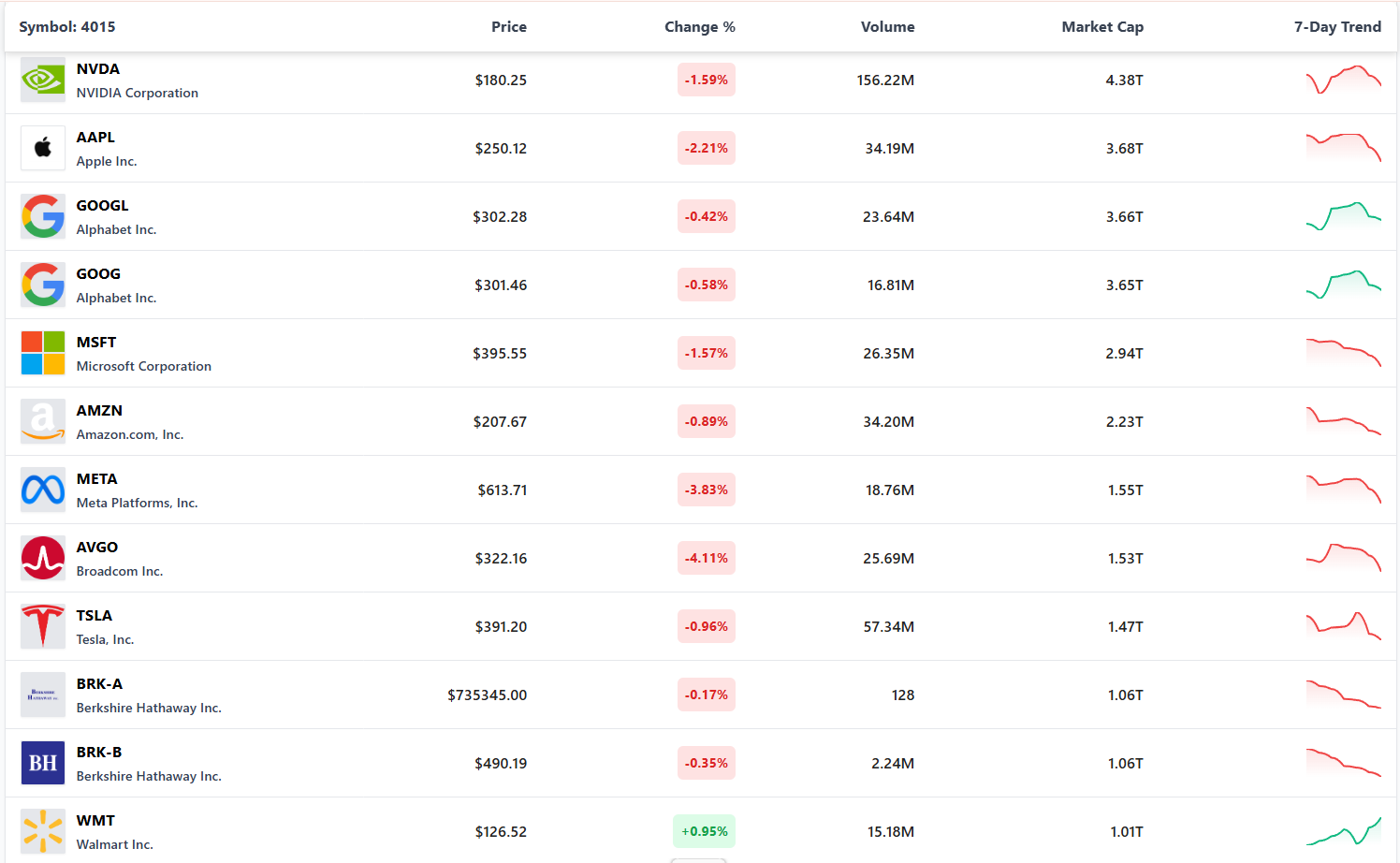
Our stock screener tool lets you filter thousands of stocks by P/E ratio, earnings growth, dividend yield, and dozens of other fundamental and technical criteria. Build custom screens to identify undervalued stocks, high growth opportunities, or dividend payers that match your investment strategy. Save your screens and track how your criteria perform over time.
Deepen your knowledge with our investing education resources, covering everything from basic financial ratios to advanced portfolio construction techniques. Whether you’re analyzing individual stocks or building a diversified portfolio, Tickerplace provides the data and educational content to sharpen your investment skills and improve your decision making process.
Frequently asked questions
What does a high price-to-earnings ratio indicate?
A high P/E ratio typically means investors expect strong future earnings growth or are willing to pay a premium for quality. It can also signal overvaluation if the price has run ahead of fundamentals. Context matters: compare the P/E to historical averages, peer companies, and sector norms to determine whether it’s justified.
What is the difference between trailing and forward P/E?
Trailing P/E uses actual earnings from the past 12 months, providing a factual baseline grounded in reported results. Forward P/E relies on analyst estimates of future earnings, offering insight into growth expectations but introducing uncertainty. Most investors check both to understand how market sentiment about future performance compares to historical results.
Why does P/E ratio vary so much by industry?
Different industries have different growth rates, capital requirements, and risk profiles that influence normal P/E ranges. Fast growing technology companies command higher P/E ratios because investors pay for future earnings potential. Mature industries like utilities trade at lower P/E ratios due to stable but limited growth prospects and predictable cash flows.
Can I rely solely on P/E ratio for investment decisions?
No, P/E ratio should never be your only valuation metric. It ignores debt levels, cash flow quality, asset values, and competitive positioning. Combine P/E with price-to-book, EV/EBITDA, free cash flow analysis, and qualitative factors like management quality and competitive advantages. A comprehensive approach reduces the risk of value traps and missed red flags.
How do I know if a low P/E stock is a bargain or a value trap?
Investigate why the P/E is low before assuming it’s a bargain. Check if revenue and earnings are growing or declining, examine the balance sheet for excessive debt, and assess whether the business model faces disruption. A low P/E combined with strong fundamentals and temporary headwinds suggests opportunity, while one paired with structural problems indicates a value trap.
Recommended
-
What Is PEG Ratio? Formula, How to Calculate & What Is a Good PEG Ratio for Stocks | Tickerplace
-
P/E Ratio: Formula, How to Calculate, What Is a Good PE Ratio & When It’s Overvalued | Tickerplace
-
What Is EV/EBITDA? Formula, How to Calculate & What Is a Good EV/EBITDA Ratio | Tickerplace
-
What Is EPS? EPS Formula, How to Calculate & What Is a Good EPS | Tickerplace