
Equity research is the systematic analysis of publicly traded companies to produce buy, hold, or sell recommendations for investors. Analysts examine financial statements, industry trends, competitive positioning, and macroeconomic factors to form a view on whether a stock is fairly priced. The output, typically a written research report with a price target, gives institutional investors the information they need to deploy capital with conviction.
Two distinct forms of equity research exist, and understanding the difference shapes how you interpret any report you read:
- Sell-side research is produced by brokerage firms and investment banks, distributed to institutional clients such as pension funds, mutual funds, and hedge funds. It is designed to generate client relationships and trading commissions, as sell-side research operates on a fundamentally different incentive model than its buy-side counterpart.
- Buy-side research is proprietary, created internally by asset managers for their own portfolio decisions. It is never published externally and focuses entirely on maximizing portfolio returns.
- Regulatory compliance governs sell-side analysts specifically. FINRA Regulation AC requires analysts to certify that their published recommendations reflect their genuine views, while Regulation FD restricts how companies can share material information with analysts to preserve market fairness.
The practical importance of equity research is hard to overstate. Without it, institutional investors managing billions of dollars would lack the structured, comparable analysis needed to evaluate thousands of stocks across dozens of sectors.

What does an equity research analyst actually do?
Equity research analysts are professional stock evaluators who combine financial modeling, industry expertise, and written communication to produce investment recommendations. Their daily work is more varied than most people expect, and the role differs meaningfully depending on whether the analyst sits on the sell-side or buy-side.
Core responsibilities include:
- Financial modeling: Building and maintaining detailed earnings models, including income statement projections, balance sheet forecasts, and cash flow analysis.
- Company and industry analysis: Tracking quarterly earnings, management commentary, competitor moves, and sector-level trends that affect valuation.
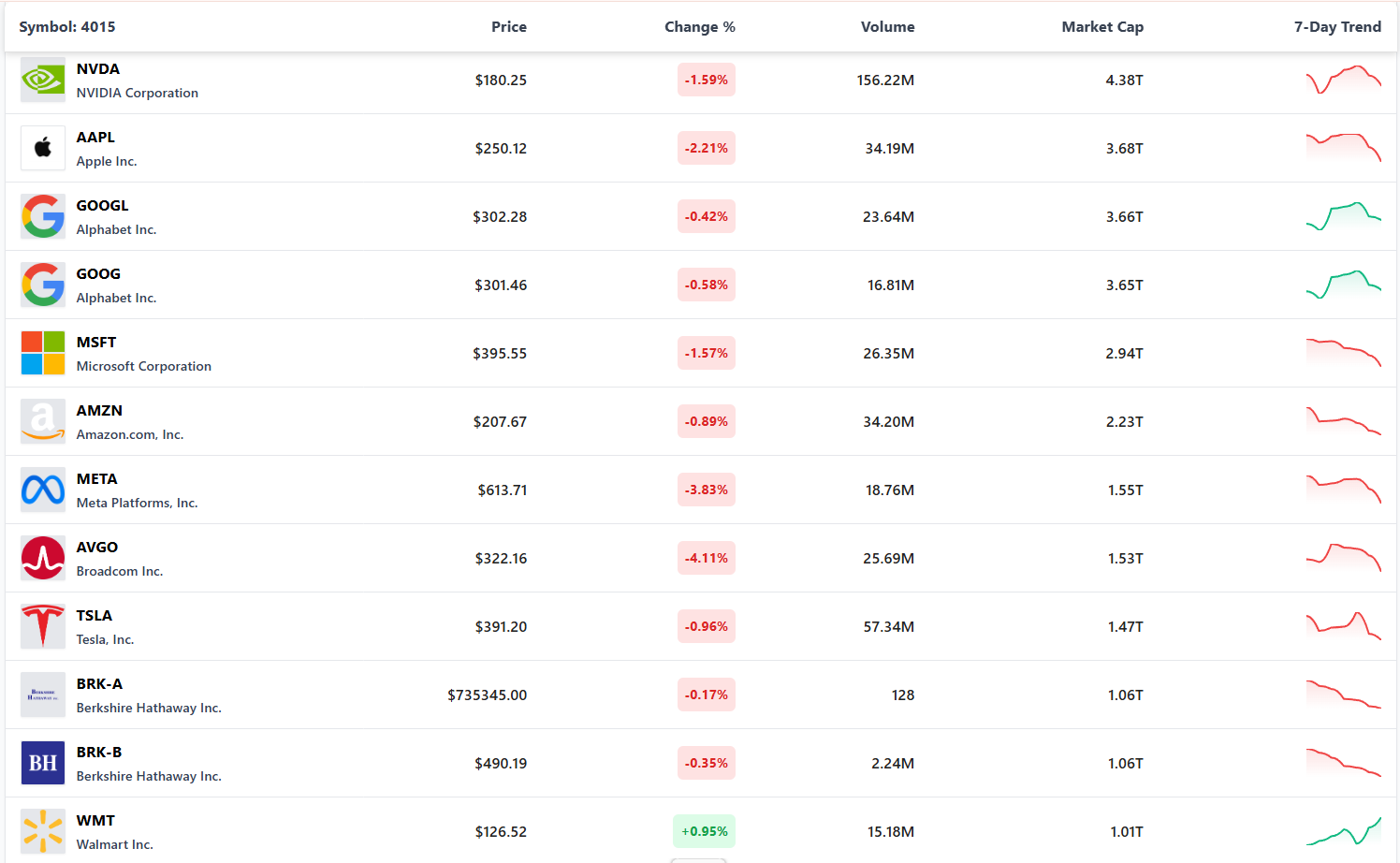
- Broader market monitoring: Analysts often track related instruments such as commodities and bonds tied to the companies they cover, since commodity prices or credit spreads can directly affect a company's earnings outlook.
- Regulatory navigation: Analysts must obtain high-quality information from company management without violating Regulation FD, which prohibits selective disclosure of material non-public information.
- Client communication (sell-side): Writing reports, hosting earnings calls, and presenting investment theses to portfolio managers at institutional clients.
- Portfolio support (buy-side): Feeding proprietary research directly to the fund's portfolio managers, with no external distribution.
The skill that separates a good analyst from a great one is the ability to synthesize complex data into a clear, persuasive investment thesis. Technical modeling matters, but communication is what drives decisions.
Pro Tip: If you are building your own equity analysis skills, start by reading sell-side initiating coverage reports on companies you already understand well. Notice how analysts structure their thesis before diving into the numbers.

What goes inside an equity research report?
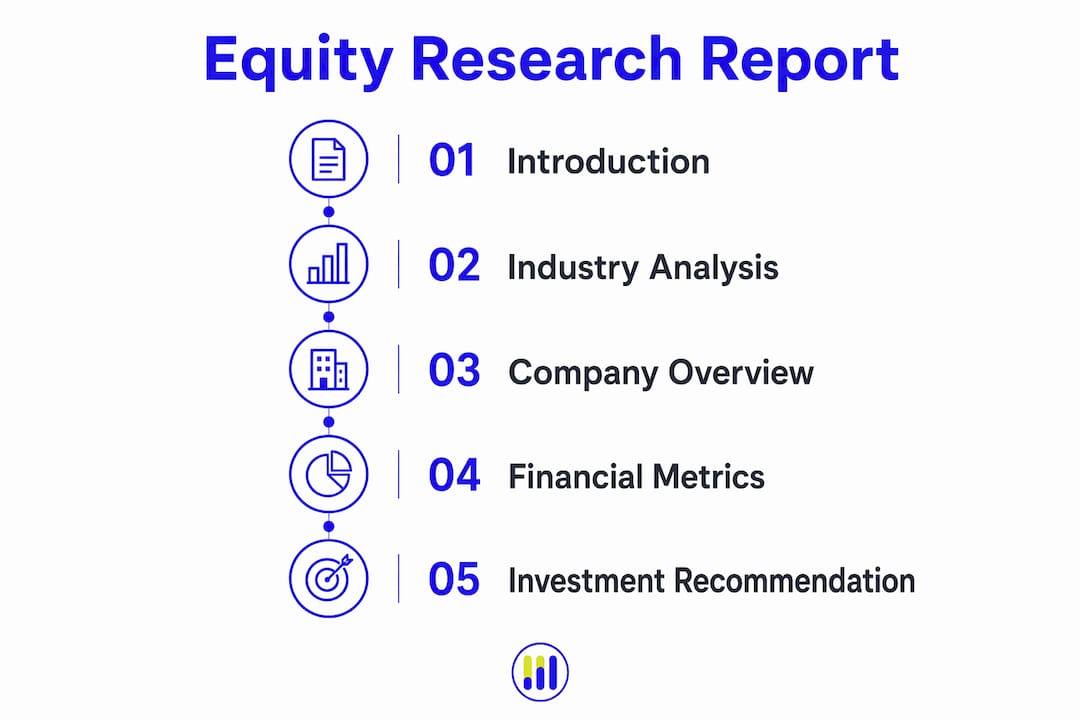
A well-constructed equity research report follows a recognizable structure, though the depth varies considerably by report type. An initiating coverage report on a new stock can run 30–50 pages, while a quarterly earnings update might be five pages or fewer. Reports typically range from 5 to 50 pages depending on their purpose.
Standard sections you will find in most reports:
- Investment thesis: The core argument for why the stock is a buy, hold, or sell at the current price, usually stated clearly in the opening pages.
- Company overview: Business description, revenue model, management team, and competitive positioning within the industry.
- Industry analysis: Sector trends, regulatory environment, and competitive dynamics that affect the company's growth prospects.
- Financial model: Historical financials and forward projections for revenue, EBITDA, earnings per share, and free cash flow.
- Valuation: The analyst's price target, derived from methods such as discounted cash flow (DCF) analysis, price-to-earnings (P/E) comparables, and enterprise value multiples.
- Price target and recommendation: A specific 12-month price target with a buy, hold, or sell rating.
- Risk factors: Downside scenarios, including competitive threats, regulatory changes, and macroeconomic sensitivities that could invalidate the thesis.
Buy-side reports follow a similar structure but are shorter, more direct, and never distributed externally. They exist solely to inform a portfolio manager's next trade. Sell-side reports, by contrast, are polished documents designed for broad institutional distribution and often serve a secondary purpose of reinforcing the firm's relationship with the covered company's management.
Equity research career paths, salaries, and qualifications
Equity research attracts candidates with strong quantitative skills and genuine intellectual curiosity about markets. Most entry-level roles require a bachelor's degree in finance, economics, or accounting, though engineering and mathematics graduates are increasingly common, particularly at quantitatively oriented funds.
Typical career progression:
- Research associate (entry level): Supports senior analysts with data gathering, model maintenance, and report drafting. Most associates spend two to four years in this role before covering their own stocks.
- Junior analyst: Begins covering a sector independently, publishing reports and interacting with clients on the sell-side.
- Senior analyst: Leads coverage of a sector, manages associates, and is the primary client-facing voice on the sell-side.
- Portfolio manager or exit opportunities: Senior analysts often transition to buy-side roles at hedge funds or asset managers, where compensation potential is higher.
Compensation ranges:
Equity researchers earn around $95,000 annually on average, with a range from $61,000 to $146,000 depending on experience, employer type, and geography.
| Career Stage | Typical Role | Approximate Annual Salary |
|---|---|---|
| Entry level | Research associate | $61,000–$95,000 |
| Mid-level | Junior/associate analyst | $61,000–$95,000 |
| Senior level | Senior analyst | $95,000–$146,000 |
| Buy-side transition | Portfolio manager | Varies widely; often higher |
On certifications: The CFA (Chartered Financial Analyst) designation is highly valued in equity research for demonstrating expertise in financial analysis, valuation, and ethics. It is not legally required to work as an analyst, but it signals commitment and competence to employers, particularly on the buy-side. Many firms treat it as a de facto requirement for advancement past the associate level.
Geographic hubs for equity research employment in the US include New York, Boston, San Francisco, and Chicago, with New York dominating sell-side hiring at major investment banks.
How equity research differs from investment banking
Equity research and investment banking are both finance careers that require strong analytical skills, but they are fundamentally different jobs. Confusing the two is one of the most common misconceptions among students entering the field.
Key distinctions:
- Core focus: Equity research analysts evaluate whether a stock is worth buying or selling. Investment bankers execute transactions, including IPOs, mergers, and debt offerings. One is an opinion business; the other is a deal business.
- Work hours: Investment banking is notorious for 80–100 hour weeks, particularly during live deals. Equity research hours are demanding with some seasonal spikes, but generally more predictable than investment banking.
- Client interaction: Sell-side analysts spend significant time communicating investment views to portfolio managers. Bankers spend their time pitching and executing transactions for corporate clients.
- Regulatory environment: Equity research operates under strict analyst independence rules, including Regulation AC and Regulation FD. Investment banking faces different compliance constraints, primarily around deal-related disclosures and conflicts of interest.
- Compensation: Investment banking generally pays more at the junior level, driven by deal bonuses. Equity research compensation is steadier, and the gap narrows significantly for senior analysts who transition to buy-side roles.
- Exit opportunities: Research analysts commonly move to buy-side roles at hedge funds or long-only asset managers. Bankers typically exit to private equity or corporate development. The skill sets diverge enough that crossing between the two fields mid-career is uncommon.
As equity research differs from investment banking in both focus and execution, the right choice depends on whether you prefer forming independent analytical views or executing high-stakes transactions under client pressure.
How institutional-grade valuation tools strengthen your equity research
The quality of equity research depends directly on the quality of the valuation framework behind it. Professional analysts at major banks use multi-model approaches because no single method captures the full picture of a company's worth.
The two most widely used frameworks are:
- Discounted cash flow (DCF) analysis: Projects a company's future free cash flows and discounts them back to present value using a weighted average cost of capital. DCF is theoretically rigorous but sensitive to assumptions about growth rates and discount rates.
- Multiples-based valuation: Compares a company's P/E ratio, price-to-sales (P/S) ratio, or enterprise value multiples against peers and historical averages. This approach is faster and grounded in market reality, though it can embed sector-wide mispricing.
Using both methods together, and checking whether they converge on a similar intrinsic value, gives analysts much higher confidence in their price targets.
Tickerplace brings this institutional methodology to individual investors through its free valuation platform. It runs DCF, P/E, and P/S analysis simultaneously across more than 10,000 US and ASX-listed equities, updating intrinsic value estimates daily. The platform's stock valuation calculator lets you apply the same multi-model approach professional analysts use, without needing a Bloomberg terminal or a team of associates.
| Valuation Tool | What It Measures | Best Used For |
|---|---|---|
| DCF calculator | Intrinsic value via discounted future cash flows | Long-term fundamental analysis |
| P/E and P/S models | Relative value vs. peers and history | Quick comparability checks |
| Intrinsic value calculator | Fair value estimate with margin of safety | Identifying undervalued stocks |
| Enterprise value calculator | Total company value including debt | Acquisition and comparison analysis |
Beyond individual stock analysis, Tickerplace offers sector and industry comparisons so you can contextualize a company's valuation within its competitive group, exactly the way a professional analyst would before publishing a report. For investors who want to conduct equity research with the same rigor as institutional professionals, Tickerplace provides the analytical foundation at no cost.
Start applying institutional-grade valuation methods to your own portfolio with Tickerplace's free financial calculators today.
Key Takeaways
Equity research is the structured analysis of publicly traded stocks to produce investment recommendations, and its quality depends on both analytical rigor and clear communication.
| Point | Details |
|---|---|
| Two research types | Sell-side research serves institutional clients; buy-side research is proprietary and internal. |
| Analyst core skill | Synthesizing complex financial data into a clear investment thesis drives the most impactful research. |
| Report structure | Reports run 5–50 pages and always include an investment thesis, financial model, valuation, and risk factors. |
| Salary range | Equity researchers earn around $95,000 on average, with a range from $61,000 to $146,000 depending on experience, employer, and location. |
| Valuation methods | DCF and multiples-based analysis used together produce more reliable intrinsic value estimates than either alone. |
FAQ
What is equity research in simple terms?
Equity research is the professional analysis of publicly traded stocks to determine whether they are worth buying, holding, or selling. Analysts study financial statements, industry trends, and company fundamentals to produce reports with price targets and investment recommendations.
Is equity research harder than investment banking?
Equity research is analytically demanding and requires strong writing and communication skills, but investment banking is generally considered more grueling due to its extreme hours during live deals. Research hours are demanding, particularly around earnings seasons, but more predictable overall.
How much do equity researchers get paid?
Equity researchers earn around $95,000 annually on average, with salaries ranging from $61,000 to $146,000 depending on experience, employer, and location. Buy-side roles at hedge funds can pay significantly more at senior levels.
Is the CFA necessary for equity research?
The CFA designation is not legally required to work as an equity research analyst, but it is widely valued by employers as proof of expertise in financial analysis, valuation, and ethics. Many firms treat it as a practical requirement for advancement beyond the associate level.