
TL;DR:
NVIDIA leads the industry with nearly double the revenue of its closest competitor, driven by AI infrastructure.
Memory companies like Samsung, SK Hynix, and Micron benefit from rising demand for high-bandwidth memory.
Geopolitical risks, especially around Taiwan and materials supply, pose significant long-term threats to semiconductor supply chains.
Semiconductor companies sit at the core of virtually every technology product on the market, from AI accelerators to automotive safety systems. Yet picking the right investment in this sector is genuinely difficult, even for seasoned analysts. The global semiconductor market hit $793 billion in 2025, a 21% year-over-year jump, with the top 10 vendors controlling 62.4% of total market share. This article walks through how to evaluate semiconductor companies, profiles the top five by revenue, examines capital expenditure trends, and identifies the risks and opportunities shaping the sector.
Key Takeaways
| Point | Details |
|---|---|
| Revenue leaders | NVIDIA tops the list, followed by Samsung, SK Hynix, Intel, and Micron. |
| Capex drives growth | Industry investment is projected at $200 billion in 2026, fueling innovation and expansion. |
| Supply chain risks | Geopolitical and material vulnerabilities pose real challenges to semiconductor stability. |
| Investor criteria | Smart evaluation weighs financials, innovation, and resilience beyond headline numbers. |
| Tools for insight | Financial calculators and stock screeners help investors analyze semiconductor prospects. |
How to evaluate semiconductor companies
With the sector’s scale established, the next step is understanding what separates a strong semiconductor investment from a speculative one. Analysts rely on a mix of financial metrics, operational indicators, and strategic positioning to build a complete picture.
Key evaluation criteria include:
-
Revenue growth and market share: Consistent top-line growth signals product demand and competitive strength. Market share trends reveal whether a company is gaining or losing ground against peers.
-
Capex-to-sales ratio: This metric tells you how aggressively a company is investing in future capacity. A capex-to-sales ratio of 19 to 21% is considered sustainable in 2026, compared to a historical range of 12 to 34%, which reflects the cyclical nature of the industry.
-
R&D investment: Companies that consistently allocate a significant share of revenue to research and development tend to maintain technology leadership. Look for multi-year R&D trends, not just single-year figures.
-
Supply chain resilience: Concentration risk is real. Evaluating supply chain vulnerabilities across materials sourcing, manufacturing geography, and logistics partners is essential for any serious analysis.
-
Geopolitical exposure: Where a company manufactures and sources materials matters as much as what it produces.
For a broader framework, reviewing financial metrics for tech companies can help you apply consistent standards across the sector.
Pro Tip: Pay close attention to memory sector capex trends. Memory companies often lead industry-wide capital spending cycles, and their investment decisions can signal broader demand shifts before they appear in revenue figures.
Top 5 semiconductor companies by revenue
Armed with those criteria, let’s look at the companies dominating semiconductor revenues. According to Gartner data reported by Electronics Weekly, the top five by 2025 revenue are:
| Rank | Company | 2025 Revenue | Market Share |
|---|---|---|---|
| 1 | NVIDIA | $125.7B | 15.8% |
| 2 | Samsung | $72.5B | 9.1% |
| 3 | SK Hynix | $60.6B | 7.6% |
| 4 | Intel | $47.9B | 6.0% |
| 5 | Micron | $41.5B | 5.2% |
A few points stand out from this ranking:
-
NVIDIA’s dominance is striking. At $125.7 billion and 15.8% market share, NVIDIA’s revenue is nearly double that of Samsung, its closest rival. Its data center GPU business, fueled by AI infrastructure spending, is the primary driver.
-
Samsung and SK Hynix reflect memory’s resurgence. Both companies benefit heavily from high-bandwidth memory (HBM) demand tied to AI chip stacks. Their combined share exceeds 16%, making memory a critical segment to watch.
-
Intel’s position is under pressure. At 6.0% share, Intel faces intensifying competition in both CPUs and foundry services. Its strategic pivot toward contract manufacturing is still unproven at scale.
-
Micron rounds out the top five with a strong position in DRAM and NAND flash, sectors where AI and data center demand continue to accelerate.
For context on how this type of comparison applies across other sectors, the approach used in biotech stocks comparison analysis offers a useful parallel. Tools like companiesmarketcap alternatives can also help you cross-reference market capitalization data efficiently.
Capital expenditure and innovation trends
Revenue alone doesn’t tell the whole story. Capital expenditure reveals where companies are placing long-term bets, and the numbers for 2026 are significant.
The semiconductor industry spent $166 billion on capex in 2025, a 7% year-over-year increase. In 2026, that figure is projected to reach $200 billion, a 20% jump. TSMC alone is expected to increase its capex from $40.9 billion in 2025 to between $52 and $56 billion in 2026. Memory firms are projected to account for 45% of total industry capex in 2026.
Here’s how the major players are directing their investment:
-
TSMC is expanding advanced node capacity, particularly for 2nm and below, to serve AI chip demand from NVIDIA, Apple, and AMD.
-
Samsung is investing heavily in both foundry services and next-generation HBM production, attempting to close the gap with SK Hynix.
-
SK Hynix is prioritizing HBM3E and future HBM4 development, where it currently holds a technology lead.
-
Micron is scaling DRAM and NAND capacity while investing in HBM to compete for AI-related orders.
The scale of these investments also introduces materials supply risks that are easy to overlook. For more context on how to interpret these investment patterns, the investing insights section covers broader capital allocation frameworks.
Pro Tip: When evaluating memory companies, distinguish between HBM-focused capex and standard DRAM or NAND spending. HBM carries significantly higher margins and is directly tied to AI infrastructure buildout, making it a more valuable signal for near-term earnings growth.
Risks and opportunities facing semiconductor companies
Understanding capex trends is essential, but investors must also weigh the structural risks and emerging opportunities that shape the sector’s trajectory.
The most significant risks include:
-
Taiwan concentration risk: Taiwan produces the majority of the world’s advanced logic chips. A Taiwan encirclement scenario could disrupt 35% of advanced node supply without a single shot being fired, simply through naval blockade or economic pressure.
-
Materials vulnerabilities: Beyond wafer supply, the industry depends on helium sourced from the Gulf region and bromine from Israel, among other geopolitically sensitive materials. These hidden dependencies rarely appear in standard risk disclosures.
-
Cyclicality: Semiconductor demand cycles are well-documented, but the timing of downturns remains difficult to predict, particularly when AI-driven demand masks underlying inventory build-ups.
The opportunities are equally compelling:
AI infrastructure, automotive electrification, and IoT expansion are creating sustained, multi-year demand tailwinds that differ structurally from prior consumer electronics cycles.
For investors building a risk-adjusted view, applying metrics for risk analysis consistently across companies helps surface vulnerabilities that headline revenue figures obscure.
A fresh perspective on semiconductor investing
Most coverage of semiconductor stocks focuses on revenue rankings and AI exposure. That framing is useful but incomplete. The investors who have navigated this sector most effectively tend to look past headline numbers and focus on two things: the durability of a company’s technology moat and its ability to manage capex cycles without destroying shareholder value.
NVIDIA’s dominance is real, but it is also a function of a specific AI infrastructure cycle. Samsung and SK Hynix are compelling precisely because HBM demand is structural, not cyclical. Intel’s challenges are not just competitive; they are organizational. Applying uncommon investor wisdom means asking whether a company’s capex is building durable advantage or simply maintaining competitive parity. That distinction separates long-term compounders from capital-intensive also-rans.
Explore deeper insights and investment tools
If you’re ready to move from analysis to action, Tickerplace provides the tools to sharpen your semiconductor investment approach.
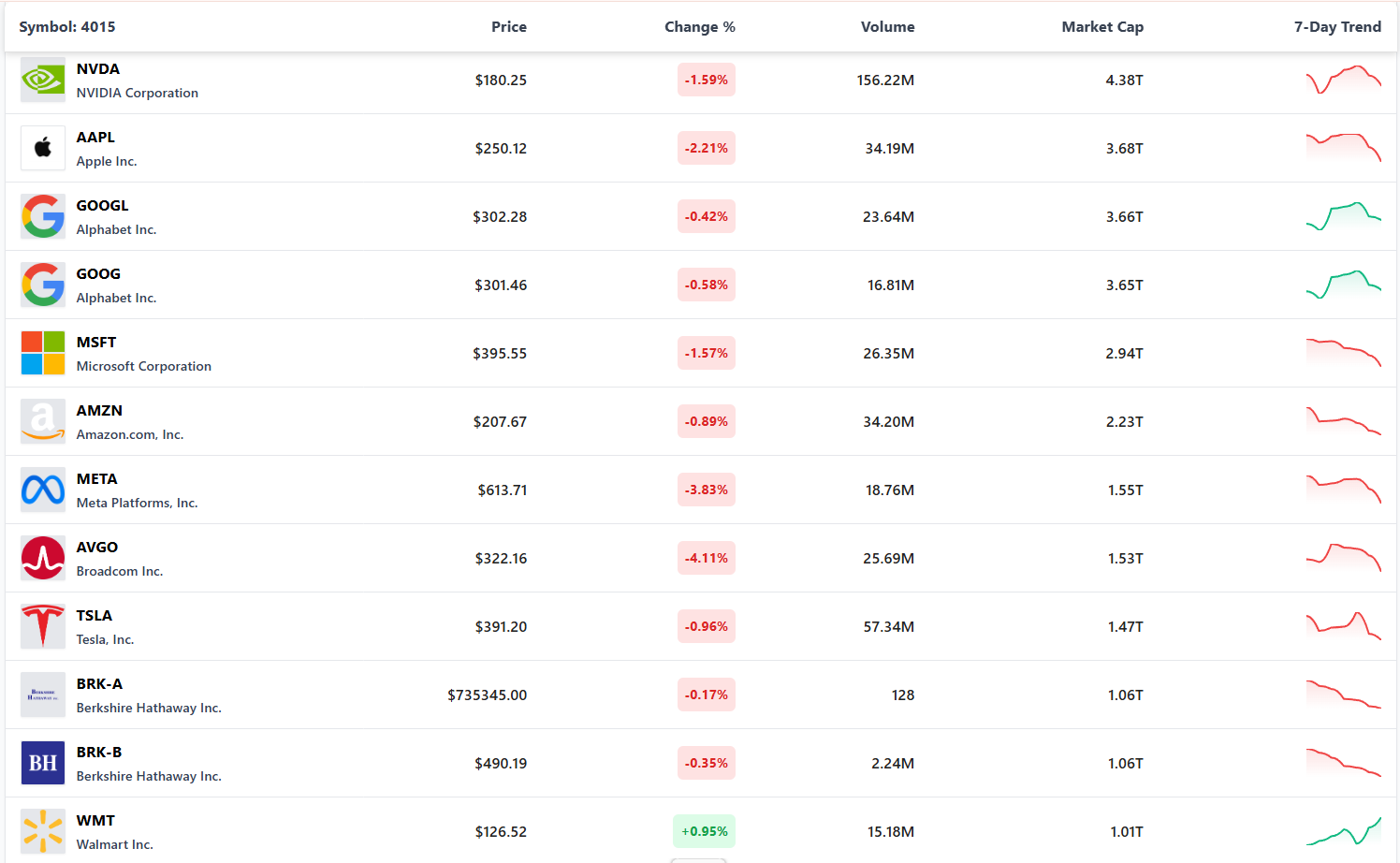
Use the stock screener to filter semiconductor companies by revenue growth, market capitalization, and valuation multiples. Run scenarios with the financial calculators to model return projections and assess risk-adjusted outcomes. For a broader foundation, the investment education section covers market trends, sector analysis, and portfolio construction strategies tailored for active investors and financial analysts.
Frequently asked questions
Which semiconductor company had the highest revenue in 2025?
NVIDIA led all semiconductor companies in 2025 with $125.7 billion in revenue, driven primarily by its data center GPU business tied to AI infrastructure demand.
What is the significance of capital expenditure for semiconductor companies?
Capex determines a company’s ability to expand capacity and develop next-generation products; industry spending is projected to reach $200 billion in 2026, reflecting the scale of competition for technology leadership.
How do geopolitical risks affect semiconductor companies?
Geopolitical tensions, particularly around Taiwan, can disrupt advanced chip supply chains significantly; a Taiwan encirclement scenario alone could affect 35% of advanced node production without direct military conflict.
What factors should investors consider when evaluating semiconductor companies?
Key factors include revenue growth trajectory, capex-to-sales ratios, R&D investment consistency, supply chain resilience, and exposure to geopolitical risk across manufacturing and materials sourcing.
Which segment dominates capital spending in semiconductors for 2026?
Memory firms are set to lead, accounting for 45% of 2026 semiconductor capex, driven by surging demand for high-bandwidth memory in AI chip architectures.