
TL;DR:
- AI capital spending is fueling stock market growth in 2026, with earnings expectations rising due to infrastructure investment. Inflation and potential Fed rate hikes are pressing valuations, favoring sectors with strong cash flow and resilience. Broad sector rotation and disciplined diversification are essential for long-term success amid ongoing geopolitical and economic risks.
Stock market trends in 2026 are defined by three forces: accelerating AI capital spending, persistent inflation above the Federal Reserve's 2% target, and geopolitical uncertainty that tests market resilience at every turn. S&P 500 earnings expectations have risen to 25% year-over-year, with the index EPS estimate reaching $350, a figure that reflects how deeply AI infrastructure investment has reshaped corporate profit forecasts. At the same time, monetary policy has pivoted from expected rate cuts to potential rate hikes, creating a more complex environment for equity positioning. Understanding these dynamics is the foundation of any credible 2026 financial market analysis.
How is AI capital spending shaping stock market trends in 2026?
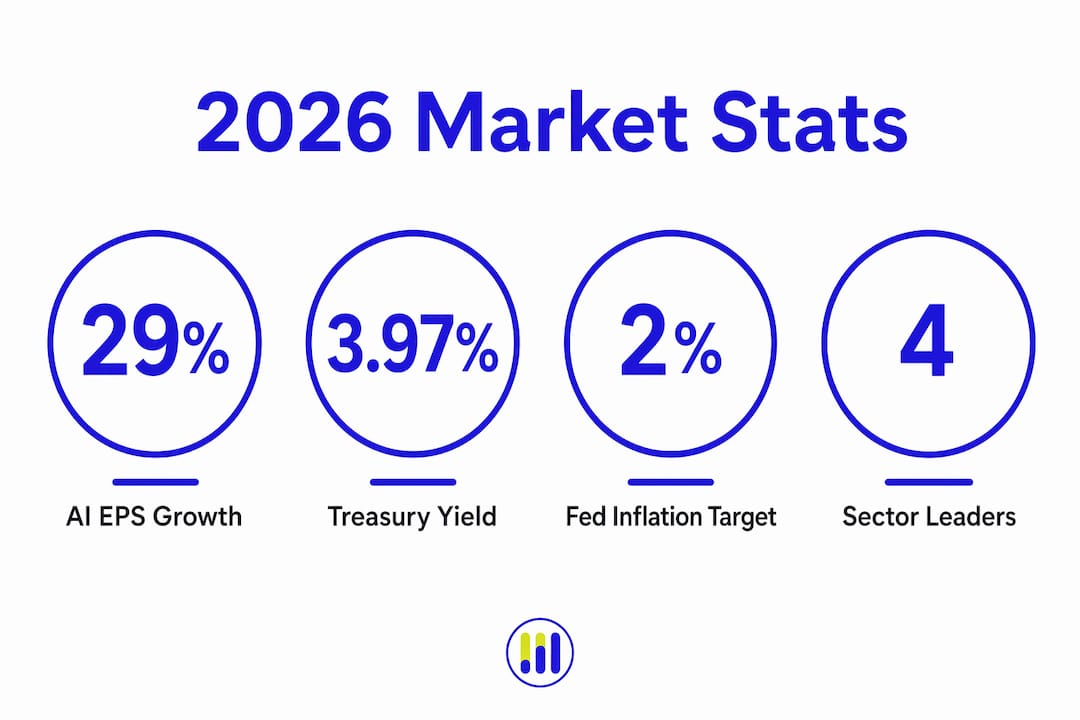
AI infrastructure investment is the single largest driver of 2026 earnings revisions. Hyperscalers and AI infrastructure firms dominated market leadership in the first half of the year, pulling the S&P 500 EPS estimate to $350, up 29% year-over-year. That number tells you something important: the market is pricing in a sustained monetization of AI spending, not just a buildout phase.
The leadership picture is now shifting. Early 2026 returns concentrated in AI infrastructure names, but analysts now flag a rotation toward AI enablers and semiconductors as the next leg of the trade. The logic is straightforward: once the data centers are built, the companies supplying chips, software, and networking equipment capture the next wave of spending.
Investors should watch AI "efficiency" and "utilization" metrics closely. Hyperscalers prioritizing fiscal discipline signals a transition from raw capital expenditure to margin management. That shift affects which companies benefit most and which face earnings pressure as the buildout matures.
Key developments in the AI spending cycle:
- Earnings revisions: AI-related capex drove the largest upward earnings revision cycle for the S&P 500 in recent memory.
- Sector concentration: Market gains in early 2026 remained narrow, centered on a small group of AI infrastructure and hyperscaler names.
- Rotation signal: Analysts identify semiconductors and AI enablers as the next beneficiaries as monetization replaces pure buildout.
- Monetization risk: If AI revenue fails to materialize at scale, earnings estimates face a sharp correction.
Pro Tip: Track capital expenditure guidance in quarterly earnings calls from major hyperscalers. When capex growth decelerates, the rotation from infrastructure to enablers typically accelerates.
For a deeper look at specific opportunities, the top AI stocks for 2026 analysis on Tickerplace covers the names most exposed to this shift.
What do inflation and interest rates mean for 2026 equities?
Inflation remains the most disruptive variable in the 2026 stock trends forecast. The Federal Reserve's 2% target has proven elusive, and markets have repriced accordingly. Rather than cutting rates, the Fed is now expected to hike in late 2026, a reversal that carries direct consequences for equity valuations and fixed income positioning.
The yield curve tells the story clearly. The two-year Treasury yield rose from 3.31% in december 2025 to 3.97% by mid-2026, reflecting rising short-term rate expectations. Bear-flattening of the yield curve compresses the valuation multiples that growth stocks depend on, since higher real yields reduce the present value of future earnings.
| Indicator | December 2025 | Mid-2026 |
|---|---|---|
| Two-year Treasury yield | 3.31% | 3.97% |
| Fed rate direction | Cuts expected | Hikes expected |
| Yield curve shape | Normal | Bear-flattening |
| Equity valuation pressure | Low | Elevated |
The practical implication for investors is a more selective equity environment. High-multiple growth stocks face the greatest headwind. Value-oriented sectors and companies with strong free cash flow hold up better when real yields rise.
Pro Tip: When the yield curve bear-flattens, reduce exposure to long-duration growth stocks and increase allocation to sectors with pricing power, such as Energy and Financials, which benefit from higher rates.
How is sector rotation reshaping the 2026 market outlook?
Technology and AI infrastructure carried the market in early 2026, but the earnings growth story is broadening. Sectors including Industrials, Materials, Financials, and Health Care are showing emerging strength as fiscal policy and capital expenditure cycles support a wider recovery.

The One Big Beautiful Bill Act provides direct fiscal support for capital expenditure and manufacturing. This legislation sustains a manufacturing upturn driven by AI infrastructure buildout and domestic production incentives, creating a tailwind for Industrials and Materials that did not exist in prior cycles.
Small-cap equities present a different picture. Small caps face headwinds from higher interest rates, elevated labor costs, and limited pricing power, leaving them at a structural disadvantage relative to large-cap names. Large caps carry stronger balance sheets and greater ability to absorb cost pressures, making them the preferred allocation in the current rate environment.
Sectors gaining momentum beyond mega-cap tech:
- Industrials: Benefiting from AI infrastructure buildout and fiscal manufacturing incentives.
- Materials: Demand from data center construction and domestic production expansion.
- Financials: Higher rates improve net interest margins for banks and insurers.
- Health Care: Defensive characteristics and steady earnings growth attract capital during volatility.
- Energy: Geopolitical dynamics and persistent inflation support commodity pricing.
Investors seeking undervalued opportunities in 2026 will find the broadening sector rotation creates more entry points than the narrow AI trade offered in 2025.
What geopolitical and economic risks could disrupt 2026 markets?
The defining characteristic of 2026 markets is resilience. Global markets absorbed inflation, tariffs, and war-related uncertainties without a sustained breakdown in earnings or growth. That resilience is real, but it does not eliminate the risks that remain active.
The most significant downside scenario is an AI course correction. If AI monetization fails to meet expectations, the resulting earnings revision would hit AI-exposed stocks hard and drag the broader market. The concentration of S&P 500 gains in a narrow group of names amplifies this risk.
Key risks investors should monitor in the second half of 2026:
- AI monetization shortfall: Revenue from AI products fails to justify infrastructure spending, triggering earnings downgrades.
- Inflation persistence: Inflation stays above 2% longer than expected, forcing additional Fed rate hikes and compressing equity multiples.
- Geopolitical escalation: Conflict-related energy market disruptions raise input costs and weigh on consumer spending.
- Small-cap stress: Higher borrowing costs and labor expenses push small-cap earnings below consensus estimates.
- Fiscal policy reversal: Changes to capex incentives reduce the manufacturing and industrial tailwind.
"Successful investors view 2026's volatility from geopolitical and economic uncertainty as opportunity, not just risk. The markets that absorb shocks without breaking are the ones that reward disciplined, long-term positioning."
How should investors apply these trends to long-term strategies?
The 2026 environment rewards investors who combine sector awareness with disciplined valuation. Concentrating entirely in AI infrastructure names worked in 2025, but the broadening earnings cycle now favors a more distributed approach.
Practical positioning principles for 2026:
- Diversify across sectors: Allocate to Industrials, Financials, and Energy alongside Technology to capture the broadening earnings recovery.
- Monitor AI efficiency metrics: Watch hyperscaler capex guidance and utilization rates to anticipate the rotation from infrastructure to enablers.
- Manage duration risk: In a bear-flattening yield curve environment, favor shorter-duration assets and companies with strong free cash flow.
- Favor large caps: Balance-sheet strength is critical when policy uncertainty and higher rates pressure smaller companies.
- Use valuation discipline: With the S&P 500 EPS estimate at $350, paying the right price for earnings growth matters more than in a low-rate environment.
Learning how to read market data is the practical skill that ties all of these principles together.
Key Takeaways
The most effective investment strategy for 2026 combines AI sector awareness, inflation-adjusted valuation discipline, and diversification across the broadening earnings recovery in Industrials, Financials, and Energy.
| Point | Details |
|---|---|
| AI drives earnings growth | S&P 500 EPS estimate reached $350, up 29% year-over-year, fueled by AI capital spending. |
| Inflation shifts rate expectations | The Fed is now expected to hike rates in late 2026, compressing growth stock valuations. |
| Sector rotation is underway | Industrials, Materials, and Financials are gaining strength beyond the narrow AI trade. |
| Small caps face structural headwinds | Higher rates and limited pricing power make large caps the preferred allocation in 2026. |
| Resilience defines the market | Global markets absorbed geopolitical shocks without sustained earnings breakdown. |
Tickerplace's view on navigating 2026 market complexity
The 2026 market is not complicated in concept, but it demands more precision than the 2023–2025 bull run required. AI capital spending created a genuine earnings catalyst, and the S&P 500 EPS revision to $350 reflects real corporate profit growth, not multiple expansion alone. That distinction matters because it means the market has a fundamental floor, even if sentiment turns.
What concerns me most is the concentration risk that still persists. Too many portfolios remain overweight a handful of AI infrastructure names while the broadening recovery in Industrials and Financials goes underweighted. The Morgan Stanley year-end S&P 500 target of 7,800 implies a 12% advance from mid-2026 levels, but that return will not distribute evenly across sectors.
Inflation above the Fed's 2% target is the variable I watch most closely. Every month it stays elevated, the probability of a late-2026 rate hike increases, and that changes the math on high-multiple stocks. Investors who treat valuation as optional in this environment will feel the consequences.
The right posture is disciplined agility: stay invested, diversify across the broadening recovery, and use every volatility event as a valuation checkpoint rather than a reason to exit.
— Tickerplace
Tickerplace tools for your 2026 investment analysis
Navigating the 2026 market requires more than reading headlines. You need to know whether the stocks you hold or are considering are priced fairly given current earnings expectations and rate conditions.
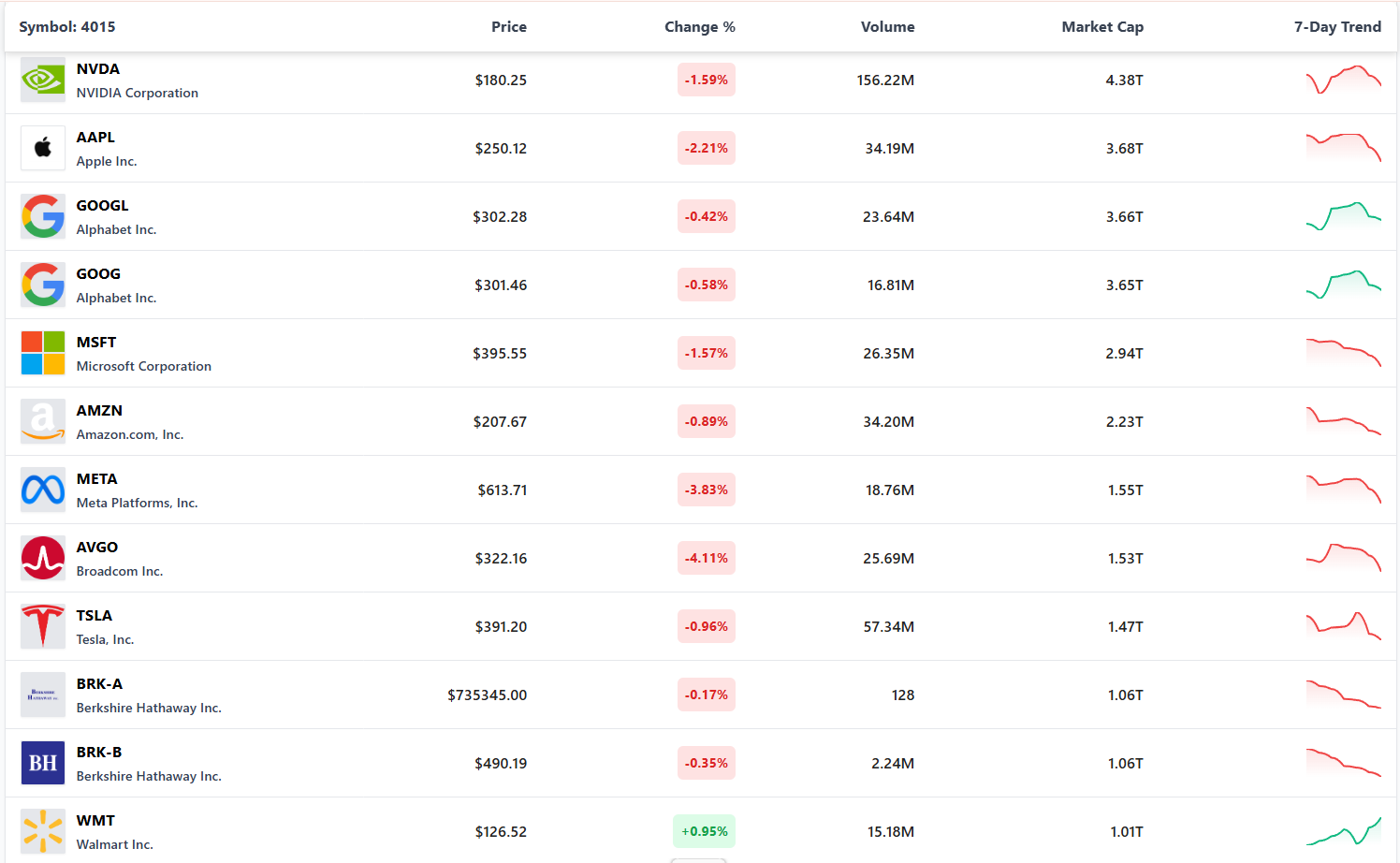
Tickerplace provides free, institutional-grade tools built for exactly this environment. The stock valuation calculator applies P/E and intrinsic value models to thousands of US and ASX-listed equities, updated daily. The stock profit/loss calculator helps you assess your current positions against 2026 market shifts. And the average price calculator keeps your cost basis accurate as you add to positions during volatility. All tools are free, with no institutional price tag.
FAQ
What is driving S&P 500 earnings growth in 2026?
AI-related capital spending is the primary driver. The S&P 500 EPS estimate rose to $350, up 29% year-over-year, as AI infrastructure investment accelerated corporate earnings revisions across the index.
Will the Federal Reserve cut or raise rates in 2026?
The Fed is now expected to raise rates in late 2026. Persistent inflation above the 2% target caused markets to reprice from anticipated cuts to potential hikes, reflected in the two-year Treasury yield rising to 3.97% by mid-2026.
Which sectors are outperforming beyond technology in 2026?
Industrials, Materials, Financials, and Energy are gaining strength. Fiscal support from the One Big Beautiful Bill Act and AI infrastructure buildout are driving a manufacturing and capital expenditure recovery that benefits these sectors.
Are small-cap stocks a good investment in 2026?
Small caps carry elevated risk in 2026. Higher interest rates, rising labor costs, and limited pricing power leave small-cap equities at a disadvantage relative to large caps with stronger balance sheets.
How should long-term investors respond to 2026 market volatility?
Diversify across sectors capturing the broadening earnings recovery, monitor AI monetization metrics, and apply valuation discipline. Market resilience in 2026 has rewarded investors who treat volatility as a buying opportunity rather than a signal to exit.