

TL;DR:
- Rio Tinto's share price is primarily driven by commodity prices, production milestones, and macroeconomic conditions across multiple exchanges.
- Understanding historical price ranges, valuation metrics, and currency differences enhances investors' ability to make informed decisions in cyclical markets.
Rio Tinto's share price is defined by the intersection of commodity market cycles, operational performance, and investor sentiment across three major exchanges. The stock trades as an ADR on the NYSE under the ticker RIO, as ordinary shares on the London Stock Exchange (LSE), and on the Australian Securities Exchange (ASX), meaning the quoted price you see depends entirely on where and when you look. For individual investors tracking Rio Tinto stock performance, understanding what moves the price, how to read its history, and which data sources to trust is the foundation of any informed trading decision.
What factors influence Rio Tinto's share prices?
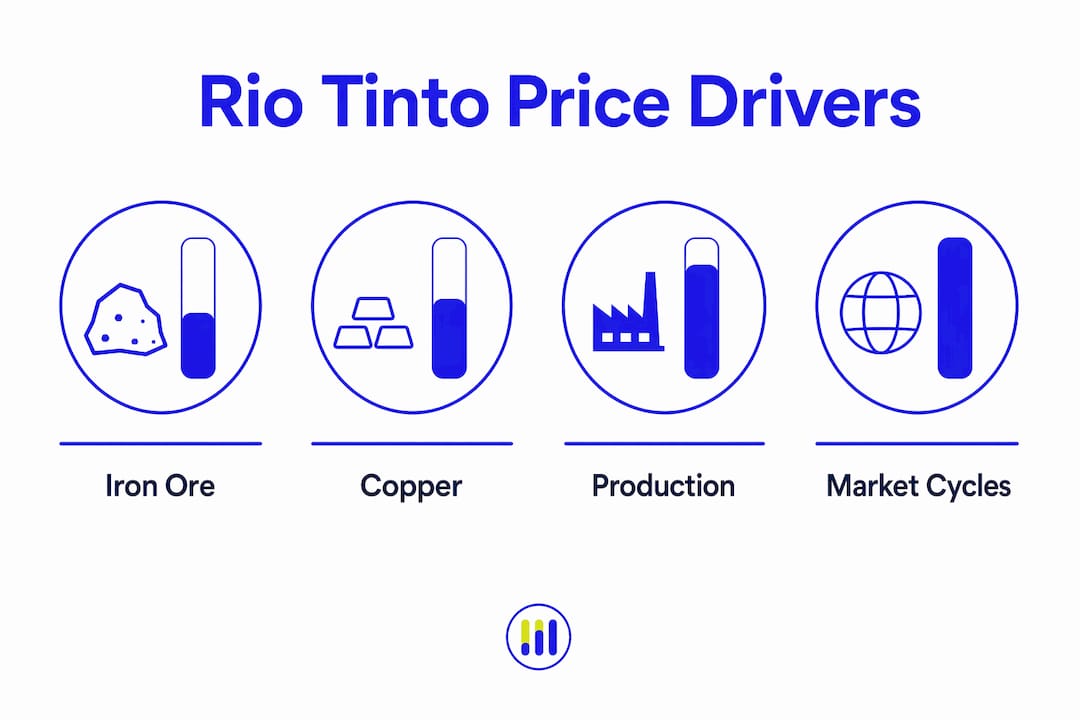
Rio Tinto's share price is driven primarily by commodity prices, specifically iron ore, copper, and lithium, which together account for the majority of the company's revenue. When iron ore prices fall on the Singapore Exchange or Dalian Commodity Exchange, Rio Tinto's share price typically follows within days. This direct commodity linkage makes Rio Tinto more sensitive to Chinese steel demand and global construction cycles than to company-specific news in most periods.
Key drivers of Rio Tinto's share price movements include:
- Commodity prices: Iron ore and copper fluctuations are the single largest short-term price movers. Price moves often track copper and iron ore more than company-specific news, particularly when the stock is near recent highs.
- Production milestones: Rio Tinto's Q1 2026 results confirmed that lithium projects achieved mechanical completion, with first production targeted for H2 2026. Announcements like this shift investor expectations for future cash flow.
- Macroeconomic conditions: U.S. Federal Reserve rate decisions, Chinese GDP growth data, and global infrastructure spending all affect mining stock valuations. Higher interest rates increase the discount rate applied to future earnings, compressing valuations across the sector.
- Dividend yield and free cash flow: Rio Tinto's elevated dividend yield reflects significant free cash flow returns to shareholders. When the yield looks attractive relative to bond rates, income-focused investors buy the stock, providing a price floor.
Pro Tip: Watch the monthly iron ore price index published by the World Bank alongside Rio Tinto's share price chart. The correlation is tight enough that commodity data often gives you a 48-hour lead on share price direction.
How does Rio Tinto's share price history inform investment decisions?

Rio Tinto's share price history provides the context that raw current prices cannot. As of May 29, 2026, the current share price sits at $106.39, against a 52-week high of $112.58 and a 52-week low of $55.64. That range, spanning roughly 47.7% from trough to peak, illustrates the cyclical volatility that defines large-cap mining stocks. The average price over the trailing 52 weeks was $77.80, meaning the stock is currently trading well above its recent average.
The table below summarizes key price reference points for Rio Tinto on the NYSE:
| Metric | Value (as of May 29, 2026) |
|---|---|
| Current share price | $106.39 |
| 52-week high | $112.58 |
| 52-week low | $55.64 |
| 52-week average | $77.80 |
| Distance from 52-week high | Approx. 5.8% below |
Understanding these figures helps you calibrate risk. Buying near the 52-week high of $112.58 carries different risk-reward dynamics than buying near the $55.64 low. Historical price patterns in resource stocks like Rio Tinto also reveal cyclical behavior tied to commodity supercycles, where multi-year bull runs in iron ore or copper lift the stock well above its long-run average before mean-reverting sharply.
Pro Tip: Use the 52-week average price as a rough fair-value anchor for cyclical miners. When Rio Tinto trades more than 20% above its 52-week average, as it does now, tighten your stop-loss levels and review valuation metrics before adding to your position.
How do listing venues affect Rio Tinto's quoted price?
Rio Tinto's share price differs depending on which exchange you are referencing, and this confuses many retail investors. The stock trades in three distinct forms across three venues, each with its own currency, trading hours, and instrument structure.
| Exchange | Instrument | Currency | Trading Hours (local) |
|---|---|---|---|
| NYSE | ADR (ticker: RIO) | USD | 9:30 AM to 4:00 PM ET |
| LSE | Ordinary shares | GBP | 8:00 AM to 4:30 PM GMT |
| ASX | Ordinary shares | AUD | 10:00 AM to 4:00 PM AEST |
The trading price difference between Rio Tinto ADRs and ordinary shares is partly due to currency exchange rates and differing market hours. When the NYSE opens, the LSE has already been trading for hours, meaning the ADR price at the open reflects overnight moves in GBP-denominated shares plus the USD/GBP exchange rate at that moment. This creates apparent price discrepancies that are not arbitrage opportunities for most retail investors but are simply the result of currency translation.
Before comparing prices across venues, always confirm the quote source. A $106 NYSE ADR price and a £84 LSE price may represent the same underlying value once you apply the current exchange rate. Investors who want to buy Rio Tinto shares on the ASX exchange should also account for the AUD/USD rate when benchmarking against NYSE data.
What should investors monitor alongside Rio Tinto's share prices?
Tracking the current Rio Tinto stock price in isolation is insufficient for informed trading. The following data points provide the surrounding context that makes price movements interpretable:
- Quarterly production reports. Rio Tinto's Q1 2026 report confirmed lithium project milestones, directly affecting perceived future earnings potential. Production volumes for iron ore, copper, and aluminum set the baseline for revenue forecasts.
- Commodity spot prices. Iron ore (62% Fe CFR China) and LME copper prices are the two most relevant daily indicators. Both are freely available on the London Metal Exchange and CME Group platforms.
- Valuation metrics. Rio Tinto's forward P/E ratio appears modest relative to broader indices, reflecting the cyclical nature of commodity stocks. Pair this with the trailing dividend yield to assess whether the current price offers value or risk.
- Macroeconomic releases. China's monthly PMI data, U.S. inflation prints, and Federal Reserve meeting minutes all move mining stocks. Rio Tinto's financial statements and news provide the company-level context to layer over these macro signals.
- Currency rates. For investors holding ADRs, the USD/AUD and USD/GBP rates affect the real return on your position even when the underlying share price is flat in local currency terms.
Combining these five data streams gives you a materially more complete picture than share price alone. The goal is to distinguish between price moves driven by genuine operational change and those driven by commodity or currency noise.
Key takeaways
Rio Tinto's share price is best understood as a composite signal reflecting commodity cycles, production milestones, and multi-venue currency effects rather than a single number.
| Point | Details |
|---|---|
| Commodity prices dominate | Iron ore and copper spot prices move Rio Tinto's share price faster than most company announcements. |
| 52-week range provides context | The $55.64 to $112.58 range in 2026 shows the cyclical volatility investors must price into their risk models. |
| Venue affects quoted price | NYSE ADR, LSE, and ASX prices differ due to currency translation and trading hour gaps, not fundamental value. |
| Production reports matter | Lithium project milestones and quarterly output data shift cash flow expectations and near-term valuations. |
| Valuation metrics are essential | Pairing the current price with P/E ratio and dividend yield reveals whether you are buying value or chasing momentum. |
Tickerplace's perspective on reading Rio Tinto's price signals
The most common mistake investors make with Rio Tinto is treating a share price move as a binary signal without asking what drove it. At Tickerplace, we see this repeatedly: a 3% single-day gain gets attributed to "positive sentiment" when the actual cause was a $5 per ton move in iron ore futures overnight in Singapore.
There is also a timing lag that catches traders off guard. Operational updates often lag in reflecting in share prices due to multi-month processing and shipping timelines. A strong production quarter does not immediately translate into revenue because ore shipped in March may not settle financially until May or June. Traders who read a strong Q1 report and expect an immediate price surge often misread the fundamental timeline.
On the venue question, we have found that investors who monitor only the NYSE ADR price sometimes miss intraday moves that originate on the ASX or LSE during hours when U.S. markets are closed. If you are serious about timing entries and exits, tracking all three venues, or at minimum understanding what happened overnight on the LSE, gives you a meaningful informational edge.
The practical takeaway is straightforward: use commodity data as your leading indicator, production reports as your fundamental anchor, and valuation metrics as your risk check. Price alone tells you what the market thinks. The surrounding data tells you whether the market is right.
— Tickerplace
Track Rio Tinto shares with Tickerplace
Monitoring Rio Tinto's share price across the NYSE, LSE, and ASX requires real-time data, clear valuation context, and access to production news in one place.
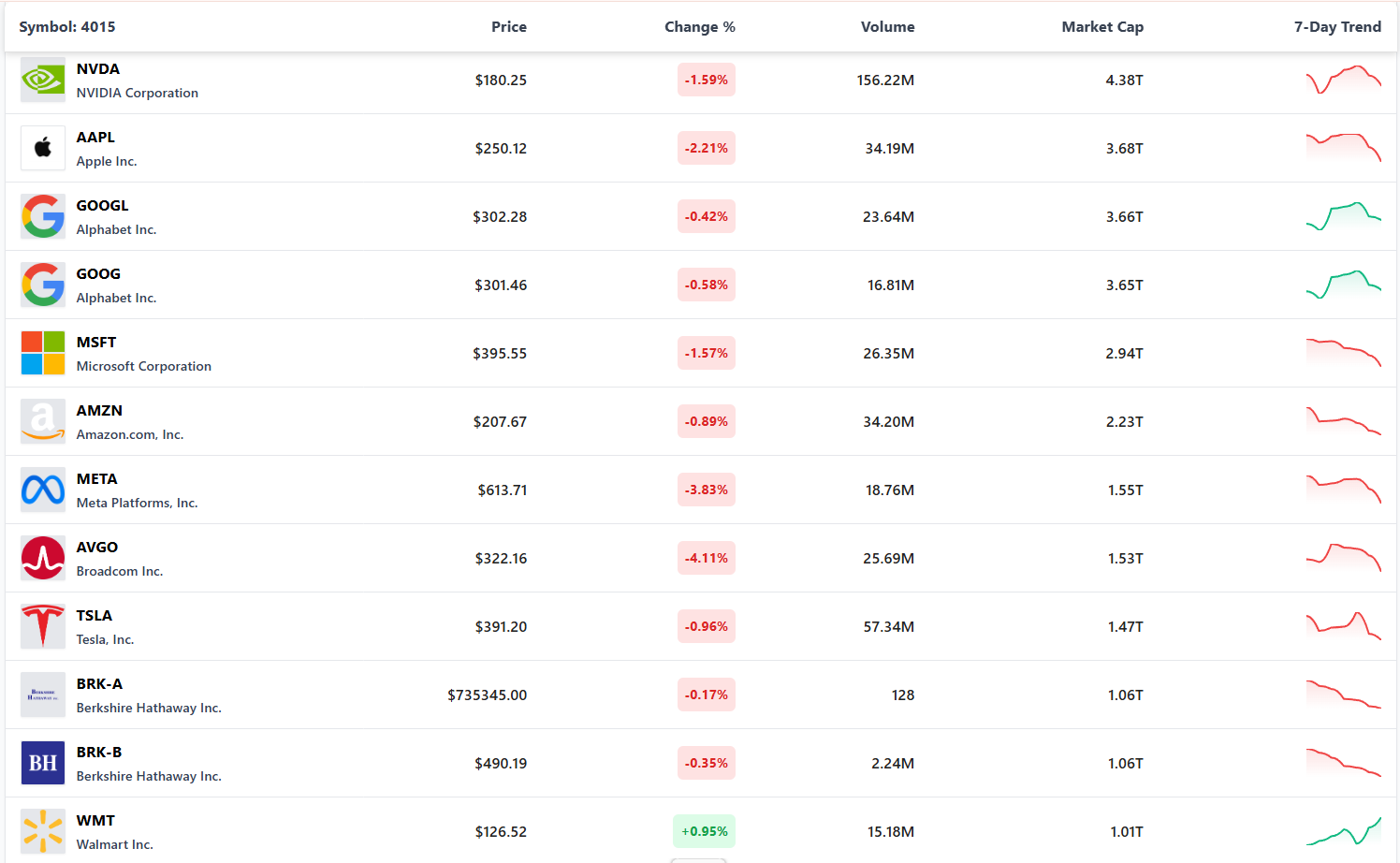
Tickerplace provides exactly that. The platform delivers real-time stock data for Rio Tinto and thousands of global equities, with company-specific pages covering financials, production news, and technical analysis. The stock screener lets you filter Rio Tinto against sector peers by P/E ratio, dividend yield, and market capitalization so you can contextualize its valuation quickly. For investors who want to build deeper knowledge around mining stocks and commodity-driven equities, Tickerplace's investing education resources cover the metrics and frameworks that matter most.
FAQ
What is the current Rio Tinto share price?
As of May 29, 2026, Rio Tinto's NYSE ADR share price is $106.39, approximately 5.8% below its 52-week high of $112.58. Prices on the LSE and ASX differ due to currency translation.
What drives Rio Tinto's share price up or down?
Iron ore and copper spot prices are the primary short-term drivers, followed by quarterly production results, macroeconomic data from China, and Federal Reserve rate decisions.
Why does Rio Tinto's price differ across exchanges?
Rio Tinto trades as a USD-denominated ADR on the NYSE and as ordinary shares in GBP on the LSE and AUD on the ASX. Currency exchange rates and different trading hours create apparent price differences that reflect the same underlying value.
Is Rio Tinto a good stock to buy based on its share price history?
Rio Tinto's current price is well above its 52-week average of $77.80, which signals elevated valuation relative to recent history. Investors should review the forward P/E ratio and dividend yield alongside price before deciding to buy Rio Tinto shares.
How often does Rio Tinto release production updates?
Rio Tinto releases quarterly production reports, with Q1 2026 results published in April 2026. These reports include output volumes for iron ore, copper, aluminum, and lithium project milestones that directly influence investor expectations and share price.