

TL;DR:
- Apple's investor site shows delayed stock quotes, approximately 20 minutes behind real market data.
- Stock prices are influenced by market sessions, earnings reports, and macroeconomic factors, causing fluctuations.
- Using real-time data and understanding session timing improves investment decisions and reduces trading errors.
Apple's official investor-relations page shows a delayed stock quote of roughly 20 minutes, a fact that surprises many individual investors who assume they're seeing live market data. For anyone trading or analyzing AAPL, the difference between a real-time feed and a delayed one isn't just a technicality; it can mean the difference between acting on accurate information or chasing a price that no longer exists. This article breaks down exactly how Apple's stock price is set, where delays originate, and how you can use price data more effectively to support smarter investment decisions.
Key Takeaways
| Point | Details |
|---|---|
| Delayed quotes matter | Apple’s official stock price is delayed, making real-time action challenging for investors. |
| Know your data feed | Understanding the difference between real-time and delayed feeds helps you avoid costly trading mistakes. |
| Track influencing factors | Earnings, news, and volume are key drivers of Apple’s price fluctuations. |
| Apply smart analysis | Combine price information with calculators and tools for better investment decisions. |
What determines the Apple stock price?
Now that we've established the prevalence of delayed pricing, let's examine what actually sets the price of Apple shares.
Apple trades under the ticker symbol AAPL on the NASDAQ exchange, one of the largest and most liquid equity markets in the world. At its most fundamental level, the price of any share reflects the intersection of supply and demand: when more investors want to buy AAPL than sell it, the price rises, and vice versa. However, that simple mechanism operates within a layered structure of market sessions, data feeds, and exchange rules that most retail investors don't fully account for.
Market sessions matter more than most investors realize. AAPL trades during three distinct windows each weekday:
- Regular market hours: 9:30 a.m. to 4:00 p.m. Eastern Time, when the highest liquidity and tightest spreads exist
- Pre-market trading: 4:00 a.m. to 9:30 a.m. ET, characterized by lower volume and wider bid-ask spreads
- After-hours trading: 4:00 p.m. to 8:00 p.m. ET, where earnings releases and major announcements often drive significant price swings
The price you see during pre-market or after-hours sessions can differ substantially from the prior closing price, and those moves often reverse or amplify during the next regular session.
Key takeaway: The "current price" of AAPL is not a single, universal number. It depends entirely on the data feed (real-time versus delayed) and the market session in which you're looking. Apple's own investor page explicitly notes its delayed pricing, which can mislead investors who assume they're viewing live market conditions.
For broader context on how these session dynamics interact with market movements insights, staying current on daily market conditions is essential for any AAPL analysis.
Pro Tip: If you see a stock quote without a visible timestamp, always search for a disclaimer or footnote. Any reputable platform will disclose whether the data is real-time or delayed.
Real-time vs delayed stock quotes: What you need to know
Understanding what drives the stock price lets us look deeper into the crucial issue of timing, especially the difference between data feeds.

A real-time quote reflects the most recent transaction price at the exact moment you request it. A delayed quote typically lags by 15 to 20 minutes, depending on the exchange and the data provider's licensing agreement. Apple's investor-relations page is a clear example of delayed pricing, showing data that is approximately 20 minutes behind actual market activity. This is standard practice for investor-relations pages and many financial news sites.
| Feature | Real-time quote | Delayed quote |
|---|---|---|
| Timing | Current market price | 15 to 20 minutes behind |
| Availability | Brokerage platforms, paid data feeds | Free financial sites, IR pages |
| Accuracy for active trading | High | Low |
| Suitable for long-term research | Yes | Often sufficient |
| Risk of decision errors | Low | Moderate to high |
Here's how the delay plays out in practice. Suppose Apple releases a product announcement at 10:00 a.m. and the stock jumps 3% in the first five minutes. A trader relying on a delayed feed might not register that move until 10:20 a.m., by which point they could be buying at or near the session high rather than participating in the initial breakout.
How to determine whether a quote is real-time or delayed:
- Look for a timestamp next to the price. If it's several minutes behind your current local time, it's delayed.
- Check for a disclaimer. Most platforms include a small-print note like "Data delayed by 15 minutes."
- Compare against your brokerage. Your trading platform's live feed is the most reliable reference.
- Verify on a paid data service. Bloomberg Terminal, Reuters Eikon, or your brokerage's streaming quotes provide confirmed real-time data.
For investors who want to go beyond price alone and assess whether AAPL is correctly priced, exploring AAPL valuation metrics provides essential context. Additionally, if you're averaging into a position over time, using a stock average calculator helps you track your effective cost basis accurately, regardless of quote timing.
Pro Tip: Most retail brokerage apps, including Fidelity, Charles Schwab, and TD Ameritrade, offer real-time quotes at no additional cost once you have an active account. There's little reason to rely on delayed data for active decision-making.
Factors influencing Apple stock price fluctuations
With a clear grasp of quote timing, we can now explore what actually moves Apple's stock price throughout the trading day.
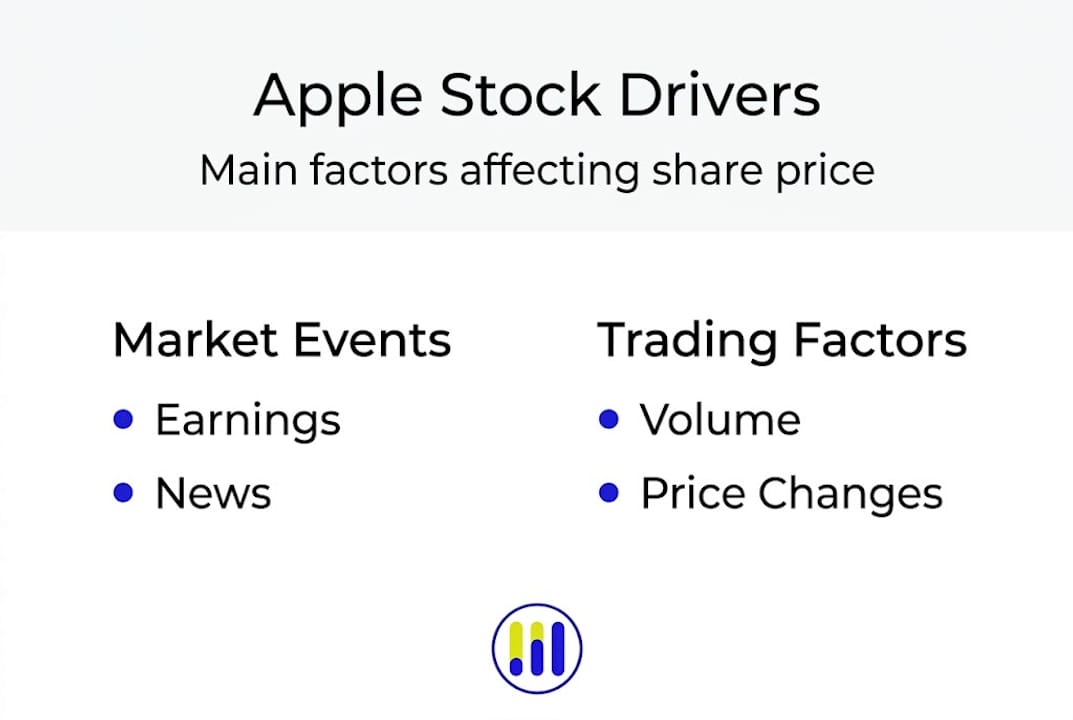
Apple's share price is not random. Specific, identifiable catalysts move AAPL in predictable patterns, even if the magnitude of each move is hard to forecast. Understanding these factors positions you to interpret price signals more accurately.
Primary drivers of AAPL price movement:
- Earnings reports: Apple reports quarterly earnings roughly every 90 days. Revenue beats or misses against analyst consensus estimates routinely produce 3% to 8% single-session moves.
- Product announcements and launches: Major events like the annual iPhone reveal generate both anticipation-driven price appreciation before the announcement and sell-the-news corrections after.
- Macroeconomic data: Federal Reserve interest rate decisions, inflation readings (CPI and PPI), and employment data affect all large-cap technology stocks, including Apple.
- Analyst upgrades and downgrades: Coverage changes from major Wall Street firms like Goldman Sachs or JPMorgan move institutional sentiment and can shift AAPL by 2% to 4% intraday.
- Regulatory and geopolitical developments: Supply chain exposure in China, antitrust investigations in the EU, and tariff policies directly affect Apple's cost structure and revenue outlook.
A concrete illustration: Apple's investor-relations page lists an example quote of $253.50 at 4:00 p.m. ET, reflecting a single-session change of -$5.36 on trading volume of 62.1 million shares. That volume figure matters. A down move of that magnitude on heavy volume indicates stronger conviction among sellers, which technical analysts interpret very differently from a similar price decline on half that volume.
| Metric | Example value | What it signals |
|---|---|---|
| Price | $253.50 | Closing price on NASDAQ |
| Change | -$5.36 | Single-session loss |
| Volume | 62.1M shares | Above-average selling pressure |
| Ticker | AAPL | Listed on NASDAQ |
For tracking how Apple's overall market capitalization shifts alongside these price moves, the market cap calculator offers a fast, practical way to quantify those changes in dollar terms. Following ongoing stock market insights keeps you informed on the macro conditions shaping Apple's price environment.
How to use Apple stock price data for smarter investment decisions
Knowing the factors that move Apple's price, let's turn to how you can actually use that data while sidestepping common pitfalls.
Price data is only as useful as your ability to interpret it correctly. Many investors make the mistake of reacting to a price change without asking whether that change reflects new information or simply short-term noise driven by low-volume speculation.
A practical framework for acting on AAPL price data:
- Confirm the quote is current. Before placing any order, verify the price against a real-time source. Never base a trade on a quote from Apple's investor-relations page alone, given its 20-minute delay.
- Contextualize the move. A 1% daily change in AAPL has different implications during a low-volatility week versus an earnings period when implied volatility is elevated.
- Check volume. Price moves on volume that is 50% or more above the 30-day average carry significantly more analytical weight than identical moves on thin trading.
- Cross-reference fundamental metrics. Price alone tells you very little. Compare the current price against earnings estimates, price-to-earnings ratios, and forward guidance to determine whether a move is justified.
- Use supporting tools. Calculators and screeners accelerate the research process and reduce the risk of confirmation bias in your analysis.
"Reacting to price without understanding the context behind it is one of the most consistent ways individual investors undermine their own performance."
For a thorough evaluation of whether AAPL's current price reflects fair value or excessive optimism, the AAPL value guide provides a structured, data-driven assessment that goes well beyond surface-level price observation.
Pro Tip: Set price alerts at key technical levels rather than monitoring AAPL continuously. This reduces emotional trading and ensures you act on defined signals rather than market noise.
Our take: Most investors overlook the real impact of delayed data
You now have actionable ways to use price data, but there's a critical blind spot that most discussion misses: investors consistently underestimate how much a 15 to 20 minute delay distorts decision-making during high-volatility periods.
Most traders know, intellectually, that some feeds are delayed. Yet in practice, many still glance at a financial news site, see a price, and treat it as live. That assumption is harmless on a calm Tuesday afternoon but genuinely costly around earnings releases or major macro announcements. The gap between a delayed and a real-time quote can represent several full percentage points of price movement. Reviewing Apple valuation insights alongside a confirmed real-time feed is the disciplined approach. Always check the data timestamp before acting. That single habit separates informed investors from reactive ones.
Ready for deeper Apple stock analysis?
If you want to analyze Apple price data even further, Tickerplace offers specialized tools and learning resources designed for serious investors.
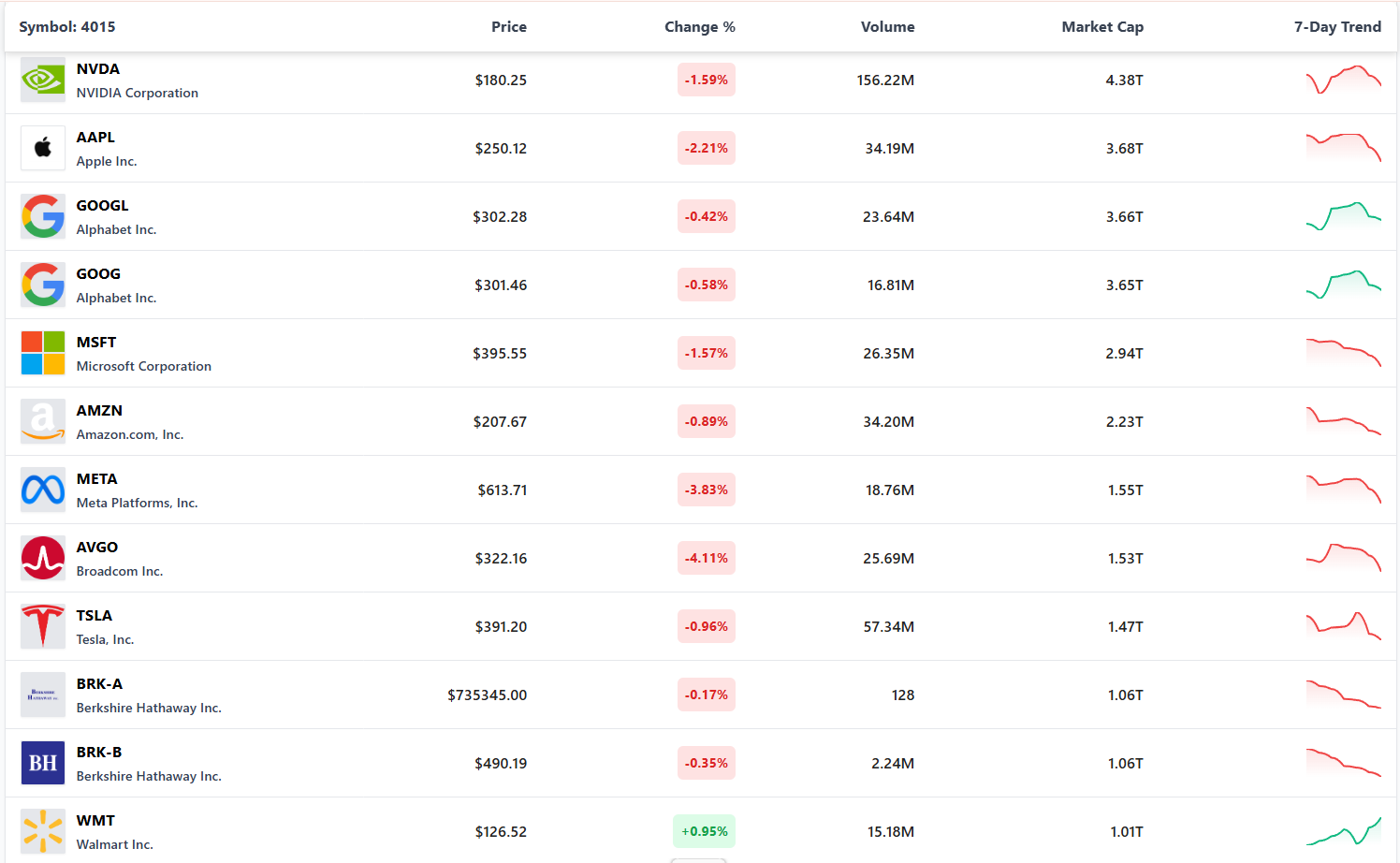
The stock screener tool lets you filter AAPL alongside hundreds of other equities using technical and fundamental criteria, helping you place Apple's performance in the right market context. For those looking to build a stronger foundation, the investing education resources at Tickerplace cover everything from reading price charts to evaluating company fundamentals. Real-time data, screening capability, and structured education in one platform means you spend less time searching and more time making confident, well-researched investment decisions.
Frequently asked questions
Why is the Apple stock price on the official site delayed?
Apple's site presents pricing data delayed by about 20 minutes to comply with standard exchange licensing rules, which require fees for real-time data distribution that most IR pages do not pay.
Where can I get real-time Apple stock prices?
Real-time Apple stock prices are available through active brokerage accounts, which typically include live streaming quotes at no additional cost, or through professional data services like Bloomberg.
What factors most influence Apple's stock price during the day?
Key factors include earnings announcements, breaking product news, Federal Reserve decisions, and trading volume, with Apple's own data showing that a single session can produce a move like the -$5.36 shift on 62.1M shares in volume that signals strong directional conviction.
How can I tell if a stock quote is delayed?
Look for a timestamp or a small-print notice near the price display, as Apple's own investor page explicitly labels its quotes as delayed, which is the transparency standard most reputable platforms follow.